 How to resolve AdBlock issue?
Health care workers plan pickets at Sutter Health facilities; Sutter Lakeside among protest sites
LAKEPORT, Calif. — The union representing health care workers at eight Sutter hospitals and medical centers across California, including Lakeport, said protests are planned this week.
The pickets, at sites including Sutter Lakeside Hospital on Hill Road East in Lakeport, are scheduled for Tuesday, according to SEIU-United Healthcare Workers West.
In addition to Sutter Lakeside, facilities where protests will take place are Sutter Health facilities in Antioch, Berkeley, Castro Valley, Oakland, Roseville, San Francisco, Santa Rosa and Vallejo.
The frontline healthcare workers are holding a series of protests to demand solutions to chronic short staffing, shuttering of services in underserved areas and wages that don’t keep up with inflation.
Those workers include nursing assistants, respiratory therapists, licensed vocational nurses, environmental services, cooks, technicians and more, the union said.
The union said years of low wages have led to high turnover rates. The resulting understaffing has forced employees to take on multiple roles, work long hours and is creating burnout amongst caregivers who are stretched thin.
At the same time, the union said Sutter Health has closed departments in facilities in lower-income areas such as San Francisco’s Mission Bernal campus, and is vowing to replace the aging Alta Bates Ashby campus with a smaller facility in Emeryville, resulting in a loss of services in the communities that need them the most.
Meanwhile, Sutter is paying their corporate executives millions of dollars a year, including Sutter Health CEO Warner Thomas, who took home over $11 million in 2023.
The union said caregivers are calling on Sutter Health to invest in its healthcare staff by ensuring safe staffing levels, fair wages and affordable health care.
The last time a strike or picket took place at Sutter Lakeside was in April 2022, when California Nurses Association members held a one-day strike.
Firefighters increase containment on Arden fire; other area fires contained
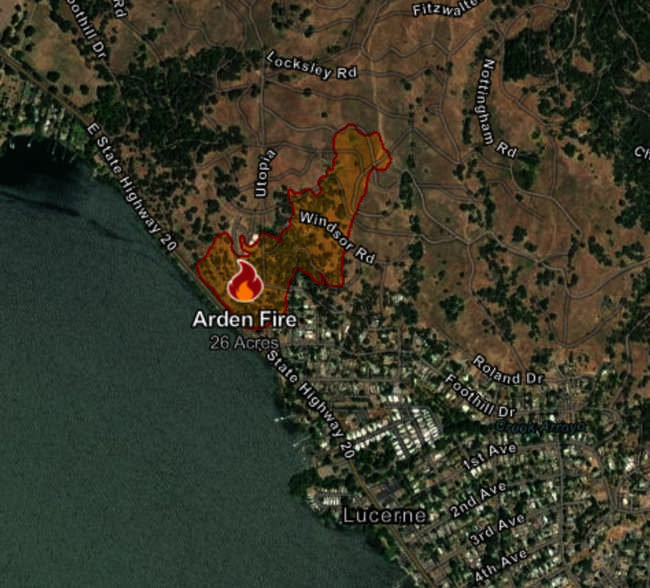
LAKE COUNTY, Calif. — Firefighters are continuing the work to wrap up work on a wildland fire that destroyed structures and caused evacuations on Saturday.
The Arden fire, which began Saturday afternoon at Arden and Foothill drives in Lucerne, remained at 26 acres on Sunday, with containment up to 60%.
It destroyed two structures, led to temporary evacuations and caused a power outage of several hours.
On Sunday morning, traffic control remained in effect in the area of Highway 20 and Foothill Drive on the west end of Lucerne, as firefighters and utility workers continued their efforts to fully contain the fire and deal with the infrastructure damage.
Later on Sunday afternoon, traffic cones were still in place to slow traffic but traffic was flowing through the area unimpeded.
On Sunday evening, all but one of the fire units left the scene for the night, with three engines, a utility unit and a crew set to return on Monday, according to radio traffic.
The resources that Cal Fire said remain assigned are 50 personnel, four engines, one dozer, one water tender and one crew.
The 401-acre Lake fire, which began Aug. 3 in Clearlake, was contained on Saturday morning and the North fire, which burned 11 acres on Friday near Sulphur Bank and North Drive in Clearlake, was fully contained on Sunday night.
Email Elizabeth Larson at
State partners with world’s leading tech companies to prepare Californians for AI future

Gov. Gavin Newsom has announced that California has signed agreements with four of the largest technology companies in the GenAI sector, as the state continues to speed forward as the global leader in technology.
Working with Google, Adobe, IBM and Microsoft, the state will help train California’s workforce for a wide range of jobs in AI, including preparing students in grades nine to 12, community colleges and California State Universities for high-paying careers in these fields.
These agreements — reached at no cost to the state — will also allow schools and industry partners to work together to make it easier for students to develop the skills they need to move from the classroom to the workforce.
“AI is the future — and we must stay ahead of the game by ensuring our students and workforce are prepared to lead the way. We are preparing tomorrow’s innovators, today,” said Newsom. “Fair access to next-generation workforce training tools is one important strategy that California is using to build economic opportunities for all Californians. We will continue to work with schools and colleges to ensure safe and ethical use of emerging technologies across the state, while emphasizing critical thinking and analytical skills.”
This agreement will support faculty and students across the community college and California State University systems, and enable high schools across the state to modernize their curriculum offerings to provide students with the latest AI tools, foster networking and internship opportunities, and expand access to state-of-the-art technology.
“AI is expected to touch nearly every aspect of the working world, so making sure California students are fluent in AI tools will give them a huge advantage as they start their careers,” said Stewart Knox, secretary of Labor & Workforce Development.
“Leveraging the state’s leadership in technology to train the current and future generation of California workers positions us to remain the world’s leader in emerging technologies,” said Nick Maduros, secretary of the California Government Operations Agency.
“With agreements like these, we are doing what California does best – investing in the innovation economy to create new industries and new opportunities,” said Dee Dee Myers, senior advisor to the governor and director of the Governor’s Office of Business and Economic Development, or GO-Biz. “Partnering with these industry leaders will further unlock opportunities for Californians to get the skills they need to advance their careers while ensuring employers have access to the most talented workforce in the nation.”
"This new partnership with leading AI companies brings cutting-edge skills and tools directly to our students, faculty, staff, and communities — expanding opportunity and ensuring that Californians are prepared to thrive in the future world of work shaped by AI,” said California Community Colleges Chancellor Sonya Christian. “As the largest workforce training provider in the nation, we play a pivotal role in developing California’s talent and guiding the responsible and equitable use of Generative AI.”
“On behalf of the California State University, I commend and deeply appreciate Governor Newsom’s forward-thinking efforts to harness the power of artificial intelligence. The MOU we celebrate today and the CSU-Industry AI Workforce Acceleration Board it memorializes are at the very heart of the CSU’s Artificial Intelligence Initiative, aimed at empowering faculty teaching and research, elevating the student experience, driving the state’s future workforce and, most importantly, equipping our graduates with the essential skills they’ll need to thrive in every field. We look forward to our continued collaborative work – with the governor’s administration, AI industry leaders, and CSU students, faculty and staff – as the CSU seeks to become a global model for an AI-empowered higher education system,” said California State University Chancellor Mildred Garcia
California’s GenAI economy
California is home to 33 of the top 50 privately held AI companies around the globe. That figure signifies the state’s undisputed leadership in the GenAI arena and highlights why it is critical that California continues to create economic opportunities for our students and integrate these partnerships into educational systems statewide.
Officials said the agreements will help ensure California remains the location of choice for the world’s most innovative companies by placing an emphasis on supporting startups — a critical component of the state’s economic engine.
Recognizing GenAI is only the tip of the spear in the world of emerging technologies, the state is placing increased emphasis on sharpening students’ skills to keep them competitive in today’s workforce and ensure they use these emerging technologies safely and responsibly.
Preparing tomorrow’s innovators
Adobe, Google, IBM, and Microsoft have developed several programs they are sharing with educational institutions across the state, including providing cutting-edge AI software, sharing expertise as educators update curricula to reflect the latest technology, and supporting educational and joint research initiatives.
Newsom’s office said this partnership will drive significant advances in educational opportunities, economic development, workforce enhancement and innovation for all Californians.
The solutions are voluntary and will be made available by the companies at no cost to schools and institutions.
Adobe Initiative: Adobe and California are partnering to equip students and teachers with the skills and resources they need to thrive in an AI-driven world. Building on Adobe’s long-standing commitment to supporting education, this initiative will expand access to Adobe’s responsibly developed generative AI that is designed to be used in classrooms such as Adobe Express, Adobe Acrobat, and Adobe Firefly — as well as AI literacy content, programming and resources. This partnership will help ensure workforce readiness for the future by preparing students to become the next generation of innovators and leaders.
“To create the future, today’s students must learn to speak the language of tomorrow. That means not only having access to Adobe’s world-class, classroom-ready AI-powered tools as they are creating, ideating, or studying, but also becoming fluent in AI itself. This is equally important for educators because when we invest in teachers, we invest in every student they will ever reach. By empowering both students and educators with AI skills and knowledge, Adobe is proud to take a critical step toward building an innovative workforce that thrives in the digital world of today and tomorrow,” said Mala Sharma, vice president and general manager, Adobe for Education.
Google Initiative: Google will help California residents develop tech skills through its extensive online AI training programs and continue to partner with government agencies across the state to transform citizen services, make data-driven decisions, and enhance efficiencies using GenAI. As a partner in this initiative, Google will support the state's commitment to modernizing government and investing in its workforce. This includes increasing access to Google's Prompting Essentials course for students at no cost. Designed and taught by experts at Google, the online course is product agnostic, does not require a degree or experience, and teaches learners how to effectively instruct AI, make the technology work for them, and responsible use.
Additionally, Google will offer its no-cost Generative AI for Educators course to teachers across the state to help them personalize instruction to meet student needs, develop creative lessons and activities, and save time on administrative tasks. This partnership builds on collaboration between California and Google to accelerate the adoption of GenAI at government agencies in the state and create new upskilling opportunities for the workforce.
"Generative AI is reshaping the future of work, revolutionizing industries and creating entirely new career paths. By collaborating with California to make this technology more accessible to K-12 classrooms, higher education institutions, and innovative start-ups, we're empowering Californians with the skills and knowledge to thrive in the robust GenAI economy of tomorrow,” said Matthew Schneider, managing director, education, state & local government, Google Public Sector.
IBM Initiative: This initiative aims to integrate AI into career education programs across California’s community colleges, explore opportunities for faculty training, and broaden access to industry-recognized credentials through IBM SkillsBuild. The initiative also seeks to promote the development of regional AI labs, short-term certificates, and hands-on learning experiences aligned with evolving workforce needs. By aligning proven, accessible educational pathways with the demands of a rapidly changing technological landscape, this collaboration aspires to help prepare students for future roles in AI, cybersecurity, and data science fields.
"IBM is proud to collaborate with the State of California to expand access to AI education and economic opportunity. As AI transforms the workplace, the demand for skilled workers is growing rapidly. Through IBM SkillsBuild and our collaboration with California’s community colleges, we are empowering students and educators with the tools, training, and credentials they need to thrive in an AI-driven economy,” said Dinesh Nirmal, senior vice president, IBM Software
Microsoft Initiative: Microsoft, the Foundation for California Community Colleges, and the California Community College Chancellor's Office successfully delivered a comprehensive bootcamp learning series focused on AI Foundations, Cybersecurity, and Microsoft Copilot. This training equipped faculty members from various community colleges across the state to educate students at their respective colleges. This collaborative effort has significantly enhanced the AI and cybersecurity skills of both faculty and students, positioning California's community colleges at the forefront of technological education.
“Microsoft is proud to partner with the State of California to help ensure students, faculty, and staff across the California Community Colleges system have access to the AI skills needed in today’s workforce. By supporting AI literacy, cybersecurity training, and hands-on learning opportunities through our Copilot technology and trusted training partners, we’re investing in the future of California. We’re grateful to Governor Newsom’s office and the California Government Operations Agency for their leadership in creating pathways into the digital workforce,” said Beth Dann, general manager, state, local, and education, Microsoft.
California’s AI global leadership
Key leadership from this newly announced partnership will begin the implementation phase, continuing their efforts to harness GenAI to enhance the lives of all Californians.
California has launched efforts to help the state take advantage of this emerging technology, while also creating responsible policy guardrails to protect Californians.
In 2023, Gov. Newsom signed an executive order laying out California’s approach to state GenAI adoption. That EO has shaped the future of ethical, transparent, and trustworthy GenAI deployment, all while California remains the world’s GenAI leader.
Within state government, projects are already underway to utilize GenAI to reduce highway congestion, improve roadway safety, and enhance customer service in a state call center, among other new initiatives.
Earlier this year, Gov. Newsom further advanced California’s ongoing leadership in the responsible development and deployment of AI with the release of a new report from world-leading AI academics and experts.
The group, which was convened at the request of the Governor last September, today released its final report, The California Report on Frontier AI Policy.
This landmark report will help pave the way for the responsible, ethical, and safe use of AI for the benefit of all Californians by offering a policy framework for workable guardrails based on an empirical, science-based analysis of the technology’s capabilities and risks.
Firefighters stop progress of Arden fire; work continues to reach full containment
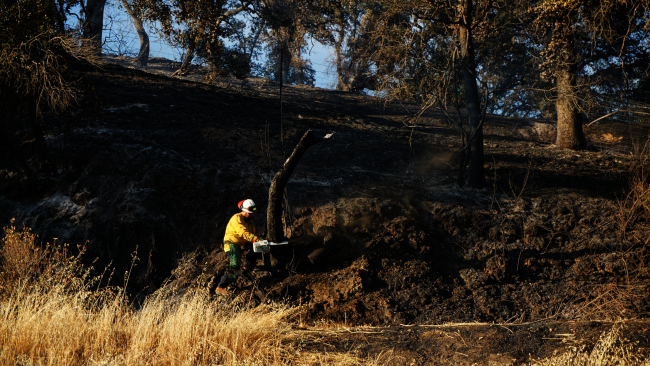
LUCERNE, Calif. — Work continued Saturday evening to fully contain a wildfire that destroyed structures, led to evacuation orders and resulted in a power outage that impacted thousands of Lucerne residents.
The Arden fire began at 2:09 p.m. Saturday at Arden and Foothill drives off of Highway 20, on the west end of Lucerne.
By evening, after a fierce fire fight, multiple spot fires, power outages and evacuations, the fire was being held to 26 acres, with 40% containment, Cal Fire reported.
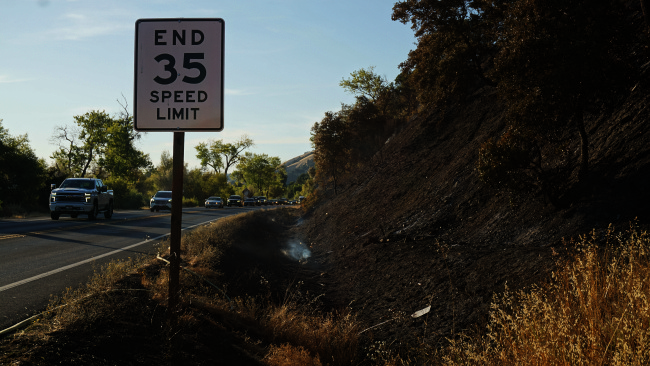
The fire quickly moved uphill on Saturday afternoon — prompting a closure of Highway 20 — and threatened multiple structures, which led to evaluation orders that were lifted shortly after 4 p.m.
Cal Fire said the fire ultimately destroyed two structures.

The power went off across Lucerne just after 3:30 p.m. and was off for about three and a half hours. The organization Find Energy said the outage impacted 3,941 meters at its height. By 11 p.m., 38 meters were still without power.
While the power was off in the late afternoon and early evening, the Lucerne Alpine Senior Center opened as a cooling center to give people respite during the hot temperatures.
At about 6:15 p.m., three spot fires were reported at the head of the fire, farther up in the hills above the town, to the west of the fire and under high tension power lines. That required air resources to return to the scene after they had been released following the initial fire fight.

An incident overview by Cal Fire said the fire burned as far as Sherwood Road, one of the many gravel fire roads in the paper subdivisions above town.
The fire roads in the hills were reported to be helping to contain the advance of the fire, along with the multiple retardant and water drops done throughout the afternoon by Cal Fire air resources.
The hillside above Highway 20 was still smoking at around 7 p.m., with Pacific Gas and Electric personnel working to cut up smoking trees and address burning power poles.
Into the evening, traffic control remained in place at Highway 20 and Foothill Drive as firefighters, PG&E, California Water Service and Lake County Sheriff’s deputies continued to work in the area.
Cal Fire said in a report issued shortly after 8 p.m. Saturday that forward progress of the fire has been stopped.
Also stopped — and fully contained — were the three spot fires that had been reported shortly after 6 p.m. at the head of the fire.
Resources that were assigned to the incident on Saturday included 200 personnel, 14 engines, four dozers, four water tenders and three crews coming from agencies including Cal Fire units from Lake and Mendocino counties, the Mendocino National Forest, Northshore Fire, South Lake County Fire, Lakeport Fire and Williams Fire, with air resources such as tankers and air attack coming from Chico and Ukiah, and two helicopters from Boggs Mountain and Howard Forest.
The Arden is the latest in a series of fires that have burned in Lake County this month.
Those include the North fire, which burned 11 acres on Friday near Sulphur Bank and North Drive in Clearlake. It was 80% contained as of Saturday night, Cal Fire said.
The largest of the season so far in Lake County is the Lake fire, which burned 401 acres near Borax Lake last Sunday afternoon. Cal Fire said it was fully contained on Saturday morning.
The Lake fire also is the largest wildfire in the Cal Fire Sonoma-Lake-Napa Unit in 2025. Up until the Lake Fire, the unit said it had only seen 240 wildfires burn a total of 518 acres.
Email Elizabeth Larson at




