How to resolve AdBlock issue?
Refresh this page
Lake County News,California
  • Home
    • Registration Form
  • News
    • Education
    • Veterans
    • Community
      • Obituaries
      • Letters
      • Commentary
    • Police Logs
    • Business
    • Recreation
    • Health
    • Religion
    • Legals
    • Arts & Life
    • Regional
  • Calendar
  • Contact us
    • FAQs
    • Phones, E-Mail
    • Subscribe
  • Advertise Here
  • Login
How to resolve AdBlock issue?
Refresh this page

News

Thompson leads letter demanding Congress reconvene to address evolving situation in the Middle East

Rep. Mike Thompson (CA-04) has led a formal letter to Speaker of the House Mike Johnson urging him to reconvene the House of Representatives so Congress can be thoroughly briefed on the evolving situation in the Middle East and fulfill its Constitutional responsibilities related to any potential authorization of military force. 

This letter comes following statements from President Trump indicating the United States is seriously considering military action in Iran.

“We call on you to immediately reconvene the U.S. House of Representatives so that Members can be properly briefed on the situation, debate the security situation, and fulfill our Constitutional responsibilities related to any potential authorization of military force,” wrote the lawmakers.

“Congress has the sole power to declare war under Article 1 of our Constitution. It is of the highest importance that no military action take place without Congressional authorization. The stakes are too high. As representatives of the American people, it is the duty of every Member to ensure that we fulfill our Constitutional role,” they continued.

The full text of the letter is available here and below.

Dear Speaker Johnson,

We write to you following statements from President Trump indicating the United States is seriously considering military action in Iran. Media reports indicate the President has reviewed attack plans with senior aides.

We call on you to immediately reconvene the U.S. House of Representatives so that Members can be properly briefed on the situation, debate the security situation, and fulfill our Constitutional responsibilities related to any potential authorization of military force.

Congress has the sole power to declare war under Article 1 of our Constitution. It is of the highest importance that no military action take place without Congressional authorization. The stakes are too high. As representatives of the American people, it is the duty of every Member to ensure that we fulfill our Constitutional role.

Sending our men and women in uniform into conflict is always a matter of the highest

seriousness and should not be undertaken lightly. Proper Congressional consideration of the issues will help our country step away from the emotion of the moment to weigh the complexities of engaging in armed conflict.

We strongly urge you to immediately bring the U.S. House of Representatives back into session. This matter is urgent and cannot be postponed. For the good of our country, we must fulfill our duty to our Constitution and our constituents.

Thank you for your immediate attention to this urgent matter.

50 years after ‘Jaws,’ researchers have retired the man-eater myth and revealed more about sharks’ amazing biology

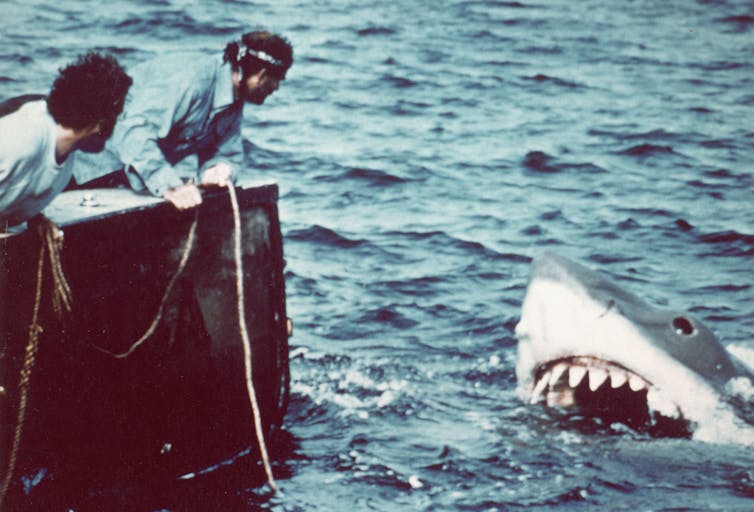
The shark in ‘Jaws’ became a terrifying icon. Universal Pictures via Getty Images

The summer of 1975 was the summer of “Jaws.”

movie poster for 'Jaws' with shark's toothy mouth under the water with a swimmer on the surface
The movie was adapted from a novel by Peter Benchley. Universal History Archive/Universal Images Group via Getty Images

The first blockbuster movie sent waves of panic and awe through audiences. “Jaws” – the tale of a killer great white shark that terrorizes a coastal tourist town – captured people’s imaginations and simultaneously created a widespread fear of the water.

To call Steven Spielberg’s masterpiece a creature feature is trite. Because the shark isn’t shown for most of the movie – mechanical difficulties meant production didn’t have one ready to use until later in the filming process – suspense and fear build. The movie unlocked in viewers an innate fear of the unknown, encouraging the idea that monsters lurk beneath the ocean’s surface, even in the shallows.

And because in 1975 marine scientists knew far less than we do now about sharks and their world, it was easy for the myth of the rogue shark as a murderous eating machine to take hold, along with the assumption that all sharks must be bloodthirsty, mindless killers.

moviegoers lined up under the theater's marquee with 'JAWS' on it
People lined up to get scared by the murderous shark at the center of the ‘Jaws’ movie. Bettmann Archive via Getty Images

But in addition to scaring many moviegoers that “it’s not safe to go in the water,” “Jaws” has over the years inspired generations of researchers, including me. The scientific curiosity sparked by this horror fish flick has helped reveal so much more about what lies beneath the waves than was known 50 years ago. My own research focuses on the secret lives of sharks, their evolution and development, and how people can benefit from the study of these enigmatic animals.

The business end of sharks: Their jaws and teeth

My own work has focused on perhaps the most terrifying aspect of these apex predators, the jaws and teeth. I study the development of shark teeth in embryos.

pinkish white fish embryo next to a larger yellowish sphere
Small-spotted catshark embryo (Scyliorhinus canicula), still attached to the yolk sac. This is the stage when the teeth begin developing. Ella Nicklin, Fraser Lab, University of Florida

Sharks continue to make an unlimited supply of tooth replacements throughout life – it’s how they keep their bite constantly sharp.

Hard-shelled prey, such as mollusks and crustaceans, from sandy substrates can be more abrasive for teeth, requiring quicker replacement. Depending on the water temperature, the conveyor belt-like renewal of an entire row of teeth can take between nine and 70 days, for example, in nurse sharks, or much longer in larger sharks. In the great white, a full-row replacement can take an estimated 250 days. That’s still an advantage over humans – we never regrow damaged or worn-out adult teeth.

about a dozen rows of pointy teeth, all lined up
Magnified microscope image of a zebra shark (Stegostoma tigrinum) jaw. They have 20 to 30 rows of teeth in each jaw, each a new generation ready to move into position like on a conveyor belt. Humans have only two sets! Gareth Fraser, University of Florida

Interestingly, shark teeth are much like our own, developing from equivalent cells, patterned by the same genes, creating the same hard tissues, enamel and dentin. Sharks could potentially teach researchers how to master the process of tooth renewal. It would be huge for dentistry if scientists could use sharks to figure out how to engineer a new generation of teeth for human patients.

Extraordinary fish with extraordinary biology

As a group, sharks and their cartilaginous fish relatives – including skates, rays and chimaeras – are evolutionary relics that have inhabited the Earth’s oceans for over 400 million years. They’ve been around since long before human beings and most of the other animals on our planet today hit the scene, even before dinosaurs emerged.

Sharks have a vast array of super powers that scientists have only recently discovered.

Their electroreceptive pores, located around the head and jaws, have amazing sensory capabilities, allowing sharks to detect weak electrical fields emitted from hidden prey.

looks like a face with a big eye and an open mouth, everything covered with little bumps
CT scan of the head of a small-spotted catshark (Scyliorhinus canicula) as it hatches. Skin denticles cover the surface, and colored rows of teeth are present on the jaws. Ella Nicklin, Fraser Lab, University of Florida

Their skin is protected with an armor of tiny teeth, called dermal denticles, composed of sensitive dentin, that also allows for better drag-reducing hydrodynamics. Biologists and engineers are also using this “shark skin technology” to design hydrodynamic and aerodynamic solutions for future fuel-efficient vehicles.

green glowing sections on the front part of a fish against a black background
Fluorescent skin of the chain catshark (Scyliorhinus retifer). Gareth Fraser, University of Florida

Some sharks are biofluorescent, meaning they emit light in different wavelengths after absorbing natural blue light. This emitted fluorescent color pattern suggests visual communication and recognition among members of the same species is possible in the dark depths.

Sharks can migrate across huge global distances. For example, a silky shark was recorded traveling 17,000 miles (over 27,000 kilometers) over a year and a half. Hammerhead sharks can even home in on the Earth’s magnetic field to help them navigate.

Greenland sharks exhibit a lengthy aging process and live for hundreds of years. Scientists estimated that one individual was 392 years old, give or take 120 years.

Still much about sharks remains mysterious. We know little about their breeding habits and locations of their nursery grounds. Conservation efforts are beginning to target the identification of shark nurseries as a way to manage and protect fragile populations.

Tagging programs and their “follow the shark” apps allow researchers to learn more about these animals’ lives and where they roam – highlighting the benefit of international collaboration and public engagement for conserving threatened shark populations.

Sharks under attack

Sharks are an incredible evolutionary success story. But they’re also vulnerable in the modern age of human-ocean interactions.

Sharks are an afterthought for the commercial fishing industry, but overfishing of other species can cause dramatic crashes in shark populations. Their late age of sexual maturity – as old as 15 to 20 years or more in larger species or potentially 150 years in Greenland sharks – along with slow growth, long gestation periods and complex social structures make shark populations fragile and less capable of quick recoveries.

Take the white shark (Carcharodon carcharias), for example – Jaws’ own species. Trophy hunting, trade in their body parts and commercial fishery impacts caused their numbers to dwindle. As a result, they received essential protections at the international level. In turn, their numbers have rebounded, especially around the United States, leading to a shift from critically endangered to vulnerable status worldwide. However, they remain critically endangered in Europe and the Mediterranean.

shark swims toward the camera with teeth visible in mouth, against blue ocean background
Protections and conservation measures have helped white sharks make a comeback. Dave Fleetham/Design Pics Editorial/Universal Images Group via Getty Images

“Jaws” was filmed on the island of Martha’s Vineyard, in Massachusetts. After careful management and the designation of white sharks as a prohibited species in federal waters in 1997 and in Massachusetts in 2005, their populations have recovered well over recent years in response to more seals in the area and recovering fish stocks.

You might assume more sharks would mean more attacks, but that is not what we observe. Shark attacks have always been few and far between in Massachusetts and elsewhere, and they remain rare. It’s only a “Jaws”-perpetuated myth that sharks have a taste for humans. Sure, they might mistake a person for prey; for instance, surfers and swimmers can mimic the appearance of seals at the surface. Sharks in murky water might opportunistically take a test bite of what seem to be prey.

But these attacks are rare enough that people can shed their “Jaws”-driven irrational fears of sharks. Almost all sharks are timid, and the likelihood of an interaction – let alone a negative one – is incredibly rare. Importantly, there more than 500 species of sharks in the world’s oceans, each one a unique member of a particular ecosystem with a vital role. Sharks come in all shapes and sizes, and inhabit every ocean, both the shallow and deep-end ecosystems.

Most recorded human-shark interactions are awe-inspiring and not terrifying. Sharks don’t really care about people – at most they may be curious, but not hungry for human flesh. Whether or not “Jaws” fans have grown beyond the fear of movie monster sharks, we’re gonna need a bigger conservation effort to continue to protect these important ocean guardians.The Conversation

Gareth J. Fraser, Associate Professor of Evolutionary Developmental Biology, University of Florida

This article is republished from The Conversation under a Creative Commons license. Read the original article.
Estate Planning: Conflicts of interest and trustees


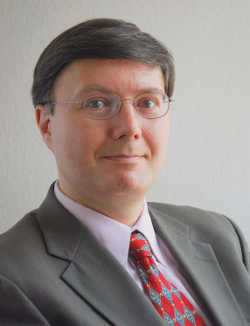
Dennis Fordham. Courtesy photo.

Potential and actual conflicts of interest are important considerations when selecting who to serve as successor trustee as they are being trusted with the authority to manage, disburse (i.e., use assets to pay expenses) and distribute (make gifts of) trust assets pursuant to the terms of the trust. Let us discuss.

A trustee’s primary duty of loyalty is to manage the trust assets strictly according to the terms of the trust for the sole benefit of the trust beneficiaries. That is a high standard. While the settlor(s) of a revocable living trust is alive, all of the trustee’s duties are owed to the settlor who may direct the trustee’s administration. Typically, however, the settlor is the trustee until they are incapacitated or die.


A conflict of interest means that the trustee, for one reason or another, has interests that are at odds with the trustee’s duty of loyalty. Conflicts of interest are either potential, meaning they might occur, or they are actual, meaning they already exist (to one degree or another). 


Conflicts should be identified and addressed within the estate planning. Existing estate planning documents, if possible, should be revised when such conflicts emerge. Ignoring conflicts and allowing them to go unaddressed can result in unintended and otherwise avoidable negative consequences that can even ruin the intended estate planning. Let us consider some illustrations. 


Consider a person who appointed his trusted friend to serve as trustee of a special needs trust in favor of the person’s special needs (disabled) sister and names his friend as death beneficiary. As trustee “the friend” had discretionary authority either to make or not make payments for the sister’s benefit. The trustee chose not to make distributions for the sister’s benefit and so preserved more trust assets for inheritance by the friend when the sister dies. 


Clearly, naming the untrustworthy friend to be both trustee and beneficiary of a discretionary trust intended for the benefit of a disabled person was very bad planning. A professional private fiduciary who is bonded and is not a trust beneficiary would have been a much better choice.


Next, a trustee with authority to value trust assets might possibly use that authority to favor themselves, family or friends, when selling assets from the trust or when distributing assets, if asset valuations are relevant. Such improper “self dealing” use of authority could be eliminated by requiring the trustee to utilize unbiased (neutral) professional valuations. 


Conflicts of interest may also arise if a representative’s spouse has an interest in the trust assets. For example, perhaps the representative sells estate assets to their own spouse on unduly favorable terms to the detriment of trust beneficiaries. This is more likely if assets are already co-owned by the representative’s spouse (e.g., a co-owned business) and the spouse wants full ownership.  


Under California’s Uniform Directed Trust Act, a trusted (neutral) advisor can be appointed as a trust director with authority (i.e., a power of direction) to direct the trustee in those aspects of the trust administration where a potential or actual conflict of interest arises. The trust director would control the trustee’s actions in such conflicts and the trustee would act pursuant to the director’s control. 


The foregoing is not legal advice.  Consult a qualified estate planning attorney for guidance. 

Dennis A. Fordham, Attorney, is a State Bar-Certified Specialist in estate planning, probate and trust law. His office is at 870 S. Main St., Lakeport, Calif. He can be reached at This email address is being protected from spambots. You need JavaScript enabled to view it. and 707-263-3235.  

Space News: Is Mars really red? A physicist explains the planet’s reddish hue and why it looks different to some telescopes

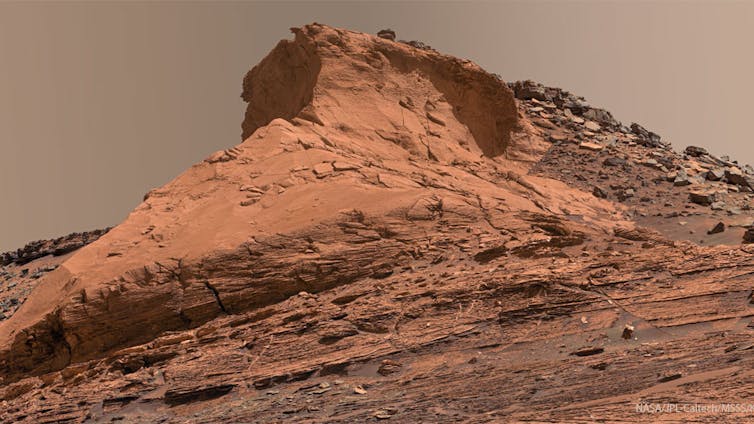
Siccar Point, photographed by the Curiosity rover, is near Mars’ Gale Crater. NASA/JPL-Caltech/MSSS; Processing & License: Kevin M. Gill

Curious Kids is a series for children of all ages. If you have a question you’d like an expert to answer, send it to This email address is being protected from spambots. You need JavaScript enabled to view it..


Is Mars really as red as people say it is? – Jasmine, age 14, Everson, Washington


People from cultures across the world have been looking at Mars since ancient times. Because it appears reddish, it has often been called the red planet.

The English name for the planet comes from the Romans, who named it after their god of war because its color reminded them of blood. In reality, the reddish color of Mars comes from iron oxide in the rocks and dust covering its surface.

Your blood is also red because of a mixture of iron and oxygen in a molecule called hemoglobin. So in a way, the ancient connection between the planet Mars and blood wasn’t completely wrong. Rust, which is a common form of iron oxide found here on Earth, also often has a reddish color.

Rust flakes on metal.
Iron oxide, found in rust on old metal machinery, is the compound that colors rocks and dust on Mars’ surface reddish brown. Lars Hammar/Flickr, CC BY-NC-SA

In my current research on exoplanets, I observe different types of signals from planets beyond Earth. Lots of interesting physics goes into how researchers perceive the colors of planets and stars through different types of telescopes.

Observing Mars with probes

If you look closely at pictures of Mars taken by rovers on its surface, you can see that most of the planet isn’t purely red, but more of a rusty brown or tan color.

A photo showing the front of a lander as well as dusty, rocky terrain.
You can see Mars’ rusty color in this photo taken by the Viking lander. NASA/JPL

Probes sent from Earth have taken pictures showing rocks with a rusty color. A 1976 picture from the Viking lander, the very first spacecraft to land on Mars, shows the Martian ground covered with a layer of rusty orange dust.

Not all of Mars’ surface has the same color. At the poles, its ice caps appear white. These ice caps contain frozen water, like the ice we usually find on Earth, but these ice caps are also covered by a layer of frozen carbon dioxide – dry ice.

This layer of dry ice can evaporate very quickly when sunlight shines on it and grows back again when it becomes dark. This process causes the white ice caps to grow and shrink in size depending on the Martian seasons.

A photo of Mars from space. It looks reddish brown in color, with white clouds at the poles.
This picture from the Hubble Space Telescope shows the planet with the same rusty color covering large parts of its surface. NASA, ESA, Zolt G. Levay (STScI)

Beyond visible light

Mars also gives off light in colors that you can’t see with your eyes but that scientists can measure with special cameras on telescopes.

Light itself can be thought of not only as a wave but also as a stream of particles called photons. The amount of energy carried by each photon is related to its color. For example, blue and violet photons have more energy than orange and red photons.

A diagram of the electromagnetic spectrum, with radio, micro and infrared waves having a longer wavelength than visible light, while UV, X-ray and gamma rays have shorter wavelengths than visible light.
The rainbow of visible light that you can see is only a small slice of all the kinds of light. Some telescopes can detect light with a longer wavelength, such as infrared light, or light with a shorter wavelength, such as ultraviolet light. Others can detect X-rays or radio waves. Inductiveload, NASA/Wikimedia Commons, CC BY-SA

Ultraviolet photons have even more energy than the photons you can see with your eyes. These photons are found in direct sunlight, and because they have so much energy, they can damage the cells in your body. You can use sunscreen to protect yourself from them.

Infrared photons have less energy than the photons you can see with your eyes, and you don’t need any special protection from them. This is how some types of night-vision goggles work: They can see light in the infrared spectrum as well as the visible color spectrum. Scientists can take pictures of Mars in the infrared spectrum using special cameras that work almost like night-vision goggles for telescopes.

Two photos of Mars from space -- one labeled 'visible true color' that looks reddish brown and one labeled 'infrared false color' that looks green and red.
The Hubble Space Telescope could take pictures in both visible light and infrared light. NASA, James Bell (Cornell University), Justin Maki (NASA-JPL), Mike J. Wolff (SSI)

The colors on the infrared picture aren’t really what the infrared light looks like, because you can’t see those colors with your eyes. They are called “false colors,” and researchers add them to look at the picture more easily.

When you compare the visible color picture and the infrared picture, you can see some of the same features – and the ice caps are visible in both sets of colors.

Mars shown from space, colored gray, green and brown.
A UV view of Mars with the MAVEN spacecraft. NASA/LASP/CU Boulder

NASA’s MAVEN spacecraft, launched in 2013, has even taken pictures with ultraviolet light, giving scientists a different view of both the surface of Mars and its atmosphere.

Each new type of picture tells scientists more about the Martian landscape. They hope to use these details to answer questions about how Mars formed, how long it had active volcanoes, where its atmosphere came from and whether it had liquid water on its surface.

Astronomers are always looking for new ways to take telescope pictures outside of the regular visible spectrum. They can even make images using radio waves, microwaves, X-rays and gamma rays. Each part of the spectrum they can use to look at an object in space represents new information they can learn from.

Even though people have been looking at Mars since ancient times, we still have much to learn about this fascinating neighbor.


Hello, curious kids! Do you have a question you’d like an expert to answer? Ask an adult to send your question to This email address is being protected from spambots. You need JavaScript enabled to view it.. Please tell us your name, age and the city where you live.

And since curiosity has no age limit – adults, let us know what you’re wondering, too. We won’t be able to answer every question, but we will do our best.The Conversation

David Joffe, Associate Professor of Physics, Kennesaw State University

This article is republished from The Conversation under a Creative Commons license. Read the original article.

Body of missing Mendocino County man located at vehicle wreck site in forest

LAKE COUNTY, Calif. — Authorities said they have located the body of a Mendocino County man who went missing in April at a crash site in northern Lake County.

Randolph Albert Wilson, 63, of Covelo was identified as the man found dead along with his wrecked vehicle on Thursday morning, according to Lauren Berlinn of the Lake County Sheriff’s Office. 

Lt. Commander Dan Fansler of the California Highway Patrol’s Clear Lake Area office said that on Thursday at 11:30 a.m. his officers, along with the Lake County Sheriff’s Office and fire personnel, responded to a report of a solo vehicle crash on Hull Mountain Road, approximately two miles east of Simmons Road.  

That location is a short distance away from Lake Pillsbury in the Mendocino National Forest in northern Lake County.

Fansler said the initial crash investigation led to the discovery of a 1990 Pontiac Sunbird sedan down a steep 400 foot embankment.  

He said Wilson, the Pontiac’s suspected driver and solo occupant, was found dead at the scene.

Fansler said investigators believe the crash occurred over a month ago.

A Feather Alert — used to help locate at-risk Indigenous people — was issued for Wilson after it was reported that he was last seen in Ukiah April 17. 

The Mendocino County Sheriff’s Office said Wilson was reported missing April 21 and had been believed to be driving the white Pontiac Sunbird convertible.

Fansler said the crash is still under investigation. 

Email Elizabeth Larson at This email address is being protected from spambots. You need JavaScript enabled to view it.. Follow her on Twitter, @ERLarson, and on Bluesky, @erlarson.bsky.social. Find Lake County News on the following platforms: Facebook, @LakeCoNews; X, @LakeCoNews; Threads, @lakeconews, and on Bluesky, @lakeconews.bsky.social. 

Board of Supervisors terminates Public Works director

LAKE COUNTY, Calif. — Lake County’s Public Works director was dismissed this week after just a year on the job.

On Tuesday afternoon, the Board of Supervisors emerged from closed session to vote to terminate Public Works Director Glen March.

The board appointed March to the job on a limited term basis last June. The goal was for him to work alongside retiring Public Works Director Scott DeLeon in order to facilitate a leadership transition before March’s permanent appointment became effective June 29, as Lake County News has reported.

March came to Lake County after serving three decades in what the county said at the time were “engineering-focused roles in the private and public sectors” in places including the cities of Hollister and East Palo Alto.

Department heads typically have reviews once or, occasionally, twice a year, especially if they are new. More closed session performance evaluations than that during a year are generally a sign that a department head may be about to leave.

Since his hire was announced in May of 2024, March had been evaluated Dec. 3, with the next evaluation set for June 3. Another evaluation followed at the board’s June 10 meeting, with “Public Employee Discipline/Dismissal/Release” included on this week’s agenda under closed.

After the closed door discussion, the board came back into open session, with Supervisor Brad Rasmussen moving to terminate March immediately. The board voted unanimously to approve the motion.

Rasmussen followed up with a second motion, also approved unanimously, to appoint County Administrative Officer Susan Parker and Public Services Director Lars Ewing as interim Public Works directors, effective immediately.

The Public Works director job has typically been one of the county’s more reliably filled department head positions.

Scott De Leon, who retired at the end of June 2024, held the job for 13 years, following Brent Siemer, who had resigned in 2011 after four years on the job because he said he couldn’t meet the board’s expectations.

Board dealing with other recruitment issues

In addition to now having to begin a recruitment to fill the Public Works director position, the supervisors continue to seek a permanent Animal Care and Control director.

Gregory Wilkins, who the board had appointed to head animal control in October, tendered his resignation on Feb. 25, the same day as he had a performance evaluation. His departure was effective May 28.

The supervisors were scheduled to hold a closed session to conduct interviews for an Animal Care and Control director on May 12.

On Tuesday, as part of the regular board consent agenda, the supervisors appointed Assistant County Administrative Officer Stephen Carter Jr. to the post on an interim basis, effective July 1.

This spring, Public Health Officer Dr. Noemi Doohan also resigned. 

Earlier this month, the board appointed Robert S. Bernstein, MD, MS, MPH, PhD, to succeed Doohan, effective Sept. 2.

Email Elizabeth Larson at This email address is being protected from spambots. You need JavaScript enabled to view it.. Follow her on Twitter, @ERLarson, and on Bluesky, @erlarson.bsky.social. Find Lake County News on the following platforms: Facebook, @LakeCoNews; X, @LakeCoNews; Threads, @lakeconews, and on Bluesky, @lakeconews.bsky.social. 

  • 208
  • 209
  • 210
  • 211
  • 212
  • 213
  • 214
  • 215
  • 216
  • 217

Community

  • Sheriff’s Activities League and Clearlake Bassmasters offer youth fishing clinic

  • City Nature Challenge takes place April 24 to 27

Public Safety

  • Lakeport Police logs: Wednesday, Feb. 11

  • Lakeport Police logs: Tuesday, Feb. 10

Education

  • Ramos measure requiring school officer training in use of anti-opioid drug moves forward

  • Lake County Chapter of CWA announces annual scholarships 

Health

  • California ranks 24th in America’s Health Rankings Annual Report from United Health Foundation

  • Healthy blood donors especially vital during active flu season

Business

  • Employment law summit takes place March 9

  • Two Lake County Mediacom employees earn company’s top service awards

Obituaries

  • Terry Knight

  • Ellen Thomas

Opinion & Letters

  • Who should pay for AI’s power? Not California ratepayers

  • Crandell: Supporting nephew for reelection in supervisorial race

Veterans

  • State honors fallen chief warrant officer killed in conflict in Iran

  • CalVet and CSU Long Beach team up to improve data collection related to veteran suicides

Recreation

  • April Audubon program will show how volunteers can help monitor local osprey nests

  • First guided nature walk of spring at Anderson Marsh State Historic Park April 11

  • Second Saturday guided nature walks continue at Anderson Marsh State Historic Park

  • Wet weather trail closure in effect on Upper Lake Ranger District

Religion

  • Kelseyville Presbyterian Church plans Easter service

  • Easter ‘Sonrise’ Service returns to Xabatin Community Park

Arts & Life

  • ‘CIA’ delves into the shadowy world of an espionage thriller

  • ‘War Machine’ shifts the battlefield into uncharted territory

Government & Politics

  • Lake County Democratic Central Committee endorses Falkenberg

  • Crandell launches reelection campaign plans March 15 event

Legals

  • April 23 hearing on Lake Coco Farms Major Use Permit

  • NOTICE OF 30-DAY PUBLIC COMMENT PERIOD & NOTICE OF PUBLIC HEARING

How to resolve AdBlock issue?
Refresh this page