LAKE COUNTY, Calif. — The Board of Supervisors this week will consider nine letters to federal and state agencies regarding legislation and budget matters, as well as amendments to multimillion-dollar county agreements for mental health programs.
The board will meet beginning at 9 a.m. Tuesday, May 6, in the board chambers on the first floor of the Lake County Courthouse, 255 N. Forbes St., Lakeport.
The meeting can be watched live on Channel 8, online at
https://countyoflake.legistar.com/Calendar.aspx and on the county’s Facebook page. Accompanying board documents, the agenda and archived board meeting videos also are available at that link.
To participate in real-time, join the Zoom meeting by clicking
this link.
The meeting ID is 865 3354 4962, pass code 726865. The meeting also can be accessed via one tap mobile at +16694449171,,86533544962#,,,,*726865#. The meeting can also be accessed via phone at 669 900 6833.
At 10:30 a.m., the board will consider a proposed “findings of fact and decision” by county counsel which denies the appeal of a commercial cannabis cultivation permit by the appellant NinaStar LLC.
The permit was first denied by the Planning Commission in December. NinaStar LLC immediately filed an appeal to the Board of Supervisors.
On April 1, the board determined to deny the appeal by a vote of four to one, with Supervisor Eddie Crandell the only no vote.
According to the proposal to be considered this week, the appellant failed to provide sufficient evidence to its appeal and the board finds that “this project would have a significant effect on the environment.”
At 11:30 a.m., the board will hold a public hearing on proposed changes to the county’s master fee schedule, which would adjust service fees starting July 1.
In the untimed items, the board will consider a letter of opposition to proposed presidential budget that would eliminate Head Start funding for fiscal year 2026.
“Local programs providing critical Head Start services in Lake County also include the Lake Family Resource Center Early Head Start (serving 74 children and employing 22 staff), and the Kelseyville ‘E Center,’” the letter said. “Together, these programs offer an additional 108 slots, increasing access to essential early childhood education for families in the region.”
The letter highlighted the impact of eliminating the program: “Defunding Head Start would eliminate a vital safety net for some of the most vulnerable populations in our region, jeopardizing children’s futures, forcing parents and Head Start staff out of the workforce, and increasing the burden on already strained social systems.”
The board will also consider a letter to Gov. Gavin Newsom to support the extension of the BioMAT program, which requires procurement of 250 megawatts of energy from new, small-scale bioenergy projects.
The staff report says that California-based entities have received $30 million in federal funding that hinges on full BioMAT implementation. However, only 20% of the required megawatts have been procured to date.
If no action is taken, the BioMAT program will “sunset” by the end of 2025, and much of that $30 million will have to be returned to the Federal Government.
The board will also consider three letters of support for Federal Forest Health and Wildfire and Disaster Resiliency Legislation.
The proposed Disaster Resiliency and Coverage Act would establish a new state program that provides up to $10,000 for disaster mitigation work on homes and 30% tax credit for qualified mitigation activities undertaken by individuals and businesses, according to the staff memo.
The board will consider signing four coalition letters in support of state legislation focused on fire insurance.
The bills include: AB 1, which addresses how insurers incorporate wildfire risk mitigation into rate-setting; AB 441, which extends two wildfire resilience and mitigation programs; SB 547, which expands a moratorium on insurance non-renewals in wildfire disaster areas to include commercial properties; and SB 616, which revises the state’s wildfire mitigation program and establishes a Community Hardening Commission.
In four separate items, the board will also consider amendments to four agreements for mental health programs, totaling more than $5 million.
The full agenda follows.
CONSENT AGENDA5.1: Approve continuation of proclamation declaring a Clear Lake Hitch emergency.
5.2: Approve continuation of proclamation of the existence of a local emergency due to pervasive tree mortality.
5.3: Approve continuation of emergency proclamation declaring a shelter crisis in the county of Lake.
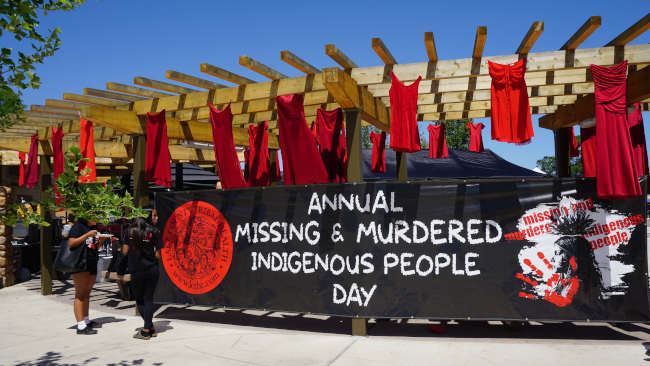
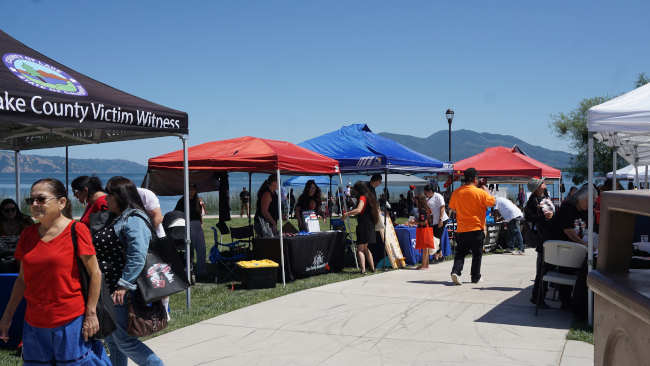
5.4: Adopt proclamation designating May 2025 as Lake County Month of Awareness for Missing and Murdered Indigenous Women and People.
5.5: Adopt proclamation designating May 1 to 7, 2025, as Elks National Youth Week in Lake County.
5.6: Adopt proclamation designating May 2025 as Community Action Month.
5.7: Adopt proclamation designating May 2025 as Wildfire Community Preparedness Month in Lake County.
5.8: Adopt a proclamation designating May 2025 as Mental Health Matters Month.
5.9: Adopt resolution authorizing Amendment No. 2 to the standard agreement between the county of Lake and the Behavioral Health Services Oversight and Accountability Commission (BHSOAC) for the period ending December 31, 2026 and authorizing the Behavioral Health Director to sign the amendment.
5.10: Approve Board of Supervisors meeting minutes February 25, 2025, April 1, 2025, and April 8, 2025.
5.11: Approve first amendment of agreement between the county of Lake and 360 Junk Removal & Hauling annual compensation by $50,000; for a total compensation not to exceed $150,000 for abatement services and authorize the chair to sign.
5.12: (a) Rescind resolution 2024-19 approving an application for funding and the execution of a grant agreement and any amendments thereto form the 2023-2024 funding year of the State CDBG Mitigation (CDBG-MIT) Resilient Planning and Public Services (MIT-PPS) Program and (b) adopt resolution approving and application for funding and the execution of a grant agreement and any amendments thereto from the 2023-2024 funding year of the State CDBG Mitigation (CDBG-MIT) Resilient Planning and Public Services (MIT-PPS) Program.
5.13: Adopt proclamation designating the week of May 4-10, 2025 as Correctional Officers Week in Lake County.
5.14: Adopt proclamation designating May 2025 as CalFresh Awareness Month.
TIMED ITEMS6.1, 9:02 a.m.: Public input.
6.2, 9:03 a.m.: Pet of the week.
6.3, 9:04 a.m.: New and noteworthy at the library.
6.4, 9:05 a.m.: (a) Presentation of proclamation designating May 2025 as Lake County Month of Awareness for Missing and Murdered Indigenous Women and People; and (b) authorize Public Services to hang the flag at the courthouse for the month of May 2025.
6.5, 9:10 a.m.: Presentation of proclamation designating May 1-7, 2025, as Elks National Youth Week in Lake County.
6.6, 9:15 a.m.: Presentation of proclamation designating May 2025 as Community Action Month.
6.7, 9:20 a.m.: (a) Presentation of proclamation designating May 2025 as Wildfire Community Preparedness Month in Lake County.
6.8, 9:25 a.m.: Presentation of proclamation designating May 2025 as Mental Health Matters Month.
6.9, 9:30 a.m.: Presentation of proclamation designating the week of May 4 to 10, 2025 as Correctional Officers Week in Lake County.
6.10, 9:35 a.m.: Presentation of proclamation designating May 2025 as CalFresh Awareness Month.
6.11, 10:30 a.m.: Consideration of proposed findings of fact and decision in the appeal of NinaStar LLC (AB 24-05).
6.12, 11:30 a.m.: Public hearing, consideration of a resolution amending the master fee schedule for departmental services rendered by the county.
NONTIMED ITEMS7.1: Supervisors’ weekly calendar, travel and reports.
7.2: Consideration of use of staff time in excess of 8 hours to research the feasibility of a dedicated special tax for county roads.
7.3: Consideration of a letter of opposition to proposed defunding of Head Start programs.
7.4: Consideration of a letter to Governor Newsom supporting extension of the BioMAT Program.
7.5: Consideration of three letters of support for federal forest health and wildfire and disaster resiliency legislation, in furtherance of established Board of Supervisors federal legislative priorities (a) the Disaster Resiliency and Coverage Act (H.R. 1105, Thompson); (b) the Facilitating Increased Resilience, Environmental Weatherization, and Lowered Liability (FIREWALL) Act (S. 1323, Schiff and Sheehy); and (c) the Fix Our Forests Act (FOFA, H.R. 471; S. 1462).
7.6: Consideration of four coalition letters related to fire insurance in consistency with Board-adopted 2025 state legislative priorities.
7.7: Consideration of the agreement between county of Lake and Community Behavioral Health for substance use disorder medication assisted treatment services for FY 2025-26 in the amount of $1,000,000.
7.8: Consideration of amendment No. 4 to the agreement between county of Lake and Lake County Office of Education for the Mental Health Student Services Act Grant Program based specialty mental health services for fiscal year 2021-26 in the amount of $2,112,250.
7.9: Consideration of amendment No.1 to the agreement between county of Lake and Parkview Healthcare Center for adult residential and skilled nursing support services and specialty mental health services for fiscal year 2024-25 in the amount of $340,000.
7.10: Consideration of amendment No.1 to the agreement between county of Lake and Hilltop Recovery Services for ASAM Level 1.0, 2.0, 3.1 & 3.5 services for FY 2024-25 in the amount of $1,963,200.
7.11: Consideration of administrative encroachment permit #25-06 - temporary closure of a portion of Clear Lake near Buckingham Homes Association office from May 16 to 18, 2025 for the Buckingham Test and Tune Boat and Car Show.
CLOSED SESSION8.1: Conference with legal counsel: significant exposure to litigation pursuant to Gov. Code section 54956.9(d)(2), (e)(1) – one potential case
8.2: Conference with labor negotiator: (a) Chief negotiator: C. Torrez; county negotiators: S. Parker, S. Carter, C. Moreno, P. Samac and D. Rico; and (b) employee organizations: LCDDAA, LCDSA, LCCOA, LCEA, LCSEA and LCSMA
8.3: Public employee evaluation: Air Pollution Control Director Doug Gearhart.
8.4: Public employee evaluation: Community Development Director Mireya Turner.
Email staff reporter Lingzi Chen at This email address is being protected from spambots. You need JavaScript enabled to view it..
 How to resolve AdBlock issue?