How to resolve AdBlock issue?
Estate Planning: Unduly burdening the surviving spouse
Some married people seem to believe that their estate planning is sufficient if all assets go to the surviving spouse at death and let the surviving spouse take care of subsequent estate planning if they so choose.
People taking this approach often title (own) their real property and bank accounts in the form of jointly tenancy with right of survivorship; they designate each other as their sole death beneficiary on retirement accounts, life insurance, annuities etc.; and they name each other as the sole beneficiary in their wills.
Is the foregoing approach sufficient?
In the long run, not considering what happens after the death of the first spouse is often nearsighted. The surviving spouse may be overwhelmed.
Let us examine some important reasons why spouses need to plan together to protect both the surviving spouse during incapacity and the family at the death of the surviving spouse.
Who will take care of the surviving spouse if he or she is incapacitated?
If the surviving spouse is already incapacitated when the deceased spouse dies, or later becomes incapacitated, and does not already have the necessary legal powers of attorney in place regarding financial, property, personal and health care decisions then a court appointed conservatorship of the person and/or estate may become necessary.
Such conservatorships may be avoided had the incapacitated spouse authorized agents to act on his or her behalf.
Durable powers of attorney for finances, property and personal care and advance health care directives for health care decisions enable authorized persons – often the children or other relatives – to take charge of important affairs without going to court. This saves time, money and trouble for all concerned.
Next, what about the transfer of assets at the surviving spouse’s death? While California law does not require a probate to transfers assets from a deceased to a surviving spouse only, the same is not true regarding transfers from the surviving spouse’s own estate to the children or to anyone else, other than a subsequent spouse.
Most people want their loved ones to inherit with the least amount of aggravation and cost and so choose to transfer their assets into a living trust that will transfer assets to their intended death beneficiaries either outright or in an ongoing trust, as desired.
Some married couples simply take it for granted that after the first spouse dies the surviving spouse will be willing and able to actually take care of all necessary estate planning.
Based on this wishful assumption, some married people will not deal with long range estate planning.
There are numerous potential flaws with such wishful thinking. It is not uncommon for the surviving spouse to procrastinate and for events to overtake him or her.
The surviving spouses may either already be incapacitated when the first spouse dies or later become incapacitated, and thus unable to execute estate planning documents.
The surviving spouse might be more vulnerable to undue influence coercion, unduly pressure or menace – either from family or friends. That is, the surviving spouse under such influence may sign documents that really express the self-serving wishes of other people.
As a general rule, therefore, it is good for married people (in a stable marriage) to motivate each other to take care of long term estate planning that looks beyond the death of the first spouse.
Expecting the surviving spouse to get his or her affairs in order, only after the death of his or her spouse, could amount to Russian roulette with the personal well being of the surviving spouse.
It may also jeopardize the desired and most efficient distribution of the estate to the couple’s loved ones when the surviving spouse dies.
Dennis A. Fordham, attorney (LL.M. tax studies), is a State Bar Certified Specialist in Estate Planning, Probate and Trust Law. His office is at 55 First St., Lakeport, California. Dennis can be reached by e-mail at
Space News: Strange but true – Curiosity’s Sky Crane
On Sunday, Aug. 5, at 10:31 p.m. Pacific Time, NASA will gently deposit its new, 2000-pound Curiosity rover on the surface of Mars, wheels-first and ready to roll.
Quite a feat – because it will come screaming through the Martian atmosphere at 13,000 miles per hour.
Curiosity, aka the Mars Science Laboratory, will be the largest mission ever to land on another planet. It’s big because it has a big mystery to solve: was Mars ever or is it still capable of harboring life?
During its grand entrance, the lander must slow to 1 ½ mph to touch down safely. That kind of braking action for a one-ton payload demands the nail-bitingly precise unfolding of an intricately choreographed sequence of events.
Key players: a red-hot heat shield, a huge parachute, 76 explosive bolts – and a Sky Crane.
“The whole ballgame transpires within seven minutes, from atmospheric entry to touch-down,” said Jet Propulsion Laboratory’s Steve Sell, deputy operations lead for entry, descent and landing. “The onboard computer calls the shots. And if any one maneuver fails, it’s game over.”
Here’s the game plan.
“Atmospheric friction slows the capsule containing Sky Crane – an eight-rocket jetpack attached to the rover – from 13,000 to 1,000 miles per hour. [Mars’ atmosphere is too thin to slow it more.] The friction burnishes the capsule’s heat shield to a glowing 3800 degrees Fahrenheit (2100 degrees Celsius). Then a 60-foot diameter parachute deploys and inflates above the capsule on 160-foot lines. What’s left of the heat shield jettisons, giving Curiosity its first look at its new home below,” Sell said.
This is the largest, strongest parachute ever flown to another world. It has to be a super-chute to handle the 65000 pounds of force produced when the rover snaps to attention below it.
“After the payload slows to about 200 mph, explosive bolts free the chute and Sky Crane free-falls for a second,” Sell said. “Then its retrorockets fire.”
The rockets slow the descent to 1 ½ mph and power a sideways parry to avoid the faster falling chute.

As Sky Crane descends to 60 feet above Mars’ surface, the rover inches down from underneath it on three nylon ropes like a spider spinning strands of its web.
With Curiosity dangling 20 feet below, Sky Crane continues its downward progress until the rover is resting on the surface.
Explosive bolts cut Curiosity’s last physical attachments to the outside world, and Sky Crane flies away to death-plunge into the red sands, its incredible job done.
It might sound frighteningly complicated, “but what appears to be a complex system actually simplifies the landing greatly,” explains Sell.
Previous missions such as Vikings I and II and the Mars Phoenix Lander used retrorockets to lower spacecraft all the way to the surface atop a legged lander. Others have used airbags. Neither method is feasible for Curiosity.
“With a payload this size, the rockets could kick up enough dust to compromise the rover and its instruments,” explained Sell. “And the rockets could excavate craters Curiosity would have to avoid as it drives away. Add to that the risk of a big, heavy vehicle driving down off the lander via an exit ramp to reach the surface.”
Pathfinder, Spirit and Opportunity used airbags to eliminate these concerns. But Curiosity is too large for airbags.
“Bags big enough to soften its landing would be too heavy or too costly to launch,” Sell said. “Besides, you’d have to drop the payload so slowly for the bags to survive the load, you may as well place the rover right on its wheels.”
Sky Crane, said Sell, makes sense for Curiosity. But it still keeps him up at night.
“I leave myself voice mails in the middle of the night about things to check in the morning,” he said. “We’ve run thousands of tests and simulations, thinking of ways to ‘break’ the system so we can build in comfortable performance margins. We’re still testing. There’s always one more test we can run. We’re always afraid we missed something.”
In the control room at JPL the night of Sunday, Aug. 5, it will be too late. It takes 14 minutes for signals to travel from Mars to Earth. When the team receives the signal “I am entering the atmosphere,” Curiosity will be alive or dead on the surface.
Said Sell: “I’m already holding my breath.”
Dauna Coulter writes for the National Aeronautics and Space Administration.

STATE: California's first West Nile Virus fatality of the year reported in Kern County
An 88-year-old woman from Kern County is the first reported fatality from West Nile Virus this year, state health officials reported Friday.
“This unfortunate death reminds us that we must protect ourselves from mosquito bites to prevent West Nile Virus and other mosquito born infections,” said Dr. Ron Chapman, director of the California Department of Public Health.
An increase in West Nile Virus activity has occurred this year compared to last year, Chapman added.
To date in 2012, 100 human cases of West Nile Virus from five California counties have been reported. Last year at this time there were seven human cases and no deaths. During all of 2011, 159 human cases and nine fatalities were reported.
Health officials said increased activity also is being seen in other parts of the United States.
Nationwide, 241 human cases were reported to the Centers for Disease Control and Prevention as of August 1, 2012. This is the highest number of cases reported through the end of July since 2004.
While California overall is seeing an increase in virus activity, no West Nile Virus cases of any kind have been reported in Lake County this year, according to state data.
West Nile Virus is transmitted to humans and animals through a mosquito bite. Mosquitoes become infected when they feed on infected birds.
The risk of serious illness to most people is low. However, some individuals – less than 1 percent of those infected – will develop serious neurologic illness such as encephalitis or meningitis.
Individuals 50 years of age and older have a higher chance of getting sick and are more likely to develop serious symptoms. Studies also show that those people with diabetes and/or hypertension are at greater risk for serious illness.
Chapman said California residents are very good at protecting themselves from mosquito bites for planned events like camping, however, he said they tend to have a false sense of security in their own backyards.
Health officials said the most effective way for individuals to prevent exposure to mosquito bites and West Nile virus is to remember the “Three D’s”:
– DEFEND: Use an EPA-registered insect repellent with DEET, picaridin, oil of lemon eucalyptus, or IR3535 according to label instructions. Repellents keep the mosquitoes from biting you. DEET can be used safely on infants and children 2 months of age and older.
– DAWN AND DUSK: Mosquitoes that carry West Nile Virus bite in the early morning and evening. It is important to use repellent and wear clothing that reduces the risk of skin exposure to mosquito bites during this time. Make sure your doors and windows have tight-fitting screens to keep out mosquitoes. Repair or replace screens with tears or holes.
– DRAIN: Mosquitoes lay their eggs on standing water. Eliminate all sources of standing water on your property, including buckets, old car tires, and pet bowls. If you have a pond, use mosquito fish (available from your local mosquito and vector control agency) or commercially available products to eliminate mosquito larvae.
California’s West Nile Virus Web site, http://westnile.ca.gov/ , includes the latest information on West Nile Virus activity in the state.
Californians are encouraged to report all dead birds and dead tree squirrels on the Web site or by calling toll-free 1-877-WNV-BIRD (968-2473).
Land Trust considers fire damage to Rodman Preserve; walks will be closed until Aug. 18
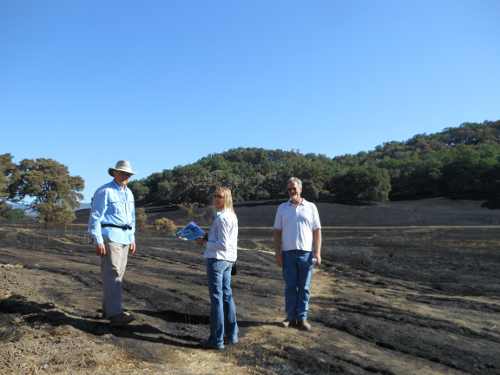
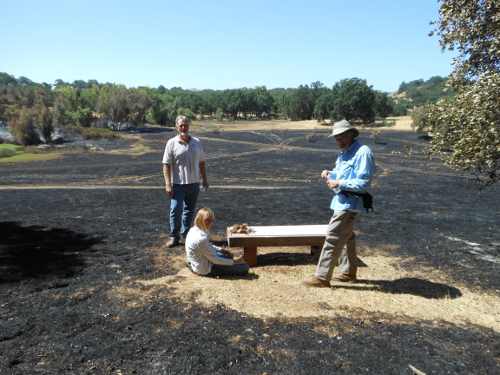
LAKE COUNTY, Calif. – In the wake of a 70-acre fire last Saturday, the Lake County Land Trust said it is postponing some of the events hosted at its Rodman Preserve near the Rodman Slough.
After assessing the fire impact at the preserve, which is located on Westlake Road off of the Nice-Lucerne Cut-off, the Land Trust board felt that some time was needed for trails to be re-aligned, the smell to abate and for the dust to settle.
As a result, the group said that the weekly Saturday morning walks will be closed until Aug. 18. The walks will resume on that day at 8 a.m. which is the usual start time.
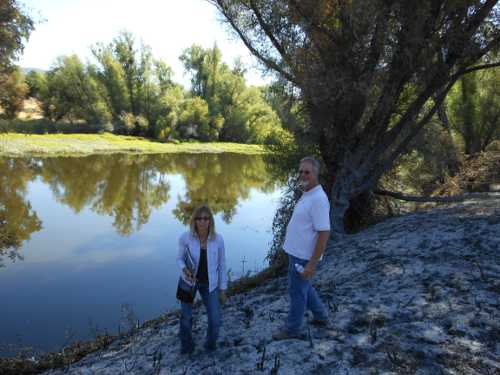
Although perhaps up to 40 acres of the preserve property was burned, the Land Trust is happy to report that permanent damage was minimal. The Nature Education Center house was undamaged and all trail-side benches remain intact.
While many mature oaks were scorched, it is highly likely that they will survive although it is not possible to tell until they re-leaf next spring.
A popular interpretive feature at the preserve, a large, dead, Acorn Woodpecker “cache tree,” also survived as did a beautiful large stand of Valley Oak near the water’s edge where numerous Wood Duck boxes are placed.
From an ecological perspective, the fire may have some beneficial outcomes next spring, since it cleared out accumulated annual grass thatch and has accelerated the return of nutrients to the soil.
“We thank all of the agencies that worked on the fire to protect the Preserve and the house,” said Land Trust Executive Director Catherine Koehler. “We greatly appreciate their sensitivity to the landscape and their efforts to keep the fire away from the buildings.”
The trust was sorry to learn of the damage done to 10 acres of vineyard on neighboring property that at one time was part of the original Rodman Ranch which was purchased by the Land Trust and the Department of Fish and Game in 1999.
The Land Trust Rodman Preserve Committee will be considering the opportunities created by the fire, especially the opportunity to better control the invasive non-native weeds and grasses.
Plans including encouraging the growth of current native species on the property and possibly re-seeding some areas with native grass seed collected on-site this year.
For more information about the Lake County Land Trust, go to www.lakecountylandtrust.org or like their page on Facebook. Community members can contact the group at