 How to resolve AdBlock issue?
MATH to host Dodd, discuss Dollar General plans April 10
MIDDLETOWN, Calif. – The Middletown Area Town Hall will host Lake County's new state Assembly representative when it meets on Friday, and also will hold a discussion and vote on a small box retailer's application to put a store in the town.
MATH will meet in the activity room at the Middletown Community Center, 21256 Washington St., beginning at 7 p.m. Friday, April 10.
Meetings are open to the community.
The main order of business is a meet and greet for District 4 Assemblyman Bill Dodd.
Dodd, who took office in December, is a former Napa County supervisor. Among his efforts so far on behalf of Lake County is a bill seeking $2.4 million for restoration efforts on Clear Lake and legislation that would create a low-income water rate assistance program to benefit communities like Lucerne.
He also has asked the state to stop the proposed closure of the Westamerica Bank branch in Upper Lake.
Other items on the agenda include a discussion regarding sending a letter to the Board of Supervisors seeking support for a multiuse trail from Twin Pine Casino to Central Park.
Up for a vote is Dollar General's major use permit application for a store at 20900 S. State Highway 29 in Middletown.
The Tennessee-based small box retailer so far has opened a store in Nice, will open a second store in Clearlake Oaks on Saturday and is exploring other locations around Lake County as well.
There also will be the opportunity for public input, approval of the March 12 meeting minutes, an update on MATH's May 16 chili cookoff, and consideration of the May 14 agenda, with proposed items including new business development, a dog park and EcoArts at Middletown Trailside Park.
The MATH board of directors includes Chairman Fletcher Thornton, Vice Chair Claude Brown, Secretary Ken Gonzales, and members Charlotte Kubiak and Mike Tabacchi.
MATH – established by resolution of the Lake County Board of Supervisors on Dec. 12, 2006 – is a municipal advisory council serving the residents of Anderson Springs, Cobb, Coyote Valley (including Hidden Valley Lake), Long Valley and Middletown.
Meetings are subject to videotaping.
For more information email
Email Elizabeth Larson at [email protected] . Follow her on Twitter, @ERLarson, or Lake County News, @LakeCoNews.
- Details
- Written by: Elizabeth Larson
Poet laureate series concludes with invitation to collaboration
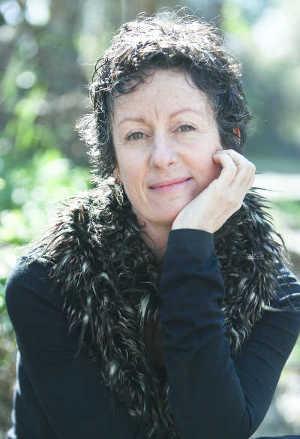
LAKEPORT, Calif. – The eighth and current Lake County poet laureate, Casey Carney, will be the featured reader at the last event of the Lake County Poet Laureate Reading Series, which takes place this Friday, April 10, at 6 p.m. at the House of Living Rhythm community center in Lakeport.
Hosted by local mindfulness teacher JoAnn Saccato, the event, which Carney is calling “An Invitation to Future Collaboration,” will feature guest poets Sam Flot, Aimé Graves and Sandra Stillwell, and guest musicians Kay Ashley, Clare Hedin, Jim Leonardis, and Jason K. Norris.
Presented by Andrea Williams and Casey Carney, the series, which began last September, has celebrated the lineage of poetry in Lake County by presenting a monthly reading of each of Lake County’s eight poets laureate. Each reading also showcased a guest poet and a guest musician.
“Poet laureate” is an official title given to a person who has achieved a level of quality in their work.
The general responsibility of a poet laureate is to promote poetry in a given jurisdiction. These appointments occur from local to national levels.
In Lake County, the tradition began in 1998, when the Board of Supervisors chose Jim Lyle as Lake County’s first poet laureate.
Lyle’s confirmation was to be a lifelong position, but he had the foresight to change the term to two years.
This effectively created a lineage of poets laureate, who have been active in the writing, teaching, and publishing of poetry and prose in Lake County.
“The first time I heard our Lake County poets laureate read was one year ago, when I was applying for the position,” said Carney. “I was so inspired by the depth and excellence of their poetry. I was both thrilled and intimidated to be invited to take on the role. Through this series, I have had the opportunity to celebrate these poets, and to deepen my connection to the art form.”
The first seven readings took place at Andrea Williams' coffee house, Common Grounds, in the Kelseyville Riviera. They were consistently attended by a capacity crowd of poetry enthusiasts.
Every month of the series, Carney wrote an in-depth feature article on each of the poets laureate, which ran in the local press.
Carney’s reading will take place at the House of Living Rhythm to accommodate a larger event, which includes her reading, the guest performers, and a community forum and mixer.
The forum will promote connection within the literary community and between writers and visual/performing artists.
“We’ve gathered a devoted group of poets and poetry lovers,”said Carney. “The first-year mark of my two-year term is the perfect time to invite the community to collaborate in creating more opportunities for poetry in Lake County.”
A poet, dancer, choreographer, and photographer, Carney considers herself a lifelong artist, whose devotion to a creative life reflects a commitment to healing, expression and connection.
“For as long as I can remember, I have experienced creativity as a force that I could trust as authentic, and therefore, essential,” said Carney.
Carney’s formal training in the arts consists of the study of dance and choreography undertaken in her late 20s. Since she started dance at what was considered a late age, her lack of technique both challenged and informed her development as a choreographer.
“Although I struggled with technique, my own movement vocabulary was quite accessible to me,” she said. “It was imperative for me first to express my own voice in movement, and then to expand it through technique.”
Carney became known as a highly inventive choreographer and compelling performer. She received her master’s degree in dance from California State University, Long Beach.
She went on to create and bring to production more than 20 dances and was selected to represent the university at the Jacob’s Pillow Dance Festival, where she studied choreography with Bessie Schonberg.
Carney followed a similar path with poetry. She has written poetry and prose since she was an adolescent, undaunted by a lack of formal study.
“The fact that a formal study of art is not always accessible or encouraged does not preclude a person from participating in any art form,” Carney said. “One’s voice can be expanded through technique, but the value of one’s voice should not be measured by one’s technique.”
As a former special education teacher, Carney utilized art, storytelling and movement, as well as traditional modes of instruction, to help her students meet their educational goals.
However, she left the field after realizing that the educational system so emphasized the product over the process of learning, that it was often an impediment to creating a healthy learning environment.
Carney is currently able to channel her desire to support local youth as a mentor and workshop teacher.
She has volunteered with a group of youth mentors in Clearlake, and, along with poet laureate emeritus Elaine Watt, she is currently teaching a spoken word poetry workshop for teen girls in Lower Lake.
“I enjoy inspiring others to take part in creativity,” said Carney. “Often, people tell me that they used to dance, or that they used to write, and they seem wistful, as if they know they have put an important part of themselves to the side. Because I believe creativity has intrinsic value and is not extraneous to life, I encourage them to make time for their creative yearnings. Our lives become richer and fuller when we do.”
She added, “There is a great momentum in the Lake County arts community that is the result of the effort of dedicated artists, past and present. I enjoy fostering poetry as an essential part of our community.”
Elaine Watt was the seventh in the series of poets laureate to serve Lake County, Calif.
- Details
- Written by: Elaine Watt
Lakeport City Council denies Vector Control request for general plan amendment, zone change
LAKEPORT, Calif. – Following several hearings that began in the fall, Lake County Vector Control District's application to the city of Lakeport for a general plan amendment and zone change as part of its planning efforts to upgrade its current facilities got the final word from the Lakeport City Council on Tuesday night.
And the answer: A unanimous “no,” with council members all voicing their concerns about impacts on the Esplanade Street neighborhood where the district has had lakeside operations for 60 years.
Beginning last spring Vector Control began working with the city on seeking zoning changes from residential and resort residential to public civic use for parcels at 408 and 410 Esplanade St., which it has owned for decades, and 35 C St., which the district purchased at auction in December 2011.
The district said the zoning and general plan changes made up the first step in its plans for a future expansion, including removing an existing laboratory building and replacing it with a new one at 410 Esplanade, expanding and reconfiguring the existing shop and garage structure onto the 35 C. St. property, and replacing the steel garage and shop building located at 408 Esplanade with an enclosed garage for parking district vehicles.
The Lakeport Planning Commission voted 3-1 on Jan. 14 to recommend to the city council the approval of a proposed mitigated negative declaration for the general plan amendment and rezone.
Commissioners, however, had voiced concerns that the recommendation not be construed as automatic approval for any future projects.
Throughout the process, concerned neighbors have been present at the meetings and hearings. They've written letters and presented reports and other documentation about their concerns about Vector Control's planned expansion plans, which they said wasn't appropriate in a residential area.
In addition to concerns about chemicals – which District Manager Dr. Jamie Scott insisted aren't stored at the Esplanade locations, but instead at the district's Todd Road property – neighbors have raised issues with parking and traffic.
There also was the matter of Vector Control's failure to follow through on requirements related to its construction more than a decade ago of its new administration building. At that time, the district was required to tear down its old laboratory building.
Scott, who joined the district after that project, said the district had run out of money to complete the work. Now, however, thanks to a special assessment voters approved in 2009, the district has funds to pursue its capital improvement plan, which will include removing that building.
At the start of Tuesday's council hearing, Community Development Director Kevin Ingram – who joined the city at the end of December, after the hearings on the Vector Control proposals had begun – updated the council on the progress so far before Mayor Martin Scheel opened the public hearing.
Vector Control neighbors Ron and Barbara Bertsch raised new issues, including their belief that a previous rezoning for Vector Control in 2003 had not been properly noticed according to state law.
The couple also stated their belief that the noticing this time around also hadn't been adequate, referring to neighbors they said they contacted who didn't know about the hearing.
They questioned why Vector Control needed so many new facilities when it only had nine employees, and said they believed the district's activities have led to soil contamination in their neighborhood.
Neighbors Verna Schaffer and Val McMurdie also questioned Vector Control's future plans in their neighborhood, asking if an expanded industrial use was appropriate there.
Supervisor Anthony Farrington, whose district includes Lakeport, also spoke to the council, explaining that several of Vector Control's neighbors had reached out to him over their concerns.
Farrington discussed the concerns about defective noticing of previous zoning actions and the “spot zoning” issue that the council had inherited due to poor planning in decades past. He questioned if Vector Control's uses were the best for the property, and touched on what he said were legitimate concerns about traffic, ingress and egress.
Taking her turn to address neighbors' concerns, Scott told the council that she couldn't address the 2003 zoning changes or the other longstanding errors. However, she noted that the project would address the neighbors' concerns, but that nothing would change unless the council adopted the zoning and general plan changes.
She said Vector Control's Esplanade location is a “transitional” site, and at the hub of a mixed use area that has retail, residential and resort residential uses.
During the council's consideration, Councilman Marc Spillman said he visited the neighborhood and spoke to residents, a number of whom were concerned about the proposal.
Councilwoman Stacey Mattina said that Vector Control has been at the site a long time, and there's nothing to say they can't stay there. But she said to change the zoning in the residential neighborhood doesn't make sense.
Mattina said the lakefront neighborhood should be protected, adding it was unfortunate that the recommendation made it through the planning commission and upset the neighborhood.
Councilman Kenny Parlet said he originally had wondered what the big deal was about the proposal. The more he asked around, the more he realized it was a big deal.
“It's really almost impossible for me to support something like this under the circumstances,” he said.
Councilwoman Mireya Turner said there was no argument that Vector Control provides a valuable service.
On a conceptual level, Turner said she found it compelling that state law requires consistency between general plan – which she called the voice of the people – and the zoning ordinance, the mechanism for carrying out the plan.
She said she found it problematic that the zoning ordinance previously had been changed regarding Vector Control, but not the general plan. “This is not straightforward.”
She added, “It's not clear for me. I don't know that the voice of the community is saying, we need to change this today.”
Scheel, like Turner, acknowledged the importance of Vector Control's service to the community, but noted that the agency's expansion over the years “didn't happen fluidly.” He suggested that, in some sense, the citizens of Lakeport were damaged in the process.
“I am not convicted that rectifying that situation at its current property is the best solution,” he said.
Scheel said he didn't believe the public and civic use zoning was the best use of the property at this time.
He said he didn't believe Vector Control's new proposal would fix how the ball was dropped in the past, and suggested that it may, in fact, do more damage. As such, he didn't believe the changes to the general plan and zoning ordinance were in the community's best interest.
Mattina moved to deny the general plan amendment and zoning change, with Spillman seconding and the council voting 5-0, an action which received applause from Vector Control's neighbors in the audience.
Also on Tuesday, the council got an update on a possible solar project, held a hearing on submitting an application to the US Department of Rural Development for financing for new Lakeport Police Department headquarters building at 2025 S. Main St., and introduced an ordinance amending the prezoning map in the South Main Street and Soda Bay Road area of the Lakeport Sphere of Influence, with a public hearing on that map amendment set for the council's April 21 meeting.
Email Elizabeth Larson at
- Details
- Written by: Elizabeth Larson
Clearlake City Council to consider commercial organics recycling requirements, land donation
CLEARLAKE, Calif. – The Clearlake City Council this week is set to hold discussions on a proposed exemption on commercial organic recycling rules and the offer of a land donation.
The council will meet for a 5 p.m. closed session to discuss litigation filed against the city by Jeri Spittler, the city's former mayor, her husband Anthony Spittler and Robin Farnham over the city's recently passed ordinance banning marijuana cultivation, and the appointment of a new city manager before convening in public session beginning at 6 p.m. Thursday, April 9, in the council chambers at Clearlake City Hall, 14050 Olympic Drive.
At the beginning of the meeting, Lake County Sheriff Brian Martin will make a presentation to the council, as will the members of Citizens for a Cleaner Clearlake.
The council also will present a proclamation designating April 2 as Autism Awareness Day.
Under council business, council members will consider a resolution affirming an exemption from the state's new requirements for mandatory commercial organics recycling.
City Manager Joan Phillipe's report to the council explains that last year a bill was signed into law that requires businesses that generate a specific amount of organic waste per week to arrange for recycling services for that waste.
The law also requires jurisdictions to implement an organics recycling program for such businesses by Jan. 2, 2016, along with carrying out education, outreach and monitoring activities, with annual reports due to CalRecycle, she said.
Phillipe explained that the new requirements would be “much the same” as the mandatory commercial recycling program now in place, with some additional components for the city to include “that would be a significant challenge and of little or no value to the city.”
The city already has programs in place to eliminate green waste disposal at the landfill, Phillipe reported, and there are few commercial properties in the city large enough to generate the amount of greenwaste requiring onsite collection, meaning establishing such a collection program would have costs that would be “unfeasibly high.”
There is a provision in the law that allows for an exemption from the requirements for the smallest of counties – with population of less than 70,000 – until Jan. 1, 2020. To pursue that exemption, Phillipe said the council would need to approve the proposed resolution.
In other business, the council also will consider accepting parcels located at 16036 14th Ave. and 16046 14th Ave. from property owner Luana Zellner.
Phillipe's report to the council explains that Zellner contacted the city in November 2014 to indicate she would like to donate the two lots.
In her letter to the city, Zellner – a resident of Austin, Texas – said the total assessed value on the lots is $1,806, with no liability, liens or taxes owed.
“I live in Texas and have no interest in keeping this property,” Zellner said in her letter.
Following an onsite review of the properties, Phillipe said staff is recommending that the council not accept the properties, which are located in an undeveloped area in the Avenues on the east side of Highway 53.
Phillipe said there is no road to the parcels from either Boyles or Irving avenues, and the entire area is overgrown with brush.
“The properties are not conducive to future park space without acquiring surrounding parcels and creating needed access and there is no other foreseeable use of the lots by the city,” she wrote.
On the meeting's consent agenda – items considered noncontroversial and usually accepted as a slate on one vote – are warrant registers and a resolution authorizing the addition of supplemental activities to the 2014 Community Development Grant.
Email Elizabeth Larson at
- Details
- Written by: Elizabeth Larson