
 How to resolve AdBlock issue?
 Legislation designating Berryessa Snow Mountain a national conservation area introduced in House, Senate
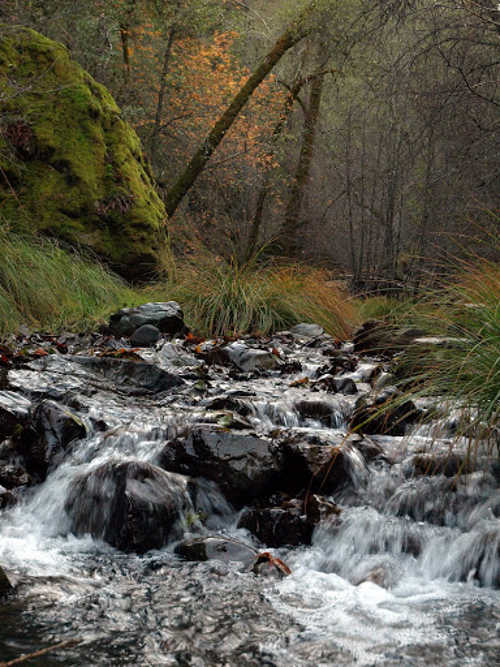
The effort to designate the Berryessa Snow Mountain a national conservation area took another step forward on Thursday.
Representatives Mike Thompson (CA-5), John Garamendi (CA-3), Jared Huffman (CA-2), Anna Eshoo (CA-18) and Ami Bera (CA-7) on Thursday introduced H.R. 1025, the Berryessa Snow Mountain National Conservation Area Act of 2013.
U.S. Senator Barbara (D-CA) introduced S.483 the companion bill in the Senate.
The legislation would designate the 350,000 acre Berryessa Snow Mountain region as a National Conservation Area (NCA).
Under this designation, all currently owned federal lands within the NCA boundary would be united under one management plan, allowing the region to be managed according to the site-specific needs.
The region also would be permanently protected under a NCA designation, ensuring continued recreational opportunities while safeguarding the region’s natural beauty, wildlife, rare plants, and waters – which include important sources of drinking water and irrigation for nearby communities.
The NCA designation only applies to lands managed by the federal government. Current access to and uses of private land will not be affected by this proposal. As the legislation states, “this Act should apply only to federal land and interests in federal land, and should not apply to private property or other non-federal land.”
In addition, the legislation further protects private property rights by clearly stating that nothing in the legislation requires a private property owner to allow public access to their property.
“The Berryessa Snow Mountain Region is a national treasure. We have a responsibility to preserve it and make sure the region is managed efficiently and responsibly,” said Thompson. “Designating the region as a National Conservation Area will preserve the land, help our local economies, and put all federal lands under one management plan. The bill does not impact private land in anyway. It will only protect and enhance the public lands for those who live in and visit the Berryessa Snow Mountain Region.”
“With its magnificent vistas and diverse wildlife, the Berryessa Snow Mountain region is one of California’s greatest natural treasures,” Sen. Boxer said. “This bill will expand opportunities for outdoor recreation and help preserve this spectacular area for current and future generations.”
“The Berryessa Snow Mountain National Conservation Act is a way to reap the benefits of our modern world while also protecting and promoting the beauty, serenity, and healthy activity that the natural world offers,” said Garamendi. “By conserving this natural setting, we are maintaining a prized commodity that will bring tourists, boost economic activity, and support local jobs. This bill will fully respect property rights and is a win-win for residents of our region and our entire country.”
“Designating the Lake Berryessa Snow Mountain region as a National Conservation Area is responsible stewardship of one of northern California’s most treasured natural resources. The bill ensures the region’s continued use as a recreation area and a safe haven for rare wildlife,” said Eshoo.
“Berryessa Snow Mountain is one of California’s natural wonders and I am proud to cosponsor legislation that will turn this beautiful region into a National Conservation Area,” said Bera. “As a lifelong Californian, I have spent countless hours enjoying our state’s natural beauty by camping, hiking, and fishing, and I am fully committed to protecting our natural treasures. This new National Conservation Area will both help Northern California’s economy, and allow us to protect and manage these lands for those who visit the region today and in the future.”
Establishment of a NCA will improve coordination between federal agencies; protect essential migratory corridors for wildlife adapting their ranges to a changing climate; keep water clean; and provide additional federal funding opportunities for conservation protection, invasive plant eradication, recreation management, and a coordinated multi-agency fire management plan.
The bill reflects the changes promised by Thompson to constituents at Lake Berryessa Town Hall Meeting last year. These changes include adding additional language to ensure that NCA designation has no impact on the use of private property, and maintains access to private inholdings and adding additional language to ensure that the legislation will not impact motorized recreation on Lake Berryessa.
The new legislation also modifies grazing language to ensure that all existing grazing will continue unchanged. The bill does not prohibit other grazing in additional areas as long as it is accordance with all laws and regulations. And the bill allows for the expanded use of grazing as a management tool.
The Berryessa Snow Mountain region stretches more than 100 miles from the lowlands of Putah Creek below Lake Berryessa, across remote stretches of Cache Creek, and up to the peak of Snow Mountain. It encompasses more than 350,000 acres across Napa, Mendocino, Lake, Solano and Yolo Counties. The area is rich in biodiversity, including bald and golden eagles, black bears, mountain lions, tule elk, and rare plants found nowhere else on Earth.
“We’re pleased that Congressman Thompson has recognized the natural wonders and recreational opportunities offered by the Berryessa Snow Mountain region – and the strong desire by community members to protect this scenic treasure so that it can be enjoyed by future generations,” said Sara Husby-Good, executive director of Tuleyome. “His National Conservation Area proposal is a win-win for everyone.”
Outdoor recreation and protected lands help the local economy. Recent studies by Headwaters Economics, a non-partisan, independent, nonprofit research group, have found that jobs and real personal income rose in local communities after nearby areas were permanently protected. That same potential is offered by the Berryessa Snow Mountain region.
Napa County Supervisor, Keith Caldwell agrees that the proposed Conservation Area will be good for business. He stated, “Legislation to protect the Berryessa Snow Mountain region as a National Conservation Area is definitely something to get excited about. As someone who hikes, paddles and rides my motorcycle in the area, I have a vested interest in insuring this land remains public open space.”
Supervisor Caldwell continues, “Protecting our public lands is also an economic investment. Lake Berryessa is a wonderful place for people to swim, boat, fish, and more, but there are also a lot of local businesses that depend on the traffic that the Lake attracts. NCA status will not only help protect the existing recreational uses, it will attract eco-tourism, create jobs and support local businesses.”
“Protecting special places increases recreation opportunities, encourages tourism, and supports local businesses,” said Yolo County Board of Supervisor Don Saylor. “That’s why I was pleased to see that Representative Mike Thompson re-introduced legislation to protect the Berryessa Snow Mountain region as a National Conservation Area, supporting local businesses, and most importantly is a gift to future generations.”
The white water rapids of Cache Creek, Lake Berryessa’s bass fishery, and mountain bike and horseback riding opportunities make the Berryessa Snow Mountain region a major outdoor recreation destination. Permanent protection for the region would improve management of recreational trails and campsites. It would also increase user education and help draw visitors to the area.
“I applaud the reintroduction of legislation to permanently protect the Berryessa Snow Mountain region. The proposed National Conservation Area will not only preserve a very special region of California, but also provide opportunities for the public to reconnect with the outdoors,” said Tom Ward, California Policy Advisor for the International Mountain Bicycling Association (IMBA). “IMBA is supportive of the proposed Berryessa Snow Mountain National Conservation Area because it would maintain and enhance trails and preserve important recreational uses in the region.”
“We are pleased that Representative Thompson has reintroduced the Berryessa Snow Mountain National Conservation Area Act, safeguarding the region’s recreation opportunities and natural beauty and improving coordination between federal agencies and the local community,” said John and Judy Ahmann, ranchers and adjacent private landowners. “We feel better management and coordination by federal agencies will help us to fulfill our own stewardship goals with conservation easements on our private land. It is important to have strong stewardship of both public and private lands so that this incredible landscape can be enjoyed by future generations.”
No legally-open roads or motorized vehicle trails will be closed as a result of the NCA designation. Federal agencies will retain their existing authority to open new roads and trails or to temporarily close them when necessary, such as during major storms or emergencies.
Hunting and fishing will still be allowed in the NCA and the California Department of Fish and Game will retain its authority over these forms of recreation. The NCA designation would not impose any new regulations on hunting, fishing, or firearm use.
Existing laws and policies regarding firefighting will not be changed by the establishment of the NCA. Federal agencies can continue to reduce fuels before fires start by thinning trees, establishing fuel breaks, and by using controlled-burns and other appropriate tools.
Lake, Napa, and Yolo County Board of Supervisors; the Calistoga and Napa County Hispanic Chamber of Commerce; and the cities of Calistoga, Clearlake, Davis, St. Helena, West Sacramento, and Winters support permanently protecting the Berryessa Snow Mountain region.
Also in support of the designation are more than 65 elected officials including former Congressman Pete McCloskey, co-author of the Endangered Species Act; more than 200 businesses representing all five involved counties; nearly 30 landowners and farmers; and more than 35 recreation and conservation groups including the Blue Ribbon Coalition, International Mountain Bicycling Association, Ducks Unlimited, the Backcountry Horsemen of California and the National Hispanic Environmental Council.
The legislation was referred to the House Committee on Natural Resources.
- Details
- Written by: Lake County News reports
Clear Lake hitch gets endangered species candidacy status; yearlong review process set to begin

LAKE COUNTY, Calif. – The California Fish and Game Commission on Wednesday voted to move forward with the process of evaluating whether to give state endangered species status to the Clear Lake hitch.
The commission, in a 2-1 vote, decided that listing the hitch as endangered may be warranted. That, in turn, begins a yearlong process to study the hitch’s situation.
Wednesday’s hearing on the hitch was held in Mt. Shasta. The commissioners had been set to fly in to the meeting, but due to inclement weather – about 5 inches of snow was reported to have fallen in the area – they instead had to call into the hearing, which was televised.
Several Lake County residents traveled to the hearing to give testimony, including Tom Smythe, a county water engineer; Peter Windrem of the Chi Council for the Clear Lake Hitch; Lake County Farm Bureau Executive Director Claudia Street and Mark Hooper, board president; Paula Britton, environmental director for the Habematolel Pomo; and Sarah Ryan, environmental director for the Big Valley Rancheria.
Jeff Miller of the Center for Biological Diversity, who submitted the petition last September, also was on hand to speak on behalf of the petition moving forward.
On Tuesday, the Board of Supervisors had voted unanimously to send a letter to the commission, asking it to defer the decision and allow the county to work with local partners to conduct its own study on the matter, as Lake County News has reported.
Smythe delivered the letter to the commission staff and also communicated that wish to the commission in his statements. Nevertheless, the commission chose to start the review process, which will include additional protection for the for the fish.
After the meeting, Smythe told Lake County News that the work will now begin to gather the best science on the hitch. While the fish’s life is well documented in creeks, the portion of its lifecycle spent in Clear Lake is not as well understood.
The goal, as was pointed out at the meeting, is not to have an endangered species, but to protect a species and have it recover, Smythe said.
Just how the process is carried out from this point forward, and how the public can participate, will be the subject of the next Chi Council meeting on March 27, Windrem said.
“We need to learn more about that,” Windrem said. “That’s going to be a primary activity of the Chi Council.”
The meeting will take place beginning at 3:30 p.m. Wednesday, March 27, at the Lake County Agricultural Center, 883 Lakeport Blvd., Lakeport.
Windrem said the hitch also are preparing to spawn, an activity the Chi Council actively monitors.
Due to the dry weather, flows in the creeks have been very low. However, thanks to the last few days’ worth of rain, conditions for the migration runs may be better now; Windrem said council members will be checking the creeks to determine conditions.
Email Elizabeth Larson at
- Details
- Written by: Elizabeth Larson
Lakeport City Council approves utility expansion deferral agreement for senior housing complex
LAKEPORT, Calif. – The Lakeport City Council on Tuesday approved an agreement to defer sewer and water expansion fees for a senior housing project.
The council voted 4-1 – with Councilman Marc Spillman the dissenting vote – to approve the agreement with Idaho-based Lakeport Pacific Associates for its 48-unit senior apartment project at 1075 Martin St.
The project’s estimated construction value is more than $5.3 million, with the total water and sewer expansion fees to be paid to the city totaling $496,096, according to the report to the council from City Attorney Steve Brookes.
Originally, the project was to have relied on redevelopment funds, Brookes said. However, after redevelopment was dissolved new financing was worked out.
The contract defers $346,096 of the $496,096 in fees due to the city for a period not to exceed two years from the date of the agreement or until a request for building occupancy is made, Brookes reported.
The updated contract Brookes presented to the council on Tuesday also included a 15-year $150,000 deferral fee loan at 3 percent interest, with payment to be made out of the project’s residual receipts, defined as “excess revenues that are generated by the operation of the housing project after all other debt service obligations.”
In previous discussions on the project council members had stated that they wanted the developer to buy local materials and use local contractors.
Brookes said four local contractors bid for the project. Two local contractors – Jeffers Pool’s and Mendo-Lake Flooring – were reported to have been selected.
The developer also is supposed to make reports every 30 days to the city on the complex’s progress.
“It’s a big project for Lakeport,” Brookes said.
City Manager Margaret Silveira said the complex is being certified as a platinum LEED project. LEED is a voluntary rating system promoting green building, with platinum the highest rating.
Councilman Martin Scheel asked Silveira if the project looked good financially. She said yes, adding the developer has an excellent reputation.
The project epitomized what a small city can do to build relationships with investors, according to Councilman Kenny Parlet.
Vice Mayor Stacey Mattina said the city was lucky to have the project after the loss of redevelopment. Under the plan worked out when redevelopment was still operating, she said the city had a much larger funding requirement.
Mayor Tom Engstrom said he’s already getting calls from community members interested in applying for an apartment in the complex.
Bob Bissell of Pacific West Builders, the project superintendent, gave the council an update on construction.
“We've got a lot of water on the site right now,” said Bissell, a result of this week’s rains.
He said they were working on retaining walls and on Thursday morning will start a French drain around the property.
Bissell said they will work as fast as they can to complete the project.
In other council business, Utilities Director Mark Brannigan received the council’s approval for adjusting the classification for the Westshore Pool manager and raising the pay from $16.50 to $20 per hour as part of an effort to recruit a qualified candidate for the job.
Council members voiced their support for the pool. “This is a great thing to have as a community resource,” said Parlet.
The council also updated and approved a letter supporting the House Gun Violence Task Prevention Task Force, chaired by Congressman Mike Thompson, agreed to partner with the Lakeport Main Street Association to install decorative new signage in the downtown area and directed staff to continue working with Mediacom on a request for an aerial easement in order to provide Internet service to Lake County Tribal Health.
Also on Tuesday, the council turned down a request from the Lake Local Area Formation Commission to meet with the county of Lake and resolve a dispute over the proposed annexation of the South Main Street area, as Lake County News has reported.
Correction: The original version of the story noted that there were four local contractors involved in the senior apartments project.
Email Elizabeth Larson at
- Details
- Written by: Elizabeth Larson
Supervisors to ask state commission to defer Clear Lake hitch listing decision
LAKEPORT, Calif. – The Board of Supervisors voted Tuesday to send a letter to the state Fish and Game Commission asking for a delay in the discussion of an endangered species listing for the Clear Lake hitch.
The 5-0 vote was in anticipation of a meeting set to take place on Wednesday in Mt. Shasta, at which the commission will consider if the petition – submitted last September by the Center for Biological Diversity – is warranted.
If the commission were to make a decision on Wednesday that the listing is warranted, it would set it motion a yearlong status review process before a final listing decision would be made, according to the commission agenda.
The Clear Lake hitch, which is a native fish, currently is listed by the state as a species of concern due to its declining numbers.
Supervisor Rob Brown, who brought the matter to the board, said he believed there was a group of people working to push the matter forward based not so much on a scientific agenda but rather an emotional one.
Before the petition went much further, “We really need to evaluate this from a scientific perspective and a local perspective,” said Brown, who worried about the potential for unintended consequences.
Supervisor Denise Rushing said she didn't think the county could go wrong by relying on sound science or having a locally based effort to study the fish's situation.
She said it also was important that, whatever happens, the position must be taken that outside resources will be needed to help with Clear Lake's condition, although the lake's condition wasn't necessarily what caused the hitch's decline.
Supervisor Jim Comstock was concerned that a lot of information gathered about the hitch is based on “citizen science,” some of which is skewed or inaccurate. “We need to take the lead on this.”
Brown said people who grew up in Kelseyville tend to associate the hitch with Kelsey Creek, where their runs were once abundant. He said there is no question that their numbers have been significantly diminished.
He said there is local interest in studying the fish, pointing to the Chi Council for the Clear Lake Hitch. Such involvement, he said, gives the county a “good head start.”
Brown said he wanted the commission to base any decision regarding the hitch on science, and give the county time to form a group and come up with some of its own recommendations on what should be done to help the fish. He said they wouldn't need more laws if they enforced the ones they have.
There also is a school of thought, said Brown, that there will be money available if the listing petition is granted. But Brown cautioned that there are strings attached to such funds.
Rushing pointed to a recently released, peer-reviewed study of the impact of rodenticides in the region’s forests – which are affecting the Clear Lake fishery – as an example of outside forces’ impact on the hitch.
Tom Smythe, a county water resources engineer who is working with the Chi Council, said there have been projects to open up the hitch's historic spawning grounds. Every time the county replaces a bridge or does a similar project, the hitch has to be taken into account.
He said he was among a group of individuals planning to make the trip to the Wednesday commission meeting, although he and others questioned why the matter hadn't been scheduled for a more convenient meeting, such as in April, when the commission will meet in Santa Rosa.
He said the biggest need was to have good science on the fish.
Brown asked Smythe if it was reasonable to ask the state to defer the evaluation decision and give the county a year.
Smythe said the concern, again, was the available science, with no one really knowing what the hitch's life is like when it's in Clear Lake.
Lake County Farm Bureau Executive Director Claudia Street said her board of directors took a lot of time to put together a four-page letter to the Fish and Game Commission outlining their responses to the petition evaluation.
The Farm Bureau letter faults some of the petition's main conclusions for lack of a basis in science and minimizing “the unquestionably primary contributor of decreasing hitch populations - predation and competition from introduced species of fish.”
The letter also points out that “substantial efforts to improve hitch habitat” are currently under way in Lake County.
In addition, the Farm Bureau letter suggested four measures to reduce the threats to the hitch population: banning commercial harvesting of both adults and juvenile Clear Lake hitch; banning recreation hitch harvest; enforcing existing state streambed management regulations; and continuing to work with private landowners and municipalities on removing or modifying both public and private stream migration barriers and improving habitat for the hitch.
Finley resident Phil Murphy said he thought the Farm Bureau did a good job of critiquing the petition evaluation but had a flawed conclusion, and he raised issues of drawing water from local creeks when hitch fry are present and vulnerable.
“I believe listing the hitch as an endangered species is inevitable,” he said, adding that the fish are fairly easy to track.
He said that the board needed to have a deep, long discussion about possible ramifications and unintended consequences before signing on to any effort, adding that he wanted to see movement on things they already should be doing.
The board asked County Administrative Officer Matt Perry to draft a letter to the commission on Tuesday afternoon. Board Chair Jeff Smith wanted all board members to sign the letter.
Brown moved that the board authorize staff to write a letter identifying members' desire to defer the state decision, and allow them the opportunity to work with local partners in developing and researching the science, and coming up with a set of recommendations and solutions to best serve the hitch and the community.
The motion was approved 5-0.
Email Elizabeth Larson at
- Details
- Written by: Elizabeth Larson
Lakeport council, supervisors discuss LAFCO request to meet; council says a meeting is premature
LAKEPORT, Calif. – The Lake Local Area Formation Commission's effort to get the county of Lake and the city of Lakeport to meet apparently fell short on Tuesday.
The Board of Supervisors and the Lakeport City Council both discussed LAFCO's request for a meeting – with a facilitator that would be paid for by the agency – at their Tuesday meetings, with the board willing to meet without a facilitator and the council concluding that they were not prepared to sit down with the county at this time.
The council also had turned down a request to meet with the board last fall.
LAFCO made the request for this meeting in January in an effort to get the county and city to settle a long-running dispute over the proposed annexation of the 197-acre South Main Street area in Lakeport, a commercial corridor that is the most lucrative sales tax generator in the county.
According to statements made at the two Tuesday meetings, LAFCO has been attempting to conduct a sphere of influence update for the city.
At the board's Tuesday morning meeting Deputy Administrative Officer Alan Flora said county staff had some concerns about the proposed meeting format, among them financial equity.
He said the county would end up paying about 33 percent of the costs for the process and Clearlake 16.5 percent, which county staff didn't feel was fair since it was a Lakeport issue.
The staff report for the meeting also pointed out concerns that LAFCO had stated a desire to “facilitate a cooperative approach to completion of the update of the City sphere and annexation project,” with county staff pointing out that LAFCO's role is to analyze and approve projects, not lobby for them.
Flora told the board that staff perceived that through the meeting a “new and unique process” for sphere of influence updates was being created because of the sensitivity of the annexation issue.
Instead, they suggested sending LAFCO a letter proposing a coterminous sphere of influence policy that would require that desired updates, changes or amendments be initiated and costs borne solely by the responsible entity.
Supervisor Denise Rushing said she expected that, whatever happened with respect to the annexation matter, legal action would be involved. At that point County Counsel Anita Grant stopped her from making further comments along those lines.
Supervisor Anthony Farrington said he believed the two sides could sit down like adults, without a facilitator. He said that there has been a changing of the guard on the Lakeport City Council, and lines of communication were open between him and council members.
He wanted to move forward with the letter staff proposed sending to LAFCO adding, “I think the meeting would be productive either way.”
Board Chair Jeff Smith said the supervisors used to hold joint meetings with the councils years ago, and it was very beneficial.
Grant cautioned the board that it may not be appropriate to have LAFCO Executive Officer John Benoit participate in any meeting outside of a LAFCO proceeding as it could be viewed as impacting his ability later to act objectively.
The board voted unanimously to send the council the letter.
However, that letter may be useless in light of the council's Tuesday night decision on the meeting proposal.
Mayor Tom Engstrom noted at the start of the discussion that the city had offered to have two members of the council meet with two board members along with associated staff members, an offer which didn't get far.
He said there were three new council members – Marc Spillman, Kenny Parlet and Martin Scheel – who still needed to get up to speed on the issue and there was no application in place for annexing the South Main Street area.
City Manager Margaret Silveira said Engstrom hit all of the main points she would have mentioned, adding that the county previously had indicated that it wanted to know the views of property owners in the South Main Street area before even talking about annexation.
While Silveira said it's a great idea to eventually meet, “I just think it's a little premature at this time.”
Parlet also agreed that a meeting was not appropriate just yet, explaining that he wanted to do some fact-finding and discover the underlying issues.
Silveira explained that LAFCO is supposed to review the city's sphere of influence every five years, and currently are two or three years behind on the process. There also is an environmental review that needs to be completed.
“That's what brought this to a head with LAFCO,” she said.
Scheel, who was at the board meeting, agreed that in the future they should wipe the slate clean and start over, but that the timing was not appropriate and they should decline.
Spillman, who had served on LAFCO, said the commission felt it was stuck in the middle and needed to find a way to complete its duties.
Engstrom said the city needed to respond to LAFCO's letter and do its homework in preparation for when a meeting did happen.
Parlet said it was in everyone's best interest to get on the same page on the matter.
Email Elizabeth Larson at
- Details
- Written by: Elizabeth Larson




