How to resolve AdBlock issue?
Refresh this page
How to resolve AdBlock issue?
Refresh this page
Lake County News,California
  • Home
    • Registration Form
  • News
    • Community
      • Obituaries
      • Letters
      • Commentary
    • Education
    • Veterans
    • Police Logs
    • Business
    • Recreation
    • Health
    • Religion
    • Legals
    • Arts & Life
    • Regional
  • Calendar
  • Contact us
    • FAQs
    • Phones, E-Mail
    • Subscribe
  • Advertise Here
  • Login

Police seek missing teen

Madison Madero. Courtesy photo.

LAKE COUNTY, Calif. – The Clearlake Police Department is attempting to locate a missing 17-year-old.

Madison Madero was last seen in the area of Stonybrook Drive and Woodside Drive.

She is described as a white female juvenile, 5 feet tall and 100 pounds, with brown hair and brown eyes. 

Madison was last seen wearing a light gray sweater and light gray sweatpants. 
 
If you have any information regarding her whereabouts, please contact the Clearlake Police Department at 707-994-8251, Extension 1, for dispatch.

Details
Written by: Lake County News Reports
Published: 21 January 2026

New first-in-the-nation privacy tool allowing Californians to block the sale of their data

This week, Gov. Gavin Newsom and the California Privacy Protection Agency are unveiling a new tool that enables Californians to easily opt out of the sale of their information by data brokers. 

The tool, Delete Request and Opt-out Platform, better known as DROP, was made possible by SB 362 (Becker) (the Delete Act), signed by Gov. Newsom in 2023, which helps continue advancing California’s nation-leading privacy protections.

“A little over two years ago, I signed a nation-leading law to give Californians more control over their data, and the ability to tell data brokers that their information is not for sale. Your data should belong to you, and DROP will make that happen in one simple step,” said Newsom. 
 
Data brokers quietly work to collect, combine, analyze, trade and sell personal information, usually without a person’s knowledge or explicit consent, creating risks for fraud and other nefarious outcomes. 

As of Jan. 1, Californians can submit a single deletion request to registered data brokers through DROP. 

DROP quickly verifies the user’s California residency and then transmits the deletion request to the data brokers. Under the Delete Act, data brokers must start processing deletion requests August 1, 2026. 

DROP helps give Californians better control over their data and simplifies the process of requesting that data brokers stop sharing and selling their data. Previously consumers would have to make requests to each data broker individually, making the process extremely difficult and time-consuming.

“DROP is a game changer for consumer privacy,” said Tom Kemp, executive director of the California Privacy Protection Agency, or CalPrivacy. “It’s the first platform of its kind and it makes exercising privacy rights simple, free, and accessible for millions of Californians. It gives people a straightforward way to take control of their personal information.”

To date, more than 155,000 Californians have taken control of their personal information.

“With the launch of DROP, California is once again setting the national standard for consumer privacy,” said Senator Josh Becker, author of the Delete Act. “I wrote this bill to give people real control over their personal information and protect them from scams, identity theft, and spam emails. And I’m grateful to see that it’s being called the toughest privacy protection law in the country.”

DROP is the first government-built platform of its kind in the world—developed by CalPrivacy in partnership with the California Department of Technology, or CDT, once again demonstrating that California is the hub of government technology innovation and digital government services that residents can trust and rely on.

“Privacy only works if people can trust the technology behind it,” said Liana Bailey-Crimmins, California state chief information officer. “Our promise was to deliver an easy-to-use and secure platform for all Californians to decide whether or not data brokers can use or sell their personal information — and that’s exactly what DROP does.”

DROP and the Delete Act reflect Governor Newsom’s broader commitment to protecting consumer rights and leveraging technology to serve the public interest. 

CalPrivacy oversees policy and enforcement of the Delete Act and CDT is responsible for delivering and maintaining the secure digital infrastructure that makes the DROP platform work statewide.

For more information about the Delete Act and how Californians can submit a deletion request, visit https://privacy.ca.gov/drop/. 

The California Department of Technology serves as the custodian of public data, an innovator in IT services and solutions, overseeing policy development, facilitating collaboration across agencies, ensuring effective IT project management, safeguarding information integrity, delivering technological services, and championing advocacy efforts.

The California Privacy Protection Agency is committed to promoting the education and awareness of consumers' privacy rights and businesses' responsibilities under the California Consumer Privacy Act, Delete Act and Opt Me Out Act.

Details
Written by: Lake County News Reports
Published: 21 January 2026

PFAS in pregnant women’s drinking water puts their babies at higher risk, study finds

Studies show PFAS can be harmful to human health, including pregnant women and their fetuses. Olga Rolenko/Moment via Getty Images

When pregnant women drink water that comes from wells downstream of sites contaminated with PFAS, known as “forever chemicals,” the risks to their babies’ health substantially increase, a new study found. These risks include the chance of low birth weight, preterm birth and infant mortality.

Even more troubling, our team of economic researchers and hydrologists found that PFAS exposure increases the likelihood of extremely low-weight and extremely preterm births, which are strongly associated with lifelong health challenges.

What wells showed us about PFAS risks

PFAS, or perfluoroalkyl and polyfluoroalkyl substances, have captured the attention of the public and regulators in recent years for good reason. These man-made compounds persist in the environment, accumulate in human bodies and may cause harm even at extremely low concentrations.

Most current knowledge about the reproductive effects of PFAS comes from laboratory studies on animals such as rats, or from correlations between PFAS levels in human blood and health outcomes.

Both approaches have important limitations. Rats and humans have different bodies, exposures and living conditions. And independent factors, such as kidney functioning, may in some cases be the true drivers of health problems.

We wanted to learn about the effects of PFAS on real-world human lives in a way that comes as close as possible to a randomized experiment. Intentionally exposing people to PFAS would be unethical, but the environment gave us a natural experiment of its own.

We looked at the locations of wells that supply New Hampshire residents with drinking water and how those locations related to birth outcomes.

We collected data on all births in the state from 2010 to 2019 and zoomed in on the 11,539 births that occurred within 3.1 miles (5 kilometers) of a site known to be contaminated with PFAS and where the mothers were served by public water systems. Some contamination came from industries, other from landfills or firefighting activities.

A conceptual illustration shows how PFAS can enter the soil and eventually reach groundwater, which flows downhill. Industries and airports are common sources of PFAS. The homes show upstream (left) and downstream (right) wells. Melina Lew

PFAS from contaminated sites slowly migrate down through soil into groundwater, where they move downstream with the groundwater’s flow. This created a simple but powerful contrast: pregnant women whose homes received water from wells that were downstream, in groundwater terms, from the PFAS source were likely to have been exposed to PFAS from the contaminated site, but those who received water from wells that were upstream of those sites should not have been exposed.

Using outside data on PFAS testing, we confirmed that PFAS levels were indeed greater in “downstream” wells than in “upstream” wells.

The locations of utilities’ drinking water wells are sensitive data that are not publicly available, so the women likely would not have known whether they were exposed. Prior to the state beginning to test for PFAS in 2016, they may not have even known the nearby site had PFAS.

PFAS connections to the riskiest births

We found what we believe is clear evidence of harm from PFAS exposure.

Women who received water from wells downstream of PFAS-contaminated sites had on average a 43% greater chance of having a low-weight baby, defined as under 5.5 pounds (2,500 grams) at birth, than those receiving water from upstream wells with no other PFAS sources nearby. Those downstream had a 20% greater chance of a preterm birth, defined as before 37 weeks, and a 191% greater chance of the infant not surviving its first year.

Per 100,000 births, this works out to 2,639 additional low-weight births, 1,475 additional preterm births and 611 additional deaths in the first year of life.

Looking at the cases with the lowest birth weights and earliest preterm births, we found that the women receiving water from wells downstream from PFAS sources had a 180% greater chance of a birth under 2.2 pounds (1,000 grams) and a 168% greater chance of a birth before 28 weeks than those with upstream wells. Per 100,000 births, that’s about 607 additional extremely low-weight births and 466 additional extremely preterm births.

PFAS contamination is costly

When considering regulations to control PFAS, it helps to express the benefits of PFAS cleanup in monetary terms to compare them to the costs of cleanup.

Researchers use various methods to put a dollar value on the cost of low-weight and preterm births based on their higher medical bills, lower subsequent health and decreased lifetime earnings.

We used the New Hampshire data and locations of PFAS-contaminated sites in 11 other states with detailed PFAS testing to estimate costs from PFAS exposure nationwide related to low birth weight, preterm births and infant mortality.

The results are eye-opening. We estimate that the effects of PFAS on each year’s low-weight births cost society about US$7.8 billion over the lifetimes of those babies, with more babies born every year.

We found the effects of PFAS on preterm births and infant mortality cost the U.S. about $5.6 billion over the lifetimes of those babies born each year, with some of these costs overlapping with the costs associated with low-weight births.

An analysis produced for the American Water Works Association estimated that removing PFAS from drinking water to meet the EPA’s PFAS limits would cost utilities alone $3.8 billion on an annual basis. These costs could ultimately fall on water customers, but the broader public also bears much of the cost of harm to fetuses.

We believe that just the reproductive health benefits of protecting water systems from PFAS contamination could justify the EPA’s rule.

Treating PFAS

There is still much to learn about the risks from PFAS and how to avoid harm.

We studied the health effects of PFOA and PFOS, two “long-chain” species of PFAS that were the most widely used types in the U.S. They are no longer produced in the U.S., but they are still present in soil and groundwater. Future work could focus on newer, “short-chain” PFAS, which may have different health impacts.

A woman holding a small child fills a glass with water.
If the water utility isn’t filtering for PFAS, or if that information isn’t known, people can purchase home water system filters to remove PFAS before it reaches the faucet. Compassionate Eye Foundation/David Oxberry via Getty Images

PFAS are in many types of products, and there are many routes for exposure, including through food. Effective treatment to remove PFAS from water is an area of ongoing research, but the long-chain PFAS we studied can be removed from water with activated carbon filters, either at the utility level or inside one’s home.

Our results indicate that pregnant women have special reason to be concerned about exposure to long-chain PFAS through drinking water. If pregnant women suspect their drinking water may contain PFAS, we believe they should strongly consider installing water filters that can remove PFAS and then replacing those filters on a regular schedule.The Conversation

Derek Lemoine, Professor of Economics, University of Arizona; Ashley Langer, Professor of Economics, University of Arizona, and Bo Guo, Associate Professor of Hydrology, University of Arizona

This article is republished from The Conversation under a Creative Commons license. Read the original article.
Details
Written by: Derek Lemoine, University of Arizona; Ashley Langer, University of Arizona, and Bo Guo, University of Arizona
Published: 21 January 2026

County adjusts sewage spill impact area; Wednesday town hall planned

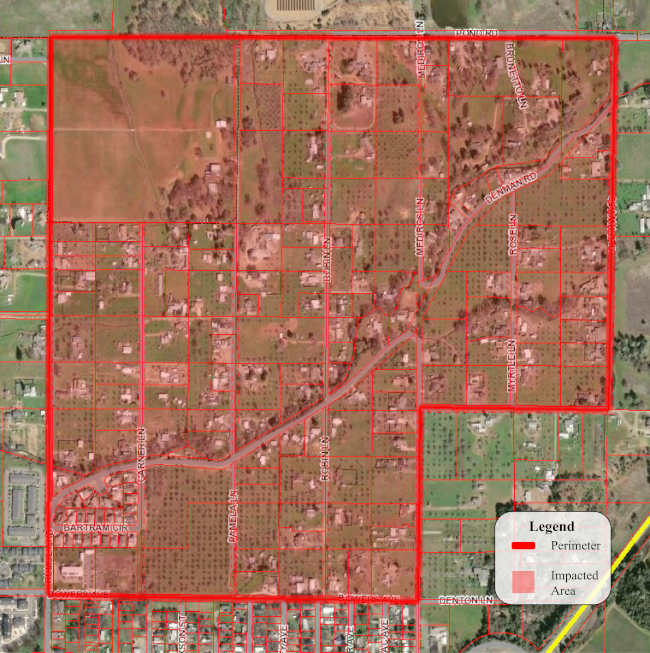
A new map of the 2026 Robin Lane Sewer Spill area in Clearlake, California. Image courtesy of the county of Lake.


LAKE COUNTY, Calif. — The county of Lake on Monday issued its latest update on the aftermath of the Robin Lane sewer spill, with most health recommendations remaining in place and a town hall set for midweek.

The spill, which began on Sunday, Jan. 11, lasted a day and a half but the impacts are expected to be ongoing, with no end yet in sight.

Lake County Special Districts operates the 16-inch force main on Robin Lane that ruptured early on Jan. 11. The county’s latest report submitted late last week to the California Governor’s Office of Emergency Services estimated the total size of the spill at 2.9 million gallons.

The Monday evening update included few new details, but did adjust the size of the sewage spill area.

An assessment of the new map puts the total area now at about 328 acres, down from an estimated 357 acres in the area east of Smith Lane, west of Old Highway 53, south of Pond Road and north of Bowers Avenue.

A town hall meeting to update the community is set to be held at 6 p.m. Wednesday, Jan, 21, at Clearlake City Hall, 14050 Olympic Drive.

Residents of the area have reported that there are still individuals who have not been notified of the spill and may still be drinking their well water, with some issues with sewage-related illness reportedly occurring.

The county reported that Special Districts crews are currently locating a 10-inch sewer force main, but offered little further explanation outside of noting that “potholing operations are underway to identify and confirm the exact location of the line.”

Public Health Officer Dr. Robert Bernstein’s recommendation that property owners in the spill area temporarily relocate until their wells are deemed safe remains in place.

The county said well sanitization is ongoing, with residents advised to call Environmental Health at 707-263-1164 to schedule the services. Officials said proactive well sanitization can help protect water quality and reduce potential health risks.

Regarding well sanitization, the county reported, “Significant progress was made over the holiday weekend, and we are grateful to those property owners who have made contact to facilitate this critical work.”

Environmental Health is due to resume sampling in the sewage release impact area at 5 a.m. Tuesday. 

“Environmental Health staff will be in the area throughout the day tomorrow, working with sampling teams and drillers to facilitate data collection. This work is essential to support any changes to health guidance and DO NOT USE notices, for example. Many thanks to all residents who have authorized this critical data gathering,” the county reported.

Officials are considering options for soil management, with residents to be notified of road impacts. 

Road work is expected to first occur near Pamela Lane, with the Robin Lane to follow; planning and coordination are ongoing for both areas at this time. Work on Pamela Lane is expected to begin on Friday, the county said.

The county also published a post on its Facebook account saying that staff responding to the incident “have received reports of unconfirmed ‘charities’ making contact with individuals affected by the event.”

However, responses to that post from spill area residents suggested it was a matter of people offering assistance and information.

Available resources

County officials direct spill area residents to the following resources.

ADA showers: Available 8 a.m. to 5 p.m. Tuesday and Friday at the Clearlake Senior Center, 3245 Bowers Ave.

Avoiding scams after a disaster: Visit this link, https://bit.ly/4jP8A1Z. 

Drinking water: Highlands Water Co. offers a free public water filling station from 8 a.m. to 4 p.m. Monday through Friday at 14580 Lakeshore Drive. Please bring your own jugs or bottles.

Drinking water guidance and information on testing of private wells: Contact Environmental Health at 707-263-1164.

Relocation: Affected residents are directed to first contact their homeowner’s insurance provider to inquire about coverage for temporary lodging under their policy. Residents may also contact Lake County Special Districts at 707-263-0119 for additional assistance and guidance.

Showers, laundry services and potable water: A mobile laundry and hygiene service trailer is available to the public at the entrance to the wastewater treatment plant located at 2485 Pond Road. It includes two laundry sets, with the ability to bring in a larger trailer if additional capacity is needed. Residents can drop off their laundry with on-site staff, who will tag each load with a number, then wash, dry, and fold items before returning them in a clean bag. The unit also includes a double-shower setup (family) and three sinks large enough to wash dishes. A separate family shower area is available and includes one sink, two showers, and a bench, providing space for families and individuals to clean up comfortably and safely. For potable water, members of the public are asked to bring their own water containers. Special Districts staff are on site to assist the public, and a 24-hour call-answering service is available to respond to inquiries related to Special Districts services.

Support to mitigate water and sewer-related needs: Call Special Districts at 707-263-0119.

Well sanitization services: To schedule well sanitization services or for more information, please contact Environmental Health at 707-263-1164. Environmental Health staff are available to review your location, confirm whether your property falls within the mapped area and provide guidance on appropriate next steps.

Email Elizabeth Larson at This email address is being protected from spambots. You need JavaScript enabled to view it.. Follow her on Twitter, @ERLarson, and on Bluesky, @erlarson.bsky.social. Find Lake County News on the following platforms: Facebook, @LakeCoNews; X, @LakeCoNews; Threads, @lakeconews, and on Bluesky, @lakeconews.bsky.social. 

Details
Written by: Elizabeth Larson
Published: 20 January 2026
  • 12
  • 13
  • 14
  • 15
  • 16
  • 17
  • 18
  • 19
  • 20
  • 21

Public Safety

  • Lakeport Police Department celebrates long-awaited new headquarters

  • Lakeport Police Department investigates flag vandalism cases

  • Lakeport Police Department thanks Kathy Fowler Chevrolet for donation

Community

  • Hidden Valley Lake Garden Club installs new officers

  • 'America's Top Teens' searching for talent

  • 'The Goodness of Sea Vegetables' featured topic of March 5 co-op talk

Community & Business

  • Annual 'Adelante Jovenes' event introduces students, parents to college opportunities

  • Gas prices are dropping just in time for the holiday travel season

  • Lake County Association of Realtors installs new board and presents awards

  • Local businesses support travel show

  • Preschool families harvest pumpkins

  • Preschool students earn their wings

How to resolve AdBlock issue?
Refresh this page