How to resolve AdBlock issue?
Refresh this page
How to resolve AdBlock issue?

Refresh this page
Lake County News,California
  • Home
    • Registration Form
  • News
    • Community
      • Obituaries
      • Letters
      • Commentary
    • Education
    • Veterans
    • Police Logs
    • Business
    • Recreation
    • Health
    • Religion
    • Legals
    • Arts & Life
    • Regional
  • Calendar
  • Contact us
    • FAQs
    • Phones, E-Mail
    • Subscribe
  • Advertise Here
  • Login

Helping Paws: New dogs to meet

LAKE COUNTY, Calif. – Lake County Animal Care and Control has new puppies and dogs waiting to meet their new families.

The dogs available for adoption this week include mixes of Belgian Malinois, Chihuahua, corgi, Doberman Pinscher, German shepherd, husky, Labrador retriever, mastiff, pit bull terrier, Rottweiler and shepherd.

Dogs that are adopted from Lake County Animal Care and Control are either neutered or spayed, microchipped and, if old enough, given a rabies shot and county license before being released to their new owner. License fees do not apply to residents of the cities of Lakeport or Clearlake.

Those animals shown on this page at the Lake County Animal Care and Control shelter have been cleared for adoption.

Call Lake County Animal Care and Control at 707-263-0278 or visit the shelter online for information on visiting or adopting.

The shelter is located at 4949 Helbush in Lakeport.

Email Elizabeth Larson at This email address is being protected from spambots. You need JavaScript enabled to view it.. Follow her on Twitter, @ERLarson, and on Bluesky, @erlarson.bsky.social. Find Lake County News on the following platforms: Facebook, @LakeCoNews; X, @LakeCoNews; Threads, @lakeconews, and on Bluesky, @lakeconews.bsky.social. 

Kennel#13 Roland's preview photo
Kennel#13 Roland
Kennel#10 's preview photo
Kennel#10

Kennel#11a Sprinkles's preview photo
Kennel#11a Sprinkles

Kennel#11b Sparkles's preview photo
Kennel#11b Sparkles

Kennel#7 Tara's preview photo
Kennel#7 Tara

Kennel#19c Celeste's preview photo
Kennel#19c Celeste

Kennel#18's preview photo
Kennel#18

Kennel#20's preview photo
Kennel#20

Kennel#14's preview photo
Kennel#14

Kennel#23's preview photo
Kennel#23

Kennel#2(Fang)'s preview photo
Kennel#2(Fang)

Kennel#27's preview photo
Kennel#27

Kennel#21's preview photo
Kennel#21

Kennel#5a's preview photo
Kennel#5a

Kennel#5b's preview photo
Kennel#5b

Kennel#4Hugo's preview photo
Kennel#4Hugo

Kennel#17aGunner's preview photo
Kennel#17aGunner

Kennel#17bGus's preview photo
Kennel#17bGus

Kennel#33Delilah(pink collar)'s preview photo
Kennel#33Delilah(pink collar)

Kennel#32 Sparrow's preview photo
Kennel#32 Sparrow

Kennel#24Stormy 's preview photo
Kennel#24Stormy

Kennel#29a Mochi's preview photo
Kennel#29a Mochi

Kennel#29b Benny's preview photo
Kennel#29b Benny


Kennel#12's preview photo
Kennel#12

Kennel#30's preview photo
Kennel#30
 
Kennel#6's preview photo
Kennel#6


Details
Written by: Elizabeth Larson
Published: 18 January 2026

American farmers, who once fed the world, face a volatile global market with diminishing federal backing

American farmers face a changing future for their businesses. Roberto Schmidt/AFP via Getty Images

President Donald Trump appears to have upended an 85-year relationship between American farmers and the United States’ global exercise of power. But that link has been fraying since the end of the Cold War, and Trump’s moves are just another big step.

During World War II, the U.S. government tied agriculture to foreign policy by using taxpayer dollars to buy food from American farmers and send it to hungry allies abroad. This agricultural diplomacy continued into the Cold War through programs such as the Marshall Plan to rebuild European agriculture, Food for Peace to send surplus U.S. food to hungry allies, and the U.S. Agency for International Development, which aimed to make food aid and agricultural development permanent components of U.S. foreign policy.

During that period, the United States also participated in multinational partnerships to set global production goals and trade guidelines to promote the international movement of food – including the U.N.’s Food and Agriculture Organization, the International Wheat Agreement and the General Agreement on Tariffs and Trade.

When U.S. farmers faced labor shortfalls, the federal government created guest-worker programs that provided critical hands in the fields, most often from Mexico and the Caribbean.

At the end of World War II, the U.S. government recognized that farmers could not just rely on domestic agricultural subsidies, including production limits, price supports and crop insurance, for prosperity. American farmers’ well-being instead depended on the rest of the world.

Since returning to office in January 2025, Trump has dismantled the U.S. Agency for International Development. His administration has also aggressively detained and deported suspected noncitizens living and working in the U.S., including farmworkers. And he has imposed tariffs that caused U.S. trading partners to retaliate, slashing international demand for U.S. agricultural products.

Trump’s actions follow diplomatic and agricultural transformations that I research, and which began with the fall of the Soviet Union in 1991.

Feed the world, save the farm

Even before the nation’s founding, farmers in what would become the United States staked their livelihood on international networks of labor, plants and animals, and trade.

Cotton was the most prominent early example of these relationships, and by the 19th century wheat farmers depended on expanding transportation networks to move their goods within the country and overseas.

A drawing of people on foot and on horseback gathering cattle into a wooden pen.
Workers load cattle on a train for shipment to market in the late 19th century. Bettmann via Getty Images

But fears that international trade could create economic uncertainty limited American farmers’ interest in overseas markets. The Great Depression in the 1930s reinforced skepticism of international markets, which many farmers and policymakers saw as the principal cause of the economic downturn.

World War II forced them to change their view. The Lend-Lease Act, passed in March 1941, aimed to keep the United States out of the war by providing supplies, weapons and equipment to Britain and its allies. Importantly for farmers, the act created a surge in demand for food.

And after Congress declared war in December 1941, the need to feed U.S. and allied troops abroad pushed demand for farm products ever higher. Food took on a significance beyond satisfying a wartime need: The Soviet Union, for example, made special requests for butter. U.S. soldiers wrote about the special bond created by seeing milk and eggs from a hometown dairy, and Europeans who received food under the Lend-Lease Act embraced large cans of condensed milk with sky-blue labels as if they were talismans.

Ropes hoist large boxes aboard a ship.
Crates of American hams, supplied through the Lend-Lease Act, are loaded on a ship bound for Britain in 1941. Bettmann via Getty Images

Another war ends

But despite their critical contribution to the war, American farmers worried that the familiar pattern of postwar recession would repeat once Germany and Japan had surrendered.

Congress fulfilled farmers’ fears of an economic collapse by sharply reducing its food purchases as soon as the war ended in the summer of 1945. In 1946, Congress responded weakly to mounting overseas food needs.

Large bags are stacked in a pile, each with a tag on it saying it came from the U.S. to help Europe.
Bags of Marshall Plan flour wait in New York for shipment to Austria in 1948. Ann Ronan Picture Library/Photo12/Universal Images Group via Getty Images

More action waited until 1948, when Congress recognized communism’s growing appeal in Europe amid an underfunded postwar reconstruction effort. The Marshall Plan’s more robust promise of food and other resources was intended to counter Soviet influence.

Sending American food overseas through postwar rehabilitation and development programs caused farm revenue to surge. It proved that foreign markets could create prosperity for American farmers, while food and agriculture’s importance to postwar reconstruction in Europe and Asia cemented their importance in U.S. foreign policy.

Farmers in the modern world

Farmers’ contribution to the Cold War shored up their cultural and political importance in a rapidly industrializing and urbanizing United States. The Midwestern farm became an aspirational symbol used by the State Department to encourage European refugees to emigrate to the U.S. after World War II.

American farmers volunteered to be amateur diplomats, sharing methods and technologies with their agricultural counterparts around the world.

By the 1950s, delegations of Soviet officials were traveling to the Midwest, including Soviet premier Nikita Khrushchev’s excursion to Iowa in 1959. U.S. farmers reciprocated with tours of the Soviet Union. Young Americans who had grown up on farms moved abroad to live with host families, working their properties and informally sharing U.S. agricultural methods. Certain that their land and techniques were superior to those of their overseas peers, U.S. farmers felt obligated to share their wisdom with the rest of the world.

The collapse of the Soviet Union undermined the central purpose for the United States’ agricultural diplomacy. But a growing global appetite for meat in the 1990s helped make up some of the difference.

U.S. farmers shifted crops from wheat to corn and soybeans to feed growing numbers of livestock around the world. They used newly available genetically engineered seeds that promised unprecedented yields.

Expecting these transformations to financially benefit American farmers and seeing little need to preserve Cold War-era international cooperation, the U.S. government changed its trade policy from collaborating on global trade to making it more of a competition.

In a large auditorium, people sit at a long table on a stage and sign papers.
World leaders sign the Marrakesh Agreement, creating the World Trade Organization, in 1994. Jacques Langevin/Sygma/Sygma via Getty Images

The George H.W. Bush and Clinton administrations crafted the North American Free Trade Agreement and the World Trade Organization to replace the general agreement on trade and tariffs. They assumed American farmers’ past preeminence would continue to increase farm revenues even as global economic forces shifted.

But U.S. farmers have faced higher costs for seeds and fertilizer, as well as new international competitors such as Brazil. With a diminished competitive advantage and the loss of the Cold War’s cooperative infrastructure, U.S. farmers now face a more volatile global market that will likely require greater government support through subsidies rather than offering prosperity through commerce.

That includes the Trump administration’s December 2025 announcement of a US$12 billion farmer bailout. As Trump’s trade wars continue, they show that the U.S. government is no longer fostering a global agricultural market in which U.S. farmers enjoy a trade advantage or government protection – even if they retain some cultural and political significance in the 21st century.The Conversation

Peter Simons, Lecturer in History, Hamilton College

This article is republished from The Conversation under a Creative Commons license. Read the original article.

Details
Written by: Peter Simons, Hamilton College
Published: 18 January 2026

Lake County Creative Economy Town Hall set for Jan. 20

LAKEPORT, Calif. – A community meeting this week will explore the creative economy.

The Lake County Creative Economy Town Hall will take place from 1 to 4 p.m. Tuesday, Jan. 20, at the Soper-Reese Theater, 275 S. Main St. in Lakeport.

Admission is free, and anyone engaged with the creative economy in the Northern California Region is invited to attend.

The California Arts Council will host the event, with support from the Shasta County Arts Council in collaboration with the Lake County Arts Council.

The Creative Economy Town Halls are a series of statewide California events, led by the California Arts Council and partners, to gather input from artists, cultural workers, and leaders to implement California’s first Creative Economy Strategic Plan.

The plan will focus on workforce, business stability, cultural tourism, and economic recovery through arts and culture. 

These events allow creatives to share local needs and shape policies for a more inclusive, vibrant creative sector, with recent sessions held in the Bay Area and Central Valley, and more planned.

Organizers want to hear from those working in arts and culture — in both creative and "noncreative" roles — about what it will take to keep California the world leader in a thriving creative economy. 

Participants’ input will shape policy, programs and resources. 

The town halls also seek to collect stories to share through the campaign.

Please RSVP if you plan to attend.

Details
Written by: Lake County News Reports
Published: 18 January 2026

Space News: From a new flagship space telescope to lunar exploration, global cooperation – and competition – will make 2026 an exciting year for space

The U.S. is planning a crewed flight around the Moon in 2026. AP Photo

In 2026, astronauts will travel around the Moon for the first time since the Apollo era, powerful new space telescopes will prepare to survey billions of galaxies, and multiple nations will launch missions aimed at finding habitable worlds, water on the Moon and clues to how our solar system formed.

Together, these launches will mark a turning point in how humanity studies the universe – and how nations cooperate and compete beyond Earth. Coming from one of the world’s largest astrophysical research institutes, I can tell you, the anticipation across the global space science community is electric.

Mapping the cosmos at unprecedented scales

Several of the most ambitious missions slated for launch in 2026 share a common goal: to map the universe on the largest possible scales and reveal how planets, galaxies and the largest cosmic structures evolved over billions of years.

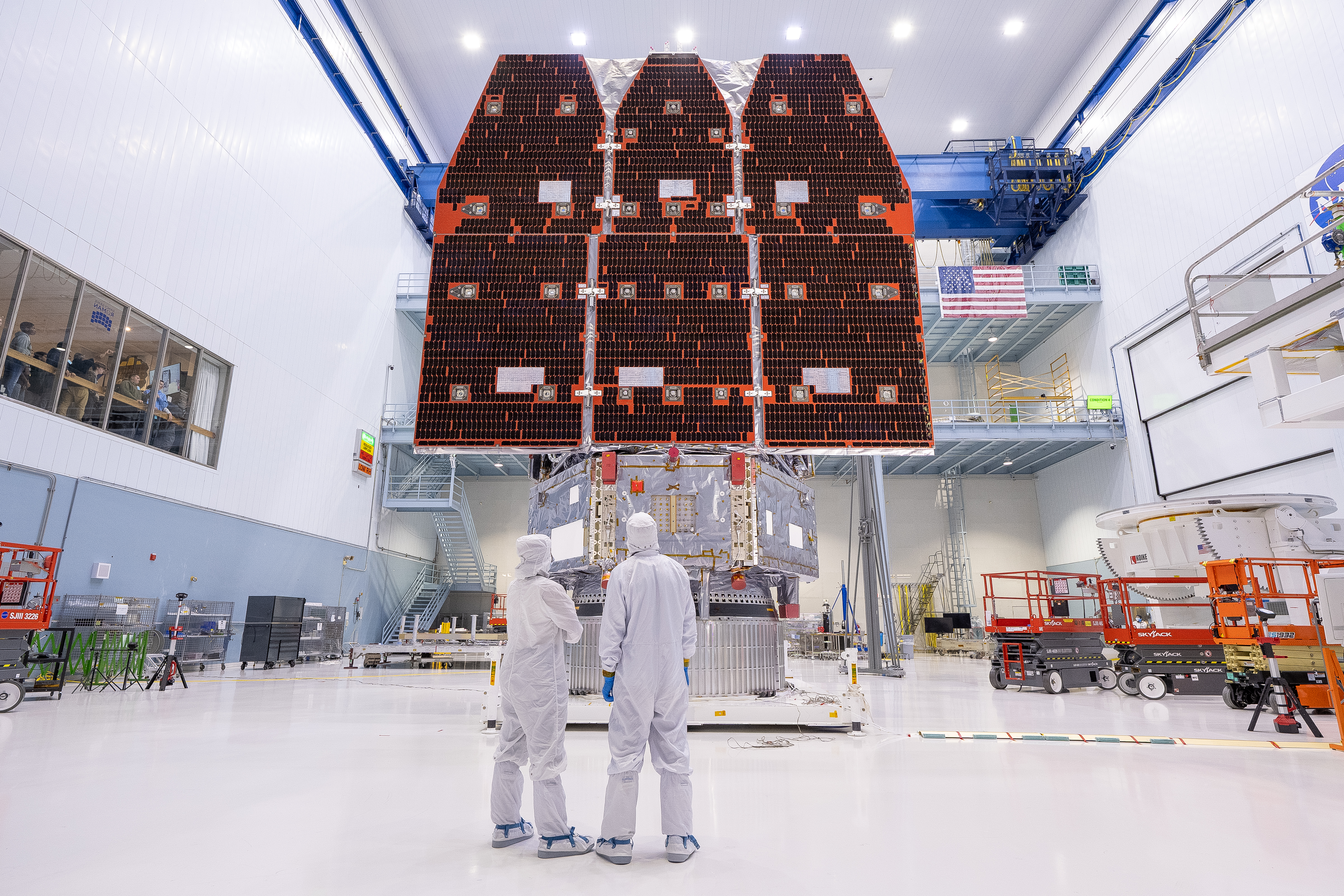
The centerpiece of this effort is NASA’s Nancy Grace Roman Space Telescope. Construction completed on the Roman telescope in December at NASA’s Goddard Space Flight Center, and if all goes well, it could launch as early as fall 2026.

What makes Roman more special than NASA’s other flagship space telescopes is not just what it will see, but how much of the sky it can see at once. Its 300-megapixel camera can capture regions of sky about 100 times larger than the Hubble Space Telescope’s field of view while maintaining comparable sharpness – like switching from studying individual tiles to surveying the entire mosaic at once.

During its five-year primary mission, Roman is expected to discover more than 100,000 distant exoplanets, map billions of galaxies strewn across cosmic time and help scientists probe dark matter and dark energy – the invisible scaffolding and mysterious forces that together account for 95% of the cosmos.

Roman also carries a coronagraph, a pathfinder instrument that can block out a star’s blinding light to directly photograph planets orbiting around it. The technology could pave the way for future missions, like NASA’s planned Habitable Worlds Observatory, capable of searching for signs of life on Earth-like worlds.

Two engineers in a clean room wearing protective suits looking at the mirror of the assembled Roman space telescope
NASA’s Nancy Grace Roman Space Telescope is now fully assembled following the integration of its two major segments on Nov. 25, 2025, at the agency’s Goddard Space Flight Center in Greenbelt, Md. The mission is slated to launch by May 2027, but the team is on track for launch as early as fall 2026. NASA/Jolearra Tshiteya

Over in Europe, the European Space Agency’s PLATO mission, short for PLAnetary Transits and Oscillations of stars mission, is scheduled to launch in December 2026 aboard Europe’s new Ariane 6 rocket. PLATO will monitor about 200,000 stars using an array of 26 cameras, searching for small, rocky planets in their stars’ habitable zones, while also determining the stars’ ages.

For China, 2026 is expected to mark a milestone of a different kind: the launch of its first large flagship space telescope dedicated to astrophysics. The Xuntian space telescope, also known as the Chinese space station telescope, is currently expected to launch in late 2026. Xuntian will survey enormous regions of the sky with image quality comparable to Hubble’s, but with a field of view more than 300 times larger.

Like NASA’s Roman Space Telescope, Xuntian is designed to tackle some of modern cosmology’s biggest questions. It will hunt for dark matter and dark energy, survey billions of galaxies and trace how cosmic structure evolved over time. Uniquely, Xuntian will co-orbit with China’s Tiangong space station, allowing astronauts to service and upgrade it and, potentially, extending its life for decades.

An illustration of a space telescope, which looks like a metal cylinder with two solar panels attached to either side.
A recent rendering of China’s Xuntian space station telescope, which is on track to launch in late 2026. China National Space Administration

Together with the new Vera C. Rubin Observatory on the ground, which will repeatedly scan the entire southern sky to capture how the universe changes over time, the Roman, PLATO and Xuntian space telescopes will study the cosmos not just as it is but as it evolves.

Global milestones in human spaceflight

While robotic observatories quietly expand our view of the cosmos, 2026 will also mark a major step forward for human spaceflight.

NASA’s Artemis II mission, now readying for launch as early as April 2026, will send four astronauts on a 10-day journey around the Moon and back. It will be the first time humans have traveled beyond low Earth orbit since Apollo 17 in December 1972.

Across the globe, India is preparing to reach a similarly historic milestone. Through its Gaganyaan program, the Indian Space Research Organisation is planning a series of uncrewed test flights in 2026 as it works toward sending astronauts to space. If that happens, India would become only the fourth nation to achieve human spaceflight on its own – a significant technological and symbolic achievement.

Meanwhile, China will continue regular crewed flights to its Tiangong space station in 2026, part of a broader effort to build the experience, infrastructure and technologies needed for its planned human missions to the Moon later in the decade.

In parallel, NASA is relying increasingly on commercial spacecraft to carry astronauts to and from the International Space Station, freeing the agency to focus its own human spaceflight efforts on deep-space missions beyond Earth.

Together, Artemis II, Gaganyaan and China’s ongoing crewed space station missions reflect a renewed global push toward human exploration beyond Earth orbit – one in which governments and commercial partners alike are laying the groundwork for longer missions and a sustained human presence in space.

The origin and geology of the Moon and Mars

Another set of 2026 missions focuses on a more grounded question: how rocky worlds – and the resources they contain – came to be.

Japan’s Martian Moons eXploration mission, slated to launch in late 2026, will travel to Mars, spend three years studying both of its small, potato-shaped moons – Phobos and Deimos – and collect a surface sample from Phobos to bring back to Earth by 2031.

Scientists still debate whether these moons originated as captured asteroids or debris from an ancient giant impact with Mars. Returning pristine material from Phobos could finally settle that question and reshape our understanding of how the inner solar system evolved.

China’s Chang'e 7 mission, expected to launch in mid-2026, will head to the Moon’s south pole, a region of intense scientific and strategic interest. The mission includes an orbiter, lander, rover and a small flying “hopper” designed to leap into permanently shadowed craters, where sunlight never reaches. These craters are thought to harbor water ice, a resource that could one day support astronauts or be converted into rocket fuel for deeper-space missions.

The Chinese and Japanese missions both highlight how planetary science and exploration are becoming increasingly intertwined, as understanding the geology of nearby worlds also informs future human activity.

It’s the Sun’s solar system, we’re just living in it

In 2025, powerful solar storms forced airlines to reroute and ground flights, disrupted radio communications and pushed vivid auroras far beyond their usual polar haunts – lighting up skies as far south as Florida. These events are reminders that space is not a distant abstraction: Activity on the Sun can have immediate consequences here on Earth.

Not all of 2026’s major missions look outward into deep space. Some are focused on understanding the dynamic space environment that surrounds our own planet.

In a notable example of international cooperation, the solar wind magnetosphere ionosphere link explorer, SMILE – a joint mission between the European Space Agency and the Chinese Academy of Sciences – is scheduled for launch in spring 2026.

SMILE will provide the first global images of how Earth’s magnetic field responds to the constant stream of charged particles flowing from the Sun. That interaction drives space weather, including solar storms that can disrupt satellites, navigation systems, power grids and communications.

Understanding those interactions is critical not only for protecting modern infrastructure on Earth but also for safeguarding astronauts and spacecraft operating beyond the planet’s protective magnetic shield.

At a time of growing geopolitical tension in space, the mission also stands out as a rare and consequential example of sustained scientific cooperation between Europe and China.

The global stakes

These missions unfold against a complex geopolitical backdrop. The United States and China are both racing to return humans to the Moon by the end of the decade.

Yet for all the competition, space science remains profoundly collaborative. Japan’s Martian Moons eXploration mission carries instruments from NASA, ESA and France. International teams share data, expertise and the sheer wonder of discovery. The universe, after all, belongs to no one nation.

Having spent my career studying the universe, I see 2026 as a year that reflects both the rivalries and the shared ambitions of space exploration today. Competition is real, but so is cooperation at a scale that would have been hard to imagine a generation ago. From the search for habitable worlds around distant stars to plans for returning humans to the Moon, the work is global – and the sky is shared by all.The Conversation

Grant Tremblay, Federal Astrophysicist and External Relations Lead at the Smithsonian Astrophysical Observatory, Smithsonian Institution

This article is republished from The Conversation under a Creative Commons license. Read the original article.

Details
Written by: Grant Tremblay, Smithsonian Institution
Published: 18 January 2026
  • 15
  • 16
  • 17
  • 18
  • 19
  • 20
  • 21
  • 22
  • 23
  • 24

Public Safety

  • Lakeport Police Department celebrates long-awaited new headquarters

  • Lakeport Police Department investigates flag vandalism cases

  • Lakeport Police Department thanks Kathy Fowler Chevrolet for donation

Community

  • Hidden Valley Lake Garden Club installs new officers

  • 'America's Top Teens' searching for talent

  • 'The Goodness of Sea Vegetables' featured topic of March 5 co-op talk

Community & Business

  • Annual 'Adelante Jovenes' event introduces students, parents to college opportunities

  • Gas prices are dropping just in time for the holiday travel season

  • Lake County Association of Realtors installs new board and presents awards

  • Local businesses support travel show

  • Preschool families harvest pumpkins

  • Preschool students earn their wings

How to resolve AdBlock issue?

Refresh this page