 How to resolve AdBlock issue?
Arts & Life
- Details
- Written by: Editor
Artists are invited to submit their original artwork to the 2016-2017 California Duck Stamp Art Contest.
The California Department of Fish and Wildlife (CDFW) will accept submissions May 13 through June 13.
The contest is open to U.S. residents who are 18 years of age or older as of March 14, 2016. Entrants need not reside in California.
The winning artwork will be reproduced on the 2016-2017 California Duck Stamp. The top submissions will also be showcased at the Pacific Flyway Decoy Association's art show in July.
The artwork must depict the species selected by the California Fish and Game Commission, which for the 2016-2017 hunting season is the lesser snow goose.
The design is to be in full color and in the medium (or combination of mediums) of the artist's choosing, except that no photographic process, digital art, metallic paints or fluorescent paints may be used in the finished design.
Photographs, computer-generated art, art produced from a computer printer or other computer/mechanical output device (air brush method excepted) are not eligible to be entered into the contest and will be disqualified.
The design must be the contestant's original hand-drawn creation. The entry design may not be copied or duplicated from previously published art, including photographs, or from images in any format published on the Internet.
All entries must be accompanied by a completed participation agreement and entry form. These forms and the official rules are available online at www.wildlife.ca.gov/duck-stamp/contest .
Entries will be judged at a public event to be held in June. The judges' panel, which will consist of experts in the fields of ornithology, conservation, and art and printing, will choose first, second and third-place winners, and an honorable mention.
Since 1971, CDFW's annual contest has attracted top wildlife artists from around the country. All proceeds generated from stamp sales go directly to waterfowl conservation projects throughout California.
In past years, hunters were required to purchase and affix the stamp to their hunting license. Now California has moved to an automated licensing system and hunters are no longer required to carry the physical stamps in the field (proof of purchase prints directly onto the license).
However, CDFW will still produce the stamps, which can be requested online at www.wildlife.ca.gov/licensing/collector-stamps .
- Details
- Written by: Editor
LAKE COUNTY, Calif. – The Lake Country Grand Jury is extending to next month the deadline for its art challenge for Lake County youth.
The grand jury is inviting young people ages 6 to 18 to submit their original artwork for inclusion in the 2015-16 grand jury report.
The grand jury publishes a written report every summer which is distributed to all departments in the county government and to the state archivist.
The artwork should express one or more of the following themes:
– The natural beauty of Lake County;
– Unique Lake County culture;
– Rebirth and renewal.
Winners will receive cash prizes: $200 for first place, $100 for second and $50 for places up to eighth.
To participate, submit a photo or a good copy of the original art that is packaged safely so it does not bend. Please do not submit original art work as they will not be able to return it.
Label the package “Grand jury artwork” and send it via the US Postal Service to Lake County Grand Jury, P.O. Box 1078, Kelseyville, 95451.
Digital files of the artwork – in JPG or PDF formats – also may be submitted to the grand jury at
All entries – whether hard copy or digital – must include the artist’s name, age, address, email address and phone number.
The deadline for entering is April 30.
If your artwork is chosen, the grand jury will contact you for further information.
- Details
- Written by: Ted Kooser
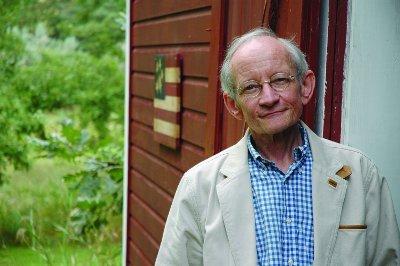
In my limited experience, mothering and worrying go hand in hand. Here's a mother's worry poem by Richard Jarrette, from his fine book, A Hundred Million Years of Nectar Dances. He lives in California.
My Mother Worries About My Hat
Every spring my mother says I should buy a straw
hat so I won't overheat in summer.
I always agree but the valley's soon cold, and besides
my old Borsalino is nearly rain-proof.
She's at it again, it's August, the grapes are sugaring.
I say, Okay, and pluck a little spider from her hair—
hair so fine it can't hold even one of her grandmother's
tortoise shell combs.
American Life in Poetry is made possible by The Poetry Foundation ( www.poetryfoundation.org ), publisher of Poetry magazine. They do not accept unsolicited submissions. It is also supported by the Department of English at the University of Nebraska-Lincoln. Poem copyright ©2015 by Richard Jarrette, “My Mother Worries About My Hat,” from A Hundred Million Years of Nectar Dances, (Green Writers Press, 2015). Introduction copyright © 2016 by The Poetry Foundation. The introduction's author, Ted Kooser, served as United States Poet Laureate Consultant in Poetry to the Library of Congress from 2004-2006.
- Details
- Written by: Tim Riley
LONDON HAS FALLEN (Rated R)
Only three years ago, “Olympus Has Fallen” set forth the preposterous plot of a North Korean terrorist attack on the White House during the course of which President Benjamin Asher (Aaron Eckhart) was saved by then-demoted Secret Service Agent Mike Banning (Gerard Butler).
The action heroics of Butler’s Agent Banning invited comparisons to Bruce Willis’ John McClane from the “Die Hard” franchise, considering that he operated pretty much like a one-man wrecking crew hell-bent on killing as many of the bad guys as possible.
In the present day, at the start of the nominal sequel “London Has Fallen,” Mike Banning, the trusted protector President Asher, now serving his second term, contemplates retirement from the service as his wife (Radha Mitchell) is expecting their first child.
The resignation letter sits in draft form on Banning’s computer and there it will remain because the sudden death of the British prime minister occasions the need for the president to attend a state funeral in London where the heads of state of many nations will congregate.
Working with Secret Service Director Lynne Jacobs (Angela Bassett), Banning realizes the high-stakes for the quick planning that must occur for the President and his protective detail to safely make the trip to St. Paul’s Cathedral in Britain’s capital city.
The backdrop to the story is the knowledge of a drone strike on a lavish wedding party in Lahore, Pakistan, where the target is the father of the bride, Aamir Barkawi (Alon Moni Aboutboul), a lethal arms dealer and one of the most wanted men in the world.
With every powerful world leader expected to attend, the funeral should be the most protected event on Earth. But the sadistic terrorist Barkawi and his equally villainous son Kamran (Waleed F. Zuaiter) have carefully plotted an infiltration of Britain’s security forces.
Within moments of arriving, heads of government are assassinated and virtually every recognizable London landmark, from Westminster Abbey and the Houses of Parliament to iconic bridges, is destroyed by explosions. Even Buckingham Palace is under siege.
Back in Washington, D.C., Vice President Trumbull (Morgan Freeman) takes command of the Situation Room, with the help of top advisors (Melissa Leo and Robert Forster, returning once again as the secretary of defense and the head of the Joint Chiefs of Staff, respectively).
One of the president’s key advisors observes that Barkawi is number six of the top 10 most wanted. Barkawi appears most anxious to rise in the rankings when he tells the American government that his ambition is to capture President Asher for a televised execution.
Just as German terrorist Hans Gruber failed to account for the resolve of John McClane in “Die Hard,” the same could be said for Barkawi and his minions not figuring on the resiliency of Mike Banning to foil the most dastardly plot to assassinate the American commander in chief.
Coming under heavy fire from terrorists impersonating British police and intelligence officers, Banning and Asher have to make a thrilling escape on the nearly deserted streets in a high-speed car chase to reach the Marine One helicopter.
Meanwhile, Vice President Trumbull and the top advisors race against time brainstorming to get those trapped in London a lifeline of support and a way out, a process that appears increasingly complicated and compromised by an apparent mole in British intelligence.
Outnumbered and outgunned, Banning reaches out for help from trusted British MI6 agent Jacquelin Marshall (Charlotte Riley), who rightly trusts no one as she helps the Americans to get to a safe house.
Safety, however, is not the operative word in a city terrorized by legions of armed thugs machine-gunning everything in sight. Before long, Asher and Banning are on the run once again until the President is unfortunately captured by the terrorists.
The carnage that takes place with wide-scale destruction of people and places is certain to induce groans of disapproval in certain quarters. But “London Has Fallen” offers plenty of rousing action that serves well enough for mindless entertainment.
Though over-the-top and outlandish in its action sequences, “London Has Fallen” is a guilty pleasure film that can be enjoyed because it’s so outrageously staged. An added benefit is that the running time of 90 minutes keeps everything moving at a fast clip.
Gerard Butler has found his ticket to a franchise with his gritty portrayal of the wise-cracking Secret Service agent Mike Banning.
More action could be in store for him even when President Asher is termed out of office, and there’s a new occupant in the White House.
Tim Riley writes film and television reviews for Lake County News.