 How to resolve AdBlock issue?
Arts & Life
- Details
- Written by: Ted Kooser
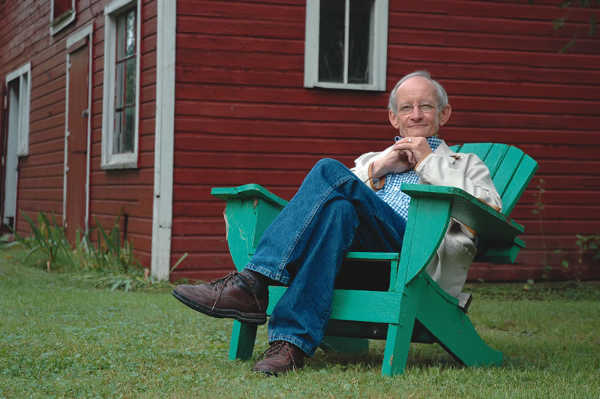
I’ve shown you a couple of poems from the anthology, Local News: Poetry About Small Towns, from MWPH Books, P.O. Box 8, in Fairwater, WI. Here’s another, by Mark Vinz, who lives in Minnesota. Time and timelessness. We’ve all been in this café, haven’t we? His latest book of poetry is Permanent Record.
Center Café
Well, you’re in town, then. The boys
from the class reunion wander in
and take their places in the corner booth,
just as they might have fifty years ago—
grayer, balder, wearing hats announcing
places far away. Their conversation
rises, falls to the inevitable—a missing
friend who worked right up until the end,
another who is long past traveling. Smiles
grow distant as their silence overtakes
the room. The busy waitress pauses,
nods. She’s always known the boys.
American Life in Poetry does not accept unsolicited manuscripts. It is made possible by The Poetry Foundation, publisher of Poetry magazine. It is also supported by the Department of English at the University of Nebraska, Lincoln. Poem copyright ©2019 by Mark Vinz, "Center Cafe," from Local News: Poetry About Small Towns, (MWPH Books, 2019). Poem reprinted by permission of Mark Vinz and the publisher. Introduction copyright @2020 by The Poetry Foundation. The introduction’s author, Ted Kooser, served as United States Poet Laureate Consultant in Poetry to the Library of Congress from 2004-2006.
- Details
- Written by: Tim Riley
‘HOLLYWOOD’ ON NETFLIX
As reviewed in this column not so long ago, Showtime’s series “Penny Dreadful: City of Angels” featured the strange rich history of Los Angeles during a period of social and political tension during the late Thirties.
Netflix gets into the act of a period piece of Los Angeles history in which aspiring actors and filmmakers of the post-World War II era are hoping to make a big splash in the Hollywood film industry at all costs.
The aptly-titled “Hollywood” is a seven-episode series streaming on Netflix. Co-creator Ryan Murphy, the creative force behind the “Glee” television series, has found an outlet for a risqué homage to entertainment that could not be realized on network television.
What both “City of Angels” and “Hollywood” have in common, if at all, is the opportunity to weave true-life events into a fictional narrative that is either revisionist history or wish fulfillment for what never was.
“Hollywood,” even more so than the Netflix series, goes out on a limb to explore the sexist, racist, misogynistic and hypocritical aspects of the lurid underbelly of the film industry’s Golden Age.
Have you heard about Scotty Bowers, a handsome former Marine who lands in Hollywood after World War II and becomes a legendary escort for male and female celebrities while providing his “full service” out of a gas station in the shadow of the film studios?
You may learn more about Bowers from his memoir “Full Service: My Adventures in Hollywood and the Secret Sex Lives of the Stars,” a collaboration with Lionel Friedberg, or the documentary film “Scotty and the Secret History of Hollywood.”
The relevance of the post-war hustler’s dalliance with celebrities seeking furtive affairs is that “Hollywood” pivots in a big way to the activity at the Golden Tip gas station run by Ernie (Dylan McDermott), who provides a stable of hunky young men satisfying sexual fantasies.
Celebrities of both sexes, gay and straight, patronize the station and speak the magic words “I want to go to Dreamland” to one of the attendants. Enter Jack Castello (David Corenswet), a war veteran who wants to be a movie star by becoming one of the pump jockeys.
Expecting a child with his wife Henrietta (Maude Apatow), hustling at the gas station is the only way for Jack to get into show business, and as luck would have it, he gets hooked up with Avis (Patti LuPone), the wife of the studio head (Rob Reiner) of Ace Pictures.
Jack’s long-shot bid for the movie business was off to an inauspicious start when he’d hang outside the studio gates hoping to be an extra for the day, along with a throng of other hopefuls.
Not alone in getting his foot in the door at the studio, Jack’s other gas station buddies, wannabe director Raymond Ainsley (Darren Criss) and Archie Coleman (Jeremy Pope), an aspiring gay black screenwriter, are soon swept into their own dreamland.
Another young man, straight off the bus from flyover country, the handsome but dim Roy Fitzgerald (Jake Picking) ends up being molded by Henry Willson (Jim Parsons), a real-life closeted agent with a nasty streak, into Rock Hudson.
That “Hollywood” is revisionist history, in the sense that it would like to present a world that did not exist, Hudson and screenwriter Archie become lovers so openly that even agent Willson warns that Hudson would sink his nascent career with a public display of his sexual orientation.
Grounded in some relatively factual situations, “Hollywood” brings to life real characters of the Golden Era, from a bawdy Tallulah Bankhead (Paget Brewster) to Anna May Wong (Michelle Krusiec), the Chinese-American star victimized by institutional racism.
Wong was not alone in suffering ostracism. Queen Latifah’s Hattie McDaniel, the first African-American to win an Oscar, played Mammy in “Gone With The Wind” and was mainly stuck in domestic roles.
Ryan Murphy upends the customs of the era by bringing together the half-Filipino director Raymond, the gay screenwriter Archie, straight white male Jack, and future star Rock Hudson in a movie project based on the life of British actress Peg Entwistle.
Archie has penned a script titled “Peg,” and Ace Studios decides to make a film based on the tragic life of the actress, but the title is shifted to “Meg,” when Avis, acting as interim studio head, greenlights the production to star a black female actress.
The actress in question is the fictional Camille Washington (Laura Harrier), involved in an interracial romance with director Raymond, and she delivers a luminous performance that is Oscar-worthy.
The final episode, knowingly titled “A Hollywood Ending,” takes us to the Academy Awards, where “Meg” is nominated in several categories including, among others, Best Picture, Best Actress and Best Director. Just for fun, make your own guesses on the winners.
Blending fact and fiction for a desired narrative, Ryan Murphy is the driving force behind the fantasy message for an illusory Golden Age in “Hollywood,” buttressed by the visual treats of retro scenery, automobiles, and elegant clothes that are fun to take in.
Tim Riley writes film and television reviews for Lake County News.
- Details
- Written by: Middletown Art Center
MIDDLETOWN, Calif. – The Middletown Art Center invites community members to participate in “Connecting Community in the Age of Social Distancing,” a meditative art inquiry with Antje Howard on Saturday, May 30, from 11 a.m. to 1 p.m. via Zoom.
The workshop will focus on reinvigorating our connection to one another and to different parts of ourselves, some of which have been quite dormant during the past two-plus months.
"Connect with Us! We will inquire into what we hold dear as individuals as community, and as people living in, and sharing this place – Lake County – here and now’” explained Howard, the event’s facilitator.
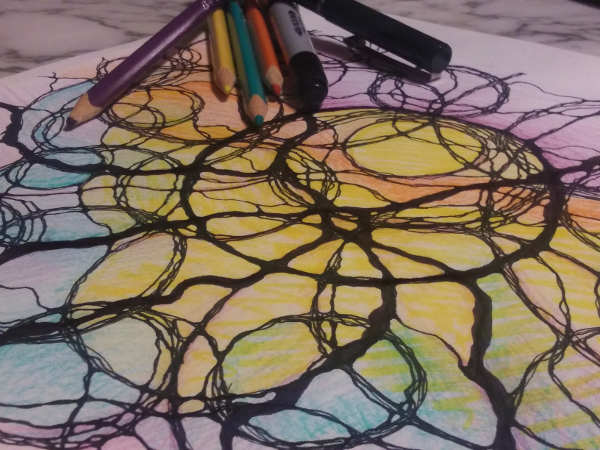
“We will explore how and where we can connect through creativity, what each of us need and wish for, what each of us have to offer and how we can participate in strengthening our community together,” Howard said. “The inquiry will be guided with the help of a simple intuitive drawing process using the Neurographica technique that can help us to see things from a new perspective. No prior art experience is required."
Participation is by donation of $1 to $25 to benefit the center.
Preregistration is required. Please sign up at www.middletownartcenter.org/classes and a Zoom link will be provided. Work trade options are also available, inquire at
All you need is a piece of paper, thin and thick black markers or other pens, colored pencils, markers or pens, and a readiness to try something new.
The drawing process will take approximately 1.5 hours, with the final 30 minutes of the workshop reserved for an optional community connection activity.
Howard is a certified Neurographica specialist, artist, creative coach and mentor who uses Neurographica, and mindfulness to catalyze personal and practical change.
Her guidance is solution-oriented, with focus on concrete steps to support holistic well-being and growth. Learn more about her work at http://neuroartproject.net .
The Neurographica Method was developed and trademarked by Pavel Piskarev of the Institute of the Psychology of Creativity in 2014. It is an interdisciplinary practice and unique art and stress reduction therapy that supports sustainable personal change. Learn more at https://www.neurographica.us/ .
The MAC has been offering children’s, artists’ professional development, and Woodland Community College art classes online since the shelter in place began.
Find out more about how MAC is adapting to the current evolving situation and ways to support the MAC’s efforts to weave the arts and culture into the fabric of life in Lake County at www.middletownartcenter.org .
- Details
- Written by: Ted Kooser
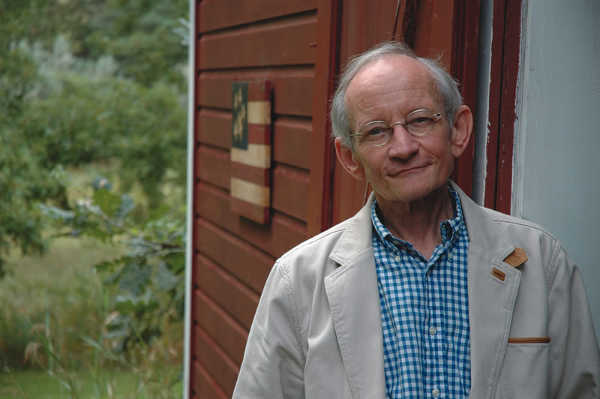
We’ve featured several other poems by Bruce Guernsey, who lives in Illinois and Maine.
But here he is visiting Gettysburg and giving us a poem for Memorial Day.
“Naming the Trees” is forthcoming in the fall issue of Sow’s Ear Poetry Review.
Naming the Trees
At the national cemetery in Gettysburg
all the trees have names,
both family and genus
on small brass plaques at the base of each
to let the visitor know
the kind of oak,
whether red, white or black,
and is this rock or silver maple
looking once like any other
burlapped ball of roots
when it was lowered to earth
those decades after the war.
Colorful names like Tulip Poplar,
Weeping Beech, Buckeye,
Sweet Gum and Ginko—
sounding like nicknames almost, these trees
from every region and state
with broad leaves or skinny,
shiny, dull, or no leaves at all
like the Eastern Hemlock,
but all, all with names every one,
no matter the size and shape
amidst the many anonymous
mute stones in their shade.
American Life in Poetry does not accept unsolicited manuscripts. It is made possible by The Poetry Foundation, publisher of Poetry magazine. It is also supported by the Department of English at the University of Nebraska, Lincoln. Poem copyright ©2020 by Bruce Guernsey, "Naming the Trees." Poem reprinted by permission of Bruce Guernsey. Introduction copyright @2020 by The Poetry Foundation. The introduction’s author, Ted Kooser, served as United States Poet Laureate Consultant in Poetry to the Library of Congress from 2004-2006.