 How to resolve AdBlock issue?
Business News
- Details
- Written by: Clear Lake Chamber of Commerce
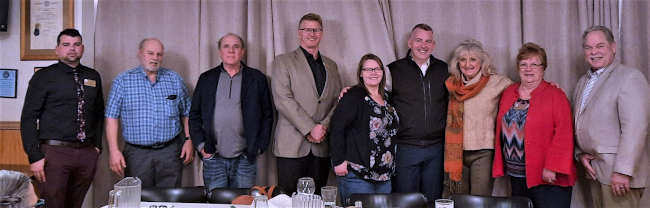
CLEARLAKE, Calif. — The Clear Lake Chamber of Commerce is currently working on a new web page and will be hosting several events at Highlands Park.
The new board is encouraging a working partnership with our community neighbors and nonprofits to benefit the economic welfare of our south county communities and businesses.
Board members are Tim Biasotti of Biasotti Barbeque; Russ Cremer, retired, Bank of America and Clearlake City Council member; Bob Alderman, owner of Vista Del Largo Resort, Clearlake; Brock Falkenberg, Lake County superintendent of schools; Jamie Yates, dispatcher for AAA; Dan Janakes, Konocti Unified School District financial controller; Joan Jacobs, Keytonia Publishing; Stephanie Codling, retired; Russell Perdock, Adventist Health and Clearlake City Council member; and Denise Loustalot of Big O Tires.
- Details
- Written by: California Insurance Commissioner’s Office
The FAIR Plan is an association made up of all admitted insurance companies to be the state’s property “insurer of last resort.”
“Agriculture is critical to our continued economic recovery. That’s why when leaders in this sector first shared their challenges in getting insurance coverage, we listened. We worked with Sen. Rubio, legislative leaders and the governor to pass SB 11 to help address these issues,” said Commissioner Lara. “The department of Insurance is changing how the FAIR Plan operates as part of a broader solution to help protect these businesses, especially those vulnerable to climate-intensified wildfires.”
Following Gov. Gavin Newsom’s signing of Senate Bill 11 authored by Sen. Susan Rubio, the State Legislature and the California Department of Insurance have urged the FAIR Plan to act as promptly as possible.
Not wanting to add to the FAIR Plan’s delays, the department, in its approval letter, noted some additional commercial coverage issues overall that the FAIR Plan must resolve at a later date as the department reviews the FAIR Plan’s entire commercial property insurance program in the months ahead to ensure it truly “takes all comers.”
“Helping consumers hurt by devastating wildfires has been my top priority as Chair of the Senate Insurance Committee,” said Sen. Susan Rubio, author of SB 11. “I am happy to see the Department of Insurance implement legislation I passed to protect California farmers and their workers.”
California’s farmers, ranchers, and vintners, among other agricultural businesses, live and work in more rural, outlying areas that may be especially vulnerable to wildfires.
This makes having more and better options for insurance coverage critical to these businesses’ ability to operate and thrive in their communities.
Department of Insurance data shows that some agricultural businesses have been left without coverage by insurance companies.
“This approval means California’s FAIR Plan can do its job and add much-needed protection for those farmers and ranchers that have found their insurance policies canceled or non-renewed. Given the current wildfire challenges facing California, our agricultural community is fearful of what may happen this year without this additional coverage,” said Jamie Johansson, president of the California Farm Bureau Federation. “We thank Commissioner Lara for supporting and expediting this new coverage and Senator Rubio for championing this legislation to protect California’s farmers and ranchers. We know that we have a leader in Commissioner Lara to get things done and look forward to continuing to partner with him on long-term coverage solutions for California’s agricultural community.”
CDFW announces start of commercial crab fishery and recreational use of crab traps in Fishing Zone 3
- Details
- Written by: California Department of Fish and Wildlife
The commercial fishery will open in that area under a Fleet Advisory at 12:01 a.m. on Wednesday, Dec. 29, 2021, with a presoak period to begin at 8:01 a.m. on Sunday, Dec. 26.
The commercial fishery 40-fathom depth restriction will also be lifted in Fishing Zone 4 beginning at 8:01 a.m. on Dec. 26. The presence of humpback whales within zones 3 and 4 has continued to decline, lowering the risk of entanglements.
Based on data collected during the most recent risk assessment, the California Department of Fish and Wildlife director has determined that risk of entanglement has declined, and it is time to provide fishing opportunities in all fishing zones.
However, informed by requests from port and crab boat owner associations in Zone 3 to promote a fair and orderly fishery, the season delay in Zone 3 will continue until Dec. 29. These groups have requested additional time to prepare and set gear for an orderly start to the commercial fishery. This also gives the remaining whales additional time to leave the fishing grounds, further reducing risk of entanglement when the season opens. For a map of all fishing zones, see here.
It has been a tremendous undertaking to conduct four risk assessments over the last seven weeks to inform CDFW’s Risk Assessment Mitigation Program (RAMP) for the Dungeness crab fishery. Partnering researchers and federal agencies have conducted numerous aerial and vessel-based surveys to observe marine life concentrations along the coast of California.
“Partner surveys, recommendations from the Dungeness Crab Fishing Gear Working Group and other data informs the Risk Assessment Mitigation Program,” said CDFW Director Charlton H. Bonham. “All fishing zones will soon be open and we should all be thankful to everyone who participated in this large collaborative effort that works to use the best available science to manage an important California fishery.”
Available data indicate whales remain in zone 3, particularly in waters off Pigeon Point between 50 and 100 fathoms. As a result, Director Bonham is also continuing a Fleet Advisory for all fishing zones and reminds both the commercial and recreational fisheries to implement best practices, as described in the Best Practices Guide.
New this season is the addition of entanglement risk delays to the fair start provision described under Fish and Game Code section 8279.1. This provision prohibits a person from taking, possessing onboard or landing crab for commercial purposes from a vessel in an area previously delayed due to marine life entanglement risk, human health risk (e.g. domoic acid), or poor crab quality for a period of 30 days from the date of the opening if that vessel previously participated in other commercial Dungeness crab fishing areas (including those in Oregon and Washington) during the same season. Fair start delays will expire for zone 4 at 12:01 a.m. on Saturday, Jan. 15, 2022, and for zone 3 at 12:01 a.m. on Friday, Jan. 28, 2022.
For more information related to the risk assessment process, please visit CDFW’s Whale Safe Fisheries page or more information on the Dungeness crab fishery, please visit CDFW’s Crab page, including FAQs for the 2021-22 season of the commercial fishery and FAQs for the new recreational crab trap regulations.
- Details
- Written by: Community First Credit Union
“Maggie,” powered by artificial intelligence, has been helping Community First members since April of 2020 by making account transfers and payments, checking balances and answering debit card issues, 24/7.
Now, Maggie can understand, answer and carry out commands in Spanish.
“In our five-county footprint, a significant portion of our members tell us they are more confident when banking in Spanish,” said Scott Johnson, CEO of Community First.
If one of Community First’s members queries Maggie in Spanish, the banking bot instantaneously uses Spanish during the remainder of the transaction or chat session.
There is no need for a fork-in-the-road to indicate if you want an English or Spanish language experience; Maggie ascertains the language you’re using based on your initial question or directive.
“Maggie is smart with language detection,” said Ravi Shankar, CEO of ACTIVE.Ai, the firm that Community First employed to assist with its banking bot. “It’s all about making it easy on the user and giving the user a seamless experience, which Maggie can now do in two languages,” he added.
An announcement of Maggie’s bilingualism was included in the October newsletter to the credit union’s 60,000 members.
Since then, a question in Spanish (which translates to, “What is your routing number?”) was the third-most asked question of the month.
“So we know members are already tapping into Maggie’s Spanish-language abilities,” said Johnson.
In addition to Spanish-speaking Maggie, Community First is the only Redwood Empire-based financial institution with a complete version of its website available in Spanish.
It also remains the only local bank or credit union with any banking bot powered by artificial intelligence.
“The fastest growing demographic group in our marketplace is Hispanics. They account for 25.2 percent of the population we serve, and 29.1 percent of our employee base. We make it a priority to have bilingual staff in every branch and office, and we felt we needed to do the same for our online banking users,” Johnson explained.
Community First is a not-for-profit financial cooperative founded by local teachers in 1959. It has 60,000 local member-owners, $741 million in assets, and has provided nearly $3 billion for local home and car loans since its inception. In addition to providing traditional consumer banking products at its 11 area branches and via online and mobile devices, it also offers products that no one else offers in the United States.