 How to resolve AdBlock issue?
Business News
- Details
- Written by: Editor
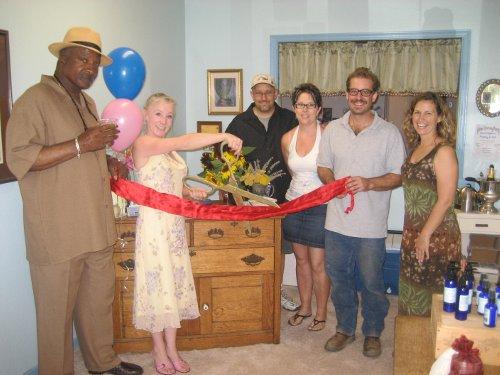
CLEARLAKE OAKS – Remington Plumbing & Bath opened its doors and held a grand opening June 24.
Chris and Katy Remington have moved into the area, and have joined the business community. They have combined their talents – two businesses in one.
Chris Remington is usually out working on new and existing plumbing projects for commercial and residential customers.
Katy Remington has added to the plumbing business location a beautiful bath shop. You can find lotions, soap, teas, and body care products for yourself or for gifts. Many of the labels were from locals. You can find everything you need to destress, relax and care for your body.
Stop by and see Chris and Katy Remington with Remington Plumbing & Bath at 13300 E. Highway 20, Clearlake Oaks, in the Big Oak Plaza, or give them a call at 707-998-1168.
- Details
- Written by: Editor
Supported by a broad coalition of environmentalists, private landowners and the timber industry, this bill was introduced to protect private forestland from development while keeping intact private property rights, and the jobs and businesses that are tied to the land.
“The current tax code makes it hard for conservation organizations to manage and restore our forests,” said Congressman Thompson. “This bill is important for the health of our forests and forest jobs.”
“A massive forest ownership conversion has taken place with nearly 84% of America’s industrial forests changing hands in the past 12 years,” said Tom Tuchmann, President of Portland, Oregon-based US Forest Capital. “Notwithstanding the economic downturn, transaction activity remains strong, creating opportunities for large-scale conservation purchases. With funding for such purchases being the limiting factor, tools such as these Community Forestry Bonds will be of benefit to all.”
Fast action is needed. While deforestation has been balanced by reforestation of agriculture lands in recent decades, the U.S. Forest Service estimates that 23 million acres of forestland will be lost by 2050. There are multiple reasons for this trend, including the still significantly more lucrative residential and commercial real estate market, tax policy, global competition, loss of mill infrastructure and changing inter-generational demographics.
“The Bible says we shall reap what we sow and this legislation will enable nonprofit organizations to sow forest lands with seeds of conservation and forest management that will protect and preserve forests for generations to come,” Rep. McDermott, a senior Member of the House Ways and Means Committee, said.
California’s Redwood Forest Foundation’s recent acquisition of the Usal Redwood Forest was one community’s response to these massive ownership changes. “The Foundation would like to thanks Congressman Thompson for his leadership on this important issue,” said Art Harwood, Executive Director of the Redwood Forest Foundation. “Community Forestry Bonds will provide RFFI and our communities with a funding tool that will keep our forests working for the economic, environmental and social attributes they provide”.
The bill is supported by an unusual coalition among conservation, timber and financial interests and simply modifies the tax code to allow municipal revenue bonds to be issued on behalf of a organizations like RFFI to purchase tracts of land. Such acquisition protects the land from development and fragmentation while allowing jobs that depend on harvesting to continue.
- Details
- Written by: Editor
SACRAMENTO – Lake County wines once again performed well at the 2009 California State Fair Commercial Wine Competition, with 37 wines garnering medals, including one Double Gold, five Gold, 18 Silver and 13 Bronze awards.
First held in 1855, the California State Fair Commercial Wine Competition is by far the oldest wine competition limited to vitis vinifera grapes in America and is firmly established as the most prestigious of American Wine Competitions. Many industry leaders recognize it as the most meaningful of the major competitions restricted to California wines.
At this year’s Wine Competition, more than 2,600 wine entries were received from more than 600 participating wineries. Sixty-eight professional wine judges awarded a total of 1,895 medals, including 43 Double Gold, 220 Gold, 1,028 Silver, and 604 Bronze awards.
It is the only competition that requires all wines to be entered based on the American viticultural area (AVA, also known as an appellation) where the grapes are grown, not where the winery is located.
To further focus on the event’s unique attributes and on the importance of the wine grapes, duplicate awards are presented to each single vineyard grape grower or the winery estate vineyard manager. This applies to all award-winning wines from single vineyards or estate vineyards.
This is the first wine competition in the world ever to honor the grape growers and vineyard managers this way.
Wines produced from primarily Lake County winegrapes were well-represented in medals and in varietals.
This year’s winners included zinfandel, sauvignon blanc, petite sirah, cabernet sauvignon, merlot, sangiovese, primitivo, chardonnay, syrah, muscat, pinot noir, pinot gris and pinot grigio, as well as blends that include other varietals.
DOUBLE GOLD
Wildhurst Vineyards was awarded Best Zinfandel of California Double Gold for its 2007 Lake County Zinfandel, with a score of 98. Begun in 1966 when fifth-generation pear grower Myron Holdenried planted a former pear orchard with 30 acres of zinfandel grapes, Wildhurst Vineyards has consistently won top awards and high ratings. Other Wildhurst wines earned awards: Gold for the 2006 Lake County Merlot Reserve, Silver for the Lake County 2008 Sauvignon Blanc Reserve, Bronze for the Lake County 2008 Muscat, and Bronze for the Lake County 2006 Petite Sirah Reserve.
Winemaker Mark Burch’s commitment to produce hand-crafted fruit-focused wines that showcase the quality of the Lake County winegrape growing region is evident in his signature wine – sauvignon blanc – and in the winery’s other award-winning varietals including cabernet sauvignon, cabernet franc, chardonnay, and zinfandel. A friendly tasting room is located in the restored Odd Fellows Hall in
downtown Kelseyville.
GOLD
Hawk and Horse Vineyards was awarded Best of Class North Coast Appellations Gold for its Lake County 2006 Cabernet Sauvignon Latigo, Dessert Wine with a score of 94 and the Lake County 2006 Cabernet Sauvignon garnered Silver. Located on Highway 29 at the Diamond B Ranch in Lower Lake, Hawk and Horse Vineyards is open for tasting and tours by appointment.
Passionately dedicated to quality from the ground up – from the selection of vines and vineyard sites to the most carefully detailed farming practices – owners Tracey and Mitch Hawkins pay special attention to every aspect of the wine growing process. With soil and climate perfectly suited to growing Bordeaux varietals of world-class distinction, Hawk and Horse Vineyards specialize in cabernet sauvignon.
The wines are attentively hand-crafted from fruit grown on their certified organic vineyard located in the Red Hills AVA. Family-owned and operated, they take great pride in their farming practices and are certified Demeter Biodynamic and CCOF organic.
Shannon Ridge Vineyards & Winery, which operates a tasting room on Highway 20 in Clearlake Oaks, was awarded Gold with a score of 94 for both the Lake County 2007 Cabernet Sauvignon and the Lake County 2007 Zinfandel. The Lake County 2007 Wrangler Red and the 2008 Lake County Sauvignon Blanc Ranch Collection were each awarded Silver. The Lake County 2008 Chardonnay Ranch Collection, Lake County 2007 Petite Sirah, and Lake County 2007 Syrah were all awarded Bronze.
After meeting at a Napa Valley winery where they both worked, Clay and Margarita Shannon would eventually use their common vision to take the reins with their own winery. Shannon Ridge uses fruit from the High Valley AVA in Clearlake Oaks, where the Shannons have pioneered more than 300 acres of mountain vineyards. Sited in blankets of brick-red earth – at altitudes up to 2,400 feet – the vineyards are nestled between the waters of Clear Lake to the south and snow-capped mountains to the north. The lean and rocky volcanic soil has kept its promise to grow vines that produce small berries with concentrated flavors, which compose the luscious, fruit-driven wines that lift Shannon Ridge’s reputation to the same elevations as the grapes that distinguish it.
While the Robledo Family Winery is located in Sonoma, they own vineyards in Lake, Sonoma, and Napa counties. The winery’s Lake County 2007 The Seven Brothers Sauvignon Blanc was awarded Gold and a score of 94. Lake County Wine Studio in Upper Lake offers tastings of Robledo Family Winery wines.
SILVER
Barsetti Vineyards – Lake County Cabernet Sauvignon 2005
Bell Hill Vineyards – Lake County Merlot 2005 and Lake County Merlot2004
Benziger Family Winery – Lake County Sauvignon Blanc 2008
Brassfield Estate – High Valley Zinfandel 2005, High Valley Pinot Noir 2006, and High Valley Serenity
Proprietary White Wine 2007
Guenoc – Lake County Petite Sirah 2006
Hallcrest Vineyards – Lake County Zinfandel Limited Production 2005
Hawk and Horse Vineyards – Lake County Cabernet Sauvignon 2006
Matchbook – Lake County Cabernet Sauvignon 2007
Robledo Family Winery – Red Hills Cabernet Sauvignon El Rey 2005
Rosa d’Oro Vineyards – Lake County Sangiovese 2007 and Lake County Primitivo 2007
Shannon Ridge Vineyards & Winery – Lake County Wrangler Red 2007 and Lake County Sauvignon Blanc Ranch Collection 2008
Shed Horn Cellars – Lake County Sauvignon Blanc 2008
Wildhurst Vineyards – Lake County Sauvignon Blanc Reserve 2008
BRONZE
Bell Wine Cellars – Lake County Sauvignon Blanc 2007
Brassfield Estate – High Valley Pinot Grigio 2007 and High Valley Eruption, Proprietary Red Wine 2005
Guenoc – Lake County Sauvignon Blanc 2008
Rosa d’Oro Vineyards – Lake County Rosato Limited Release 2007
Red Lava Vineyard – Red Hills Syrah 2005
Shannon Ridge Vineyards & Winery – Lake County Chardonnay Ranch Collection 2008, Lake County Petite Sirah 2007, and Lake County Syrah 2007
Shed Horn Cellars – Lake County Cabernet Sauvignon 2006
Wildhurst Vineyards – Lake County Chardonnay Reserve 2007, Lake County Muscat 2008 and Lake County Petite Sirah Reserve 2006
These award-winning wines are available to taste and purchase at the California State Fair, Aug. 21 through Sept. 7 in Sacramento.
Lake County is part of the North Coast AVA, which also encompasses Napa, Sonoma, and Mendocino counties. Within Lake County, five other AVAs exist – Clear Lake AVA, Benmore Valley AVA, Guenoc AVA, and the recently approved Red Hills AVA and High Valley AVA.
For visitor information, contact the Lake County Visitor Information Center at 800-525-3743 or
- Details
- Written by: Editor
The dinner meeting will begin at 6:30 p.m. at Main Street Cafe, 14084 Lakeshore Drive, Clearlake.
To RSVP call the chamber at 707-994-3600.