
Business News
SACRAMENTO – State Sen. Bill Dodd (D-Napa) has introduced a new bill to help deter harmful emissions from oil refineries.
The bill would increase fines for serious violations of emissions standards that sicken people or force shelter-in-place orders.
“There are already fines on the books for illegal refinery emissions, but the most common fine hasn’t been increased since Richard Nixon was in the White House,” said Dodd. “When people are sickened by refinery emissions or forced to shelter-in-place, there should be stiffer penalties. My bill reinforces that oil companies should take proactive steps to avoid violations in the first place.”
Dodd’s bill, SB 1144, would triple existing fines for violations of emissions standards if the violations cause a health problem or impact over 25 people.
Existing law doesn’t allow increased penalties for violations that injure nearby residents or for refineries with multiple violations. Currently, the maximum amount for the most common level of fines is $10,000 and hasn’t been adjusted since 1974.
Dodd’s bill would set the new fine at $30,000, and if refineries are found negligent, the amount would go up to $75,000 per day.
In instances where a refinery fails to correct a known violation or intentionally violates standards, the violations would be even greater. For serial offenders with multiple serious violations within 36 months, the fines could be as much as $500,000 per day.
“Representing communities that house several refineries, I want to encourage the industry to be proactive in meeting their duty to neighboring residents,” said Senator Dodd. “This measure isn’t a silver bullet for addressing safety, but it certainly provides greater incentive to act responsibly.”
Dodd’s district includes the majority of the Bay Area’s refineries. In September 2016, numerous Vallejo residents were sickened by a refinery incident that triggered over 1,500 complaints.
The state’s Office of Emergency Services reported that area hospitals and medical facilities treated 120 patients for headaches, nausea, dizziness, and burning of the eyes, nose and throat.
The Bay Area Air Quality Management issued a notice of violation to the refinery in Rodeo for that incident.
In May, a power outage at a refinery in Benicia resulted in the release of over 80,000 pounds of sulfur dioxide and caused shelter-in-place orders for area residents, businesses and schools.
The funds from the fines in Dodd’s bill would be available to support more robust monitoring and enforcement. The bill is expected to come up for a committee vote next month.
Dodd represents California’s Third Senate District, which includes all or portions of Solano, Napa, Sonoma, Yolo, Sacramento and Contra Costa counties. Visit his Web site at www.sen.ca.gov/dodd.
The bill would increase fines for serious violations of emissions standards that sicken people or force shelter-in-place orders.
“There are already fines on the books for illegal refinery emissions, but the most common fine hasn’t been increased since Richard Nixon was in the White House,” said Dodd. “When people are sickened by refinery emissions or forced to shelter-in-place, there should be stiffer penalties. My bill reinforces that oil companies should take proactive steps to avoid violations in the first place.”
Dodd’s bill, SB 1144, would triple existing fines for violations of emissions standards if the violations cause a health problem or impact over 25 people.
Existing law doesn’t allow increased penalties for violations that injure nearby residents or for refineries with multiple violations. Currently, the maximum amount for the most common level of fines is $10,000 and hasn’t been adjusted since 1974.
Dodd’s bill would set the new fine at $30,000, and if refineries are found negligent, the amount would go up to $75,000 per day.
In instances where a refinery fails to correct a known violation or intentionally violates standards, the violations would be even greater. For serial offenders with multiple serious violations within 36 months, the fines could be as much as $500,000 per day.
“Representing communities that house several refineries, I want to encourage the industry to be proactive in meeting their duty to neighboring residents,” said Senator Dodd. “This measure isn’t a silver bullet for addressing safety, but it certainly provides greater incentive to act responsibly.”
Dodd’s district includes the majority of the Bay Area’s refineries. In September 2016, numerous Vallejo residents were sickened by a refinery incident that triggered over 1,500 complaints.
The state’s Office of Emergency Services reported that area hospitals and medical facilities treated 120 patients for headaches, nausea, dizziness, and burning of the eyes, nose and throat.
The Bay Area Air Quality Management issued a notice of violation to the refinery in Rodeo for that incident.
In May, a power outage at a refinery in Benicia resulted in the release of over 80,000 pounds of sulfur dioxide and caused shelter-in-place orders for area residents, businesses and schools.
The funds from the fines in Dodd’s bill would be available to support more robust monitoring and enforcement. The bill is expected to come up for a committee vote next month.
Dodd represents California’s Third Senate District, which includes all or portions of Solano, Napa, Sonoma, Yolo, Sacramento and Contra Costa counties. Visit his Web site at www.sen.ca.gov/dodd.
- Details
- Written by: Editor
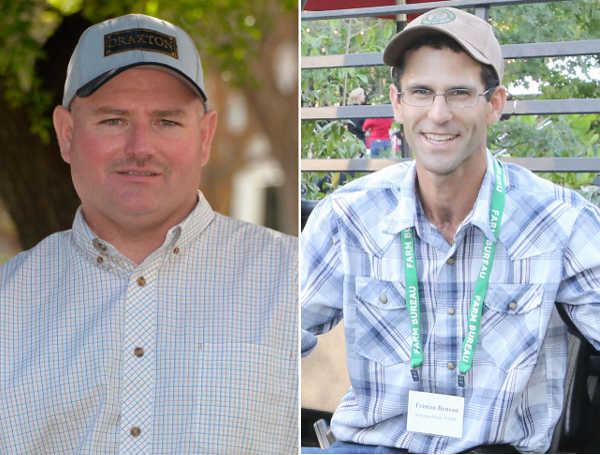
SANTA ROSA, Calif. – Pat Burns and Tristan Benson have joined the Board of Directors for Sonoma County Farm Bureau, the county's largest agricultural organization.
Burns, a Healdsburg native, started his term with Sonoma County Farm Bureau in August 2017, having previously attended board meetings as a Farm Bureau member. Burns chairs Sonoma County Farm Bureau's Labor & Safety committee and serves on the membership committee.
Burns grew up surrounded by agriculture, but wasn't actively involved in the industry until 1993 when he started working for Bevill Vineyard Management where he worked as a vineyard manager for the next 20 years.
Since 2013, Burns has worked as the general manager of Vineyard Operations for M. Draxton Wines where he oversees the vineyard operations of 250 acres of Cabernet in Alexander Valley. Additionally, Burns is in charge of grower relations and purchasing grapes for Draxton Wines.
Burns joined Sonoma County Farm Bureau's board to stay current on issues affecting agriculture. He is looking forward to the opportunity to educate the general public about agriculture and how it affects them. For Burns, water and labor are two of the most critical issues affecting local agriculture.
Benson, 34, joins the board as the chair of the Sonoma-Marin Young Farmers & Ranchers (YF&R), a committee of Sonoma County Farm Bureau for active agriculturists between the ages of 18 and 35 who are involved in production, banking, business, and many other areas of the agriculture industry.
Benson succeeds Andrew Ryan who served on the Sonoma County Farm Bureau Board for the 2016-2017 term. Benson's term on the Sonoma County Farm Bureau Board will coincide with his one year term as chair of the Young Farmers & Ranchers committee.
The YF&R committee chair began serving on the Sonoma County Farm Bureau board last year when Sonoma County Farm Bureau saw an increased need to involve future leaders in the current issues and regulations facing Sonoma County agriculture.
Benson is the foreman of Benson Ranch, a family business that produces plums, Asian pears and grain. Benson produces seed grain with a business partner that gets sold to millers. Benson also considers himself a mechanic, repairing equipment for his custom farming operation and other farmers.
Benson is passionate about agriculture and wants to see the industry thrive. While he sees challenges, he also sees many opportunities in Sonoma County. It is particularly important to Benson to encourage the next generation of farmers to continue in agriculture and ensure they are successful.
"Sonoma County Farm Bureau is excited to welcome Pat Burns and Tristan Benson to our Board of Directors," said Steve Dutton, president of Sonoma County Farm Bureau. "Pat brings years of experience in the industry, a strong passion for agriculture and commitment to watching and contesting regulations that could harm agriculture. Tristan represents the next generation of agricultural leaders and his enthusiasm to support Sonoma County ag is welcome on our board."
Sonoma County Farm Bureau currently has 17 board members, with one spot reserved for the chair of the Sonoma-Mary Young Farmers and Ranchers committee. A full list of board members is available at www.sonomafb.org/directors.
- Details
- Written by: Editor





 How to resolve AdBlock issue?