 How to resolve AdBlock issue?
Opinion
- Details
- Written by: Dave McQueen
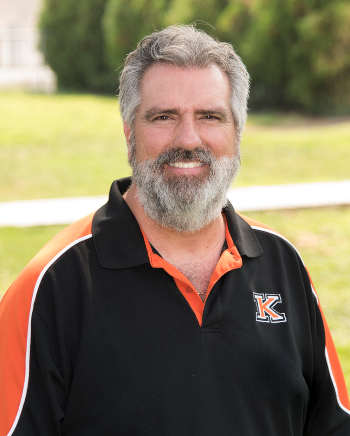
KELSEYVILLE, Calif. – The longer this pandemic goes on, the harder it is.
It feels like we were asked to run a 100-meter dash; then halfway through the race, it got changed to a marathon, and now we’re all running out of energy.
I get it. I’m tired, too.
The thing is, we’ve got to keep going – all of us together. I know it takes extra effort to do things that used to feel easy, but we can’t give up.
We’ve got to do what we can to stay safe and keep our loved ones safe, and that means wearing masks, staying socially distanced, and if you have coronavirus symptoms, staying away from other people as much as possible.
When it comes to bringing students back into the classroom, we have to choose between the lesser of two evils: 1. Putting children at risk at school (potentially exposing them to a deadly virus) or 2. Putting children at risk at home (potentially exposing them to mental health problems resulting from a lack of socialization).
I’m also thinking about the community at large. Bringing students back into the classroom will almost certainly increase the number of COVID cases. Although children who get the virus may not get seriously ill, those they come in contact with may not be able to fight off the disease. We have a lot of students in Kelseyville who live in close quarters with family members older than 55 and some who are medically fragile.
On the other hand, the impacts of long-term distance learning on our students and the limitations it places on their families is only getting worse. Even the best distance learning isn’t as good as in-person instruction.
Friends of mine mentioned that their local mechanic is trying to fix cars for a living while his second grader sits against a wall in his shop with a Chromebook on his lap trying to download his assignment.
People are making sacrifices all over our community – and not all parents have the luxury of bringing their children to work with them. Some parents are at home with young children, and if they can’t work from home, that causes financial and emotional strain.
Because this pandemic is affecting people differently, Kelseyville Unified is going to let parents make the decision about whether their child should return to school. We’ll start calling parents in November to see whether they want to continue with distance learning or to have their child back on campus part-time, and we’ll structure our classes accordingly.
When students do come back to in-person learning, our schools will maintain strict safety measures that include COVID health screenings, face coverings, and physical barriers like plexiglass desk separators. If students do not adhere to these safety measures, they’ll be sent home and moved to full distance learning.
Eventually, when there’s a vaccine and the spread of the virus is minimal, we’ll return to normal (in-person instruction every day without COVID-19 safety measures). But until then, we have to keep people as safe as possible.
To determine the spread of COVID, the state has created a color-coded tracker with four tiers: purple, red, orange and yellow. A county can only move from one tier to another after three weeks.
Tier 1 is purple. It is the most dangerous because COVID-19 is considered widespread. This means there’s been an average of more than seven new cases per 100,000 people per day for the last seven days and/or an average positivity rate for COVID-19 testing of more than 8 percent for the last seven days. Without a special waiver, we cannot bring students into the classroom when we’re in the purple tier.
Tier 2 is red, and the spread of COVID-19 is considered substantial. This means we’ve had an average of between four and seven new cases per 100,000 people per day for the last seven days and/or an average positivity rate for COVID-19 testing of 5-8 percent for the last seven days. With safety measures, we can bring small groups (cohorts) of students on campus in line with county and state guidelines (no more than 16 in a classroom at a time).
Tier 3 is orange, and the spread of COVID-19 is considered moderate. This means we’ve had an average of between one and four new cases per 100,000 people per day for the last seven days and/or an average positivity rate for COVID-19 testing of 2-5 percent for the last seven days. With safety measures that might be slightly less restrictive, we can bring students back in cohorts.
Tier 4 is yellow, and the spread of COVID-19 is considered minimal. This means we’ve had an average of fewer than one new case per 100,000 people per day for the last seven days and/or an average positivity rate for COVID-19 testing of less than 2 percent for the last seven days. This is when we can return to normal.
As of late October, Lake County was in the red tier with numbers that were sending us toward the purple tier. We probably won’t hit orange until early next year, which means we’ll be in either distance learning or a combination of in-person and distance learning (also called the hybrid model) for some time.
For now, we remain in full distance learning. I understand it isn’t as good as in-person learning, but it’s better than having people we love get really sick or die. In case you don’t know, it’s pretty impressive the way teachers and students have adjusted.
Of course, some people are struggling more than others, but a lot of teachers and students are doing amazing work virtually.
I’ve said this before, but I’ll say it again. Parents, please keep asking your school for what you need, and we’ll do everything we can to provide it. Of course, we have some limitations, but we also have a lot of resources to help.
At Kelseyville Unified, we continue to provide free meals for all Kelseyville students, as well as access to technology that includes hotspots, wifi via school parking lots, and Chromebooks, plus school-sponsored technical support via
For more information, visit our website at www.kvusd.org.
Dave McQueen is the superintendent of Kelseyville Unified School District.
- Details
- Written by: Lake County Democratic Party Central Committee
The endorsement process is a rigorous one, according to the party's Elections Chair Sissa Harris. It involves each prospective candidate completing a questionnaire that asks how they would approach solving issues critical to our community. It also involves interviews conducted (via Zoom, this year) by the entire Elections Committee with each candidate. "I am grateful for the patience and hard work of everyone involved," said Harris.
Board of Supervisors candidate for District 5 Jessica Pyska was endorsed by the Lake County Democratic Party before her primary in March, where she attained the majority of votes cast, but not enough to win outright and therefore is now in a runoff on the November ballot.
Ms. Pyska has deep experience in two areas of priority for Lake County – fire resilience and economic development. She is a founding member of the Cobb Area Council and recently received a $200,000 economic development grant that is being strategically invested.
She serves on several county-level committees and attends every meeting of the Board of Supervisors. To help feed the community during the current crisis, she raised almost $8,000 and three tons of food. She started two garden giveaway programs and continues to support local businesses during the Covid crisis.
Ms. Pyska has also been endorsed by Assemblymember Cecilia Aguiar-Curry as well as State Senator Mike McGuire.
Clearlake City Council candidate David Claffey is a member of the Clearlake Marketing Committee and serves on the board of directors for the Highlands Senior Center. He is currently a business content strategist for ServiceNow. He brings youth, creativity and enthusiasm to the role that city government can play in improving housing, tourism and business in the city of Clearlake.
Lakeport City Council candidate Michael Green has served the city of Lakeport on the Planning Commission for three years. Planning and zoning issues have given him a good understanding of the many and complex issues facing the city. Twenty years of Mr. Green's career was spent in journalism writing about local news. He also ran two businesses.
Mr. Green brings a balanced approach to city government, understanding the needs of residents and the business community. He appreciates that Lakeport has many strengths, from the great people who live in the city to the many recreational things to do in the area, and a city staff that has very good working relationships. Mr. Green seeks to improve the city's stock of affordable housing and looks for ways to safely increase jobs in the COVID-19 era.
Kelseyville Unified School District Board candidate Natalie Higley is new to running for office, but is not new to politics, serving as an AD4 delegate to the California Democratic Party. Ms. Higley is running for the school board because of her interest in delivering a quality education safely to school children. As a single parent, she believes that she understands how challenging educational delivery can be for both school districts and parents in these challenging times.
Ms. Higley is herself a product of the Kelseyville Unified School District, and is grateful to the many teachers and classified staff who supported her educational journey. Ms. Higley has been active in the revitalization of the school garden project, an example of a successful school and community partnership, and one way parents can engage with their children's learning. Ms. Higley is currently the political director for the International Brotherhood of Electrical Workers, Local 551.
Kelseyville Unified School District Board candidate Gilbert Rangel has 20 years of experience working in the government and nonprofit sectors, focused on programming in the areas of youth development, education and migrant communities. Currently, Mr. Rangel serves as the director for the Lake County AmeriCorps program which is focused on empowering youth to become successful in their education. Mr. Rangel's vision for the Kelseyville Unified School District is for all stakeholders to work “Together Towards Progress” so that every student has equal access and opportunity to a meaningful education.
Konocti Unified School District school board candidate Zabdy Neria is an alumni of Lower Lake High School, and is now acquiring her master's in social work. She is a children's mental health specialist, provides therapy, and advocates for the youth of this county. Ms. Neria has dedicated her life to serving the most vulnerable populations in a variety of roles. She believes in the power of community and that "together we can achieve anything."
"We have truly outstanding candidates," said Lake County Democratic Party chair Deb Baumann. "Lake County is fortunate that such thoughtful, committed people are stepping up to the plate to run for office."
For more information about the Democratic Party in Lake County visit www.lakecountydemocrats.org or www.facebook.com/LakeCountyDemocrats.
Contact the Democratic Party of Lake County at 707-533-4885 or by email at
The members of the Lake County Democratic Party Central Committee of Lake County, California, are Deb Baumann, Larry Bean, Mary Borjon, Susan Cameron, Virginia Cerenio, Doug Harris, Sissa Harris, Ceva Giumelli, Tom Jordan, Chloe Karl, Ellen Karnowski, Cathy McCarthy, John Sheehy, Stephanie Pahwa, Dave Rogers, Justine Schneider and Trish VanDenBerghe.
- Details
- Written by: Seema Verma

Each year, more than 250,000 women in the United States learn that they have breast cancer, and more than 20,000 find out they have ovarian cancer.
While most of these cancers happen randomly, about 5 to 10 percent are hereditary, meaning they are caused by genetic changes (called mutations) which are passed down in families.
Unfortunately, women with these inherited cancers have few treatment options.
That’s why the Centers for Medicare & Medicaid Services (CMS) recently extended Medicare coverage to laboratory diagnostic tests using next-generation sequencing (NGS) for patients with inherited breast or ovarian cancer.
NGS testing gives a more complete profile of cancer cells than is possible with current tests and may help identify proven, targeted treatments.
NGS tests provide the most comprehensive genetic analysis of a patient’s cancer because they can simultaneously detect multiple types of genetic alterations. CMS first began covering laboratory diagnostic tests using NGS in March 2018 for Medicare patients with advanced cancer that met specific criteria. With CMS’ recent coverage decision, more Medicare patients will have access to NGS to assist in managing other types of inherited cancers to reduce mortality and improve health outcomes.
Innovative technologies are transforming American medicine, and CMS is closely monitoring the rapid development of new tests and tools for diagnosing cancer. We want to do everything we can to support women’s health and help patients get the care they need.
In addition to providing access to this testing for women, Medicare also covers testing for prostate cancer.
All men are at risk for prostate cancer. Out of every 100 American men, about 13 will get prostate cancer during their lifetimes, and two or three men will die from it.
The most common risk factor is age. The older a man is, the greater his chance of getting prostate cancer.
Some men are at increased risk for prostate cancer. You’re at increased risk for getting or dying from prostate cancer if you’re African-American or have a family history of prostate cancer.
Medicare Part B covers digital rectal exams and prostate-specific antigen (PSA) blood tests once every 12 months for men over 50 (beginning the day after your 50th birthday).
Beneficiaries pay 20 percent of the Medicare-approved amount for a yearly digital rectal exam and for physician services related to the exam. The Part B deductible ($198 in 2020) applies. In a hospital outpatient setting, there’s also a copayment.
Beneficiaries pay nothing for a yearly PSA blood test. If you get the test from a doctor who doesn’t accept Medicare payment, you may have to pay an additional fee for the doctor’s services, but not for the test itself.
In 2018, the U.S. Preventive Services Task Force made the following recommendations about prostate cancer screening:
Men who are 55 to 69 years old should make individual decisions about being screened for prostate cancer with a PSA test.
Before making a decision, men should talk to their doctor about the benefits and harms of screening for prostate cancer, including the benefits and harms of other tests and treatment.
Men who are 70 years old or older should not be screened for prostate cancer routinely.
September is National Prostate Cancer Awareness Month, and October is National Breast Cancer Awareness Month. Please take a moment to familiarize yourself with the many preventive screening services that Medicare offers for cancer and other diseases, at https://www.medicare.gov/coverage/preventive-screening-services.
Seema Verma is the administrator of the Centers for Medicare & Medicaid Services.
- Details
- Written by: Jackee Riccio
Cartel-operated trespass cannabis grows are toxic dumps in remote, pristine habitats. They divert streams to the point of depletion, use EPA-banned pesticides that poison wildlife, water, and soil, and leave tons of trash in sensitive ecosystems. They contain plastic irrigation lines, strewn trash, makeshift water reservoirs, propane tanks, primitive camps, and planted cannabis, especially in burn scars or other exposed habitats.
The issue of trespass grows has flown under the radar for years. Hidden away, illicit growers use banned pesticides to protect their plants, poisoning wildlife and users alike.
The northern population of Pacific fishers, a candidate species for the Endangered Species Act, or ESA, now tests over 80 percent positive for rodenticides (rat poisons) – a poison in heavy use at trespass grows.
Northern Spotted Owls – an ESA-listed species – test 70 percent positive for the same poisons. Even game species have tested positive, including mule deer. Incredibly, trespass growers will even bait fishing hooks with poisoned meat to kill foraging wildlife.
The amount of wildlife poisoned by pesticides shows how it has bioaccumulated through the food web, leading to major ecosystem implications. Furthermore, those toxics are sometimes weaponized by growers to target law enforcement, and can readily poison unsuspecting hikers. Until recently, it was “out of sight, out of mind.” That is now over.
Federal appropriations requests for reclamation and prevention championed by Congressmen Huffman (CD-2) and LaMalfa (CD-1) are now under review in Congress, and will hopefully be approved in the coming months. The requests could mean as much as $25 million a year to address this seemingly intractable problem.
A further request was submitted under the COVID-19 stimulus plan for “shovel ready” projects, which includes reclamation. If approved, the reclamation funding would: (1) provide economic opportunity for Northern California’s rural, economically disadvantaged communities, keeping the funding and jobs local; (2) increase USFS law enforcement on California’s federal lands to preclude new grows from being established, and (3) prioritize tribal reclamation partners, furthering their participation in the management and cleanup of their ancestral territory and protection of cultural resources.
The Cannabis Removal On Public Lands, or CROP Project, working to address this issue since 2017, significantly raised the profile of this issue through national press in 2019 and has been integral to congressional action.
True to its bipartisan nature, CROP is a broad-based coalition of scientists, elected county officials, conservation interests, state and federal agencies, tribes, the legal cannabis industry, and USFS law enforcement.
Now, CROP’s mission to remove and prevent trespass grows is bearing fruit and presenting an opportunity for regional collaboration between diverse, and sometimes polarized, interests to reclaim public lands.
The CROP Project, now expanding out of the Emerald Triangle into Siskiyou, Shasta and Lassen counties, looks forward to working with interests to solve this problem.
In the meantime, hikers and recreational users of California’s public lands need to exercise extreme caution should they come across a trespass grow. Public land users that stumble upon a trespass grow should immediately and discretely leave the scene, preferably going out the same way you came in (most growers are armed).
Remember the location of the site, and immediately report it to 1-888-334-CALTIP (888-334-2258), the anonymous environmental crime tip-line for CDFW.
To learn more about CROP, or how to support us, please visit www.cropproject.org .
Jackee Riccio is the regional field director for the CROP Project, and resides in Humboldt County, California.