 How to resolve AdBlock issue?
Opinion
- Details
- Written by: Dr. Gary Pace
Over the past 10 days, I have collaborated with a broad set of local and state-level stakeholders to evaluate our preparedness. In meetings with healthcare professionals, a cross-section of business leaders, members of all of Lake County’s local governments, school officials, and many others, I was encouraged to find numerous partners that truly understand the risks we face, and also share a commitment to moving our County forward in a responsible manner.
On Monday, I presented a “local variance” plan to the Board of Supervisors, to accelerate reopening of eligible local businesses. I am grateful to the board, our local hospital systems, and the councils of the cities of Clearlake and Lakeport, for recognizing the great community efforts that went into this proposal, and formally supporting our submitting it to State Public Health officials, for review.
Reopening of some Lake County businesses expected May 21
Once our local variance documents are approved by the state, I will gain authority to reopen businesses that are considered “low risk” under the Governor’s Resilience Roadmap. Following Monday morning’s discussion with the board, I have decided to move forward with a plan to reopen eligible businesses May 21, pending approval by the state.
We have already attended pre-meetings with State Public Health officials, and it is probable our plan will be approved. To enable local residents and businesses to prepare, I want to share key details of that plan now. The following changes are expected to take effect Thursday, May 21:
· Childcare will no longer be restricted to children of essential workers, only, but accessible to all families, in stable groups of 10 kids or fewer, with proper precautions and disinfection.
· Outdoor dining will be permitted at restaurants (excluding gaming areas and bars), with limited seating to promote social distancing and other precautions.
· Low-risk retail establishments will be able to receive in-person customers, with a plan in place to maintain the health safety of workers and patrons.
· Some personal services will be available, including car washes, pet grooming, tanning facilities and landscape gardening.
· Outdoor museums and open gallery spaces will be permitted to reopen, as well.
· To keep all residents safe, and particularly those most vulnerable to severe complications, face coverings (masks) will be required when entering all Lake County businesses, for workers and patrons, alike, with the following exceptions:
o People that have medical conditions leading to difficulty breathing with masks should get a note from their medical provider, excusing them from wearing one.
o Children younger than two must not wear face coverings due to risk of suffocation.
o Face coverings are not recommended for children six years or under.
o Masks may not be appropriate for individuals who would have difficulty removing the covering without assistance.
If the situation remains stable, more reopening will occur 10 to 14 days later
As with other steps we have taken to loosen restrictions, we will then have to monitor COVID-19 activity in Lake County’s communities for a period of 10 to 14 days. If there is no significant increase in infections, and local healthcare partners remain well prepared for any potential surge in cases, we will take additional steps, likely Thursday, June 4, including:
· Indoor dining at restaurants, with appropriate disinfection, social distancing, and other precautions; and
· Reassignment of “day camp” activities and after school programs (carried out in stable groups of 10 or fewer, without changes from one group to another) to the permitted childcare activities category, facilitating much needed relatively low-risk group activities for children.
Reopening plans are required
Prior to reopening, all businesses must complete a reopening business plan, social distancing plan and a self-certification attestation form. All of these are available here: http://health.co.lake.ca.us/Coronavirus/Businesses.htm .
Because business owners are the experts on their own spaces and the activities associated with their work, we expect businesses will take the most appropriate precautions to keep their employees and customers safe. If complaints are received, local officials will take action to make conditions safer. The goal is to keep everyone healthy, and not further burden local business owners, so education and correction of any problems that emerge will be our primary objectives. Eventually, we would consider issuing fines, if necessary.
Statewide guidance by industry is published here: https://covid19.ca.gov/industry-guidance/ .
Please also Follow the County of Lake Facebook page, https://www.facebook.com/lakecountycagov/, as a YouTube video will soon be posted, to help guide businesses on how to navigate new requirements.
If COVID-19 activity significantly increases, restrictions may tighten again
There was much discussion during this morning’s Board meeting regarding triggers that may cause us to pause advancement of reopening, or even add restrictions back in. The situation will be continually evaluated, and no one factor will entirely drive our decision-making. However, the following events would suggest concern:
· Increasing confirmed cases of COVID-19, particularly if testing/containment capacity becomes strained.
· Clusters of cases, indicating community spread, and the probability further undocumented infections are present in significant numbers.
· Deaths or other severe complications in significant numbers, particularly if the health care system is unable to maintain capacity to respond.
Statewide stay at home order is in effect until further notice
The statewide stay at home order sets a baseline for what business-related and other activities are allowed. All California residents are currently required to stay home, unless leaving to engage in permitted activities.
COVID-19 remains a significant threat to public health in Lake County
As reported over the weekend, two further cases were documented in Lake County, and this is a clear reminder that we are not out of the woods yet. Cross-county travel, both into and out of Lake County, is very common, and active cases in neighboring Counties may result in secondary infections of Lake County residents.
Particularly as we begin to further reopen, and movement in our communities increases, it is very likely we will see an increase in confirmed cases. Because testing capacity in Lake County was so limited early on, and has now markedly improved, more confirmed positive cases does not necessarily indicate an elevated level of concern, but it does serve as a reminder that the virus remains very active in our region.
This weekend’s cases appear to have stemmed from a livestreamed Mother’s Day event produced by a community organization in inland Mendocino County. At least one Mendocino County resident and two Lake County residents have now tested positive for COVID-19. All were present at the venue for the event; they were not merely watching a Zoom presentation from home, as has been rumored.
Two participated in the presentation, which included singing. Congregate singing, particularly in an enclosed space and in close proximity, is a high-risk activity, as detailed in this recent CDC report.
The two Lake County residents who tested positive were from the same family, and there are indications that others who came into close contact with these individuals were actively moving about in the community for some period of time. While contact tracing and investigations remain ongoing, only the two cases previously reported have been confirmed, to date. Mendocino County reported over the weekend one of the Lake County residents that tested positive was hospitalized at a Mendocino County facility.
COVID-19 testing by Verily
Testing is only more critical as we take additional steps toward reopening. Thanks to the tremendous efforts of County Public Health staff, local leadership, Sen. McGuire, Assemblymember Aguiar-Curry, and the California COVID-19 Testing Task Force, Verily’s Project Baseline has now made drive-thru COVID-19 testing more robustly available in Lake County. Those with any concern they may have been exposed are strongly encouraged to visit https://www.projectbaseline.com/study/covid-19/ to complete the screening process and schedule drive-thru testing.
Frequently asked questions on drive-thru testing are available here.
More resources
– For Lake County-specific Coronavirus information, please continue to visit the Health Services Department’s website.
The Lake County Coronavirus Response Hub has additional valuable resources.
– Public Health can be reached by email,
– Up-to-date information on what businesses are open and closed, statewide, is available here.
– The most recent formal update to the state’s stay at home order, from Sonia Angell, MD, MPH, can be found here.
California’s COVID-19 Response “Resilience Roadmap,” describing the like progression of reopening of industries and business sectors, is available here.
Thank you for continuing to exercise appropriate precautions:
· Maintain social distancing and keep good hygiene.
· It remains strongly recommended that people wear masks when out.
· Vulnerable populations (over 65 and/or with chronic medical conditions) should continue to stay safe at home.
· We discourage people from crossing county lines, since this is an important way that the virus spreads.
Gary Pace, MD, MPH, is Public Health officer for Lake County.
- Details
- Written by: Dr. Gary Pace
This action marked a major step toward people getting out of their homes and back to work. Seeing progress being made toward responsible reopening, I decided to align our local orders directly with the governor’s.
Until further notice, the statewide “stay at home” order remains in effect, meaning local residents continue to be expected to shelter-in-place, except for certain allowable activities. Nonessential travel is not yet permitted.
Recent changes did facilitate three new areas of local opportunity: Lake County waterways are now open without restriction (except for appropriate social distancing); low risk retail businesses can open for phone and online sales with curbside pickup; and each county can attest to their readiness for businesses in later phases of Stage 2 to reopen, and reopen at the rate that best fits their circumstances.
The state’s assignment of industries to the various stages of the roadmap was done in consideration of broad social import and network effects (for example, childcare adds a level of risk of COVID-19 spread, but it must be more available for workers to be able to report as their offices reopen).
However, Stage 2 businesses are generally considered low-risk in terms of social mixing, and those eligible to reopen in later phases of Stage 2 include:
· Destination retail, including shopping malls and swap meets.
· Personal services, limited to: car washes, pet grooming, tanning facilities, and landscape gardening.
· Office-based businesses (telework remains strongly encouraged).
· Dine-in restaurants (not gaming areas or bars).
· Outdoor museums and open gallery places.
· Government offices that were deemed non-essential.
· Some children’s activities and childcare.
Stages 3 (“higher-risk workplaces”) and 4 (“end of stay home order”) will include businesses that encourage more contact and travel.
Stage 2 does not include:
· Hotels and lodging for leisure and tourism.
· Nightclubs, concert venues, festivals, theme parks.
· Religious services and cultural ceremonies.
· Entertainment venues – movies and gaming.
· Personal services (cosmetology, hair salons, etc.).
· Hospitality such as bars and lounges.
· Indoor museums, kids museums, gallery spaces, and libraries.
· Community centers including public pools, playgrounds, picnic areas.
Lake County has begun the process to apply for a “local variance” to the governor’s orders, which would provide the opportunity to accelerate the later phases of Stage 2 reopening. To be eligible, certain public health benchmarks must be met (stable number of cases, no new deaths, capacity to test and protect people if there is a surge in cases). We must also affirm there is a thoughtful plan in place on how to open the businesses.
As Lake County’s Public Health officer, it will ultimately be my responsibility to attest to our readiness to reopen, but the process to get to that point is collaborative, including engagement with local government and healthcare stakeholders.
Because we recently reopened local waterways, including the nationally prominent and regionally popular Clear Lake, we need to ensure there is not a surge in cases in the 10 to 14 days following that reopening. Hopefully, people have been continuing to maintain social distancing, using face coverings, and not traveling – these are going to be the things that keep us safe as we move forward to reopen. If cases start rising, it will slow down the progress we can make in reopening businesses.
The proposal for accelerating reopening in Lake County is being actively developed this week. We plan to present it to the Board of Supervisors on Monday, May 18, and if everything stays stable, we’ll submit it to the state by the end of that week.
The first day of the new openings will most probably be the Tuesday following Memorial Day weekend, May 26. This step will be a partial opening of businesses, with the full opening of Stage 2-approved businesses to occur no sooner than two weeks later, in order to make sure there continues to be no surge in cases.
We are aware that more than 20 counties around the state have already submitted their applications for accelerated reopening, but we live next to two counties that continue to have new cases.
Sonoma County documents between 5 to 15 new cases every day, and both Sonoma and Napa had a COVID-related death this past week.
Travel between our counties for work and shopping is very common, and we need to be particularly careful not to allow the virus to get a firm foothold and start spreading throughout Lake County. The main tools we have to prevent this are: restricting movement, testing, and helping people to isolate when they test positive.
We aim to move forward carefully, in an effort to balance opening for business with protecting the community from widespread infection. When the local variance takes effect, masks will be required in business and offices, for both workers and patrons. As movement increases, and fewer people are staying home, it is almost certain COVID-19 will enter our communities. We will need to institute and maintain protections, to help slow the spread.
Businesses eligible to reopen will self-certify their compliance with social distancing and other protocols. Guidance and self-certification forms are available at http://health.co.lake.ca.us/Coronavirus/Businesses.htm .
Statewide industry-specific guidance is also available here: https://covid19.ca.gov/industry-guidance/ .
Business owners are the experts on the services they provide, and we expect they will want to keep the public safe. Eligible businesses in Stage 2 will need to have plans and post the plans at their entry. Masks will need to be a part of the plan.
If there are complaints from the public about businesses not following good, safe practices, inspectors will visit and help make the space safe. If repeated efforts to educate are not successful, fines may result.
We will be watching closely, to make sure public health is not suffering due to these changes. If the number of cases starts to rise, if there are significant outbreaks in vulnerable groups, or if area hospitals start getting overwhelmed, we will be forced to add restrictions back in, or even go completely back to sheltering-in-place. These strategies are successful, as evidenced in other parts of the country and world, and will be reinstituted, if needed.
This is a new chapter for us in the response to this pandemic. We appreciate the high level of cooperation in the county, and we realize this has been a very difficult time. Particularly as we loosen restrictions, it is essential that people:
· Maintain social distancing and keep good hygiene.
· It remains strongly recommended that people wear masks when out.
· Vulnerable populations (over 65 and/or with chronic medical conditions) should continue to stay safe at home.
· We discourage people from crossing county lines, since this is an important way that the virus spreads.
For Lake County-specific Coronavirus information, please continue to visit the Lake County Health Services Department’s website.
The Lake County Coronavirus Response Hub has additional valuable resources.
If you still have questions, send an email request to
You can also call during business hours: 707-263-8174.
We really want to move forward in a safe and thoughtful way, allowing people more social and economic opportunities without risking public health. Thank you for doing your part!
Dr. Gary Pace MD, MPH, is the Public Health officer for Lake County, California.
- Details
- Written by: Dave McQueen
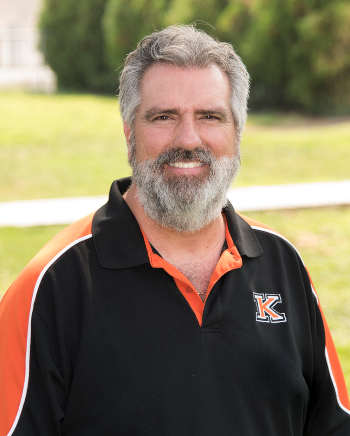
KELSEYVILLE, Calif. – In 1939, when Britain was preparing for World War II, the government created the now-famous slogan, “Keep Calm and Carry On.”
Seems like good advice right about now, so that’s what we’re doing at Kelseyville Unified School District. We’re just focusing on taking care of our staff and students. Here’s the latest.
Big thanks to our teachers and support staff
Teachers all over Lake County are working hard to connect with students and help them learn, oftentimes while they’re also caring for their own kids at home. I’d like to thank all the teachers and other school district employees who are working remotely with students and their families.
Remote learning isn’t as good as being in the classroom, but it’s the very best we can do under the circumstances.
I’d also like to call attention to the impressive work of our food services, maintenance, and information technology staff.
Since we closed schools in March, Kelseyville Unified Food Service employees have remained at work every day, Monday through Friday, even throughout spring break, to provide as many as 600 meals a day to children who depend on us to feed them.
The maintenance crew and custodians are keeping campuses clean, safe and in good repair; and the IT team has remained responsive and helpful while fielding an enormous number of calls.
Where to get information (and lunch)
Because we are dealing with a situation that changes all the time, it is important to know where to find the latest information. In addition to communicating with students and parents via phone, text, and email, we also post information on our Facebook page and on our website.
For those in the Kelseyville area, be aware that the next on-site schoolwork drop-off and pick-up will be May 4. Visit www.kvusd.org and click on Remote Learning, then Coronavirus Update for the latest.
We continue to serve lunch daily at Kelseyville High School from 11:30 a.m. to 12:30 p.m. for all children and teens under 18 years old. They can also pick up breakfast for the following morning during the KHS lunch service.
After lunch service, we start preparing boxes for delivery. Delivery starts at 2:30 p.m. If anyone needs food delivered, let us know by 2 p.m. by contacting Food Service Director Michelle Borghesani at
The District Office remains open every day and school offices are open daily between 11 a.m. and 2 p.m. If you need to visit us, please remember to wear a mask.
Grades, graduation and other unknowns
We know people are curious about grades, graduation ceremonies, and other school-related questions. Here’s what we know right now.
For grades, we are waiting for the California Department of Education to provide guidance, but I can promise we will not penalize kids for a situation that wasn’t their fault.
We will find a fair and equitable way to give students the credit they deserve for working hard and achieving academically, and we won’t punish those who were dealing with unforeseen challenges related to the COVID-19 pandemic that prevented them from focusing on their studies.
Kelseyville High School is sending progress reports with additional information about grading soon.
As for eighth-grade promotion and high school graduation, we must comply with Lake County Public Health orders that do not allow large gatherings, so at this point, we do not plan to hold any ceremonies. However, if things change, we can adjust quickly and host events to celebrate our students.
Same goes for returning to school before the end of the school year, if the shelter-in-place order stands, we’ll continue with remote learning. If things change and we are allowed to re-open schools, we will. Given what we know at this point, I’m not expecting to reopen schools until fall of 2020.
This news hits some students harder than others. I’m sorry that our high school seniors aren’t able to celebrate their final spring at Kelseyville Unified with classmates and friends.
As for returning to school, in late April, Gov. Newsom talked about California schools reopening in July or August. In Kelseyville, we are making plans for whenever students return, coordinating with the California Department of Education and Lake County Public Health to make sure everyone can be as safe as possible.
Resources for parents
If you are home with students who are looking for more to do, we’ve posted resources on our website. Visit www.kvusd.org and click on the Remote Learning menu at the top, then click on Educational Resources.
Another great resource is www.healthychildren.org . A local pediatrician recommended it to me.
She said, “It includes information about how to protect your family from COVID-19, how to talk to your children about it, and how to recognize whether your children need extra support.”
This is a hard time, but it will end. Concentrate on the good things in your life, and we’ll be back together again before you know it.
In the meantime, keep calm and carry on.
Dave McQueen is the superintendent of Kelseyville Unified School District.
- Details
- Written by: David Santos
Our hospital corridors, usually bustling with caregivers and patients, have been unusually quiet these past few weeks. Many of the beds in our inpatient units have gone unfilled. The number of patients suffering from heart attacks, strokes and chest pains has appeared to decline. Fewer emergency surgeries are being performed and nonemergent surgeries are being postponed.
While fewer emergencies may sound like cause for celebration, we know that the reality is grim. As much as we’d like to believe it’s because people are not suffering from life-threatening conditions, we know that’s not the case.
Across the communities we serve, loved ones, including the elderly and medically vulnerable, have been delaying or avoiding care out of fear of coming to the hospital during a pandemic. In other cases, our community members feel a sense of duty to avoid the hospital to not overwhelm healthcare resources.
It’s not an isolated issue. The number of hospital visits are dropping around the world – an unusual occurrence at the tail end of flu season.
We’ve seen our community take extraordinary measures amid this pandemic to practice responsible social distancing, “flattening the curve” and keeping our healthcare workers safe. We’re grateful for that, but the measures – meant to prevent an unmanageable surge of COVID-19 patients – have had unintended consequences.
At Adventist Health, the number of people coming into our emergency department has decreased by more than half across our multi-state system.
This is distressing for those who are suffering from otherwise minor conditions that can worsen without immediate medical care. A man in one of our communities, for example, took a bad spill off his bicycle and fractured a bone. He called the hospital to see if it was safe to come in for treatment.
Let me answer his question for everyone who might be asking themselves the same thing during this pandemic: Yes, our hospitals are safe. Emergencies happen, and you should never delay care.
We recognize that some might fear going to the hospital during these uncertain times. But we should never let fear get in the way of receiving needed medical care. If we allow it to, then this pandemic will have indirectly claimed more lives and wreaked more havoc than it should have.
Our community has done its job socially distancing. That has provided us adequate time to prepare for any potential surge of patients, put into place infection prevention measures to halt the spread of COVID-19 within our hospital walls, and most of all, keep our patients and caregivers safe.
Adventist Health Clear Lake wants to continue keeping our community healthy and safe. Part of that is providing safe, high-quality emergency care. Emergency care should never be put off or avoided, especially during a pandemic.
Emergencies happen. Please don’t delay your care.
David Santos is the president at Adventist Health Clear Lake in Clearlake, California.