
Opinion
The Governing Board of the Yuba Community College District has two distinct duties.
Clearly, our first duty – maintaining the high quality of education received by the over thirteen thousand students who attend classes at one of our six campuses – must never waiver. But we have another important duty as well – to be vigilant in protecting local taxpayers.
We are extraordinarily proud of the diligence and care taken by our fellow trustees in reducing the burden to our taxpayers.
Consider this: Within the last five years, the Yuba Community College District’s Board of Trustees has approved refinancings of voter-approved general obligation bonds resulting in taxpayer savings of over $100 million. These refinancings cut taxpayers’ future school bond property tax payments by 40 percent.
Let’s stop and think about this. Imagine you were able to cut the cost of your own home mortgage or monthly rent by nearly half. For most of us, this would be an incredible financial windfall! Yet this is exactly what the Yuba CCD Board of Trustees achieved without fanfare or publicity.
But their actions were certainly applauded by members of our community who monitor the impact of the district’s financings on taxpayers.
Pat Miller, president of the Sutter County Taxpayers Association, said the refinancing of the district’s bonds was “certainly a big tax savings for property owners in the eight counties of the Yuba College district,” adding that the Taxpayers Association was “extremely pleased” with the refinancing. (Territorial Dispatch, Feb. 21, 2017)
This same commitment to fiscal conservatism is what led the Yuba CCD Board to place Measure C on the March 2020 ballot.
Our local community college campuses are among our most valuable public assets. Measure C will provide the district with a source of low-interest funding to preserve and protect these public institutions for decades to come and allow our local colleges to expand their job training and technical education programs.
Our colleagues on the Yuba CCD Board of Trustees deserve praise and thanks for their commitment to building Yuba CCD into one of the state’s top community colleges while making sure that taxpayers get the best deal possible.
As we enter the next decade, this conservative stewardship will allow Yuba CCD to continue to play a significant role in the overall economic health of our communities and neighborhoods.
Richard Teagarden is president and Michael Pasquale is the trustee representing Area 4 on the Yuba Community College District Board of Trustees. The district serves several Northern California counties, including Lake.
Clearly, our first duty – maintaining the high quality of education received by the over thirteen thousand students who attend classes at one of our six campuses – must never waiver. But we have another important duty as well – to be vigilant in protecting local taxpayers.
We are extraordinarily proud of the diligence and care taken by our fellow trustees in reducing the burden to our taxpayers.
Consider this: Within the last five years, the Yuba Community College District’s Board of Trustees has approved refinancings of voter-approved general obligation bonds resulting in taxpayer savings of over $100 million. These refinancings cut taxpayers’ future school bond property tax payments by 40 percent.
Let’s stop and think about this. Imagine you were able to cut the cost of your own home mortgage or monthly rent by nearly half. For most of us, this would be an incredible financial windfall! Yet this is exactly what the Yuba CCD Board of Trustees achieved without fanfare or publicity.
But their actions were certainly applauded by members of our community who monitor the impact of the district’s financings on taxpayers.
Pat Miller, president of the Sutter County Taxpayers Association, said the refinancing of the district’s bonds was “certainly a big tax savings for property owners in the eight counties of the Yuba College district,” adding that the Taxpayers Association was “extremely pleased” with the refinancing. (Territorial Dispatch, Feb. 21, 2017)
This same commitment to fiscal conservatism is what led the Yuba CCD Board to place Measure C on the March 2020 ballot.
Our local community college campuses are among our most valuable public assets. Measure C will provide the district with a source of low-interest funding to preserve and protect these public institutions for decades to come and allow our local colleges to expand their job training and technical education programs.
Our colleagues on the Yuba CCD Board of Trustees deserve praise and thanks for their commitment to building Yuba CCD into one of the state’s top community colleges while making sure that taxpayers get the best deal possible.
As we enter the next decade, this conservative stewardship will allow Yuba CCD to continue to play a significant role in the overall economic health of our communities and neighborhoods.
Richard Teagarden is president and Michael Pasquale is the trustee representing Area 4 on the Yuba Community College District Board of Trustees. The district serves several Northern California counties, including Lake.
- Details
- Written by: Richard Teagarden and Michael Pasquale
Medicare helps pay for a wide variety of medical services and goods in hospitals, doctor’s offices, and other healthcare settings. But it doesn’t cover everything, and it’s useful to know what is and isn’t covered.
Services and goods are covered either under Medicare Part A or Part B. If you have both Part A and Part B, you can get many Medicare‑covered services whether you have Original Medicare or a Medicare health plan, such as Medicare Advantage.
Part A is Hospital Insurance and it helps pay for:
* Inpatient care in hospitals;
* Inpatient care in a skilled nursing facility (but not custodial or long‑term care);
* Hospice care;
* Home health care;
* Inpatient care in a religious nonmedical health care institution.
Part B (Medical Insurance) helps cover medically necessary doctors’ services, outpatient care, home health services, durable medical equipment such as wheelchairs and walkers, and other medical services.
Part B also covers many preventive-care services, such as vaccinations and cancer screenings.
You can find out if you have Parts A and B by looking at your Medicare card. If you have Original Medicare, you’ll use this card to get your Medicare-covered services. If you join a Medicare Advantage plan, in most cases you must use the card from the plan to get your Medicare-covered services.
Under Original Medicare, if the yearly Part B deductible ($198 in 2020) applies, you must pay all costs (up to the Medicare-approved amount) until you meet the Part B deductible before Medicare begins to pay its share.
After your deductible is met, you typically pay 20% of the Medicare‑approved amount of the service, if the doctor or other healthcare provider accepts assignment. (“Accepting assignment” means that a doctor or other provider agrees to be paid directly by Medicare, to accept the Medicare payment amount for the service, and not to bill you for more than the Medicare deductible and coinsurance.)
There’s no yearly limit on what you pay out-of-pocket under Original Medicare.
If you’re in a Medicare Advantage plan (like an HMO or PPO) or have other insurance, your costs may be different. Contact your plan or benefits administrator directly to find out about the costs.
Under Part B, Medicare pays for many preventive services that can detect health problems early when they’re easier to treat. You pay nothing for most covered preventive services if you get the services from a doctor or other qualified provider who accepts assignment.
However, for some preventive services, you may have to pay a deductible, coinsurance, or both.
Medicare doesn’t cover everything, of course. If you need certain services that aren’t covered under Part A or Part B, you’ll have to pay for them yourself unless:
* You have other insurance (including Medicaid) to cover the costs;
* You’re in a Medicare Advantage plan that covers these services.
Some of the services and goods that Medicare Parts A and B don’t cover are:
* Most dental care;
* Eye exams related to prescribing glasses;
* Dentures;
* Cosmetic surgery;
* Massage therapy;
* Routine physical exams;
* Long-term care;
* Concierge care (also called concierge medicine, retainer-based medicine, and boutique medicine);
* Hearing aids and exams for fitting them.
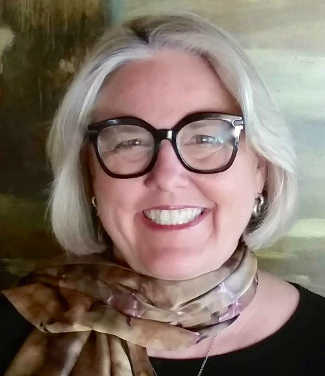
Cate Kortzeborn is Medicare’s regional administrator for Arizona, California, Nevada, Hawaii, and the Pacific Territories. You can always get answers to your Medicare questions by calling 1-800-MEDICARE (1-800-633-4227).
- Details
- Written by: Cate Kortzeborn





 How to resolve AdBlock issue?