
Opinion
If you’ve been hanging around a school lately you might have heard the term Common Core bandied about.
What is the Common Core?
Put simply, it’s a set of standards that describe what a student should know for each grade level in each subject.
For example, the Common Core Reading Standards for Literature state that students in third grade should be able to: “Describe characters in a story (e.g., their traits, motivations, or feelings) and explain how their actions contribute to the sequence of events.”
That’s just an example of one of the many standards in each subject.
In 2010, California adopted the Common Core State Standards.
Forty-five states have adopted these same standards, which makes changing schools much easier for students.
The Common Core standards are a major change in education requiring schools to change textbooks, curriculum, and instruction.
So what does the Common Core have to do with the library?
The Common Core is a great for libraries because of the focus the standards put on reading many different types of books.
The standards require students to be able to construct arguments that are supported with evidence.
Students need to be able to find and refer to primary source documents and other resources in all of their subjects, not just in English class.
This means that the library has a role to play in helping students build strong research skills and providing nonfiction materials to support their school work.
Here are a couple of books that Lake County Library system has purchased through a special California State Library program to develop library resources to support the Common Core standards.
Diary of Sallie Hester: A Covered Wagon Girl by Sallie Hester
The Common Core stresses the importance of looking at primary documents. In the subject of history primary documents are texts or other materials created during the time being studied.
This title is a collection of diary entries made by a real girl who was traveling west on the Oregon trial in the mid-1800s.
The book contains the real text of her diary entries, unedited, but with sidebar explanations and timelines to help put her words in context.
Recommended for children in grades fourth to sixth.
Frog and Toad Together by Arnold Lobel
A classic children’s book, this title is listed on the Common Core’s Appendix B, which is a list of texts to use as examples to find material that supports the common core.
The Frog and Toad series is great for new readers and the books contain simple text and pictures depicting the friendship of Frog and Toad.
Recommended for children in grades first to second.
Curiosity's Mission on Mars: Exploring the Red Planet by Ron Miller
The common core encourages reading in all subjects, including science and math.
This title contains a brief overview of the mission of the mars rover, Curiosity, presented in a way that makes it accessible to students.
The author compares many of Mars' geographical features to Earth to put them in a context that is easy to understand.
The book also provides the history of missions to Mars and speculates on the possibility of life there.
Moreover, the book can easily be used to demonstrate the scientific process.
Recommended for children in grades seventh and above.
These titles and many more can be found at your local library; check our Web site, www.library.lakecountyca.gov , for hours and availability.
To learn more about the Common Core visit www.corestandards.org .
Christopher Veach is the county librarian for Lake County, Calif.
- Details
- Written by: Christopher Veach
Geothermal is one of California’s greatest resources – a natural bounty of renewable energy in our own backyard.
It is a renewable resource that has been developed and sustained for half a century.
We need to make sure our regulatory system and contracting practices do not put this valuable and unique resource at risk.
Miles beneath the surface of Lake and Sonoma counties lies what is known as The Geysers, the world’s largest geothermal resource.
Continuously producing clean, reliable power around the clock The Geysers provides enough energy to power a city the size of San Francisco.
Renewables including geothermal, solar, wind and biomass are expected to comprise 33 percent of our energy use by 2020.
As state legislators contemplate increasing this requirement and seek to further reduce carbon emissions to battle climate change there is no doubt we will need existing and new renewable power, like The Geysers.
While geothermal is essential and complimentary to the overall California energy mix, geothermal development has not kept pace with other renewable resources.
Worse, energy agencies predict that utilities’ contracting of geothermal energy will drop significantly within the next few years.
So what’s going on here?
It’s widely acknowledged that the way utilities purchase renewable energy does not take into account all the costs and benefits of competing energy resources.
To date, it’s been about which power producer can provide energy at the lowest cost without considering the costs associated with delivering that resource to consumers or the economic and environmental benefits of a specific resource.
This poses several inherent biases against geothermal power.
First, wind and solar resources produce power intermittently.
At night, or on cloudy or calm days, their reduced output means additional generation is required to fulfill backup energy needs. Geothermal plants, however, produce power predictably and consistently.
Unfortunately, current procurement rules do not take this reliability into account when “scoring” the value of competing renewable resources.
Second, federal tax credits have helped reduce the overall cost of solar and wind energy.
It’s a justifiable policy that I support fully, but it means their costs are subsidized in ways that geothermal cannot match.
Third, geothermal employs more people both during construction and post construction than most other renewable technologies.
The Geysers employs 300 full-time employees and more than 150 contractors who support our local economy. The Geysers also is the largest taxpayer in Sonoma and Lake counties.
Finally, geothermal provides important environmental benefits. The Geysers helps reduce greenhouse gas emissions to the equivalent of removing 432,000 cars from the road, meaning cleaner air for local towns and cities.
The Geysers efficiently uses wastewater from the city of Santa Rosa and Lake County to generate more energy and solving an environmental problem for those communities.
Yet, absurdly, none of these economic and environmental benefits are valued in the current “scoring process,” putting geothermal energy at a competitive disadvantage.
I am worried about the future of The Geysers. It takes more than $50 million annual investment to sustain a geothermal field its size.
If utility contracting policies remain unchanged, The Geysers may not be able to get the long-term contracts it needs to continue operating at current levels.
This would not only mean less clean power for Northern California, but could also negatively affect the local environment and economy.
It is not good policy to risk the viability of an existing clean energy resource. I want to see The Geysers continue producing clean power for future generations.
Making sure existing and new geothermal power is part of a diverse and sustainable energy mix for the near and long term is a responsibility we all share.
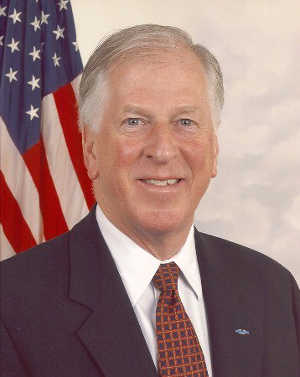
Thompson represents California’s Fifth Congressional District, which includes all or part of Contra Costa, Lake, Napa, Solano and Sonoma counties.
- Details
- Written by: Congressman Mike Thompson





 How to resolve AdBlock issue?