 How to resolve AdBlock issue?
Opinion
- Details
- Written by: Congressman John Garamendi
California’s aging water infrastructure is insufficient for our present and future needs. Unfortunately, the current Bay Delta Conservation Plan (BDCP) and its two massive tunnels is a destructive $25 billion boondoggle that won't solve the problem.
California can solve its water needs and end the water wars that pit north vs. south and water exporters vs. environmentalists – but not with the BDCP.
California needs a comprehensive water plan that generates new water and is focused on six priorities:
1) New water storage infrastructure,
2) Water conservation,
3) Water recycling,
4) Fixing the Delta with levee improvements, habitat restoration, and a right sized conveyance,
5) A science-driven process,
6) The protection of existing water rights.
If the BDCP moves forward, two tunnels will be constructed near Sacramento with the capacity to move 15,000 cubic feet per second (cfs).
To accommodate this massive plumbing project, we would sacrifice prime agricultural land, destroy legacy Delta communities, and potentially suck our Delta dry.
At a minimum cost of $24.5 billion, it’s extraordinarily expensive for California taxpayers and water ratepayers.
Delta farmers, fishermen and recreation businesses would see their livelihoods destroyed to benefit powerful corporate agribusinesses operating on desert lands in part of the San Joaquin Valley.
We need to develop surface and underground water storage systems. Sites Reservoir north of Sacramento could be built and Los Vaqueros reservoir could be expanded at an estimated cost of $4.8 billion creating the capacity to store 1.9 million acre feet of water and providing up to 700,000 acre feet of water to use each year.
The San Louis dam could be repaired and expanded as could Shasta Dam. New reservoirs could be built at Los Banos Grandes and other off stream sites throughout the Central Valley. The underground aquifers of the Central Valley offer enormous storage when used in a conjunctive management system.
The quickest and cheapest new water source is conservation. The California Department of Water Resources estimates that robust conservation efforts in urban water use could save 1 million acre feet of water each year by investing $530 million.
In addition to urban conservation, we must also look to agricultural water users to conserve water. California’s $40 billion agricultural economy needs a sustainable water supply and the technology already exists to conserve 3 million acre feet of water each year at a cost of $1.2 billion over 10 years.
Each year, 3.5 million acre feet of treated water is dumped into the Pacific Ocean by cities in the Los Angeles Basin. How foolish to pump water 500 miles, clean it, use it once, clean it to a higher standard than the day it arrives, and dump it in the ocean. One million acre feet could be recycled and stored in the underground aquifers in Southern California at a cost of $1.3 billion. Similar projects must be done in Northern California. Desalination of ocean water can also add to our supplies.
With adequate investment and implementation, urban and agriculture conservation, recycling programs and new storage could create approximately 5.7 million acre feet of new water to use each year at a projected cost of $7.8 billion.
Any plan that doesn’t include levee improvements in the Delta is a plan awaiting disaster. The BDCP will spend $25 billion, but not one dime to secure the Delta levee system that is necessary for delivering half of the anticipated water supply. How foolish and short sighted. The key Delta levees could be secured at an estimated cost of $1 billion.
The BDCP skips all of these important sources of increased water supply. It's a $25 billion boondoggle that won’t create a single drop of new water for California.
The BDCP plan for habitat restoration is well intentioned, but too extensive and expensive. The plan calls for as much as 145,000 acres of valuable Delta farm land to be converted to wildlife habitat. Every scientific study done thus far doubts the potential of this $10 billion proposal to restore and maintain the endangered fish in the Delta, yet the BDCP moves forward as if money is no problem.
After investing in conservation, recycling, storage and Delta levees and carefully monitoring their progress, it might be necessary to construct a much smaller Delta water delivery facility.
A 3,000 cubic feet per second facility could operate year round delivering 2 million acre feet water to the pumps in Tracy and on to the south.
Instead of destroying heritage communities and Delta farm land, this facility could use the existing 25 mile long Sacramento Deep Water Shipping Channel for water deliveries to a short 12 mile pipe connected to existing channels leading to the Tracy pumps. This could save billions of dollars while preserving the economy and communities of the Delta.
Providing a foundation for these projects is the protection of existing water rights. If we are going to build any project, these rights must be honored.
Stop the $25 billion BDCP boondoggle and use that money on water conservation, recycling, storage, fixing the Delta, a balanced habitat program, and a small Delta facility.
California could create up to 5.7 million acre feet of new water at half the cost of the $25 billion tunnel plan, solve its water crisis, and avoid a fruitless time consuming water war. Only by embracing a comprehensive plan can we avoid this gridlock.
It’s time to move forward and ensure a reliable water supply for the entire state.
Congressman Garamendi represents Northern California’s 3rd Congressional District, which includes part of Lake County. He served as a state senator, lieutenant governor, insurance commissioner and as President Bill Clinton’s deputy interior secretary.
- Details
- Written by: Linda Laing
At holiday time, many people who are dealing with loss are caught in a dilemma between the need to grieve and the pressure to get into the spirit of the season.
Holidays or not, it is important for people who feel grief to find ways to take care of themselves.
Here are 10 tips for hope for the holidays from Hospice Services of Lake County.
– Plan ahead as to where and how you will spend your time during the holidays. Let yourself scale back on activities if you want to.
– Select a candle in your loved one’s favorite color and scent. Place it in a special area of your home and light it at a significant time throughout the holidays, signifying the light of the love that lives on in your heart.
– Give yourself permission to express your feelings. If you feel an urge to cry, let the tears flow. Tears are healing.
– Write an “unsent letter” to your loved one expressing what you are honestly feeling toward him or her in the moment. After you compose the letter, you may decide to place it in a book, album or drawer in your home, leave it at a memorial site, throw it away, or even burn it and let the ashes symbolically rise.
– When you are especially missing your love one, call family members or dear friends and share your feelings. If they knew him or her, consider asking them to share some memories of times they shared with your loved one.
– If you live within driving distance of the cemetery, decorate the memorial site with a holiday theme.
– Play music that is comforting and meaningful to you. Take a few moments to close your eyes and feel the music within the center of your being.
– Give money you would have spent for gifts for your absent loved one to a charity in your loved one’s name.
– Read a book or article on grief. Some suggestions are “Don’t Take My Grief Away From Me” by Doug Manning; “The Comfort Book For Those Who Mourn,” compiled by Anna Trimiew; and “A grief Observed” by C.S. Lewis.
– Remember that the anticipation of holidays without your loved one is often harder than the actual holidays themselves.
The public is invited to attend an open supportive discussion entitled Hope for the Holidays, including a DVD and light refreshments, on Tuesday, Dec. 10, 1:30 p.m. to 3 p.m., at the following locations: Lakeport – 1605 S. Main St.; Lower Lake – 162 Second St. at the Lower Lake Community United Methodist Church reception hall.
For more information call 707-263-6222.
Linda Laing, MFT, is director of Bereavement Services for Hospice Services of Lake County, Calif.
- Details
- Written by: Todd Metcalf
Sometimes it happens suddenly or seemingly overnight. We are all going about our business and then we get sick or have an accident.
Our health and independence – what we once took for granted – can be taken away from us in a heart beat. Illness and/or aging seem to sneak up on most of us when we are busy living life. It doesn’t make it any easier when we see it coming, such as when we or a loved is diagnosed with a serious health condition that doesn’t have a cure.
November is National Family Caregiver Month and this year’s theme is “Family Caregivers – Now More Than Ever!”
Each year, more and more Americans are caring for a loved one with a disability, chronic condition, or the frailties of old age.
There are as many as 90 million family care providers in the United States today, and it’s not just the elderly who need caregiving – the number of parents caring for children with special needs is increasing, too, due to the rise in cases of many childhood conditions.
We are all members of an aging society. Whether an older person becomes confused or physically frail, or an otherwise healthy disabled person begins to face health issues that are associated with aging, there is a common theme: How do I keep doing what I want to do and how I want to do it, for as long as I am able?
Those needing assistance need to be part of the decision-making process. When this isn’t completely possible, it is critical that family members and friends take the time to understand and discuss a person’s expectations for care and support so their choices and wishes can be respected and honored.
This conversation also serves to help determine what is needed in a care provider, and helps care providers know what is to be expected.
Know community resources
The Area Agency on Aging of Lake and Mendocino counties provides guidance and support for older adults and care providers striving to maintain healthy and independent lives in Lake and Mendocino Counties.
Its Information and Assistance Program helps seniors and care providers locate the best resources for their unique situations.
Be a knowledgeable care provider – attend a care provider training
The In-Home Supportive Services Public Authority offers care provider training courses throughout the year in Lake County for those caring for In-Home Supportive Services recipients.
The feedback on these classes is always positive. Folks walk away from the training with increased confidence as well as relief, knowing that they will be of better service to the person who needs their help.
Use the registry to find help
A list of available care providers can be mailed, emailed or faxed upon request to In-Home Supportive Services recipients.
Screen your care providers
Although care providers on the registry have been screened and have completed required training, it is important to do a thorough interview.
Asking the following questions can help select the right care provider:
- What experience do you have as a care provider?
- Do you have any specialized training?
- Do you have any physical limitations?
- Would you be willing to take me to appointments? If he/she is going to be providing transportation, ask to see his/her driver license and auto insurance.
- Would you cook according to my needs?
- Do you have any problems with the days or hours that I need you?
- If you don’t smoke, do you mind being around someone who smokes?
- Do you use drugs or alcohol?
If you have special needs, ask the applicant how they would handle your specific needs.
If you have animals, ask if they have any allergies to them.
Ask if they have gone through the provider enrollment process, including being fingerprinted.
Give them a chance to ask you questions about the job and the services that you need.
Pace yourself – family caregiver support program
Family care providers need a break now and then as well as those receiving care from family care providers.
The Family Caregiver Support Program offers respite grants to unpaid care providers to allow them to get a break from their regular caregiving responsibilities.
So remember to acknowledge and celebrate someone you know who is caring for a loved one to reinforce this year’s theme: “Family Caregivers, Now More Than Ever!”
For information about In-Home Supportive Services and the Public Authority Registry, please call 707-995-4680.
For information about the Area Agency on Aging’s Information & Assistance and Family Caregiver Support Programs, call 707-262-4517.
Todd Metcalf is the Adult Services Program manager at Department of Social Services serving Lake County, Calif.
- Details
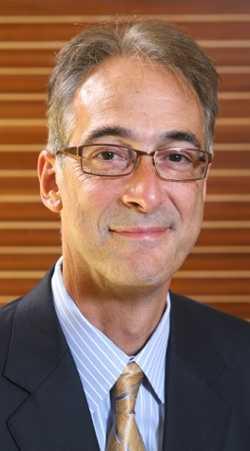
- Written by: David Sayen
Some people may not realize it, but there are actually two ways to get Medicare benefits.
The best-known way is Original Medicare. With Original Medicare, you can choose any doctor, hospital, or other healthcare provider you want, as long as they accept Medicare. When you receive medical services or goods, Medicare pays the provider directly.
The other way is Medicare Advantage, which is a form of managed care, like an HMO or PPO. Medicare Advantage is provided by private insurance companies approved by Medicare. If you’re in Medicare Advantage, you generally must go to doctors and other providers in the company’s network.
If you go outside the network, you may have to pay more.
On the other hand, Medicare Advantage companies may offer some coverage – such as dental, hearing, vision, and wellness programs – that Original Medicare doesn’t.
Most people with Original Medicare pay a monthly premium. If you’re in Medicare Advantage, you sometimes pay an additional monthly premium to the private insurance company that covers you.
With Original Medicare, you must pay deductibles, co-pays, and coinsurance.
To cover these “gaps” in Medicare, some people buy a type of supplemental insurance called Medigap. If you have a Medigap policy, Medicare pays its share of the covered costs, and then your Medigap policy pays its share.
Medigap policies also are sold through private companies. All plans offer the same basic benefits but some offer additional benefits. The costs vary between insurance companies – and often cost is the only difference between policies. Some Medigap policies also offer benefits that Original Medicare doesn’t, such as medical care when you travel outside the United States.
Original Medicare generally doesn’t cover prescription drugs. If you want drug coverage, you can get it through Medicare Part D. Part D policies are sold through private companies approved by Medicare. You have to pay an additional monthly premium for Part D.
About 75 percent of Medicare beneficiaries choose Original Medicare, with the rest getting coverage through Medicare Advantage.
Medicare Advantage companies must cover all of the services that Original Medicare covers, except hospice care and some care in qualifying clinical research studies. (Original Medicare covers hospice and qualifying clinical research care even if you’re in a Medicare Advantage plan.)
In all types of Medicare Advantage plans, you’re covered for emergency and urgent care. Most Medicare Advantage plans also include prescription drug coverage.
But the plans can charge different out-of-pocket amounts and they have different rules for how you get service.
For example, you may need a referral to see a specialist. And you may need to stay in their provider network, unless you’re willing to pay more to go outside the network.
You should always check with the plan before you get a service to find out whether it’s covered and what your costs may be. If the plan decides to stop participating in Medicare, you’ll have to join another Medicare health plan or return to Original Medicare.
How can you decide whether Original Medicare or Medicare Advantage is better for you?
There’s a more detailed explanation of the differences between Original Medicare and Medicare Advantage in the “Medicare & You” handbook. An updated version of “Medicare & You” is mailed to all Medicare beneficiaries every fall.
You can also find “Medicare & You” on our Web site, www.Medicare.gov .
If you have any questions, you can always call Medicare’s toll-free number, 1-800-MEDICARE (1-800-633-4227).
David Sayen is Medicare’s regional administrator for Arizona, California, Hawaii, Nevada, and the Pacific Territories.