 How to resolve AdBlock issue?
Opinion
- Details
- Written by: Dr. Nicki Thomas
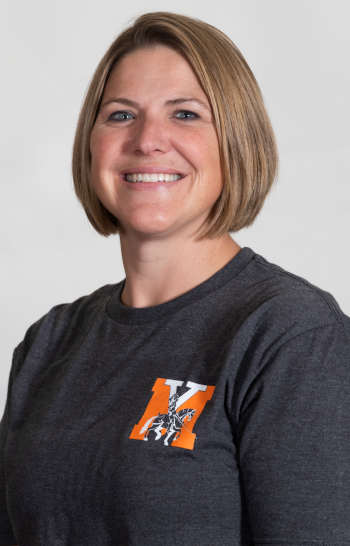
You may be surprised to learn that when our youngest students miss just two days of school per month for any reason — excused or unexcused — they can become third-graders who can’t make the transition from learning to read to reading to learn; sixth-graders who cannot keep up in core classes, and high school students who do not graduate.
Missing ten percent of school, which equates to about 18 days for the whole school year, is called “chronic absenteeism” and children living in poverty are more than twice as likely to be chronically absent. This is especially harmful in kindergarten through third grade when students are building fundamental language and math skills.
Even when students are absent because of something important like a medical appointment or family emergency, they still miss out on the teacher’s lesson and social time with their peers. Studies show it takes three days for students to catch up for every one day they miss.
Here’s why. When students miss a day of school, they not only miss that day’s lesson, they also struggle to keep up when they return to the classroom because lessons build on each other. If they missed yesterday, today’s lesson will be harder. They don’t like feeling behind, so they disengage. When school goes from being fun to confusing, from being easy to hard, many students stop trying.
The best thing parents can do is to get their children to school every single day. This means scheduling appointments after school when possible. It means planning family trips to coincide with school holidays. It means only keeping students home for illness when they have one of these three symptoms: a fever higher than 100 degrees; diarrhea or vomiting during the previous 24 hours; or eyes that look pink and/or crusty.
I understand the desire to keep kids home from school when they have the sniffles, to wrap them up in a cozy blanket and feed them chicken noodle soup. But allowing them to skip school just a couple of days a month can significantly affect their success at school.
When you get your child to school every day, it sends a message: that showing up every day is important. And these good habits can last a lifetime.
Some people think I am worried about attendance because of the drop in funding that occurs when students are absent. It’s true — I do care about funding, but only because of what funding allows us to do for our students. More funding means we can hire more teachers, which reduces class sizes. Smaller class sizes allow each child to receive more individual attention from their teacher.
Chronic absenteeism impacts more than academics. At school, students learn to navigate complex social interactions with peers, they develop respectful relationships with caring adults, and they explore extracurricular interests like athletics, art, and music. They also get a roof over their heads, a free meal, and a safe space to be themselves.
Unfortunately, students whose families are struggling financially are a lot more likely to be absent because of factors out of their control, such as unstable housing, unreliable transportation and a lack of access to health care.
If you are having trouble getting your child to school every day, talk to their teacher. We’ll do what we can to connect you with more resources — other families who could help out, district support, or assistance from community organizations.
Education is the path to success and having students in school every day is the path to a great education.
Dr. Nicki Thomas is superintendent for the Kelseyville Unified School District in Kelseyville, California.
- Details
- Written by: Teresa Frankovich, M.D.
If you have children age 6 or younger, your health care provider should be talking with you at every well-child visit about the possibility that your child has been exposed to lead. This is important because exposure to lead can cause a wide range of health problems, including irreversible brain damage, especially in young, developing brains. There is no known “safe” level of lead exposure.
Since most children have no symptoms while they are being exposed, the best way to prevent lead poisoning is to know how kids may be exposed and to have your child screened by answering questions and/or getting tested for lead exposure. Testing is recommended at 1 and 2 years of age and is usually done with a quick finger poke at your child’s well-care visit.
For children in publicly funded programs like Medi-Cal and the Women, Infants and Children Supplemental Food Program, or WIC, testing at 1 and 2 years of age is required. For these children, catch-up testing must be done (up to the age of 6 years) if not done at 2 years of age.
Many of us have heard about older (pre-1978) homes being a source of exposure due to the lead-based paints widely used prior to that time. Fortunately, lead-based paints were banned for continued home use in the U.S. in 1978 but can still be found in older homes.
As this paint cracks and peels over time, lead-containing dust and paint chips can find their way onto the hands and then into the mouths of crawling infants and climbing toddlers. Lead may also be found in soil, particularly around older homes and industrial sites and in water that flows
through older pipes containing lead.
Until fairly recently, parents were advised primarily about these potential lead sources. In recent years, we have been finding lead in many more unexpected places.
These days, the items we all eat, drink and use every day (such as pottery, cookware, herbal medicine and makeup), come from all over the world. As countries have varying customs and regulations regarding food and product safety, the potential for lead exposure has grown.
For example, the contaminated apple cinnamon fruit pouches mentioned above were made in Ecuador and sold under various brand names in the United States. The source of contamination is suspected to be the added cinnamon. Similarly, in parts of South Asia, the beautiful golden yellow spice called turmeric has long been used in traditional medicines and in food. In that part of the world, the turmeric roots are often treated with a lead compound to make the color even brighter. This may be one reason that South Asia has some of the highest rates of lead poisoning in the world.
So, parents, the bad news is that lead exposure in children is a big health concern. The good news is that many exposures can be avoided, and testing for lead early can prevent ongoing and higher levels of exposure. Some helpful tips to prevent lead exposure in your home are:
• Be careful and consider the source of spices, medications, cosmetics and items such as cookware and tableware that you bring into your home.
• Think about the age of your home and whether it is likely to have lead paint.
• Talk with your child’s doctor about lead exposure and preventing exposure.
• Visit the California Department of Public Health Lead Prevention Homepage for facts on how you can keep your child safe from lead poisoning.
Dr. Teresa Frankovich is an associate medical director at Partnership HealthPlan of California. Partnership is a community-based, safety-net health plan that contracts with the state to administer Medi-Cal benefits. Partnership provides quality care to over 900,000 Medi-Cal members. Starting in Solano County in 1994, Partnership now serves 24 Northern California counties – Butte, Colusa, Del Norte, Glenn, Humboldt, Lake, Lassen, Marin, Mendocino, Modoc, Napa, Nevada, Placer, Plumas, Shasta, Sierra, Siskiyou, Solano, Sonoma, Sutter, Tehama, Trinity, Yolo, and Yuba. Learn more at PartnershipHP.org.
- Details
- Written by: Becky Salato
When it comes to motivating students (or anyone, really), holding them to an overwhelming goal doesn’t work.
The California Department of Education regularly updates an online dashboard for each public school district to display information about academic achievement and some of the factors that contribute to it, including suspension rates, chronic absenteeism, English Learner progress, and more.
As a district, Konocti Unified has a history of struggling to achieve at high levels when measured on the basis of “Distance from Standard,” which is what the dashboard uses. I recognize the importance of having uniform standards, but I also know how depressing it can feel when those standards feel out of reach. So, while we continue to strive for high marks, our schools are paying attention to whether students are making progress.
Imagine for a moment that your health level makes it hard to walk to the mailbox without getting winded. You know you’re not in great shape, and when someone tells you you’re not as fast as the track star next door, you shrug and shuffle back to your front door. Would you like to be in better shape? Sure. Who wouldn’t? But when external measures seem completely unrealistic, why put any effort into achieving them?
Now imagine that the whole neighborhood is on a health kick and each person is measured on their own improvement. You receive daily encouragement and helpful information about the benefits of cardiovascular health. Each time your minutes-to-the-mailbox score improves, everyone celebrates.
Suddenly, you’re fired up. You know you can shave another minute off your time. You love how much better you’re feeling. You think it’s great that you aren’t tired all the time. Now, you’re not even working hard for the recognition; you’re working hard because you like the results. Now, it’s for you.
This is what we are going for at Konocti Unified. We’re measuring student progress. If a middle school student is reading at a third-grade level and they achieve two years of progress in one year, according to the distance-from-standard measure, they are still “below grade level.”
But according to our measure, they are ROCK STARS! In one year, they learned twice as much as anyone expected. We call that a reason to celebrate.
When students start succeeding, they start to believe in themselves. After all my years in education, I can tell you, this is where the magic happens. This little snowball of success can roll into an avalanche or achievement.
At Pomo Elementary, Lexile (reading) growth rates were stunning. The percentage of kids who hit the 50-point growth goal was as follows:
First grade: 83%
Second grade: 85%
Third grade: 73%
Fourth grade: 69%
Fifth grade: 61%
Sixth grade: 52%
This is a huge improvement over prior years. We have implemented a strong foundational reading program in grades K-3. Schoolwide, we are providing the kind of support that catches students as soon as they start to stumble, so they don’t get stuck — and frustrated. This keeps students motivated to learn.
We celebrated all students for the schoolwide success — this helps students feel connected to each other and feel school pride.
For students to succeed, we need them at school. Poor attendance has been a problem countywide, but we are starting to see improvement in that area. By making our schools as welcoming as possible, students have a place where they feel like they belong.
Sometimes, this means finding a club or sports team. Sometimes, this means connecting with a caring adult willing to take the time to listen. Sometimes, it simply means getting used to each other.
At Obsidian Middle School, we had a bumpy start to the year. We knew this would be the case. When this many middle schoolers come together in a new school, they need to figure out the social hierarchy. It’s human nature.
The good news is that things are settling way down. We have a tiny fraction of the fights on campus that we had at the beginning of the year. Our goal is no fights (standards-based goal), but we are focusing on our progress (things are moving quickly and dramatically in the right direction).
At Obsidian, we are also creating a culture that supports a sense of community. Our House Structure program allows students to be in a smaller learning environment.
Students have two core teachers, one STEM (math and science) and one Humanities (English and history). Each house has approximately 90 students, and the students travel together in their three blocks throughout the day. This makes a middle school of 600 students feel smaller and more personalized. We plan to name the houses and hold healthy competitions this semester to boost school/house spirit.
At Obsidian we also have “positive referrals,” where all staff members can “catch” students doing good work, such as standing up for another student, helping a staff member or cleaning up the campus.
The student receives an Obsidian Middle School hoodie and can take the positive note home to share with parents. These hoodies are gaining popularity and students are working hard to earn them.
We have so many reasons to feel encouraged. We are proud of the progress our students are making. We intend to continue to help them set realistic goals and to celebrate when they reach them.
So, although our California Department of Education dashboard may not look amazing (yet), we’ll keep motivating our students to achieve. Our goal is progress, not perfection.
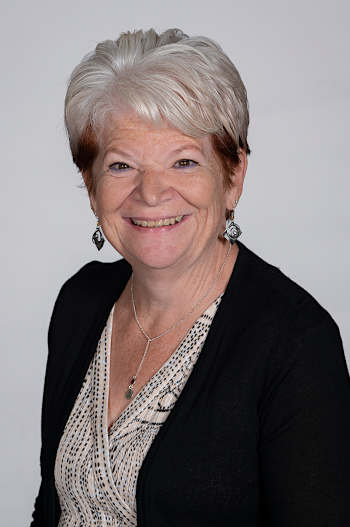
Becky Salato is superintendent of Konocti Unified School District in Lower Lake, California.
- Details
- Written by: Dr. Nicki Thomas
School funding in California depends on both state funding and local tax dollars.
State funding can only be used for operational expenses like teacher salaries, supplies, and other materials directly related to student instruction. For facilities maintenance and construction, schools depend on local tax dollars.
In 2016, Kelseyville voters passed Measure U by a significant margin, allowing us to make essential upgrades and repairs to our schools. We kept the community informed of our progress along the way, so people knew we respected and appreciated their support.
Thanks to sensible planning from our school board and careful execution from our staff and community partners, we were able to complete projects at every single school, even in the midst of a pandemic.
Some of the highlights included a new multi-use room, or MUR, at Kelseyville Elementary that now serves as both a cafeteria and a gymnasium. Before we had a MUR, kids didn’t have a covered space where they could eat lunch.
At Riviera Elementary, we upgraded the parking lot to make it safer and enhance the flow of traffic. At Mountain Vista Middle School, we renovated classrooms and bathrooms and added shade covers over ADA-compliant walkways. At Kelseyville High School, we built a state-of-the-art shop building and installed air conditioning in the gym.
These enhancements continue to make a big difference for our students. However, our work isn’t finished. Due to increased enrollment and the normal wear and tear of so many students on our campuses, we need to invest in our schools again. This should be the last time we request a bond measure for many years.
To figure out exactly what we needed, we hired a company to objectively assess our school campuses. Here’s what they said.
Original and historic buildings throughout the district are especially in urgent need of modernizing in order to meet current safety and accessibility standards, as well as access to the digital education tools necessary for our 21st century learning environment … Given increasing construction, maintenance, and utility costs, as well as the need for facilities to serve as an important community resource for emergency shelter in extreme weather and disaster events, this needs assessment focuses on safety, accessibility, durability and cost containment/mitigation.
Right now, Kelseyville Elementary is bursting at the seams. For the 2023-24 school year, we had to deny requests from several families who wanted to transfer in, and still, we are at 600 students (which is significantly beyond the population the school was built for).
With Measure Q funding, we would be able to update and build more classrooms, modernize the playground, replace non-operable windows, repair and repaint walls, and more.
At Riviera Elementary, we are also planning for a future with more students. This creates the need for more classrooms, an updated HVAC (heating and air conditioning) system, and replacing floors, cabinets, and data infrastructure.
At Mountain Vista Middle School, we’re planning on more classrooms, an upgrade to the irrigation system, replacing and repainting damaged walls and ceiling tiles, and more. I was principal at MVMS when the last round of updates occurred. After that, the new classrooms and bathrooms were never hit by vandals, only older parts of the campus. Students took pride in the parts of their school that were in good repair.
At Kelseyville High School, the pipe that carries sewage is half as big as it should be. This results in back-ups and problems that none of us wants to think about, but that our janitors and maintenance folks cannot avoid. Roofs and exterior siding are in need of phased replacement, and the remaining portable buildings on campus are more than 30 years old, which is far past their expiration date.
The point is, we are not asking for fancy upgrades. We are asking for essential maintenance and additional space to meet our growing student population. A new apartment building is under construction in the Kelseyville Elementary area, which will only increase our need for more room.
We’re happy to welcome more families to our Kelseyville community, but we need enough funding to provide adequate school facilities. Kelseyville Unified is proud of our good reputation, and we are dedicated to maintaining it.
We know that when a school district has a good reputation, it's easier for businesses to recruit employees to the area. There’s a lot of research that says well-maintained schools contribute to a positive campus culture, which increases student attendance and therefore, performance.
Also, great facilities attract great teachers and we are competing for staff because of the nationwide teacher shortage.
The bottom line is that our kids deserve a safe and comfortable place to learn. They need classrooms where air conditioning works in the summer and heaters work in the winter, allowing them to concentrate on their studies rather than the temperature. They need doors and windows that seal properly, furniture that isn’t broken, and walls where the paint isn’t peeling off. They need brightly lit classrooms and safe playground equipment.
Investing in schools is about the biggest bang for your buck you can hope for. These students are our future doctors, lawyers, teachers, and law enforcement officers. They will be taking care of us eventually. Let’s take care of them now.
Dr. Nicki Thomas is superintendent of the Kelseyville Unified School District in Kelseyville, California.