 How to resolve AdBlock issue?
Opinion
- Details
- Written by: Ray Buenaventura
My background includes over 30 years of experience as a criminal defense lawyer, with more than 100 jury trials, ranging from minor infractions to murder cases with special circumstances (i.e. death penalty-eligible cases). I am a Certified Criminal Law Specialist and have taught evidence, election law and legal research and writing. I also created the first Youth Court Program in Santa Clara County. I am additionally on the Board of Trustees of the California State Bar Association, and have served on the Criminal Law Advisory Commission and the Attorney Discipline Committee.
As your public defender, it is my responsibility to establish a premier indigent defense program in Lake County. My goal is to ensure every Lake County defendant receives a professional and appropriate defense. I will devote my energy to promoting the public interest through innovative programs that can truly make a difference. I will work to build an effective and transformative Public Defender Office everyone can rely on.
I cannot do it alone. Community-focused, holistic public defense matters, and I want to work with you.
People should get the services they need to be successful; when they do, they are less likely to offend in the future. Building relationships, promoting engagement from every Lake County community, is essential to effectively supporting people that become involved with the criminal justice system.
I write this letter to extend an invitation to anyone and everyone willing to meet with me.
I am particularly interested in meeting people involved in rehabilitation programs, mental and behavioral health-focused organizations, youth groups, veterans, Lake County’s seven sovereign tribal nations, seniors, homeless shelters, food distribution centers, mentorship groups and vocational training programs.
Please feel free to contact me at
Working together, we can change the course of people’s lives. Will you join me?
Ray Buenaventura is the chief public defender of Lake County, California, and the mayor of Daly City, California.
- Details
- Written by: Becky Salato
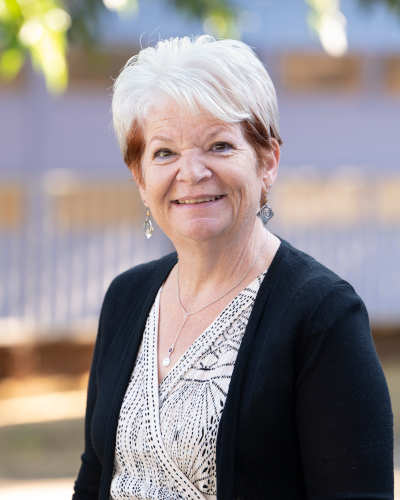
LOWER LAKE, Calif. — In many ways, the beginning of this school year looks like the beginning of every other one.
Teachers are presenting creative lessons in newly decorated classrooms, students are reconnecting with classmates and establishing new friends, clubs are forming, sports teams are looking for new recruits, and we’re all watching the weather in hopes of avoiding another wildfire.
For me, however, this year is a little different, not because of what’s going on here at the district, but because of what’s going on personally.
I’m supporting multiple family members with serious medical issues. On the outside, I look the same (maybe a few extra bags under my eyes); but on the inside, I am feeling emotionally fragile and constantly frustrated that I cannot be in two places at once. I want to be in New York with my ailing mom, and I want to be in my office supporting our wonderful staff as they kick off the school year.
Although the details of my situation are unique, my emotions and the way they distract me are not.
Many of our students and employees face challenges and distractions of their own. Health challenges are one of countless examples people face. When distractions are minor or short-term, we can often manage without much difficulty. But when they are significant or chronic, it’s almost impossible to focus on daily life and do our best work.
On any given day, children in our community struggle in ways we often know nothing about. They face food insecurity and their hunger makes it hard to concentrate. They witness or experience violence or are exposed to confusing and upsetting ideas. They worry about their immediate safety and security because their parents are incarcerated or struggling with drugs.
Can you blame them for showing a lack of discipline and focus in school?
As a school district, Konocti Unified is dedicated to delivering the academic preparation our students need to pursue the college or career path of their choice. When students are struggling with challenges outside of school, it’s much harder to achieve this goal.
This is why you constantly hear me talking about social and emotional wellness. I know that for students to achieve at their highest potential, they need to be able to focus on their studies.
When a student isn’t performing well academically or is behaving in an unacceptable manner, our response must encompass both academic and psychological elements: Does the student need more academic support or is there something else going on? One of the most important things we can do in our schools is to support students so they can learn to manage themselves and their situations.
We know that when students have one trusted adult in their lives it can make a huge difference. At school, that can be a teacher, counselor, administrator, coach, librarian, secretary, janitor, playground supervisor or any number of others. We have social-emotional counselors at every school.
One way to help your student succeed is to start each day in a calm and positive way. Small changes to routines can make a big difference, like having kids lay out the next day’s outfit the night before and/or waking up 15 minutes earlier.
When you, as a parent, feel frustrated, you can reduce morning stress for yourself and everyone else by taking a deep breath and using a tone of voice that doesn’t involve yelling. As parents, our emotional state can’t help but affect our kids.
Before dropping off your child for school, you might consider asking them what they are most looking forward to that day — who they want to see, what they want to do. This helps them focus on the positive.
When your child comes home from school, you might ask them what good things that happened today and who helped make it possible.
Gratitude is a powerful force. Let’s work together to provide our students with the support they need to focus so they can thrive.
Becky Salato is superintendent for the Konocti Unified School District.
- Details
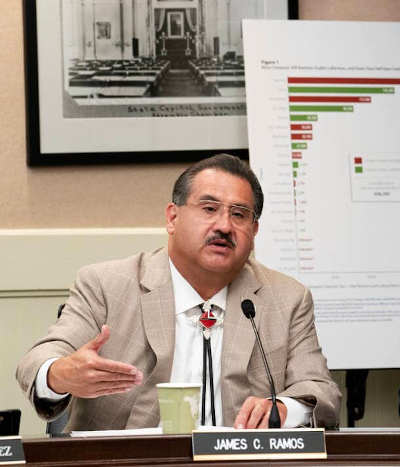
- Written by: Assemblymember James C. Ramos
Struggle to meet sacred duty to reclaim nearly 700,000 looted, desecrated human remains and cultural objects stored in forgotten or lost boxes is new battlefront in fighting centuries-old dehumanizing of First People
This year, on Sept. 6, after the Labor Day holiday, tribal leaders will travel to the State Capitol to address the legislature about the recent audit of the California State University system’s failure to repatriate nearly 700,000 Native American human remains and artifacts. These remains are stored in boxes on shelves.
The bill, AB 389, will require monitoring campus efforts to review their collections and completion of repatriation activities by December 2025, implementing protocols for handling and identifying remains and cultural items and issuing a system wide Native American Graves Protection and Repatriation Act policy establishing consistent repatriation processes and training requirements.
Sponsors supporting this important trust building measure include the San Manuel Band of Mission Indians, Redding Rancheria, Morongo Band of Mission Indians, Rincon Band of Luiseno Indians, Picayune Rancheria of Chukchansi Indians, Tule River Indian Tribe of California, Santa Ynez Band of Chumash Indians and the Tachi Yokut Tribe.
Too many Californians — when they think of the state’s tribes — imagine a single mass speaking in one language, practicing one faith and the same customs. Too many also believe that the state’s Native Americans no longer face a lack of access to health care, education, equal protections in the areas of public safety, children’s foster care or inclusion when decisions are made that impact them.
Far too many Californians believe the state’s First People are raking in cash from the 76 casinos and five mini casinos operating in California. It is true that these casino-owning, federally recognized tribes have become economic powerhouses with revenues of approximately $9 billion annually. But not even all the federally recognized tribes own casinos, and the much greater number of tribes that are non-recognized struggle to ensure the security and well-being of their members.
The reality is that California has more than 100 tribes and several more that are unrecognized because of the shameful history of broken treaties, displacement and other maltreatment.
Four years ago, in June 2019, Gov. Gavin Newsom issued an apology to the state’s Native Americans for the violence and other wrongs committed against them. Five months prior to that apology, I was elected to the state legislature. My election was 169 years after California was admitted to the Union!
Since then, I have attempted to make my election count, not just for the 45th Assembly District which covers much of San Bernardino County, but also to create a voice and representation for the larger Native American community.
Gov. Newsom’s apology signaled his willingness to write a new chapter in the state’s relationship with its tribes. In 2021, then-Speaker Anthony Rendon authorized me to create the California Native American Legislative Caucus. Legislators from both houses and both parties joined the Caucus. Together, we began the challenging work of removing obstacles to the services and rights that others in the state take for granted.
More than 25 bills dealing with Native American education, foster youth, mental health access and other issues affecting basic civil rights and health and welfare have been signed and will make a difference in the daily lives of the state’s First People.
They include:
• AB 3099 signed in 2020 to increase communication and coordination among state, local and tribal law enforcement agencies to combat the crisis of Missing and Murdered Indigenous People.
• AB 873 signed in 2021 to assist tribal courts protect tribal foster youth.
• AB 855 signed in 2021 to create the First Native American paid holiday for California’s state and local court employees.
• AB 945 signed in 2021 reinforced Native American rights to wear tribal regalia at high school graduation ceremonies.
• AB 923 signed in 2022 to encourage the state and its agencies to consult on a government-to-government basis with the tribes.
• AB 1703 signed in 2022 to create the American Indian Education Act to encourage school districts, county offices of education, and charter schools to engage with their local tribes to build more complete and accurate versions of Native American classrooms.
• AB 44, current legislation, to grant tribal governments and tribal courts access to the California Law Enforcement Telecommunications System to increase public safety on reservations.
• AB 2022 signed in 2022 prohibits the use of the word “s****”, a slur for female Native Americans, as a name for geographic features and places within the state of California.
So much more work needs to be accomplished to ensure equity in all areas of Native American lives including achieving one of the most fundamental of human rights — the respectful reburial of our ancestors.
Assemblymember James C. Ramos proudly represents the 45th Assembly district which includes the Cities of Fontana, Highland, Mentone, Redlands, Rialto and San Bernardino. He is the first and only California Native American serving in the state’s legislature. Ramos chairs the Assembly Committees on Rules.
- Details
- Written by: Dr. Shouan Pan
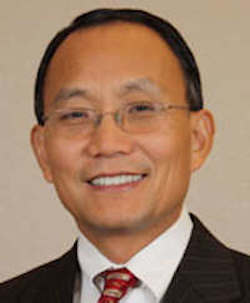
With much pride and excitement, I assumed the role as the new chancellor of Yuba Community College District on June 15.
Knowing that my appointment by the Yuba College District Board of Trustees in April this year came after almost two years of search, I feel even more intensely the honor as well as the weight of the position.
I thank the members of the board and the broad communities for their trust and confidence in me to lead an expansive rural district that comes with a unique set of opportunities and challenges.
I was attracted to this leadership opportunity at YCCD because it has a long history of supporting and improving educational attainment and economic development of its diverse communities. I am inspired by the commitment to educational excellence, collaborative problem solving, and innovation from the faculty and staff.
Those are values that resonate deeply with those of mine, and I am inspired to lead, in the coming months and years, by inclusive and equitable leadership, intentional collaboration, and shared commitment to excellence in every aspect of YCCD’s operations.
In joining the YCCD and the north Central California communities, I bring a diverse set of administrative experiences, track records, and skills from having held leadership positions at six different community college districts, both rural and urban.
The common thread across all these institutions has been my deep and lasting passion for advocating and ensuring student success. In an era of accelerating changes, YCCD has an obligation to ensure that equitable access and affordability to quality higher education always remain front and center across our communities within the eight counties it serves.
Under the direction of our seven elected trustees, in partnership with our talented and dedicated faculty and staff, my leadership team and I will remain committed to diversity, equity, and inclusion in our work; we will seek opportunities to strengthen existing and foster new partnerships with business, educational, governmental, and civic organizations; we will develop niche educational and workforce training programs that are responsive and relevant to the needs of local economy.
YCCD is founded to serve the communities. The quality and reputation of its education and training is built not only by those who teach, learn, and contribute daily on our college campuses, but also by the support of friends, supporters, and community partners year after year. Together, we can and will make YCCD more student ready, community ready, and future ready. We all have a stake in its future.
I am thrilled to join YCCD and the communities it serves. In the coming weeks and months, I look forward to meeting and establishing meaningful connections with both faculty, staff, and students on college campuses but also with friends and stakeholders in the community. I look forward to launching YCCD to new heights with all of you.
Dr. Shouan Pan was hired as chancellor of Yuba Community College District in April 2023.