 How to resolve AdBlock issue?
Opinion
- Details
- Written by: Wendy Weiss, M.Ac., L. Ac.
Each season has an energetic quality that also exists within each person. Therefore one’s health and well-being are a reflection of staying balanced with the energy of each changing season.
What is the fall season? In the ancient Chinese text, the "Nei Ching,” “The three months of the fall are called the period of tranquility of one's conduct … soul and spirit should be gathered together in order to make the breath of fall tranquil … all of this is the method for the protection of one's harvest."
In fall, everything approaches their completion. Leaves change color and fall to the ground, reflecting the passage of time. Fall reflects the never ending rhythm of life’s transitions, including the cycles of birth and death.
How does the fall relate to us? What is true in nature is true within us. Fall is a time to reap one’s harvest, to conserve energy, and to consolidate and store what will nourish the body-mind for the coming winter.
Fall is the time to acknowledge the quality in one's life. It is time to reflect on the purpose of life, one’s sense of self-worth and the meaningfulness of one’s life.
What is the element of the fall season? The fall season is associated with the metal element. The organs of the metal element are the lungs and the large intestine. They are in charge of receiving and letting go.
The lungs receive the pure Chi, life force energy, through the breath, from the heavens. When one inhales the breath, one can feel the connection to a greater source of life, of “inspiration.”
The large intestine is the great eliminator, in charge of letting go of all waste products. As one exhales one can intentionally release anything that is no longer of value to the body-mind.
What is the purpose of the fall season? Fall is a time to take stock of one’s life, and let “fall away” any patterns that no longer serve one’s highest quality of life. Letting go of old patterns makes room to receive something new that better serves one’s greater purpose.
The emotion associated with fall is grief. The falling leaves reflect how loss is a natural part of life. In times of loss and grief, one can be re-inspired and comforted through each breath. Grief brings one to a deeper place, urging one to allow the next breath, to accept change, and to trust in the ongoing cycles of life.
How can acupuncture help us stay healthy in the fall? Five Element Acupuncture can help prevent and treat colds and flus in the fall. Acupuncture helps to build up the immune system and strengthen the circulation of life force energy in the skin and muscles to help prevent germs and viruses from entering the body.
Seasonal treatments can support overall health, correcting minor imbalances before they become serious problems.
How can I receive the gifts of the fall season? During the fall, nature's brilliant and pristine colors nourish one’s inner quality and self-worth. Walk outside and breathe deeply to strengthen one’s connection to one’s deepest purpose, and the unique beauty in one’s self and others.
Consciously breath, and feel how the breath integrates the body-mind-spirit. Bring awareness to this essential connection through the breath to stay balanced in the fall season. These are the gifts of the fall.
Wendy Weiss, M. Ac., L. Ac., is a Licensed Acupuncturist specializing in Five Element Acupuncture and Chinese Medicine. She maintains offices in both Lakeport and the Clearlake Riviera and can be reached for further information at 707-277-0891 or go to https://wendyweissacupuncture.com/.
- Details
- Written by: Dave McQueen
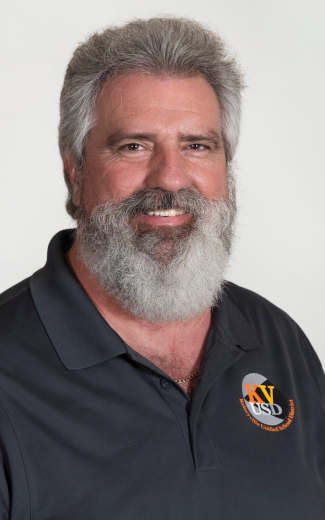
KELSEYVILLE, Calif. — Everyone knows that if you don’t attend school, you’ll miss out on an academic education, but regular attendance at school does a whole lot more for kids — it sets them up for success in life.
Unfortunately, we discovered just how important daily classroom interactions are when they went away during COVID.
We always knew there would be some learning loss during the pandemic. Recent reports and national test scores have confirmed that.
Even before the pandemic, missing school was a problem. Students who miss as little as 15 days of school per year — the Department of Education’s threshold for chronic absence — are at a serious risk of falling behind academically.
This holds true even for the youngest students. At the Kindergarten level, for example, missing just 10 days of school per year can lead to missed academic milestones and an increased likelihood of repeating grades. Social, emotional and behavioral problems can develop, too.
When you pull a kid out of school even for a day, they fall behind. When they return to the classroom, they have to play catch up instead of learning along with their classmates. Unless there’s a really good reason to pull a student out of class (like when they’re sick), it is not fair to put them in that position.
Obviously, if your student is sick, they should stay home. Our first responsibility is to keep everyone safe and we know how serious COVID can be. But, by missing many school days, students’ academics will suffer.
Kids get embarrassed when they fall behind, and they often stay quiet about it. Then that snowballs into a pattern that can affect their confidence, self-esteem and behavior.
Students already feel vulnerable enough; missing school can make them feel worse. This is especially true of our youngest students, who are just beginning to learn and socialize.
So, attendance is important for both academics as well as social and emotional development. Kids need to be around one another to learn from each other. It helps them mature as people, not just students.
I’ve seen firsthand some of the problems caused by students not being in school during the pandemic. We’re still in the process of reminding kids how to get along with each other, to communicate, to consider others, to be kind.
Isolation is not good for humans. Friendships, athletics, extracurricular activities and social get-togethers are a big part of what we offer the community here at Kelseyville Unified School District. Those things are just as fundamental to a good education as reading, writing and math.
So yes, I’m a little more excited than usual this year because it seems like we’ve finally turned a corner. Kids are back where they belong: in school with each other, learning from well-trained educators, hopefully with minimal worry and disruption.
Everyone is going to benefit from this return to normal, especially the students. They’ll be in an environment that offers them an education founded on substance and community. They’ll have the chance to graduate high school with a strong academic foundation.
And last but not least, they’ll build relationships and develop social skills that will help them deal with their emotions and guide them through the ups-and-downs of life.
Attending school every single day improves academic performance and allows for more social and emotional development. Plus, there’s something to be said for showing up, right?
Going to school every day is the best way for kids to get the most out of all that school has to offer, which sets them up for a good life down the road.
At Kelseyville Unified School District, we can help you and your students get to school every day at Kelseyville Elementary, Riviera Elementary, Mountain Vista Middle School, Kelseyville High School, Ed Donaldson Continuation High School, Kelseyville Community Day School and Kelseyville Learning Academy.
We have a program to fit every student, to help them attend school in a way that works best for them. Let’s work together to help kids attend and succeed.
Dr. Dave McQueen is superintendent for the Kelseyville Unified School District.
- Details
- Written by: Crystal Markytan
Several small fires have broken out this year and some evacuations have been necessary. As usual, the Department of Social Services will work with the Sheriff’s Office of Emergency Services, American Red Cross, Lake County Public Health, Lake County Office of Education, Lake County Animal Control and many other partners to ensure that sheltering is available for those residents who come under evacuation orders.
Sheltering operations will continue to be minimally impacted by COVID-19 restrictions.
COVID-19 screening points will be located outside of the evacuation shelters. Evacuees must pass through the screening point before they are able to register for the evacuation shelter and may be required to test for COVID-19 if they have symptoms of, or recent exposure to, the virus.
All shelter staff, volunteers, and residents will be required to wear a mask when inside of the shelter regardless of vaccination status.
Shelters will continue in the congregate care model with reduced capacity in order to control for the possibility of a COVID-19 outbreak. Some shelters may have space for outdoor sheltering in personally owned tents or RVs.
There is significant work being done by the American Red Cross and Lake County Animal Control to allow for certain shelters to potentially have designated household pet friendly areas.
Depending upon available resources and the situation, household pets may need to be housed at a different location and/or certain shelters may be designated as “pet friendly” while others are not.
It is highly recommended that Lake County residents consider what alternatives they have to the congregate sheltering option.
For example, if you have friends or family outside of the evacuated area, you may consider staying with them. Check with your home or rental insurance carrier, many will pay for the cost of a motel and meals during an evacuation.
Make sure your home is as fire proofed as possible, visit the Lake County Fire Safe Council website for more information: www.firesafelake.org/home-hardening/.
Know your zone so you can evacuate quickly, visit www.Lakesheriff.com and click on the “Know Your Area” link to access the Zonehaven map or visit https://community.zonehaven.com/ to search by address.
Follow the Lake County Sheriff’s Office and Office of Emergency services on social media for the latest updates and important information:
https://www.facebook.com/lakesheriff and https://www.facebook.com/LakeCountyOES/.
Prepare your “go bag” now! You will need enough supplies for at least three to five days. This is a critical step in preparing your family for emergencies. Based on your unique needs consider the following:
• food and water;
• medication;
• personal hygiene items — deodorant, a toothbrush, clean clothing, tissues;
• face coverings for every member of your family;
• infant formula, bottles, diapers, wipes;
• hand sanitizer;
• important documents;
• pet food;
• cash, credit or debit cards.
Every Lake County resident must do their part to prevent wildfires and prepare for evacuation.
However, if evacuation sheltering is needed, you can count on us to help.
Crystal Markytan, MA, is director of Lake County Department of Social Services, based in Lower Lake, California.
- Details
- Written by: Vincent D'Adamo

There are polarizing debates where you can identify with both sides that also expose how too many discussions are a zero-sum game.
It’s either one or the other. It’s either black or white. In the process, the various shades of gray are an oversight.
The clearly defined starting point is ambiguous but a meme has circulated on social media saying, and I’m paraphrasing, “Please emphasize trade schools with the same passion as you emphasize college degrees.”
Count me among those who believe that one is no more or less important than the other.
The two extremes in thought are: a) Segments of the “pro college degree” crowd look down at those in trade fields because of their lack of education beyond high school; b) segments of the “pro-trade school” crowd conversely show their inferiority complex by disparaging those with college degrees.
I speak from experience but it is equally true that there are those working at construction sites that would not survive a day on a college campus and there are those on college campuses that would not survive a day in a blue collar environment.
Before I go into facts, figures, beliefs, etc. I want to lay the groundwork for my perspective because I believe I can offer one that many cannot.
I am a 49-year-old first-generation American with both parents' families coming to the United States from Italy. My father was a service station owner from 1965-2002, in Napa before handing the reins to my brother, Michael D’Adamo.
I worked for my dad around my school and sports schedule, even before high school and into my college years. Pumping gas and changing tires, I learned the value of hard work and having a good work ethic.
My parents, who came to the country in 1948 (father) and 1954 (mother), spoke no English and emphasized strongly to me and all of my siblings to go to college because it was an opportunity they never had but wished they could fulfill.
I remember my father telling me one day, “The average guy with a high school diploma makes $5 an hour. The average guy with a college degree makes $18 an hour.” Mind you, this advice came in the mid-1980s if you are mystified by the hourly wages.
That aforementioned advice swayed me to go to college along with seeing one of my sisters (Annette), who is eight years older than me, get passed over for a promotion because she did not have a college degree. My sister, who was in her early 20s, then decided to attain her four-year degree, which she did at age 25.
Years later (1997), I received my Bachelor of Arts degree in broadcast journalism from the University of Nebraska. I worked briefly in broadcasting but went on to become a sports reporter in the newspaper industry for 18 years.
I exited the industry in December 2014 but transitioned my career change by getting my CDL Class B driver’s license in October 2012. I had the opportunity to work part-time as a bus driver for two years before getting my full-time opportunity with Alhambra Water.
My experience brings another layer to the college degree versus trade discussion.
College degrees have become increasingly emphasized. In the meantime, trade-oriented jobs remain plentiful but with far fewer bodies to fill them.
I’m not going to bore you with mounds of data but in 1940, 5.5% of males and 3.8% of females completed four years of college or more according to www.statista.com.
By contrast, 34.6% of males and 35.4% of females completed four or more years of college in 2018.
As far as earning potential, there are factors such as gender, degree achieved and level of postsecondary education. If you base jobs on educational attainment, 35% require at least a bachelor’s degree, 30% require some college or an associate degree and 36% do not require education beyond high school.
Though I am proud to have my four-year degree and would not change anything, I believe trade jobs are extremely vital, everything from welders, construction workers, electricians, machinists, auto technicians, commercial drivers, etc., just to name a few. Those fields pay pretty well, in some cases better than some that require college degrees.
College degrees (specifically bachelors), however, can take four to six years in part because there are so many course requirements that have little to nothing to do with a person’s major.
Seriously, I have not used my Western Civilization class knowledge since I completed my final in the fall semester of 1992. I also can’t think of the last time I used algebra. I could give many other examples but I won’t in the interest of space.
Conversely, with trade schools, you will get hands-on training in your field. They are also less costly and less time-consuming, two years at most in some cases. I received my Class B license (Falcon Trucking School; Vallejo) just by taking a two-week course, costing all of $3,000. If you factor in studying for DMV written tests, it was closer to three months but you get the point.
What I would espouse is a different movement and this is aimed at youngsters wanting to go the trade school route: Even if you are so hell bent on working in the trade field, get your four-year degree first (or at minimum complete general ed course requirements), and then go to your
trade school. You will have the best of both worlds.
Why? I have seen this happen more times than I can count. An 18-year-old kid graduates from high school, goes to trade school, gets a job, and makes pretty good money. Many trade fields, however, involve physical work.
Then, 10 to 15 years later, “I’m tired of this, I don’t want to do this the rest of my life. I think I will go back to school and get a degree.” Well, at that point, you are in your late 20s/early 30s. If you are not married and don’t have kids, it’s easier to achieve but if you have a family, different story.
I’m not saying it’s impossible but it is a steep uphill climb. It is better to choose the path of less resistance.
By having both a four-year degree and a trade degree, you have a much wider array of options. The “you don’t need college to have a well-paying job” or “I know people without four-year degrees making more money than those with them” is a shortsighted argument.
Both are important and if you have both, so much the better.
Vincent D'Adamo lives in Napa, California.