 How to resolve AdBlock issue?
Opinion
- Details
- Written by: Allison Panella
The UP 21-29 Adobe Creek Processing Facility, owned by 2CW Productions Inc., is seeking approval for a commercial cannabis processing operation located at 4820 Loasa Road, Kelseyville CA on APN 008-038-50.
The proposed operation would utilize the properties existing facilities along with 10 modular frozen harvest storage units totaling a whopping 124,279 square foot commercial cannabis processing compound.
This facility will be 495 feet from the property line shared with the Kelseyville Unified School District where classroom instruction to our community day school students occurs.
This facility will be 495 feet from the property line shared with the Kelseyville Unified School District where baseball, softball, basketball, tennis and racquet ball fields/courts exist.
This facility will be 495 feet from where any given day you will find children and adults playing, practicing, exercising and congregating.
This facility will be 495 feet from the property line shared where Pop Warner youth football and cheerleading practices occur.
This facility will be 495 feet from the property line where Kelseyville Unified hosts high school baseball games and tennis matches.
This facility will be 495 feet away from where Kelseyville Little League hosts softball games and baseball games.
This facility will be 528 feet away from the American Legion Hall where community members host barbecues, weddings, baby showers, dances and celebrations of all sorts.
This facility will be 26 feet (directly across the street ) from a large residential area where Gaddy Ln., Connie Ln, Gunn St., Willow Ave, Park Ave, Hobbs St. and 2ndSt are all located.
This facility will be 26 feet (directly across the street) from Kelseyville's First Baptist Church.
This facility will be 1,584 feet away from Main Street, Kelseyville.
If you are wondering how far 495 feet is, it's less than two football fields.
Current county ordinance prohibits cultivation or sales of cannabis within 1,000 feet of public use land, religious places of worship or school sites. However, this proposed project falls in a “gray area” where no ordinances currently exist.
I implore you to consider, if a cannabis cultivation or cannabis sale site cannot operate at this location, why should a processing facility be permitted to?
This facility will be in the heart of downtown Kelseyville. Is this the optics we want for our small-town community? Do you think a large-scale cannabis facility belongs downtown in ANY town in Lake County?
I don't care where you are from, if an ounce of you has hesitation about a large-scale processing facility in the heart of your community, I urge you to write your concerns in an email to Andrew Amelung at
For questions about this application please call the Lake County Planning Department at 707-263-2221.
Allison Panella is a concerned parent and coach of Kelseyville, California. She also is a member of the Kelseyville Unified School District Board of Trustees.
- Details
- Written by: Dr. David S. McQueen
KELSEYVILLE, Calif. — In October, Paulene Raffaelli, our bus driver on route No. 1, was headed back to the bus barn after dropping off her last student when she came across a brush fire next to the road.
Nobody was around and the fire was freely burning not far from the base of Mount Konocti.
Paulene immediately sprang into action. She stopped her bus and grabbed the fire extinguisher that each bus is required to carry. She was able to get the fire out with the extinguisher, and then another motorist stopped and used water they had on hand to douse the area.
Honestly, they may have just stopped the next big fire here in Lake County.
Paulene is a great example of the awesome people working at Kelseyville Unified and throughout Lake County schools. She represents one of the many employees who make up our “classified” staff — those who support students without using a teaching credential.
Our teachers get a lot of well-deserved credit for their amazing contributions, and I’ll keep throwing plenty of kudos their way.
But today, I’d like to talk about the employees behind the scenes who keep our schools running day in, day out, year in, year out, while the teachers work their magic in the classrooms.
Bus drivers and transportation
Many students start and end their school day with our bus drivers, who safely transport kids to school, rain or shine. Our drivers help set the tone for the day and without them, some kids wouldn’t get to school on time (or at all).
We also have other great employees in the Transportation Department. Our transportation secretary, Jessica Lorenzen, does an amazing job of keeping track of the bus passes and making sure everyone is transported to and from their correct locations. She helps keep the whole department rolling (no pun intended).
And our district mechanic, Gerald Sarver, keeps our buses and all district vehicles safe and maintained according to California Highway Patrol regulations. When called upon, he can also jump behind the wheel to drive a bus.
Skilled maintenance and groundskeepers
Those buses drop students off at well-maintained campuses thanks to our maintenance and grounds crew.
It’s hard to describe the variety and complexity of projects required to keep district facilities in good working order. Not only do our crew members take care of existing buildings and grounds through repairs and maintenance, they also perform alterations and new construction in accordance with local, state, and federal standards.
Thanks to the Maintenance Department, we can provide safe, efficient, and clean learning environments for students and staff.
Not only that — our crew makes sure indoor and outdoor athletic facilities and fields are in great shape, so the whole community can enjoy them.
We are lucky to have a skilled and hard-working team that takes such pride in their work.
Custodians
And who keeps those campuses and district facilities clean? That would be our custodians. Not to be gross, but have you ever thought about all the ways that hundreds of students could make a campus dirty?
Well, our day and night custodians can tell you. Yet, each morning when students and staff arrive, they are greeted with clean classrooms, gyms, cafeterias, restrooms, and offices.
Thanks to our custodians, we start each day with empty garbage cans, litter-free outdoor areas, and great-smelling disinfected surfaces, making all of our school sites and departments great places to work, teach, and learn.
Secretaries and clerks
Once the day is in full swing, it’s often up to our school secretaries to keep things running smoothly. I think they’d agree that “other duties as assigned” might be their main responsibility.
They complete all sorts of clerical tasks, but that’s just the start of it. They reassure sick kids while they’re waiting to be picked up, they smooth ruffled feathers when people arrive in a bad mood, they call parents when students forget their lunch or PE clothes, and they help their principal hold down the fort.
If you went to school at Kelseyville Elementary in the last couple of decades, you know Pat McGrath. She’s a fixture. Having a familiar face in the office year after year provides a stable, reliable environment and that’s good for everyone.
Aides (instructional, special needs, noon duty, language and more!)
Our aides work with students one-on-one and in small groups. Like secretaries, they also spend a lot of time on other duties as assigned, from providing extra support on difficult instructional concepts to helping students through the process of losing their first baby tooth.
Our special needs aides work with students with disabilities to support them and help them gain skills in all sorts of areas.
Campus monitors
When it comes to keeping kids safe and on track, our campus monitors are essential. They keep an eye out to prevent problems and address little issues so they don’t become big issues.
They report problems right away. Having an extra set of eyes on students is so helpful. Our administrators really appreciate the work they do.
Food service workers
When it comes to our most important need–basic health–our food service workers take care of business. They make sure students have healthy meals so they can concentrate on learning.
Our schools provide breakfast and lunch and our food service workers nourish students with more than just food–they nourish kids with kindness, putting smiles on student faces every day.
Nurses
Nurses also keep kids healthy. During the pandemic, our nurses went way beyond the call of duty. Now that things have mellowed a little, they’re able to focus on health and wellness overall.
This can mean everything from taking a student’s temperature to assessing whether a student should be referred to a physician for more follow-up.
Technology analysts
While the IT Department isn’t a health-related department, they do improve our mental health every day.
Have you ever had a computer problem at a crucial moment? Imagine having 30 little faces looking up at a screen that suddenly goes blank (if you’re over 50 years old, think of a chalkboard where everything is suddenly erased).
At Kelseyville Unified, our two-person technology team fields calls all day every day to keep everyone productive (and less stressed).
In October, the IT Department received 330 help tickets, with an average response time of five hours and an average ticket close time of two days. Of those 330 tickets, 165 were completed by our incredible network analyst, Josh Crook.
Library clerk
Information doesn’t just come in the form of technology — sometimes it comes in books! Our library clerks introduce students to all the wonderful resources available in our libraries, opening up whole new worlds of information.
Registration staff
And before students can appreciate any of the wonderful services above, they have to get registered to attend school in our district.
For the 2022-23 school year, our Welcome Center staff handled more than 330 new student enrollments, presenting each new Kelseyville Unified family with a friendly introduction to our district.
Without classified workers, schools would come unglued. I wish I could mention everyone by name. They all deserve to be recognized. They keep our district running and provide tremendous support to students and faculty.
If you get the chance, be sure to thank these unsung heroes. And if any of these jobs sound like a good fit for you, you can view local job openings at EdJoin.org.
Dr. David S. McQueen is superintendent of Kelseyville Unified School District.
- Details
- Written by: Dave Sena
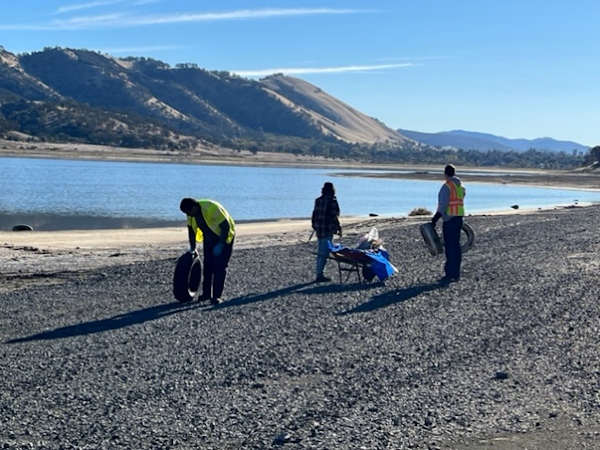
On Nov. 3, I had the pleasure of spending the day with a group of unsung heroes cleaning up the shoreline of Borax Lake.
This day was in the planning for over a year by a small group of residents that realized the drought and low lake level presented the opportunity of a lifetime to clean up the littered Borax Lake shoreline.
Barbara Christwitz of Citizens Caring for Clearlake contacted me one day and said that Calpine had reached out to her and wanted to send some volunteers to help.
I rounded up my good friends Ann and Dave to help. Ann had inspired me a couple of years ago to start doing something about the endless littering and dumping that occurs on Sulphur Bank Drive along Borax Lake.
I have been coming to Clear Lake since the early 1990s and my wife Christy grew up in Nice and went to Upper Lake High School.
I remember the first time I visited Clear Lake. We drove over Mt. Saint Helena and as we drove into Lower Lake, I remember thinking this looks like a place from another time. I had not seen a Fosters Freeze since I was a kid. I was drawn to the natural beauty of the lake, local wildlife, excellent fishing and relaxed pace of life.
As we drove onto Sulphur Bank Drive, I witnessed what looked like a sprawling landfill. There was litter, tires, appliances and abandoned vehicles everywhere.
For years I drove by this travesty lamenting the seeming lack of concern about the problem. Several years ago, I noticed things were starting to look much better in the area. Ann informed me that there was a group of concerned citizens cleaning up the area. I decided to join the cause.

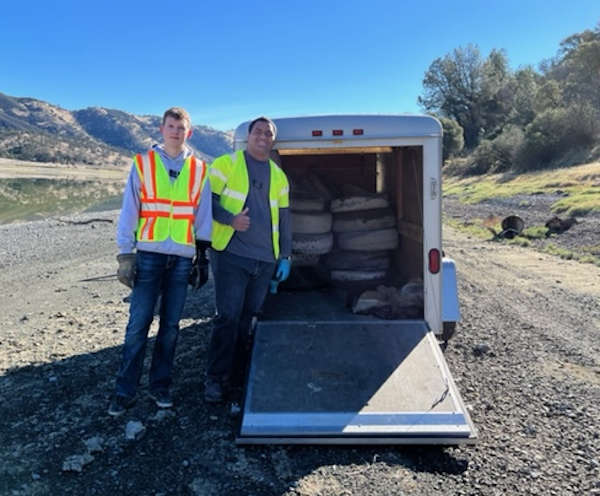
A group of about a dozen volunteers spent the day picking up over two tons of litter, tires, appliances, used hypodermic needles and trash along the shoreline of Borax Lake.
We managed to clean up the entire shoreline in a day, leaving only a handful of piles of larger items which we hauled away in the next few days.
My plea to those that continue to litter and dump their unwanted belongings in this area is this. The Borax Lake area is a special place with an important history and all of us that live here bear responsibility to future generations to keep it pristine.
These are challenging times and going to the landfill can be costly. Littering and dumping is not the answer.
The items we hauled away included tires, TVs, appliances, scrap metal, cans and bottles, all of which are recyclable items that can be taken to the local landfill for free.
Citizens Caring for Clearlake will provide landfill vouchers for those that cannot afford to pay the landfill fees for other items.
I invite you to join the group of volunteers who work tirelessly to keep this area looking beautiful.
You can contact Barbara of Citizens Caring for Clearlake at 707-995-0940 to volunteer and to obtain landfill vouchers.
I assure you that it will be a fulfilling and rewarding endeavor.
Dave Sena lives in Clearlake, California.
- Details
- Written by: Becky Salato
Last month, the Department of Education released student test results that confirmed what we all feared: the COVID-19 pandemic had devastating consequences on reading and math scores for students in every state across almost every demographic.
Konocti Unified School District was no exception — our students didn’t perform well. Unfortunately, this continues a trend that began even before the pandemic.
In truth, COVID simply revealed more of what we already knew: our kids’ scores reflect a lack of access to the kinds of resources and support available elsewhere. We have structural challenges (like limited internet access) and social challenges (like limited employment and health care).
We’re not here to make excuses or bury our heads in the sand. We understand the problems we face and we’re working hard to address them, but we cannot be successful unless schools and families work together.
For the last two years, everyone was isolated and relationships suffered. Schools and families did not have the opportunities to connect. Just like kids are relearning how to get along with each other and engage in learning, schools and families also need to relearn how to work together.
As a school administrator, I don’t expect you, as a parent, to agree with everything your child’s school does. I even understand the need for you to come in and blow off some steam when you’re frustrated. But then, I need you to roll up your sleeves and work with us to help your child thrive.
When parents and educators speak with a single voice about the value of education, it makes a huge difference. If schools say one thing and parents say another, kids will choose their favorite option. If we work together, we can instill a passion for learning that will allow our students to soar.
Let’s take a look at some of the unique challenges facing our community and school district.
Staffing
First, we’re navigating our way through a severe teacher shortage. This is another statewide (and nationwide) problem, but one that’s hitting Lake County hard. As a rural area, recruiting can be difficult, especially attracting top talent from outside the area. Most California school districts partner with nearby universities to funnel recent graduates into the teaching profession and into their schools, but we don’t have that option. Right now, many of our teachers are in the process of getting their teaching credential. Either they’re on a short-term waiver while they apply to a credentialing program or they’re in a program,teaching and going to school at the same time.
Social and economic challenges
Second, although our community has some wonderful upsides, including its natural beauty and slower pace of life, it also has its fair share of social and economic challenges that make it harder to recover from the pandemic as compared to wealthier communities. It’s no wonder that so many local students are struggling with their mental and physical health.
Growing enrollment
Third, while most California school districts have shrinking enrollment, our enrollment is growing — and fast. That puts a lot of strain on an already overburdened system, making the first two challenges even tougher.
The good news is that we’re on the path to overcoming these obstacles. I’m excited to share some of our plans and progress.
Recruitment and retention
To combat the teacher shortage, we’re focusing on both recruitment and retention. To attract new teachers to the district, we offer the best benefits package in the county. We’ve also become much more strategic in our search, reaching out to teachers from communities across the country that are similar to Lake County but may not pay as well as we do.
To retain our teaching staff, we offer ongoing support from our wonderful classified staff, professional development and training opportunities, and in-classroom mentorship. This is especially helpful for our newest teachers who are often passionate, homegrown locals who simply need a little extra support while they finish their credential and find their footing in the classroom.
Teaching is an incredible career, but it isn’t easy, even for our veteran teachers, so we are always looking for outside-the-box ways to show our teachers how much we value them. For example, to make it easier for our teachers to remain in the workforce, we are in the process of developing a day care program for employees.
Community partnerships and extra support
With all the social and economic barriers we have to overcome, it can sometimes feel like other communities are going over hills while we’re climbing a mountain. To make an impact in this area, KUSD offers a number of programs and initiatives to support students both inside and outside the classroom.
We start by making sure students have enough to eat by providing breakfast and lunch (and snacks). In addition to academic support, we offer a multitiered system to support students socially, emotionally, and physically so they can engage in learning.
We also partner with community providers to meet students’ needs. Healthy Start provides kids with free clothing, and local health care providers offer medical and behavioral health care via an on-site clinic. We’re leaning into health and wellness because we believe that when kids feel better, they do better.
Academic programs
To do better academically, students need to feel supported based on their individual skill and level of progress. To that end, we’ve implemented a corrective reading program to help our third through seventh graders catch up. We’re training our math teachers to make the subject more fun and hands-on, so it’s easier to grasp. Our goal is always to have the latest and most appropriate tools and resources to teach.
There’s no sugarcoating the fact that we’re not where we want to be with test scores. Even so, we’ve made progress through the pandemic. We have more staff with more training. There are better plans in place to measure our progress and we’re establishing the structural and foundational elements needed to succeed down the road. That’s the sign of a good team — that we’re never happy where we are.
I know we can improve test scores — especially when schools and families work together. In fact, I think we’re already on our way. Like I always say, we’re getting better at getting better.
Dr. Becky Salato is superintendent of the Konocti Unified School District.