
Opinion
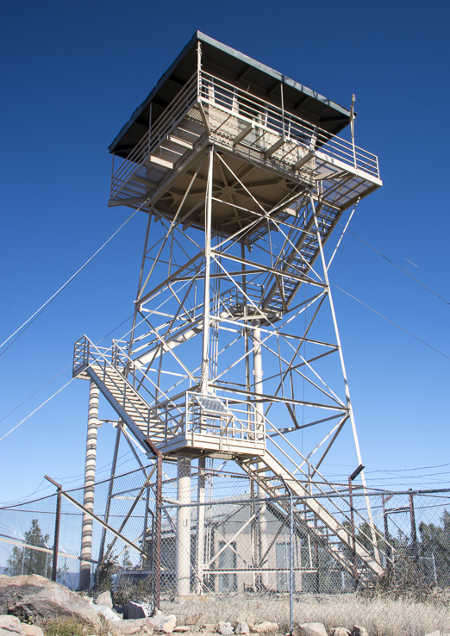
Konocti Lookout, on Wright Peak of Mount Konocti is a National Historic Lookout with both California Historical Status and National Status (#US1104, CA107).
It has served Lake County, Colusa County, Sonoma County, Yolo County, Mendocino County and the Sacramento Valley since 1977.
From its scenically and beautifully perched location it overlooks and protects Mendocino National Forest, the Snow Mountain-Berryessa National Monument, Native American tribal lands and almost every beautiful Lake County location in between.
Why does it need to be repaired? And what happened to Konocti?
In 2015, after a long time unoccupied and almost abandoned, Forest Fire Lookout Association (http://ffla.org) contacted the agency responsible for Konocti Fire Lookout and proposed opening the Fire Lookout and Staffing the lookout with volunteers, at “no cost” for personnel. The agency accepted and “Konocti Chapter” of Forest Fire Lookout Association was born (http://ffla-ccwr.org).
In 2015, after many years of what seemed normal at the time, fire season in Lake County and surrounding counties changed drastically.
In 2015, wildfire came to Lake County. We lost four citizens that year, and too many houses to count. Tragic and devastating. Cobb Mountain and Hidden Valley Lake areas were scorched and will never be the same, ever. Neither will Lake County citizens.
Since that time in 2015, Lake County has burned over 60% and the wildfire threat seems to be commonplace now. Everywhere you look, you see scorched earth, burned homes and reminders of what the new normal is, every fire season. Every fire season (June through November) we see fire apparatus from all over California, and even some from out of state responding with lights and sirens to a fire in lake county.
Konocti Fire Lookout is perched in the middle of Lake County with the best view for smoke checks and wildfires. It is manned during high fire danger periods, and even after lightning storms like we experienced in 2020.
Yes, there is satellite imagery, cameras that cost Pacific Gas and Electric Co. thousands to install, and this year even drones in some areas. Although the technologies have increased, the human element cannot be removed or ignored. Someone, a human, has to look at cameras, look at satellite imagery, and operate drones. Humans cannot be replaced, now or never. This is the new big argument.
In 2019, Konocti Fire Lookout volunteers were greeted by a busload of Lake County residents who were transported to the lookout in a Lake County bus. It was a small group, and nobody knows who the visitors were exactly. The lookout volunteers, as always, were happy to greet the visitors and show them the beautiful lookout and talk about what their duties are and were.
The visitors were greeted and instructed that only a few visitors were allowed into the lookout at a time. Some of the visitors did not understand the restrictions but all complied. This extended the time the visitors were rotated in and out of the fire lookout. This is because it is so beautiful looking over Lake County, from inside the lookout, no one wants to hurry through the awe inspiring views. But, someone on that bus that day did not like the wait.
In October 2019, the Konocti Chapter of the Forest Fire Lookout Association was staffing the Konocti Fire Lookout when California state engineers arrived, unannounced, to inspect the fire lookout’s structural integrity. After the inspection, the Konocti volunteers were suddenly asked to vacate the lookout, as it was structurally unsound and unsafe. This ended the fire lookout season for Konocti Fire lookout.
It ended the use of the Konocti Fire Lookout forever, or until it was repaired. And there is “no repair date.”
Since that day in October 2019, we have performed our duties as forest fire lookouts from the top of Mount Konocti. From the ground, there is not a 360-degree view. There is little protection from the elements but the volunteers are flexible and still enjoy the view and are committed to protecting Lake County from further destruction from wildfire.
Before that fateful day in October 2019 when the engineers arrived, the Konocti volunteers would have as many as “three” first reports of wildfire a season. Last year, even after we were working from the mountaintop, we had one significant “first report” in the Clearlake Oaks area of Lake County.
What has Forest Fire Lookout done to repair Konocti Fire Lookout?
Not knowing the exact repair costs, but knowing it will be more than requested we have started a GoFundMe account to repair Konocti Fire Lookout. It will cost a lot to sit down with an engineering firm and have them tell us what the possible estimate is, from the state engineers report. A copy of the report can be provided if requested.
The Forest Fire Lookout Association has written letters to Assemblywoman Cecelia Aguiar-Curry, Sen. Mike McGuire and Congressman Mike Thompson. Sen. McGuire’s office is the only one that has responded.
In the letters, FFLA, as we are known,actually begged for assistance. Sen. McGuire’s office responded and told us that recently Cal Fire received “deferred maintenance funding” which Sen. McGuire's office supported and signed. FFLA and Konocti Lookout were told, “Cal Fire received more than enough money to repair Konocti Fire Lookout.” Sen. McGuire’s office told FFLA that they will follow up with Cal Fire regarding the repairs. To our knowledge, there are no current plans to repair Konocti Fire Lookout.
FFLA is asking Lake County citizens and anyone knowing the value of Konocti Fire Lookout, and the job the volunteer fire lookouts are doing, to please assist us telling our leaders that it needs to be repaired, and soon. Contact Sen. McGuire’s office at
If you would like to know more about becoming a Konocti Fire Lookout volunteer or know more about our interest in preserving this fire essential, national and California State Historical landmark, please contact me at Christopher Rivera, Director, California Pacific Region, Forest Fire Lookout Association,
We are also asking the Lake County community to become a Konocti Lookout volunteer. We are a community based volunteer organization accepting anyone who would like to learn the art and skill of being a forest fire lookout. We will train you to do all aspects of “smoke watching” from the top of Wright Peak.
Konocti Chapter of Forest Fire Lookout Association is a 501(c) (3) non profit. For more information you can call Jim Adams at 707-245-3771, Chris Rivera at 707-239-6824, or go to http://ffla-ccwr.org or http://ffla.org.
Longtime Lake County, California, resident Chris Rivera is director of the Forest Fire Lookout Association, California-Pacific Region.
- Details
- Written by: Christopher Rivera
For more than 20 years I have been justifying the existence and worthiness of my child, myself, and those that care for and support us, while under government scrutiny and judgment, every single month. This will not end until death.
My children are 3, 4, 16 and 20 years old. A monetary value cannot be put on the changes to people, programs, policies and services, access to care, removal of barriers, opened doors for others, work with nonprofit and government-based organizations, and countless community based projects, resources and support that we have brought to Lake County because our existence, this is home to my family and me and we care.
People should be able to thrive at their homes, in their hometowns and in rural communities, regardless of vulnerabilities.
In-Home Supportive Services, or IHSS, is a division of Medi-Cal, which is operated by California Department of Healthcare Services, or DHCS.
This is health care that we are here talking about today. That means providers and clients are protected, and obligated, by federal and state privacy policies such as Health Insurance Portability and Accountability Act, or HIPAA, however, I do have some information to share with the public.
California’s Medi-Cal budget is $22.5 billion from the general fund, $118 billion overall. However, I want to be clear that today we are talking about pennies on the dollar in costs to the county, in exchange for invaluable resources and revenues added to our wonderful Lake County communities.
The Board of Supervisors cannot support health and wellness in any aspect for any entity, cause, function, board or committee, without supporting IHSS and everyone involved in it.
IHSS is an essential part of the operations of a County Organized Health System like Lake County operates on in order to receive their funding from the state and federal government.
The people of Lake County elected the Board of Supervisors to be community minded for all people living in Lake County.
If the Board of Supervisors has issues with the IHSS program, how it is funded, how they run essential operations, who uses the program and who is employed by the program, they need to take it up with DHCS and the state and federal governments, not take it out on the struggling, traumatized, vulnerable community members and residents of Lake County that are just trying to survive in their homes.
What is a community health needs assessment, or CHNA? It is a systematic process involving the community to identify and analyze community health needs. The process provides a way for communities to prioritize health needs, and to plan and act upon unmet community health needs.
Lake County has 64,562 residents with 29,267 or 45% of those residents receiving Medi-Cal benefits through Partnership HealthPlan of California, or PHC, which is the organization responsible for managing Medi-Cal through the County Organized Health System.
Of the PHC member population in this county, 21% are ages 0 to 10, 16% are ages 11 to 19, 30% are ages 20 to 44, 22% are ages 54 to 64, and 10% are aged 65 and over.
Eighty-eight percent of PHC members primarily speak English, while 12% are Spanish speaking.
The ethnicity for this population includes 62% white, 24% Hispanic, 3% Native American, 2% African American and 8% others.
Many seniors and disabled adults have PHC as a secondary insurance, and those people were not counted in this survey. I will argue that makes the vulnerable populations of people over 50% of the entire population of Lake County.
What is a vulnerable population? Vulnerable populations are groups and communities at a higher risk for poor health because of the barriers they experience to social, economic, political and environmental resources, as well as limitations due to illness or disability.
The vulnerability of these populations can be measured based on racial and ethnic minorities, the uninsured, low-income children, the elderly, the homeless, those with human immunodeficiency virus, or HIV, and those with other chronic health conditions, including severe mental illness.
Vulnerable populations of people face a multitude of stigmas, judgments, and criticisms from everyone. Society, friends and family members, government workers programs and resources, most of which are supposed to only be there for love, support, and help.
Vulnerable people are more likely to experience abuse, across the life continuum, and often starting in childhood. Poverty is one of the contributing factors that make a child vulnerable. Most children living in Lake County are living in poverty (or below) standards.
Severe housing problems are characterized as overcrowding, high housing costs, and lack of kitchen or plumbing facilities. Twenty six percent of Lake County’s populations are facing severe housing problems, adding to the numbers of vulnerable people living in Lake County.
Fires, floods, public safety power shut-off events and now COVID-19 have not left one resident of Lake County unaffected. We are all traumatized and have experienced more as an entire county than most people face in their lifetimes.
We are Lake County Strong. We were defining emergency preparedness, defensible space, disaster response, shelter in place, essential workers and community mindedness years before COVID-19. COVID-19 brought to light the lives of IHSS workers, and the lives of those that live sheltered in place at home from the rest of the world.
The Board of Supervisors needs to stop making vulnerable people beg for dignity, respect, acknowledgment, support, time or moneys. There will never be any equity among vulnerable peoples (the majority) in the Lake County communities we love, in our homes, and with the rest of society, as long as the Board of Supervisors continues to single out and exclude the IHSS program.
Residents of Lake County need to know that their elected officials have everyone’s best interest in mind, especially now after more than a year sheltered in place from the outside world with no resources or relief.
We have kept our most vulnerable clients healthy and safe during the covid pandemic, often at the expense of ourselves as caregivers.
County programs resources and services, community based organizations and the rest of the residents of Lake County need to know you understand the health care system and the functions of each entity involved. They need to know you support the health and wellness of the communities you’ve been elected to serve as a whole operation, not just in vanity.
Removing homeless off the streets to appear to be supporting people and their health, while failing to help and support working people make happier, healthier homes, is incredibly vain.
Failing to provide a good contract for IHSS workers knowing that there are families dependent upon this income, is counterproductive to all of the adverse childhood experiences work that you support, the poverty education that Dr. Donna Beegle has brought to Lake County, and is a slap in the face to every entity and person involved in health and wellness in Lake County.
Prove that you haven’t been wasting the health care system’s time and money, that you support Lake County residents no matter what their status is, that you value Lake County workers and that you are community minded and Lake County Strong.
Kendra Cramer lives in Kelseyville, California. She plans to present this to the Board of Supervisors at its meeting on Tuesday, June 22, 2021.
My children are 3, 4, 16 and 20 years old. A monetary value cannot be put on the changes to people, programs, policies and services, access to care, removal of barriers, opened doors for others, work with nonprofit and government-based organizations, and countless community based projects, resources and support that we have brought to Lake County because our existence, this is home to my family and me and we care.
People should be able to thrive at their homes, in their hometowns and in rural communities, regardless of vulnerabilities.
In-Home Supportive Services, or IHSS, is a division of Medi-Cal, which is operated by California Department of Healthcare Services, or DHCS.
This is health care that we are here talking about today. That means providers and clients are protected, and obligated, by federal and state privacy policies such as Health Insurance Portability and Accountability Act, or HIPAA, however, I do have some information to share with the public.
California’s Medi-Cal budget is $22.5 billion from the general fund, $118 billion overall. However, I want to be clear that today we are talking about pennies on the dollar in costs to the county, in exchange for invaluable resources and revenues added to our wonderful Lake County communities.
The Board of Supervisors cannot support health and wellness in any aspect for any entity, cause, function, board or committee, without supporting IHSS and everyone involved in it.
IHSS is an essential part of the operations of a County Organized Health System like Lake County operates on in order to receive their funding from the state and federal government.
The people of Lake County elected the Board of Supervisors to be community minded for all people living in Lake County.
If the Board of Supervisors has issues with the IHSS program, how it is funded, how they run essential operations, who uses the program and who is employed by the program, they need to take it up with DHCS and the state and federal governments, not take it out on the struggling, traumatized, vulnerable community members and residents of Lake County that are just trying to survive in their homes.
What is a community health needs assessment, or CHNA? It is a systematic process involving the community to identify and analyze community health needs. The process provides a way for communities to prioritize health needs, and to plan and act upon unmet community health needs.
Lake County has 64,562 residents with 29,267 or 45% of those residents receiving Medi-Cal benefits through Partnership HealthPlan of California, or PHC, which is the organization responsible for managing Medi-Cal through the County Organized Health System.
Of the PHC member population in this county, 21% are ages 0 to 10, 16% are ages 11 to 19, 30% are ages 20 to 44, 22% are ages 54 to 64, and 10% are aged 65 and over.
Eighty-eight percent of PHC members primarily speak English, while 12% are Spanish speaking.
The ethnicity for this population includes 62% white, 24% Hispanic, 3% Native American, 2% African American and 8% others.
Many seniors and disabled adults have PHC as a secondary insurance, and those people were not counted in this survey. I will argue that makes the vulnerable populations of people over 50% of the entire population of Lake County.
What is a vulnerable population? Vulnerable populations are groups and communities at a higher risk for poor health because of the barriers they experience to social, economic, political and environmental resources, as well as limitations due to illness or disability.
The vulnerability of these populations can be measured based on racial and ethnic minorities, the uninsured, low-income children, the elderly, the homeless, those with human immunodeficiency virus, or HIV, and those with other chronic health conditions, including severe mental illness.
Vulnerable populations of people face a multitude of stigmas, judgments, and criticisms from everyone. Society, friends and family members, government workers programs and resources, most of which are supposed to only be there for love, support, and help.
Vulnerable people are more likely to experience abuse, across the life continuum, and often starting in childhood. Poverty is one of the contributing factors that make a child vulnerable. Most children living in Lake County are living in poverty (or below) standards.
Severe housing problems are characterized as overcrowding, high housing costs, and lack of kitchen or plumbing facilities. Twenty six percent of Lake County’s populations are facing severe housing problems, adding to the numbers of vulnerable people living in Lake County.
Fires, floods, public safety power shut-off events and now COVID-19 have not left one resident of Lake County unaffected. We are all traumatized and have experienced more as an entire county than most people face in their lifetimes.
We are Lake County Strong. We were defining emergency preparedness, defensible space, disaster response, shelter in place, essential workers and community mindedness years before COVID-19. COVID-19 brought to light the lives of IHSS workers, and the lives of those that live sheltered in place at home from the rest of the world.
The Board of Supervisors needs to stop making vulnerable people beg for dignity, respect, acknowledgment, support, time or moneys. There will never be any equity among vulnerable peoples (the majority) in the Lake County communities we love, in our homes, and with the rest of society, as long as the Board of Supervisors continues to single out and exclude the IHSS program.
Residents of Lake County need to know that their elected officials have everyone’s best interest in mind, especially now after more than a year sheltered in place from the outside world with no resources or relief.
We have kept our most vulnerable clients healthy and safe during the covid pandemic, often at the expense of ourselves as caregivers.
County programs resources and services, community based organizations and the rest of the residents of Lake County need to know you understand the health care system and the functions of each entity involved. They need to know you support the health and wellness of the communities you’ve been elected to serve as a whole operation, not just in vanity.
Removing homeless off the streets to appear to be supporting people and their health, while failing to help and support working people make happier, healthier homes, is incredibly vain.
Failing to provide a good contract for IHSS workers knowing that there are families dependent upon this income, is counterproductive to all of the adverse childhood experiences work that you support, the poverty education that Dr. Donna Beegle has brought to Lake County, and is a slap in the face to every entity and person involved in health and wellness in Lake County.
Prove that you haven’t been wasting the health care system’s time and money, that you support Lake County residents no matter what their status is, that you value Lake County workers and that you are community minded and Lake County Strong.
Kendra Cramer lives in Kelseyville, California. She plans to present this to the Board of Supervisors at its meeting on Tuesday, June 22, 2021.
- Details
- Written by: Kendra Cramer





 How to resolve AdBlock issue?