 How to resolve AdBlock issue?
Education
- Details
- Written by: Elizabeth Larson
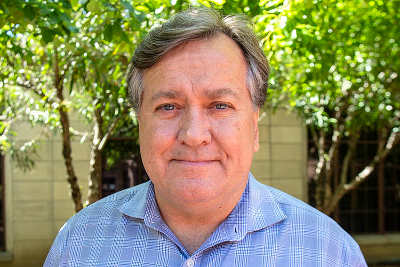
BERKELEY, Calif. – Four-time Pulitzer Prize-winning journalist David Barstow will be the new head of the Investigative Reporting Program at UC Berkeley’s Graduate School of Journalism, campus officials announced Monday.
His post begins next month.
Barstow will leave his post as a full-time investigative reporter at the New York Times, where he’s examined President Donald Trump’s tax returns, Wal-Mart’s use of bribes in Mexico, workplace safety rules and the murky relationships between retired generals, the Pentagon and the military-industrial complex, among other issues.
Barstow, working with colleagues, was awarded Pulitzer Prizes for each of those investigations.
The journalism school’s Investigative Reporting Program is a teaching newsroom that creates teams of students and professional journalists to produce content for outlets such as the Los Angeles Times, Frontline and USA Today.
“I’ve long believed that the best way to teach investigative reporting is by actually doing investigative reporting,” Barstow said. “That is exactly what the Investigative Reporting Program has been doing for the last 14 years under the leadership of Lowell Bergman. It is an enormous honor to now fill his shoes, and I can’t wait to mentor, encourage and work side by side with the brilliant students at the (Graduate) School of Journalism who are enthusiastically taking up the torch of investigative reporting.
“The truth needs reinforcements, and I can think of no better place to find recruits,” he added.
Edward Wasserman, dean of the journalism school, called Barstow “among the most honored journalists in the country.”
Bergman founded the Investigative Reporting Program in 2006 and retired in June.
“We scoured the nation for months for someone who was eager to teach and mentor our students, and to integrate the IRP’s signature strengths into our master’s program in a thoroughgoing way so the entire school will be known for its training in investigative reporting,” Wasserman said. “We are convinced David is just that person.”
Dean Baquet, executive editor of the New York Times, said he hoped to work with Barstow in the future.
“David Barstow is one of the finest journalists of his generation,” Baquet said. “His name has appeared on some of the most important stories the Times has published. He is a sensational writer, and reporter, and a journalist of high integrity.
“We are sorry to see him go, of course,” Baquet added. “But we also hope that we get to work together on future projects. And we think he will be a great teacher for a new generation of investigative journalists.”
- Details
- Written by: Elizabeth Larson
Additionally, there are numerous wastewater treatment facilities in the area that are looking for new employees for the workforce.
The Lake County Campus of Woodland Community College is now offering an associate in science degree in water and wastewater treatment in addition to the 18-unit certificate.
The certificate can be completed in one year (fall and spring semesters), and students can earn the degree by taking additional general education courses to expand their knowledge.
The associate degree is ideal for those who are interested in going into management jobs at water and wastewater agencies.
Three level-one courses in water/wastewater treatment and distribution are offered in the fall semester on Mondays, Tuesdays and Wednesdays from 6 to 8:50 p.m. starting on Aug. 19.
The level-two courses are taught in the spring semester beginning Jan. 13, 2020.
“The starting wages for public utilities in these counties range are also from $16 an hour up to $35 an hour, depending on the county,” said instructor John Hamner. “With a few years of experience the salary rates can reach $25 to $45 an hour, and this usually includes benefits like retirement, medical and dental.”
Drinking water comes from groundwater wells and from surface water sources like lakes and rivers. State and federal laws require that this water be tested, and treated if necessary, before it is deemed safe for drinking.
The testing and the treating of safe drinking water is a task performed by certified water operators.
Federal and state law requires that the men and women that operate water and wastewater treatment facilities be certified through the State Water Resources Control Board.
The certificate and degree at the Lake County Campus provide all the knowledge and understand to pass the certifying exams.
Protecting our drinking water sources from contaminants in California has become more important than ever. Often drinking water sources become contaminated by sewage.
Wastewater treatment and disposal is becoming more important as the need for safe drinking water sources increases.
One of the end products of wastewater treatment is the recycled wastewater, which used to be considered a disposable by-product of wastewater treatment. Today this product is in high demand, and only certified wastewater operators can produce and provide this valuable resource while also protecting drinking water sources.
For more information about the Water and Wastewater Treatment program, call the Lake County Campus, 707-995-7900, or instructor John Hamner, 707-277-0420, today.
The Lake County Campus is located at 15880 Dam Road Extension in Clearlake.
For more information about the Lake County Campus, visit http://lcc.yccd.edu .
- Details
- Written by: Elizabeth Larson
“Students shouldn’t have to starve in order to get an education,” Sen. Dodd said. “My bill will ensure students of modest means don’t go hungry by making it easier for them to receive public assistance. Food insecurity is a serious problem on California college campuses today and this is an important step to addressing it.”
The inability to afford food – or food insecurity – is a top concern among college students. A recent Government Accountability Office report shows a third of all college student are struggling to afford food and basic nutrition. It recommends the U.S. Department of Agriculture’s Food and Nutrition Service take steps to enroll people in federal food assistance programs.
Senate Bill 173 removes barriers to students to get subsidies under Cal Fresh, in part by streamlining the application process. More than 50,000 California college students could be enrolled in food assistance thanks to the senator’s legislation. The California Welfare Directors Association, the County of Yolo, student groups and area food banks support the bill.
SB 173 was approved in the Senate late Monday by unanimous vote after previously passing the Assembly. It heads next to Gov. Gavin Newsom for a signature.
“The Cal Fresh rules for students can be extremely limiting, forcing too many struggling college students to go hungry,” said Cathy Senderling McDonald, deputy executive director of the California Welfare Directors Association. “County human services agencies hope this bill will help ease participation in the types of work-study programs that enable more students to become, and remain, eligible for this critical nutrition support program.”
Sen. Bill Dodd represents California’s 3rd Senate District, which includes all or portions of Napa, Solano, Sonoma, Yolo, Sacramento and Contra Costa counties.
- Details
- Written by: Elizabeth Larson
Long-time Kelseyville Elementary teacher Toni Brown, who coordinates the program at the elementary school and supervises the volunteers, says the research-based program has provided exceptional results.
“Eight of the 10 students identified for the program in fall were at reading level by January, so we exchanged those students for eight more who were struggling in January and by spring, again, eight of the ten students in the program had made up their deficits and were reading at grade level. The two students who stayed in the program all year tested the highest of all the participants,” she said.
Reading at grade level by third grade is important because this period marks the shift between learning to read and reading to learn.
The Annie E. Casey Foundation’s report titled, “Early Warning! Reading by the End of Third Grade Matters,” shows that grade-level reading proficiency by the end of third grade is a key predictor of high school graduation.
In fact, the foundation says, “The ability to read by third grade is critical to a child’s success in school, life-long earning potential and their ability to contribute to the nation’s economy and its security.”
Providing students with the extra help they need in kindergarten through second grade allows them to achieve mastery of the most essential reading skills in third grade, so when program coordinator Joan Reynolds approached Kelseyville Unified School District and offered the service, Superintendent Dave McQueen jumped at the chance.
Kelseyville Unified just finished its fourth year participating in the Schools of Hope program and the collaboration has been so successful, they plan to continue the program for the 2019-20 school year.
Brown credits the program’s success to the excellent curriculum, the supportive second-grade teaching staff, and the dedicated, high-quality volunteers, most of whom are retired teachers who have been with the programs since its inception at Kelseyville Unified.
Based on whether students are in kindergarten, first or second grade, the curriculum reviews phonemic awareness (sounds), phonics (associating sounds with letters), high-frequency words, fluency, and comprehension. Students meet with their tutor twice a week for 30 minutes in a structured environment that reinforces these basic skills.
Tutors include Lynn Andre, Mary Borjon, Bev Bresso, Ashlyn Hansen, Julie Hernaez, Kim Olson, Janice Pilcher, Gail Robello, Kim Shay, Cindy Wilson, and Kathy Windrem. Schools of Hope works with North Coast Opportunities to identify volunteers for the program.
North Coast Opportunities confirms background checks, fingerprinting and tuberculosis screening to keep the students safe.
Brown said the tutors are incredibly caring, generous people. As an example, when a fourth-grade student who was in the program as a second grader saw her former tutor, Cindy, on campus, she asked Brown if she could read with Cindy again.
Brown explained that tutoring was for second graders, but when Cindy learned of the request, she started coming ten minutes early with special books checked of the library so she could read with the fourth grader, too.
Although Kelseyville Elementary has enough tutors for the 2019-20 school year, volunteers interested in expanding the program to Riviera Elementary School should contact Joan Reynolds for more information.
Reynolds can be reached at