How to resolve AdBlock issue?
News
- Details
- Written by: Elizabeth Larson
LUCERNE – A portion of Lucerne is getting a new look thanks to a public art effort.
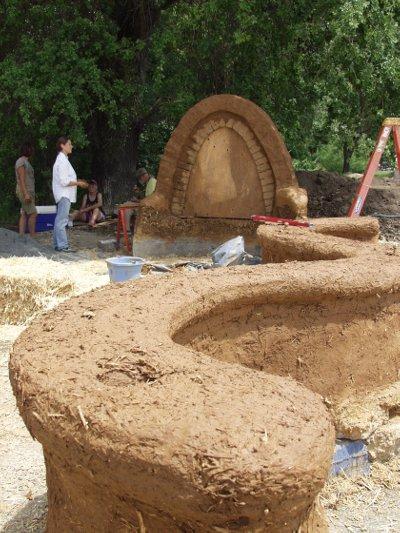
Community members of all ages are taking part in the Lucerne Community Art Project, which is being built at the corner of Eighth Avenue and Highway 20, on the edge of Lucerne Creek Park.
Natural building expert Massey Burke is overseeing the effort, which is building a community bench with a small arch and decorative walls with earthen building techniques, including adobe and cob.
The project began May 9 and will run through this Sunday, from noon to 5 p.m. daily.
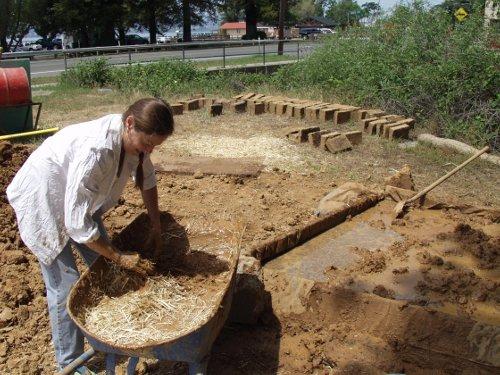
On the project's first weekend, volunteers started off by making about 200 of the nearly 300 adobe bricks that will be used in the project, said District 3 Supervisor Denise Rushing, who spearheaded the effort.
Burke said she's seen a wide variety of community members dropping by during the days to help – from seniors to small children and their parents.
She said the red clay-laden soil being used for the bricks came from Tom Carter's Upper Lake property.
Burke is an experienced natural builder who took part in creating an arch of earthen materials that was temporarily featured in an exhibition on the National Mall in Washington DC.
Clearlake Oaks residents Bill Rett and Judy Barnes have been faithfully making the trip – mostly on weekends but with an occasional weekday thrown in – to work on the project and learn natural building skills.
“That's why we got interested in this – because we wanted to learn the techniques,” said Rett.
Barnes said the project has moved along “faster than I thought it would.”
Just over the last week the arched bench has popped up, with the decorative walls and a decorative feature on the Lucerne Creek Park sign also quickly coming together.
Barbara Hepburn of Hidden Valley Lake has made the trip every day to work on the project.
She said she's part of Burke's “building tribe,” which is creating structures for Sol Fest at Hopland's Solar Living Institute.
Hepburn took natural building classes from Burke previously, but she said the only way to really learn the technique is to get out and do it.
This week she was up to her elbows in natural clay and stray, and using her hands to shape the materials on the frame of the arched bench.
Hepburn said not only is she learning more, she's helping teach others, “and realizing I know more than I thought I did.”
Volunteers hope to take what they learn and put it to work on their own projects. Rett said he and Barnes want to build a small arched bench seating area like the park's at their own home.
Burke said the project is right on schedule. Because things have moved along well, she said she's thinking of adding some additional structural details.
She also is going to have a garden party on Sunday.
Fifteen yards of topsoil have been donated to the park beautification effort, and on Sunday afternoon – after it starts to cool off – community members are invited to come and help plant a garden.
Burke suggests those who want to participate should bring shovels, wheelbarrows, drought-resistant plants and plenty of ideas.
E-mail Elizabeth Larson at
- Details
- Written by: Lake County News Reports
Properly cleaning and drying will also protect boats and help boaters avoid quarantines or being turned away from a water destination.
"Vehicles with watercraft are being stopped at California border stations for inspection," said Food and Agriculture Secretary A.G. Kawamura. "In the last two years, we have inspected tens of thousands vessels crossing into California and have confirmed adult mussels on 323. Each of those finds meant we saved a California lake or reservoir from exposure to this invasive species."
Lake County has a mussel prevention program that requires boats have an inspection sticker before launching. The Lakeport Regional Chamber of Commerce, 707-263-5092, has more information about the program.
The mussels are a threat to California agriculture because they can clog irrigation canals and other elements of the state’s vast water delivery system.
Efforts to keep the mussels out of California help officials and taxpayers avoid costly repairs and maintain efficient water movement.
“Quagga and zebra mussels pose a serious threat to our waters and fisheries,” said Department of Fish and Game (DFG) Director Donald Koch. “The spread of these mussels threatens aquatic ecosystems and fisheries, water delivery systems, hydroelectric facilities, agriculture, recreational boating and fishing, and the environment in general. Boaters should be prepared for inspections throughout the state designed to help ensure California’s water bodies remain mussel-free.”
In addition to being sure to clean, drain and dry watercraft, the Department of Boating and Waterways (DBW) urges boaters to plan for possible launch restrictions and inspections by calling water bodies before leaving home. Programs and requirements vary and can change rapidly.
“Anyone planning to go boating should contact their destination about local restrictions or requirements,” said DBW Director Raynor T. Tsuneyoshi. “At some locations, potentially contaminated vessels – those not properly cleaned, drained and dried – could be turned away.”
Quagga and zebra mussels can cause severe problems for boaters and water enthusiasts. They can:
Ruin the engine by blocking the cooling system – causing overheating;
Increase drag on the bottom of the boat, reducing speed and wasting fuel;
Jam steering equipment on boats;
Require scraping and repainting of boat bottoms;
Colonize all underwater substrates such as boat ramps, docks, lines and other underwater surfaces requiring constant cleaning.
To help prevent the spread of these mussels, boaters should inspect all exposed surfaces, wash boat hulls thoroughly, remove all plants from boat and trailer, drain all water, including lower outboard units, clean and dry livewells and bait buckets and dispose of baitfish in the trash. Watercraft should be dried for at least five days and up to 30 days depending upon the weather between launches in different fresh bodies of water. These steps are designed to thwart spread of the invasive mussels, safeguard boats and preserve high quality fisheries.
“We are strongly encouraging boaters to arrive at State Park reservoirs with clean and dry vessels to ensure they are granted access,” said Ruth Coleman, director of California State Parks. “Boaters may have their vessels inspected and we hope that people understand and cooperate to stop the spread of this destructive invasive species.”
California law makes it illegal to possess or transport quagga or zebra mussels and gives DFG authority to stop, detain, search and quarantine boats suspected or determined to be contaminated with mussels. Additional agencies have been granted this authority including the Department of Food and Agriculture (CDFA) and Parks.
Zebra mussels inhabit water depths from four to 180 feet, while Quagga can reach depths more than 400 feet. Both mollusks can attach to and damage boat trailers, cooling systems, boat hulls and steering equipment. Mussels attached to watercraft or trailers can be transported and spread to other water bodies. Water in boat engines, bilges, live wells and buckets can carry mussel larvae (called veligers) to other water bodies as well.
Quagga mussels were first detected in the Colorado River system in January 2007 and were later found in San Diego and Riverside counties by state and local water agencies. Zebra mussels were discovered in San Justo Reservoir in San Benito County in January 2008.
A public toll-free number hotline has been established for boaters and anyone involved with activities on lakes and rivers seeking information on the invasive and destructive auagga mussels at 1-866-440-9530.
For more information on the quagga/zebra mussel response and what you can do, please visit the DFG Web site at www.dfg.ca.gov/invasives/quaggamussel.
- Details
- Written by: Lake County News Reports
The Mendocino County Sheriff's Office reported that the incident occurred at Savings Bank of Mendocino County on Highway 101 in Hopland shortly before 3 p.m.
Authorities were alerted by a 911 call reporting the bank robbery.
When deputies arrived witnesses told them that the suspect – a white male adult – had fled in a vehicle, which witnesses described, according to the sheriff's report.
Deputies and Ukiah Police, along with the California Highway Patrol, searched the area for the vehicle, with CHP stopping a vehicle that matched the description at about 3:30 p.m.
Officials said the vehicle's single male occupant was detained and witnesses identified him as the person who allegedly robbed the bank. Evidence found in the car is alleged to have confirmed his involvement in the robbery.
The suspect, who was arrested at the scene, was not identified by officials on Wednesday.
Sheriff's officials said an investigation into the suspect's possible involvement in other robberies currently is under way.
- Details
- Written by: Elizabeth Larson
The Lake County Roads Department reported that the road was closed to all traffic at the Lake and Napa County lines.
The California Highway Patrol reported that a large dump truck went down an embankment and was blocking the westbound lane just after 2 p.m.
A subject believed to be the driver was reported to be walking around. Cal Fire stated that the driver needed to be transported.
Cal Fire advised that a big rig was needed to help clear the scene. Lake County Road Department crews were en route to the scene to assist with clearing the roads.
The road was later reopened.
E-mail Elizabeth Larson at