 How to resolve AdBlock issue?
News
- Details
- Written by: Glen R. Erspamer Jr.

HIDDEN VALLEY LAKE – A fire destroyed a Hidden Valley Lake home on Saturday evening.
The fire, which took place at 19559 Stonegate Road, was reported just before 5 p.m.
When firefighters from Hidden Valley Lake's fire station arrived on scene, the left side of the house was fully engulfed in flames, officials reported.
Other fire districts around lake offered mutual aid, including South Lake County Fire Protection District, Northshore Fire, Lake County Fire and Kelseyville Fire, as well as a Konocti Conservation Camp Crew 4.
There were at least fire engines and two water tenders that responded, with multiple hoses running from nearby fire hydrants. The fire department was able to extinguish the fire before it damaged surrounding homes.
No one was inside or injured during the fire, although a small black dog is still unaccounted for, fire officials said.
The home was considered a total loss. Chief Rich Boehm estimated damages at more then $250,000, not including personal property within the home.

- Details
- Written by: Lake County News Reports

Last year about this time I wrote a column that ended with the offer to provide my special tomato growing techniques to anyone interested. I had many requests for the information and have decided to dedicate this week’s column to that information.
I have read countless articles and watched numerous television segments about tomato growing, and after years of personally growing and experimenting with tomatoes I have finally come to the conclusion that these articles and segments are mistaken. Too many times I've heard that tomato plants need lots of attention and care to produce great results. I think that this view leads to pampered, spoiled, finicky plants that you waste a lot of time on and wind up with a poor outcome for all your hard work.
If you truly want the best tomatoes, you want your tomatoes to be balanced on a line just between happy and miserable. Why? Tomatoes are technically classified as a “tender perennial.” This means that deep in the tomato’s genetic code it believes that it is going to live a long life, the life of a perennial plant, but being tender it also knows that one frost can end its chance to pass on its genes to another generation.
A happy tomato plant doesn't feel the need to reproduce in order to save the species. After all, it is being well taken care of and can anticipate a long life, so as a consequence it won’t produce a lot of fruit. A tomato plant that's miserable quickly puts out lots of fruit so it can die knowing that it has passed on its lineage. By keeping the tomatoes teetering between happy and miserable, you'll have a strong plant that produces lots of fruit over a long period of time.
You can break the habit of working for your tomatoes and make your tomatoes work for you. The method I use takes a lot of work in the beginning, but then very little work is needed over the remainder of the growing season and it makes for many easy years to come. I have spent many years testing various methods, and have used this method for the last several years with magnificent results.
The preparation
In my garden, I started by digging a hole, 6 feet by 4 feet by 3 feet deep. Then I refilled the hole with alternating layers of steer manure, garden soil, chicken manure, compost and fertilizer. For the fertilizer layer I used a mixture of kelp meal, bat guano, blood meal and green sand.
I continued filling the hole layer by layer until it was completely refilled. Then I built a raised bed the same length and width of the hole using 6 inch by 2 inch redwood boards and set it in place around the hole. I recommend redwood because it’s pest resistant and durable. This bed will last for years with almost no maintenance. Once the raised bed is set, continue filling it with the same layering method mentioned above.
A lot of people make the mistake of just working the fertilizer into the first 3 to 5 inches of soil. The result is that the tomato has no motivation to grow downward in search of more water or nutrients, because all the good stuff is right there near the surface. As you fill in the bed use less and less fertilizer in the higher levels. Remember, the more you make the tomatoes work, the more you can ignore them.
For those of you who are already wondering about crop rotation, I build one of these beds per year so that every year the tomatoes will be in a brand new bed and the old bed is dedicated to a different crop. Last year’s tomato bed is this year’s artichoke bed.
The next thing you want to do in preparing your bed is to lay down a soaker hose with the hose going down the middle of each row and along the outside edge. I don't like drip irrigation for this because of clogging; you'll understand why soon.
Now I lay down red plastic sheet mulch, which you can find in most garden stores or on the Internet. Once it's laid down covering the bed, I secure it down with garden staples. These also can be purchased at the garden store; however I prefer to make mine myself out of wire clothes hangers that the dry cleaners put my shirts on. That allows me to make them extra long (due to my soil being very loose and fluffy the extra length holds better). I use lots of staples – I want that mulch secure! Now I cut six “Xs” in the mulch, one for each tomato plant, evenly spaced about a foot from the edge of the box, in two rows of three about 18” apart. Now I'm ready to plant the tomato plants.
Planting
So let's talk about the tomato plants themselves. I only use the heirloom seeds of indeterminate plants. For those who don't know, indeterminate tomato plants continue to grow longer throughout the season, producing smaller amounts of tomatoes over a longer period of time. On the other side of that coin, determinate tomatoes produce a large amount of tomatoes over a shorter time. If you want to put up canned tomatoes you would want to choose a determinate type so you can have a whole bunch at once, but if your goal is fresh tomatoes coming regularly for quite a while then you want to go with an indeterminate variety.
I plant one tomato plant in each X that was cut into the plastic mulch, and then I surround it with a red water-filled plant insulator. There are several types on the market, and when they start paying me for my endorsement I'll give you more specific names. The insulator keeps the tomatoes warm in the cool nights and protects them from sunburn during the day until they are strong enough to take care of themselves. I leave them on the plants the entire season because the tomatoes can always use the extra heat, and I could hurt the plant trying to remove them.
Some people may ask, “Why should the insulators and mulch be red?” Studies have shown that tomatoes can produce 20 percent more fruit if there is red light reflecting up from the ground, and with the improved results I've personally witnessed using the colored insulators and mulch I'm a firm believer in the use of red with tomatoes.
Now the next part of the job is building the tomato supports. Some studies have shown that tomato plants produce more fruit if they are allowed to sprawl across the ground. While this may be true this also makes the fruit more vulnerable to slugs, and I'm sorry to say I don't want to share my tomatoes with them.
Now, the insulators will give the plants the support they need until they're about 2 feet tall so that's where my supports start, at 2 feet off the ground. I use 10-foot long stakes made of steel rebar, painted red (yes, more red) with an anti-rust spray paint primer.
Rebar is very inexpensive and is available at your garden store or hardware store. My rebar tomato cages are 10 feet tall with a welded rebar latticing halfway up and more rebar latticing at the top. Yes, my tomatoes will reach the top and will even make it back down to the ground before the end of the season. You can choose a different support system but keep in mind that by the end of the season my tomatoes are over twenty feet long when stretched out.
Just a little quick fact about that amazing rebar, the metal rods you see being part of bridges, driveways, and concrete structures: Rebar is made out of the melted firearms used in crimes, confiscated in raids and gun surrender programs.
Now that the plants are in place and all their supports are in position, give your tomatoes a good, heavy watering. Pour some water with fertilizer (whether it's chemical or organic is up to you) through the X in the plastic mulch, but also start up your soaker hose irrigation and give it a ridiculously heavy watering. Let it water all day long so you get water down to the bottom of the pit you dug.
Keep in mind that not only are you trying to water the tomato plants but you are re-hydrating the dry absorbent materials in the soil. This initial heavy watering sets up the condition of not having to water much for the rest of the summer. The roots of the plants will chase the water table as the season goes on.
Your tomatoes are now planted in a deep, rich, loose soil, covered with red plastic mulch that will not only increase fruit yield but keep moisture from evaporating, and supported by red insulators and tomato cages that will hold up the tomatoes throughout the season. Your work is essentially over and now you can relax and let the tomatoes do their work. All you have to do is occasionally shove branches back into the cages as they try to escape and offer a little maintenance.
Maintenance
Suckers are the little branches that form at the point where the leaf attaches to the plant. If you leave them there you will get more tomatoes, but they will be smaller in size; if you “pinch” them or cut them off, you will get fewer tomatoes but of larger size. I typically leave them alone on four of my plants and pinch them on the other two. If you planted determinate type tomatoes don’t pinch the suckers, they need them.
Compost tea or chemical fertilizers should be your best friends. I use compost tea and spray it on my tomato plants every couple of weeks. Compost tea and manure tea are made by adding several cups of compost and/or manure to a five gallon bucket of water. You then let it sit for a couple of days to “mature” (stirring occasionally) and then filter it through a mesh filter, cheesecloth or gauze. This allows nutrients to infuse the water and beneficial microbes to grow. Then pour the tea into a spray bottle and spray the leaves of the tomato plants. This is called foliar feeding, and is a great way to give an extra boost of energy to your plants.
Avoid foliar feeding during the sunny parts of the day because it can cause the leaves of the plants to get burned. Think of every droplet of water being a tiny magnifying glass focusing sunlight onto the leaf surface, or you can compare it to you being wet in the hot sun and getting burned easily. Early morning is the best time for this kind of treatment. Foliar feeding is far under-used in gardens. I believe so strongly in foliar feeding that I have a dedicated three gallon sprayer just for the tea.
My garden is organic; not by voluntary choice, but more of necessity. A while back I had a problem with slugs and laid down a common commercial poison for them, and ended up poisoning my wife's cat. Now I'm organic and pick the slugs off myself. If you don't have a cat or you hate your neighbor's cat, then poison away. I won't push my way of gardening on others!
How many times should you water your tomatoes? I hear people say, “Once or twice a day,” or “four times a week.” I love to watch people's faces when I tell them that I only water my tomatoes once or maybe twice a month, four times a year at most! I keep track of these things and I only watered four times last year, and once was just because I was leaving town for several days and I wanted to be safe.
Watering your tomatoes should only be done to keep the plants alive, not happy. Tomato plants naturally look wilted during the heat of the day. Let your plant whine about the heat all it wants; later in the evening when the sun is low, THEN check to see if the tomato is still drooping. If it is, then you will know that it does actually need watering. I prefer to check my tomatoes in the morning after they’ve rested during the night.
Too many people baby their tomato plants and water them whenever it's hot, and what they are doing is training the plant to have shallow roots and produce tomatoes that have less flavor and are fewer in quantity. Basically, you are raising a spoiled brat. By watering less, the tomato plant is forced to drive its roots downward chasing the water table, searching for water. Remember the point is to make the plant do the work. STOP RAISING SPOILED TOMATOES!
One day in the garden my wife told me that the tomato plants looked like they need watering. I told her “Don't believe a word that they're saying. As a matter of fact I'll help you understand – this plant’s name is Britney, this one's name is Paris, and this spoiled brat’s name is Lindsay; and isn't that nice, they're all in cages, so don't listen to anything they tell you! They are spoiled brats just wanting the easy life and I’m making them work for a living.”
We got a good laugh out of it and though they didn’t get water for weeks, they were all just fine. OK, yeah, I might have some pent up issues to deal with. The point is, you’ll see your plants whining and wilting when it’s hot out, but be strong and show ‘em that tough love, and make them work through the soil for their water.
Keep in mind that you NEVER want to water your tomatoes while the fruit is ripening. The tomato plant pushes that water into the tomato fruit causing it to crack, and it waters down the flavor of the tomato. If you have fruit that is ripening and you must water, harvest the tomatoes first, even if they need to ripen on the countertop a couple of days, you’ll have more flavorful fruit and be happier in the long run.
Using this planting and growing method the roots of my tomato plants have grown so strong and so deep that I couldn’t pull the plants out of the ground. I had to actually dig them out, and even then there were pencil sized roots over a foot down that had to be left in the ground.
In summary
Boy, that was a lot of information, wasn’t it? Let’s break it down.
For this method to work you have to have good, fertile, fluffy soil, so dig deep and use a raised bed. Layer with all different soils, composts and fertilizers, with less fertilizer near the surface. You must have an initial very heavy watering to permeate the soil to give the roots of the plants somewhere to chase down to. Use the red plastic mulch to help prevent evaporation, and use the red water insulators to protect the plants in their young tender stages.
Provide the plants with large sturdy cages to climb to keep the fruit off the ground. Spray with compost tea a couple of times a month. Only water when the plants are drooping in the cool parts of the day. Don’t listen to the whining! Keep them almost happy, but almost miserable, and you will have lots of large flavorful tomatoes all season long.
Ross A. Christensen is an award-winning gardener and gourmet cook. He is the author of "Sushi A to Z, The Ultimate Guide" and is currently working on a new book. He has been a public speaker for many years and enjoys being involved in the community.
- Details
- Written by: Lake County News Reports
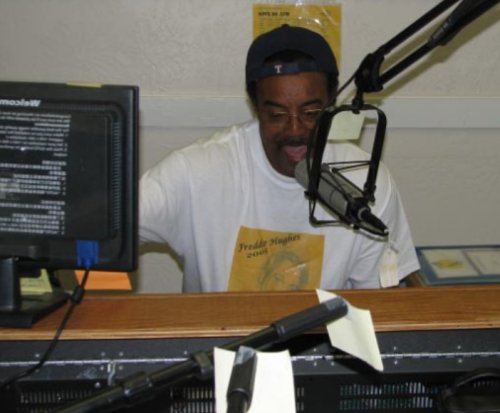
…at the age of eight I was livin’ in the haight-
ashbury, if you prefer.
hangin’ with the flips, we wuz doin’ the dip
i was a stone cold procurer…
T. Watts, circa 1979
Though I was born in uh, San Fran Ditto, I spent many of my formative years in the East Bay – Oakland and Hayward.
The city was cool. We lived there until I was 10 years old.
I remember when my dad took me to the Boys Club in the Haight-Ashbury neighborhood we lived in and signed me up. I think I was in about the second grade.
Show and tell was a big thing then in the classroom. I remember sharing with my class about my new Boys Club membership. When I was done talking, an unusual thing happened. Every boy in the class got up and told the same story about how their dad had taken them to join the Boys Club. It was like some form of a mass hallucination or somethin’…
My dad also took me to Seals Stadium for my first baseball game experience. I was pretty young and pretty tiny. This was before the San Francisco Giants, Candlestick Park and Willie Mays. The minor league team called the San Francisco Seals played there. I was so small, the only visual recollection I have is seeing knees, grass, glimpses of uniformed ball players, more knees and more grass. Nonetheless, it was exciting. I stayed hooked on baseball a long, long time …
When I was 10 years old my folks moved us to North Oakland. They actually bought a property that contained a small mom and pop grocery store that was called Unity Grocery. The former owner was a man named Mr. Sweeny. He showed my parents the basics of grocering and bam, suddenly I was a 10-year-old grocery clerk after school and on weekends …
When I was about 11, I really started getting into music and record collecting. The first record I ever bought was, “Will You Love Me Tomorrow,” by the Shirelles. There was a record shop around the corner from our house called Ray Dobard’s Music City. Ray Dobard was an infamous entrepreneur. He managed a record label and production companies. He recorded many Rhythm & Blues performers on the East Bay scene. He also cheated many, if not all, of them.
One bargain Mr. Dobard did have was the $.59 special. On weekends he sold 45 rpm records for $.59 or two for a dollar. That was like half off the regular price. He also had artists of some stature do promotional appearances. I traipsed down to Music City when an appearance by Little Richard was advertised. I only knew a little bit about Little Richard at the time. I’d seen him jamming on Bandstand, heard “Tutti Frutti” and “Lucille” on the radio and was entranced.
As I recall I was at Music City when Little Richard arrived. As he exited the vehicle parked at the curb, rose and extended to his full height, I for one, was completely astounded for you see, Little Richard was no little dude. He stood about 6 feet 6 inches tall. Ah, the contradictions of show business and life in general. He was sharp though!
When I was 14, my parents had had enough of the grocery business and moved us to Hayward. Talk about culture shock. Though it was the middle of the school year, on Thursday my last day of school in Oakland I was a ninth grade, junior high schooler. The following Monday I was a freshman in high school. Took me a long time to process that quantum leap …
Shortly after I started legally driving at age 16, Ray Dobard opened up Music City No. 2 in East Oakland. My buddies and I would drive there on Sundays to get the latest sounds via the Music City $.59 specials. Plus, there was a really good lookin’ girl who clerked at Music City that I developed a major crush on. For the purposes of anonymity, she shall remain nameless for now.
The vernacular, my CyberSoulChildren, was different then. When a girl was good lookin’ , finer than fine, we would call her fwine in my neighborhood. So, it was with great, painstaking pleasure that I set about establishing a social relationship with this fwine clerkette at Music City No. 2.
One of our favorite pastimes as teenagers was figuring out where the parties were on the weekends. You didn’t necessarily need an invitation, just an address. Or an intersection even. We didn’t call them parties, we called them gigs. The question would be, “where’s the gig at?” So, after exchanging some crucial gig information with the clerkette and actually attending a couple of gigs that she was at, I proffered my heart to her at Music City one Sunday afternoon, my buddies in attendance.
In what has to be the most unrequited response to a lover’s question of all time, much to my consternation and the hilarious hoorah amusement of my buddies, she responded, “Oh, I that we were just giggin’ partnah’s.” Took me a long time to live that one down …
Some of you may be wonderin’ where on earth I got the title for today’s column. Many of you may remember Herb Caen, the Sackamenna Kid, longtime columnist for the San Francisco Chronicle. I used to read his column frequently. He had a pet phrase that he used. It was called three dot journalism. Hence that title of today’s column.
When I was about 20 years old and had fully developed furor scribendi (latin; rage for writing), I sauntered into the offices of what was then called The Daily Review in Hayward and boldly told the editor that I’d like to apply for a writing job at the newspaper. At some point during the interview I told him that I thought I could write a column at least as good as Herb Caen.
Of course, the editor looked at me crazily and the interview was soon over. At that time there were very few African American columnists in so-called mainstream media. There were of course plenty of them in African American journalistic ventures. But we hadn’t cracked the other code yet …
Oh, and that fractured quatrain of a hip hop lyric at the beginning of this piece. Just a little somethin’, somethin’ I wrote in my 20s. Seemed like a good fit …
Keep prayin’, Keep thinkin’ those kind thoughts!
*****
Upcoming cool event:
Tallman Hotel/Blue Wing Saloon “Concert with Conversation” Boogie Woogie Queen Wendy DeWitt, Friday, April 24, 6 p.m. to 8:30 p.m., 9520 Main St., Upper Lake. 707-275-2233.
T. Watts is a writer, radio host and music critic. Visit his Web site at www.teewatts.biz.
- Details
- Written by: Elizabeth Larson
LAKE COUNTY – Unemployment rates continued edging upward in March, according to the newest unemployment numbers released on Friday.
The Employment Development Department (EDD) reported that Lake County's March unemployment rate was 16.5 percent, up from 15.8 percent in February. That March number is up significantly from March 2008, when unemployed measured 10.4 percent.
The February to March jump was far less dramatic than the December to January jump in local unemployment, which went from 13.8 percent to 16 percent, as Lake County News reported.
Statewide, unemployment was up to 11.2 percent in March,rising from 10.6 percent in February, the EDD reported. The state's March 2008 unemployment rate was 6.4 percent.
The county with the highest unemployment is once again Colusa, with 25.6 percent. Marin had the lowest unemployment, 7.4 percent.
Neighboring counties posted the following unemployment rates: Glenn, 17.1 percent; Mendocino, 11.7 percent; Napa, 9.0 percent; Sonoma, 9.8 percent; Yolo, 12.3 percent.
National unemployment figures for March was 8.5 percent, up from 8.1 percent in February.
The EDD estimated that the number of employed Californians in March was 16,524,000, a decrease of 96,000 from February, and down 578,000 from the employment total in March of last year. New claims for unemployment insurance were 79,979 in March 2009, compared with 76,303 in February and 48,282 in March of last year.
The number of people unemployed in California was 2,080,000 – up by 119,000 over the month, and up by 913,000 compared with March of last year, the agency reported.
Dennis Mullins of the EDD's North Coast labor market statistics division told Lake County News in an interview last month that unemployment rates are approaching those of the early 1980s.
He said those 1980s statistics can't exactly be compared to current unemployment rates, since classifications used for tracking employment have been changed over time, with the last major change to the reporting coming in the late 1990s.
Diana Barry, who manages eight Northern California EDD offices, including Lake's, said the construction trades – which are important to Lake County – have been hard hit, as has trucking. Because of the county's strong agricultural industry, she expects unemployment will drop some as the season picks up.
Barry said people continue seeking extra time to find jobs. “Pretty much everywhere people are applying for the extensions,” she said.
She said the EDD itself doesn't do job retraining, but refers it to another agency. There is money for that effort, she said.
Important months ahead for construction; advice for business owners
The EDD's Friday report noted that construction posted the largest decline in jobs on a percentage basis over the last year, dropping by 18.4 percent or 152,300 jobs.
Keith Woods is chief executive officer of the North Coast Builders Exchange, which covers Lake, Sonoma and Mendocino counties. It's the largest such exchange in the state, with 1,850 members.
He said a massive slowdown is still in place, with a glut of homes on the market that needs to be absorbed before building can start ramping up again. He noted the slowdown also is hitting the commercial building sector.
The period of April through October usually is the construction industry's busiest time, said Woods, and the months ahead will be a telling time. He said it wasn't this bad at this time last year.
He said nobody really knows what to expect.
“If there's going to be signs of a recovery in construction, it will be this next six-month period,” said Woods. If it's still this bad in six months, Woods said the economy will be in serious trouble, and so will contractors.
The association has lost 100 members, with many small contractors hanging on by their fingertips.
Many such contractors are cutting down on their costs and hoping for a rebound, he said. Foreclosed homes may offer big potential for contractors, as many of the homes may need serious repair after sitting on the market empty for a long time.
He said he takes unemployment figures with a grain of salt, noting that they don't show the numbers of self-employed contractors who aren't getting work.
Woods noted that he's seeing more small contractors are pursuing government jobs, which they've stayed away from in better times because of the complex requirements and voluminous paperwork. But right now government is one of the few potential customers that has money to spend.
Lori Peters, executive director of the Clear Lake Chamber of Commerce, said she isn't seeing a lot of additional hiring among community businesses, with most trying hard to save every penny.
However, she added, “I don't foresee that it's going to last very long.”
Peters advises business owners to compare their quarterly reports carefully to last year's. She said many of the businesses she's talked to are doing about the same or slightly better than last year.
Lake County didn't have the big boom seen in urban areas, so things here are business as usual, said Peters.
She advises people to shop local to help the county's economy. “We could make a completely different outcome for ourselves.”
E-mail Elizabeth Larson at




