 How to resolve AdBlock issue?
News
- Details
- Written by: Elizabeth Larson
Capt. James Bauman of the Lake County Sheriff's Office said that shortly before 1:30 p.m. Tuesday a man called to report that a male subject in a green Ford Explorer had pulled a handgun on him near Morine Ranch Road in Clearlake Oaks.
The case was unfolding all afternoon, as officials tried to determine if what occurred was a road rage incident or a basic case of brandishing a weapon.
Both sheriff's deputies and CHP officers responded to the scene only to find the suspect had fled into the west entrance of the Clearlake Cinder Chip Co.'s quarry, said Bauman.
The sheriff's office received information that the suspect in question was 22-year-old William Cressey, with whom the agency has had previous contacts, Bauman said. Cressey also appeared to have an out-of-state warrant for his arrest.
Deputies and officers found the green Explorer with no weapon inside, said Bauman. The suspect was believed to be on foot from that time forward, although one deputy was reported to be in pursuit of a dirt bike. Later the bike also was found abandoned.
Bauman said five deputies were on scene, with CHP Officer Steve Tanguay reporting that five CHP units also were assisting.
Shortly before 2 p.m. the CHP requested air support. At that point the place was mostly surrounded, said Bauman.
Bauman said before the close of business on Tuesday that he didn't know the severity of the initial crime.
The search was later called off, apparently without an arrest of a subject. There was no information on the status of the case at day's end.
E-mail Elizabeth Larson at
{mos_sb_discuss:2}
- Details
- Written by: Elizabeth Larson
Gerald Stanley, 64, has been on death row for 25 years, sent there for the August 1980 murder of his wife, Cynthia Rogers, who he shot to death at her father's resort in Nice. He was tried in Butte County due to pre-trial publicity in Lake County.
Stanley, who worked as a hunting guide, had a violent history with women before the Rogers murder.
He served four and a half years in prison for murdering Kathleen Rhiley, his first wife, in 1975, and was believed to be involved in the murder of Sheryl Ranee Wright, 19, of Redding, last seen the day before Cynthia Rogers was shot.
But there is another woman linked to Stanley whose ultimate whereabouts have been a mystery for decades: Diana Lynn Ramel.
In a phone conversation with Lake County News late last month, Stanley stated that he intended to turn over to law enforcement officials and the Tehama County Grand Jury the location of Ramel's body. Ramel went missing on Feb. 14, 1980.
“It's time to resolve this,” he said of Ramel's case.
For years, Stanley has promised to reveal Ramel's location, saying he only wanted to be granted an execution date in return.
Previously, he hasn't given up the information. But he appears to have followed through this time.
On Monday, Tehama County District Attorney Gregg Cohen confirmed to Lake County News that he had received a letter from Stanley the same day, outlining the location of Ramel's body.
Ramel and Stanley lived together in Manton, a small community in northeastern Tehama County, on the border with Shasta County.
Stanley maintains that he did not kill Ramel, but he says he did help dispose of her body.
Cohen said he's had a chance to review the handwritten letter, and he intends to meet with the local Department of Justice (DOJ) Crime Lab on Tuesday to discuss the feasibility of conducting a search.
There was a prior search for Ramel's body, said Cohen, although he doesn't know exactly when it took place, or where it was conducted.
Jack Leavitt, a Hayward attorney who has previously been sanctioned by the courts for attempting to help Stanley stop the appeals process in his death penalty case, said he found references in court records to a previous search, but he also didn't know the time frame. He believes it took place close to the area Stanley has identified in the recent letter.
That original search, Leavitt said, failed because it didn't go far enough, and the information Stanley offered didn't appear to pinpoint the location properly.
In the letter outlining the location, a copy of which Leavitt provided to Lake County News, Stanley writes that Ramel put chloral hydrate – a sedative used to induce sleep – in her wine, which killed her, “and I panicked the next morning.”
That led he and another man to bury her body in a creekbed, the letter states.
“I ask that Mr. Leavitt and I be allowed to explain federal attorneys are a fraud and delaying my case deliberately,” he said.
Stanley told Lake County News that he realizes he's not going to get an execution date, and that he's likely to die of a heart attack instead. Natural causes is reported to be the most common cause of death for death row inmates in California due to the lengthy appeals process.
Complaints over handling of death row case
Cohen said he believes Stanley offered the information because he wants to discuss with the world his anger with the Federal Defender's Office because of the repeated attempts to delay an execution.
“In the past it's always been that he would just like to end his life,” said Cohen.
That's been a consistent refrain with Stanley over the years, although some officials have doubted Stanley's sincerity.
Then, last March, came another wrinkle – a federal court judge ruled that juror misconduct and a breach of due process during the competency phase of Stanley's trial, which took place in late 1983 and early 1984 in Oroville, meant that the court needed to reexamine whether or not Stanley had been mentally competent to stand trial.
While Stanley's guilt was upheld in previous rulings, the March 2008 ruling by Judge Frank C. Damrell Jr. could mean that Stanley's sentence is changed from death to life imprisonment.
The retroactive competency hearing is back in the Butte County Superior Court, where the original trial took place.
Stanley has complained that his court-appointed attorney, Dennis Hoptowit, represents the wishes of the Federal Defender's Office, not his own. However, Stanley turned down an opportunity for Leavitt to represent him last year, instead choosing to stay with Hoptowit.
Lake County District Attorney Jon Hopkins said he'll return to Butte County Superior Court on May 21 to set a date for a hearing on whether or not it's feasible, a quarter century later, to attempt to determine if Stanley was competent at the time of trial.
The proceedings have been put over as Hopkins attempts to locate the original trial transcripts, which he said weren't with the Butte County Superior Court. He said he has people looking through the court's storage, and also has transcript copies of his own and from the California Supreme Court to submit in case the original can't be found.
Leavitt said Stanley has indicated he intends to request that the court allow him to represent himself, an action which Leavitt said Stanley hasn't taken formally before.
Also making the possibility of an execution for Stanley unlikely is a current moratorium on executions in California, established following a February 2006 ruling in which a judge ordered the state to review its death penalty procedures over concerns about suffering of inmates and cruel and unusual punishment. The last execution in the state took place late in 2005.
Cohen said the Ramel matter is “an entirely separate matter” from Stanley's death row case, which doesn't necessitate the involvement of the Federal Defender's Office.
Stanley has stated in previous interviews that he had told the attorneys involved with his federal defense of Ramel's burial site, and they had visited and videotaped it.
Cohen said he didn't yet know how he was going to proceed in the matter, and that the weather conditions and the location – specifically, if it appears to be different from the original search area – would be factors.
“It's going to be dependent, too, on what DOJ's suggestion is going to be. I don't want to speculate what they're going to say,” he said.
E-mail Elizabeth Larson at
{mos_sb_discuss:2}
- Details
- Written by: Lake County News Reports
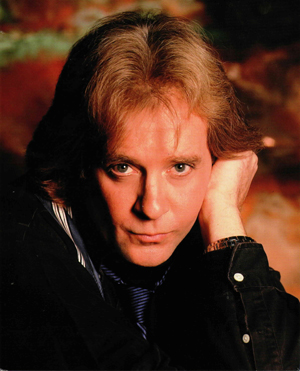
KELSEYVILLE – This Friday, Konocti Harbor Resort & Spa hosts the rock legend Eddie Money with Jesse Money of MTV's “Rock The Cradle” and special guests Lake County rising stars, The Lost Boys.
Eddie Money’s career spans more than four decades. He was a fixture in the San Francisco rock scene for several years.
Much like the members of The Lost Boys, Money began singing in rock bands while still in high school.
Edward Joseph Mahoney was born in 1949. He was going to be a New York City cop. That was before he had two tickets to paradise. He took on a new name, a new persona and became Eddie Money.
After leaving the police academy in New York, Money relocated to the San Francisco Bay Area to pursue a music career. It was there that he joined Big Brother and the Holding Company, Janis Joplin's backup band, after her death in 1970.
Money became involved with Bay Area concert promoter Bill Graham's management company. Graham became a mentor to Money, helping him negotiate a recording contract with Columbia Records.
Money's raspy, raw sound captured audiences immediately. The first two singles from Money's first record, “Baby, Hold On” and “Two Tickets to Paradise,” reached No. 11 and No. 22, respectively, on the 1978 charts.
A notable duet with Ronnie Spector in 1986, “Take Me Home Tonight,” combined Money’s trademark sound complemented by Spector’s incredible range and bad girl spirit. The song reached the top 10 on the Billboard Music Charts.
He became the first artist to sign with Graham's surviving namesake management company, Wolfgang Records, in 1995.
Money’s music remains a solid staple as seemingly timeless lyrics and tunes fill the libraries of generations of fans. He’s had many comebacks, but he never really went away.
Konocti Harbor Resort & Spa is located at 8727 Soda Bay Road in Kelseyville.
For information call toll free: 800-660-LAKE or visit www.konoctiharbor.com.
E-mail Mandy Feder at
{mos_sb_discuss:5}
- Details
- Written by: Elizabeth Larson
THIS STORY HAS BEEN UPDATED WITH A COMMENT FROM THE STATE BAR OF CALIFORNIA.
LAKEPORT – An attorney who formerly represented juveniles in criminal and civil cases in the Lake County court system has been sentenced to a year on home detention and three years of formal probation for felony possession of child pornography.
Robert Wayne Wiley, 75, was sentenced on Friday before retired Fresno County Superior Court Judge Harry N. Papadakis, who heard Wiley's case because the rest of the county's judges had recused themselves.
Deputy District Attorney Ed Borg said Wiley received 120 days in county jail and three years of formal, supervised probation.
Wiley's defense attorney, J. David Markham, declined comment on the case.
Borg said Papadakis directed that Wiley be allowed to serve his jail sentence in home detention. Wiley also must register as a sex offender, will not be allowed Internet access and will be subject to search and seizure under the terms of his probation.
For many years Wiley acted as a defense attorney for juveniles offenders, holding a contract with Lake Legal Defense Services, as well as holding a contract with Lake County Superior Court to represent juveniles in civil cases, as Lake County News has reported. Both of those contracts were terminated when Wiley was arrested in September of 2007.
Because of his previous contact with the juvenile justice system, which was managed by Lake County Probation, that agency recused itself from doing a probation report for Wiley's case. Borg said the Mendocino County Probation Department stepped in and completed the report, which suggested the 120 days in jail.
Borg said Papadakis was concerned that Wiley's age and his previous work as a public defender would make Wiley a challenge to house safely in the Lake County Jail, thus the order that he serve his sentence at home.
Wiley previously had been charged with four felony counts of possessing child pornography, but the judge reduced that to two after a preliminary hearing last fall.
In January, Wiley reached an agreement with the District Attorney's Office and pleaded guilty to one felony count of possessing child pornography.
His case came to the attention of investigators in February of 2007, when he left a thumb drive – a small portable device that stores data – in the Department A courtroom, where juvenile matter are heard.
That thumb drive allegedly contained pornographic images, which were discovered when a bailiff opened the drive in an attempt to identify its owner.
In all, investigators would find pornographic materials on several other devices as well, including a thumb drive Wiley was wearing when he was arrested, the computer from his Lakeport office and his home, where they also located several hard drives.
“He was wearing the stuff to court and he had it at his office and he had it at his home,” said Borg.
Borg said he didn't have a total when it came to counting up all the pornographic images and materials, but he said he himself reviewed several hundred of them.
Not all of the materials they found in the investigation were contraband, he said. Some were nudist films; there also were videos of young boys taking part in wrestling tournaments, which were themselves innocent but were strange in the context of being found with the other materials.
Then there were the “very disturbing” materials that investigators found, showing very young children in pornographic situations, said Borg.
None of the images were of children that Wiley knew or represented, according to a previous statement by Borg.
Borg was required to notify the State Bar of California about Wiley's case. He wasn't sure of what action the association will take.
Donald Steedman, State Bar of California supervising trial council, said when they get a complaint about an attorney convicted of a felony they take action.
“The State Bar Court will automatically suspend the attorney from practice,” Steedman said.
Steedman said the State Bar Court must then hold a hearing to decide what discipline is to be imposed.
He said he believed they have already requested certified copies of Wiley's records from the Lake County Superior Court for the purposes of the State Bar Court proceedings.
E-mail Elizabeth Larson at
{mos_sb_discuss:2}




