How to resolve AdBlock issue?
News
- Details
- Written by: Lake County News Reports

The holiday season is here and that means holiday parties, and I want to let the hosts of these parties to think about: A) Serving crab; and B) inviting me to have some.
Crab in the American culture is considered a luxury item while most Asian cultures consider it a staple. That is why crab purchased in grocery stores is sold at a premium price, but crab sold in Asian markets is much more economically priced, many times as a loss leader.
The flavors, textures, sizes and intimidation factor of crabs vary greatly so there are many choices to consider when thinking about what kind of crab to serve. I hope the information I give here will help you in your selection. The important thing to remember about any type of crab is to thaw your crab as slowly as possible, because quick thawing causes the meat to lose liquid.
King crab
Harvested in the Arctic waters of the Bering Sea, the king crab can grow to be 6 feet from end to end. SCUBA diving clubs in Alaska have “King Crab Rodeos” where a diver will try to grab a king crab and wrestle with it to the surface; the loser naturally gets eaten by the winner.
There are several subspecies that get sold under the king crab name, but it’s like comparing Cornish game hens to capon, they all taste like chicken. The large legs are sold at a higher price than the smaller legs so it can be more economical to by smaller ones and shell them ahead of time so no one knows.
The “merus” section of the leg, the leg closest to the body, is the most prized among seafood connoisseurs. The merus can best be compared to or thought of as the thigh portion of each leg. Personally I agree that the closer to the body the better the meat, with the meat out of the “toe” having a definite waxy texture and taste.
The commercial king crab fishing season is only three months long (mid-October to mid-January), so if you want the freshest crab possible ask to see the shipping tag. Grocery stores are required by law to keep these tags on hand a full 90 days after all of the crab is sold. The tag will tell you when the crab was caught and shipped. They are caught at sea, taken to processors where they are immediately cooked, cut into manageable sizes and then frozen for shipping.
The flavor of king crab is very rich, sweet and salty, with a nice firm texture. The flavor holds up in a variety of recipes, but bear in mind that the crab is already cooked so you don’t want to overdo it.
Prices vary from season to season but you can expect to pay between $10 and $20 dollars a pound at the grocery store, and more if you buy online. But be reassured that the meat to shell ratio is about 40/60 depending on the size of the legs.
This is my favorite type of crab.
Dungeness crab
The favorite and local crab of the West Coast, Dungeness crabs are a staple at Thanksgiving to many California families (my in-laws included). Caught in the cold waters of Northern California all of the way up to Alaska, the Dungeness season starts in November and continues on to June, so crab being sold in October on special has been frozen for a considerable time and is being “dumped” to make way for the new season. It is usually cooked at the seafood processors before being sent to market, although live crabs are available on occasion at some stores.
Only the males are harvested, while the females are returned to the water so they can continue to breed. The meat is moderately flavored, unique and there is plenty of it. Most grocery stores will clean the major parts of the crab at your request, which essentially entails taking apart the crab and presenting you with the leg clusters.
The yellow liquid inside the body is referred to as crab brains, but if the crab had that much brains it wouldn’t have wound up in the grocery store. It actually is made up mostly of the crab’s liver and other organs. This chunky fluid is considered a delicacy in many cultures throughout the world. Some like to spread it on bread like butter, while others stir it into sauces or seafood stews.
When purchasing Dungeness crabs I look for ones with barnacles on them. The presence of barnacles lets you know that crab hasn’t shed for some time ensuring plenty of “filling.” Crabs sold upside down will be moister since the back of the crab acts like a bowl holding moisture inside the crab instead of allowing it to leak out.
When “picking” or cleaning the meat out of a whole Dungeness crab, look forward to getting about 25 percent of the crab’s weight in meat. You can expect to pay between $3 and $8 per pound.
This is my favorite type of crab.
Blue crab
This is the East Coast’s favorite crab. They are an aggressive crab that will actually lunge at anything it thinks is a threat (maybe that’s an East Coast thing). The population of Blue crabs on the American East Coast can no longer meet the demand, and so the majority of Blue crabs are now from Asian fisheries.
The meat is milder flavored than most other crabs and the claw meat has a mild bitterness to it while the body meat is much sweeter. Claims of males being meatier than females aren’t very impressive since only 15 percent of the body is edible meat. But when the crabs shed their old shell and before their new shell hardens, they are caught and sold as soft-shelled crab and are almost 100 percent edible, after only a couple of adjustments.
The soft-shelled crab is what is used in sushi bars “Spider rolls.” The internal organs of these crabs are also considered a delicacy and are called “mustard” on the East Coast.
Blue crabs are available on the East Coast live, and to the rest of the nation are sold frozen or as shelled “picked meat” in buckets/plastic containers. They are usually cooked whole and shelled at the table, or the picked meat is made into crab cakes. Southeastern U.S. has a fondness for “She-crab soup,” which, as the name implies, is made from female crabs.
The price for whole blue crabs varies by size, and the picked crabmeat varies in price based on where on the crab the meat came from (backfin, lump and claw are the three main areas). For whole crabs expect to pay $5 to $10 each, and $7 to $20 per pound of picked meat.
This is my favorite type of crab.
Snow crab
Snow crab is just a marketing term for several species of similar-looking crabs. Like the several species of King crabs, they look and taste alike. They are found in the icy waters of the Arctic region of both the Atlantic and Pacific, are caught and then immediately cooked at the processors.
At the height of their popularity they were caught almost to the point of irreversible damage to their survival, but quick regulations and harvest limits saved the species. Only males are harvested while the caught females are released.
Snow crab season runs from mid-October through the end of May. The crab being alive at the time of cooking is a vital factor in the processing; if a crab is dead when it is cooked the meat will stick to the shell and make extraction difficult. They are then cut into sections, frozen, and shipped to buyers.
The meat is sweet, full-flavored and easy to extract and eat. The usable meat per cluster is typically around 30 to 40 percent.
This is my favorite type of crab.
Stone crabs
These are the only “renewable” resource of crabs. Only one claw of each stone crab is allowed to be harvested. The crab is trapped, retrieved and, making sure that it still has another claw to defend itself, one claw is removed. In about 18 months the removed claw grows back and the other claw can be removed. This can be done numerous times over the lifetime of the crab.
The claw shell is so hard that ordinary shell crackers won’t work easily on them, so processors now saw several slices into the claw after cooking to make it easier to consume. They are caught in the waters from the Carolinas down to Mexico, with the primary catch coming from Florida.
Stone crab season is from mid-October to mid-May. They have firm, sweet flesh that can sometimes have a bitter or iodine-like hint to them. You’ll need about a pound and a half per person.
Avoid purchasing any Stone crab claws called “lights” as they have less meat in them. I have not seen them in the stores locally, but online you should expect to pay $12 to $50 per pound, depending on size.
This is my favorite type of crab.
The bad news
All of the world’s crab fisheries are dangerously overfished. Agencies around the world are enacting self-imposed limitations in order to save the species. The most recent statistics show that demand for crab is so great that they are hovering just above the endangered species list, but hopefully not crossing onto it.
Since king, snow, and Dungeness crabs live several hundred to several thousand feet down on the ocean floor we really have no way of actually taking an accurate population count. We can only guess at their numbers by gaging how many we catch.
There’s also the added factor that though they release females and undersized crabs back into the ocean, there is no proof that they make it back to the safety of the bottom alive. They may very well die of decompression or be eaten by predators on the way down.
The world’s record king crab was/is 25 pounds ‒ currently 18 pounds is considered giant and average size is 10 pounds showing that we are harvesting younger and younger ones all the time just to meet the demand.
I haven’t included the nutritional information today like I usually do, because with crab that can be pretty depressing. It’s true that crab is high in sodium and has more cholesterol than my doctor would like, but I’m not advocating crab as a daily meal.
But I am recommending it as a party and holiday treat, like eggnog! Speaking of eggnog, I love that too, and since you now know my favorite type of crab I’ll be expecting those invitations to start pouring in.
Ross A. Christensen is an award-winning gardener and gourmet cook. He is the author of "Sushi A to Z, The Ultimate Guide" and is currently working on a new book. He has been a public speaker for many years and enjoys being involved in the community.
{mos_sb_discuss:4}
- Details
- Written by: Elizabeth Larson
The effort to build Freedom House, spearheaded by Lake Family Resource Center, received the $100,000 check from the Lake County Foundation in October, said the center's executive director, Gloria Flaherty.
She called the donation “a dream come true.”
Lake County Foundation Board members Dr. Bob Gardner, Randy Djernes, Katherine Williams and Darlene Hamm facilitated the donation, which came from the Northfield, Illinois-based Fred B. Snite Foundation, said Flaherty.
Earlier this year, the Lake County Foundation had reported receiving a $25,000 donation from the Snite Foundation for their work in the community, as Lake County News has reported.
The funds are meant to support the operations of the domestic violence shelter program and assist with the construction or purchase of a new shelter facility, Flaherty explained.
Lake County Foundation Executive Director Randy Djernes said the Snite Foundation donated the money to them because they were planning to build a local domestic violence shelter.
“As it turned out, $100,000 wasn't enough,” said Djernes.
So the Lake County Foundation decided to partner with the Lake Family Resource Center, whose effort already was under way.
The donation to Freedom House is among the larger ones offered by the Snite Foundation in recent years, based on its reports to the Internal Revenue Services, obtained by Lake County News. Many of their donations are in the $10,000 and $25,000 range. The Snite Foundation's 2007 tax documents indicated an investment portfolio valued at more than $19.1 million and total assets of $15.7 million.
Flaherty said Lake Family Resource Center has raised $1.3 million of the $2.6 million needed to construct Freedom House, a 14- to 25- bed facility which the center plans to build on 1.4 acres on the corner of Live Oak Drive and Highway 29 in Kelseyville.
Of that $1.3 million, $175,000 has come from the county, $100,000 from the Lake County Foundation and the rest from private donations.
The largest portion of the money, $1 million, is a 10-year forgivable loan that the California Department of Housing and Community Development, through the Emergency Housing Assistance Program, awarded to Lake Family Resource Center this past May, as Lake County News has reported.
Unfortunately, that $1 million could now be in jeopardy, since the Emergency Housing Assistance Program is among those impacted by the state's recent halt of projects due to cash flow issues, said Flaherty.
The timeline for raising the rest of the money to construct the shelter depends on the economy and what the state does, Flaherty added.
The economic downturn is offering other opportunities, which Flaherty, said includes exploring the purchase of a current facility for less than it would cost to build a new one.
Whether they end up buying an existing building and renovating it or building something new, it will be good for the local economy, said Flaherty.
Lake Family Resource Center's temporary shelter currently is full, she said.
At one point, the occupancy was down to five residents, but now they're expecting eight to nine people over the holidays.
The end-of-year holidays usually see fewer people at the shelters, because people try to hang on for the children, said Flaherty. Afterward, the local shelter usually sees an upsurge.
She said it's too early to attribute current occupancy rates to the strains the economy puts on families, but she added that historically hard economic times like this one have seen increases in the number of people at domestic violence shelters.
“We have certainly seen an upturn in the number of people we're providing services to over the last year,” she said.
The next fundraiser event for Freedom House will be the Wine and Chocolate event on Feb. 14, 2009, said Flaherty. This year they'll add olive oil tasting to the event. “We're kind of excited to add that to our repertoire.”
For more information about how you can help the Freedom House shelter effort, call the Lake Family Resource Center at 262-1611 or visit them online at www.lakefrc.org/frame_Shelter.html.
E-mail Elizabeth Larson at
{mos_sb_discuss:2}
- Details
- Written by: Lake County News Reports
"The overall safety of the motoring public is our primary concern," says CHP Commissioner Joe Farrow. “Not only will these new laws enhance a motorist’s safety, many of them are a step toward ridding the roadways of drunk drivers and the tragedy they cause.”
Below are the major changes to driving regulations and vehicle equipment.
Texting while driving (SB 28, Simitian). This new law makes it an infraction to write, send or read text-based communication on an electronic wireless communications device, such as a cell phone, while driving a motor vehicle. Previously this was only illegal for individuals under 18 years of age, but now has been expanded to all drivers.
Driving under the influence (DUI) zero tolerance (AB 1165, Maze). This new law prohibits a convicted DUI offender from operating a motor vehicle with a blood alcohol level (BAC) of .01 percent or greater while on probation for DUI. The law requires the driver to submit to a Preliminary Alcohol Screening (PAS) test, a portable breath test to determine the presence of alcohol. If the driver refuses, or if the driver submits and has a BAC of .01 or greater, a citation will be issued, the driver’s license will be taken and driving privileges will be suspended. In addition, the vehicle will be impounded.
Ignition interlock devices (IID) (SB 1190, Oropeza). This new law reduces the BAC from .20 percent to .15 percent or more at the time of arrest to trigger a requirement for the court to give heightened consideration for the installation of an IID for a first-time offender convicted of DUI of an alcoholic beverage.
Ignition interlock devices (SB 1388, Torlakson). Effective July 2009, this new law transfers authority for the administration of mandatory IID programs from the state courts to the Department of Motor Vehicles (DMV). This law also authorizes the DMV to require any driver convicted of driving with a suspended license due to a prior conviction for DUI to install an IID in any vehicle that the offender owns or operates.
Alcohol-related reckless driving (AB 2802, Houston). This new law requires the court to order a person convicted of alcohol-related reckless driving to participate in a licensed DUI program for at least nine months, if that person has a prior conviction for alcohol-related reckless driving or DUI within ten years. Additionally, the court is required to revoke the person’s probation for the failure to enroll in, participate in, or complete a licensed DUI program.
Global positioning systems (GPS) (SB 1567, Oropeza). This new law allows a portable GPS device to be mounted in a 7-inch square in the lower corner of the windshield on the passenger side of the vehicle, or in a 5-inch square in the lower corner of the windshield on the driver’s side. These are the only two locations on a windshield where a GPS device can be mounted. The GPS device can only be used for navigational purposes while the motor vehicle is being operated, and it is required to be mounted outside of an airbag deployment zone.
Motorcycles (AB 2272, Fuentes). This new law changes the definition of a motorcycle by deleting the weight limitation and deleting the separate definition for electrically powered motorcycles. The law will now allow fully enclosed, three-wheeled vehicles to have access to high-occupancy vehicle (HOV) lanes regardless of occupancy.
Clean air stickers: Misuse and penalties (SB 1720, Lowenthal). This new law makes it an infraction for anyone who forges, counterfeits, falsifies, passes, or attempts to pass, acquire possess, sell, or offer for sale a genuine or counterfeit “Clean Air Sticker.”
911 telephone system abuse (AB 1976, Benoit). This new law increases the penalties for any person who knowingly uses, or allows the use of, the 911 telephone system for any reason other than an emergency. Those who misuse, or allow the misuse of, the 911 telephone system are guilty of an infraction, and subject to either a written warning or a fine.
Special license plates (AB 190, Bass). This new law, when approved by local authorities, allows veterans whose vehicles display plates honoring Pearl Harbor Survivors, Legion of Valor recipients, former American Prisoners of War, Congressional Medal of Honor recipients, or Purple Heart recipients to park their vehicles that weigh not more than 6,000 pounds gross weight, without charge, in any metered parking space.
Studded pneumatic tires (AB 1971, Portantino). This new law allows the use of pneumatic tires with retractable metal-type studs, year round, as long as the studs are retracted between May 1 through October 31. However, the law prohibits a tire with retractable metal-type studs on a vehicle from being worn to a point that the metal-type studs protrude beyond the tire tread when retracted.
Spilling cargo loads (AB 2714, Keene). This new law eases restrictions on cargo loads of straw or hay to allow individual pieces that do not pose a threat to life or property, to escape from bales of straw or hay that are being transported by a vehicle upon a highway, so long as those bales are loaded and secured according to federal regulations.
Assault on highway workers (SB 1509, Lowenthal). This new law provides an increased penalty for assault and battery crimes committed against Caltrans highway workers who are engaged in the performance of their duties.
{mos_sb_discuss:2}
- Details
- Written by: Elizabeth Larson
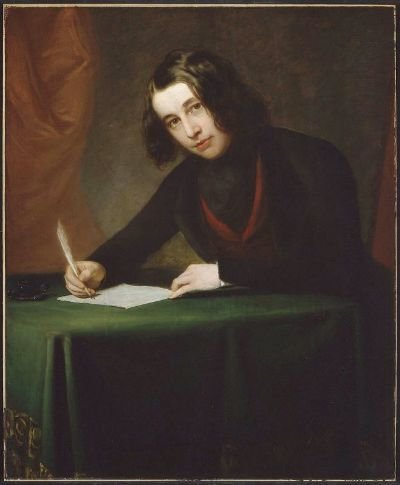
LAKEPORT – One of the world's great Christmas stories will be offered in a special Saturday production at Lakeport's Soper-Reese Community Theater.
Charles Dickens' “A Christmas Carol” will be performed at the Soper-Reese and also broadcast live on Lake County Community Radio, 88.1 FM beginning at 5:30 p.m. Saturday, Dec. 20.
The theater, located at 275 S. Main. St. in Lakeport, welcomes people to attend the performance for free.
The performance, based on Tony Palermo's radio adaptation of the story, will have a cast of 12 directed by Soper-Reese Artistic Director Bert Hutt. Before the production begins, the audience will be shown a demonstration on the sound effects' production and given background on radio dramas.
Dickens' story of redemption and love was published on Dec. 19, 1843, making it 165 years old this year.
“A Christmas Carol in Prose, Being a Ghost Story of Christmas” was written in only about two months, at the same time as he was working on his novel, “Martin Chuzzlewit.”
The 31-year-old Dickens sat down to write his “ghostly little book” in October of 1843 at his home at 9 Osnaburgh Terrace, London. By that time, he already was a well-known writer, thanks to “The Pickwick Papers,” “Oliver Twist,” “Nicholas Nickleby” and “The Old Curiosity Shop.”
But despite begin well-known, Dickens had financial pressures. He and his wife, Catherine Hogarth, already had four children with a fifth on the way.
A 1905 version compilation of Dickens' Christmas books, which included commentary by his son, Charles, said that the author was hoping to make a thousand pounds with the book, although it made several hundred pounds less, despite being a great literary success.
The first version of the book included 6,000 copies, was 166 pages in length and cost five shillings. It quickly sold out and was followed by second and third editions. It had sold 15,000 copies by the end of 1844.
Within a few months of the book's publication, it reportedly was the subject of stage adaptations.
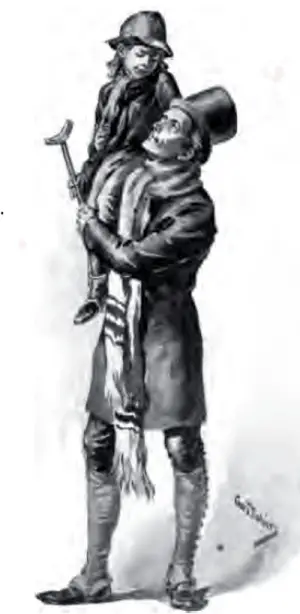
Like “Oliver Twist” before it, “A Christmas Carol” brings into sharp focus Dickens' concerns about social injustice, a theme that would follow him throughout his life, thanks to his own childhood travails. His father was sent to the Marshalsea debtors' prison and Dickens, as a 12-year-old boy, had to go to work in a blacking factory to help his family make ends meet.
Dickens wrote to a friend about his first Christmas book, noting, “Its success is most prodigious.” His son also reported that Dickens received letters from readers describing how they kept the book “about their homes and hearths.”
He noted in another letter that he “wept, and laughed, and wept again, and excited himself in a most extraordinary manner in the composition.”
In all, Dickens would write five Christmas books, including “A Christmas Carol.” The other four were “Chimes,” “The Cricket on the Hearth,” “The Battle of Life” and “The Haunted Man and the Ghost's Bargain.”
But it was “A Christmas Carol” that, for many, signaled a change in the way Christmas was celebrated in England and, later the rest of the world.
It was about that time that the holiday was getting a new emphasis. Just a few years before, in 1841, Queen Victoria's husband Prince Albert set up the first Christmas tree at Windsor Castle, a custom the prince consort brought with him from his native Germany.
Dickens' main character in “A Christmas Carol,” Ebenezer Scrooge, undergoes not just a change in how he celebrates Christmas, but how he relates to others and, ultimately, how he sees himself in the world.
The book addresses the themes of basic human connection, the importance of relationships with others, the power of love and kindness, and the ability to redeem oneself and one's sense of hope.
Lord Jeffrey wrote to Dickens about the book, noting, “You should be happy yourself, for you may be sure you have done more good by this little publication, fostered more kind feelings, and prompted more positive acts of beneficence, than can be traced to all the pulpits and confessionals in Christendom since Christmas, 1842.”
“A Christmas Carol,” more than a century and a half later, still has much to tell us. And in these times when the haves and have nots seem as far apart as they were in the early days of Victorian England, Dickens' story of hope has a special relevance.
E-mail Elizabeth Larson at
{mos_sb_discuss:5}