 How to resolve AdBlock issue?
News
Gerald Stanley, 63, was sentenced to death in February 1984 for the August 1980 shooting death of his wife, Cynthia, as Lake County News has reported.
In March, federal court Judge Frank C. Damrell, citing juror misconduct, ruled that a new hearing was needed to determine whether or not Stanley had been mentally competent to stand trial. A female juror in that original case, according to Damrell's finding, may have been a victim of domestic abuse but had not disclosed it to the court.
On Tuesday District Attorney Jon Hopkins returned to Butte County, where the trial was held in 1983 and early 1984 due to a change of venue, to set a date for a hearing to argue whether or not a new competency trial should be held.
Stanley, citing ill health, waived his right to appear in Butte County Superior Court, said Hopkins.
A hearing on the feasibility of a new competency trial is scheduled for March 2, 2009, in Butte County Superior Court, said Hopkins. He estimated the hearing could take one to four days to complete.
A readiness conference for that hearing will take place on Feb. 19, 2009, he added.
“We have all the issues framed and ready,” he said.
On Tuesday, Stanley – through his court-appointed attorney, Dennis Hoptowit – asked to be allowed to represent himself at the hearing, said Hopkins, a request the court denied without prejudice, meaning he can make the request again.
At the March hearing, Hopkins will argue that it is possible to have a trial on Stanley's mental competence, even after more than 25 years.
“In some cases it's extremely difficult to reconstruct the mental state of a person,” said Hopkins.
But in Stanley's instance, Hopkins believes he can show that Stanley was competent, just as the original 1983 competency trial found.
While not all of the witnesses who gave testimony at the 1983 trial are still alive, Hopkins said their testimony is available in transcript form. And those court transcripts, which featured the testimony of two psychiatrists and civilian witnesses, can help prove the case, said Hopkins.
He added that Stanley himself at the time insisted that he had no mental issues, but that it was Stanley's lawyer who had wanted him tested.
“This was a disagreement between his lawyer and Mr. Stanley over strategy and practices in the penalty phase,” Hopkins said.
No one ever diagnosed Stanley – who had previously been convicted of killing his first wife and was believed to have been involved in the death of another – as having a mental disability, said Hopkins.
“It doesn't have the same challenges that it would have if there had been evidence of mental disorder,” he said.
However, because Stanley's original attorney raised the issue, it stopped the criminal proceedings. Hopkins said he also could argue that, because there was no mental disability diagnosis, the court shouldn't have entertained the attorney's concerns at all.
“I believe that current-day mental health experts can examine him and review the medical histories and determine whether there is evidence that he had a mental disorder at the time,” said Hopkins.
While the court has upheld Stanley's guilt in the murder case – “that phase of the trial was found to have no problems” – the federal court has put of its determination of whether or not the death penalty stands until the competency issue has been resolved, Hopkins said.
If the competency is resolved, it will be sent back to the federal court. “The next thing they'll do is review our competency proceedings and then turn to the death penalty proceedings,” said Hopkins.
He said he's not sure how long it would take to make that death penalty determination.
After so much time, it appears increasingly unlikely that Stanley will be executed.
The California Department of Corrections reports that there currently are 677 inmates on San Quentin State Prison's Death Row, 64 of whom have been on death row longer than Stanley.
Lake County's only other death row inmate is Jerrold Johnson, sentenced to death in November of 2000.
E-mail Elizabeth Larson at
{mos_sb_discuss:2}
- Details
- Written by: Elizabeth Larson
LAKEPORT – Artwork being offered in the latest fundraiser auction and raffle for the Barbara LaForge Memorial Fund will be shown at the Lake County Arts Council's Main Street Gallery during the First Friday Fling.
The event will be held from 5:30 p.m. to 7 p.m. at the gallery, 325 N. Main St., Lakeport.
The Lake County Arts Council has become a supporter of the fundraiser, begun earlier this year by artist Gail Salituri of Inspirations Gallery. Salituri was a friend of LaForge, who was murdered in her downtown frame shop in October 2002.
Salituri is raising funds to donate in her friend's memory to the Lake Family Resource Center for its domestic violence shelter project.
“Our financial goal is slightly under $2,000 and we hope to have those funds by this month to make our first donation to the Lake Family Resource Center by Christmas time,” said Salituri.
On display this Friday night will be a framed lithograph of a San Francisco cable car by noted local watercolor artist John Clarke. The 16-inch by 20-inch lithograph, which retails for $300, is a raffle item, with tickets selling for $5 each or five for $20.
Clarke's “Golden Gate Bridge” lithograph will be featured in the silent auction, with the opening bid set at $110.
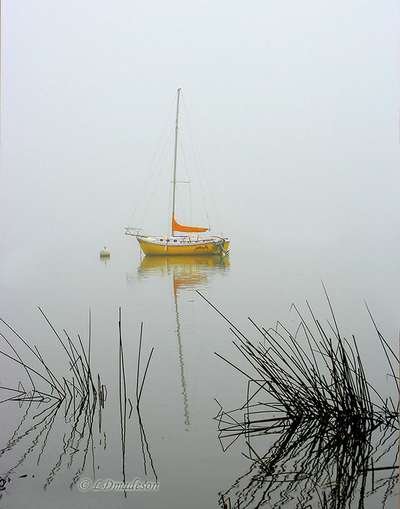
New to the auction will be the work of photographers Lyle and Deanna Madeson. Their framed photograph of a sailboat on Clear Lake, valued at $125, will be a raffle item.
Salituri's original oil, “Springers Pond,” will be included in the silent auction, with the opening bid at $300. The painting, valued at $1,650, measures 18 inches by 24 inches.
Main Street Pizza has donated a gift certificate for merchandise in their new restaurant which will be raffled on Friday.
All custom frames are donated by Sheri Salituri, director of Inspirations Gallery and Frame Shop.
Winners in the raffle and silent auction will be announced Nov. 15.
Donations can be made to the Barbara LaForge Memorial Fund at 165 Main St., Lakeport, or to any Westamerica Bank.

{mos_sb_discuss:2}
- Details
- Written by: Lake County News Reports
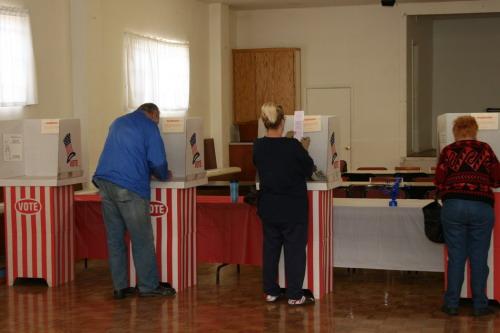
LAKE COUNTY – From one end of Lake County to another, Tuesday's presidential election proved an energizing exercise in democracy, as citizens voted for presidential, congressional, state and local elections.
The election brought out enthusiasm in young and old voters alike, who made their way to polls in steady numbers throughout the day.
Sen. Barack Obama, elected the nation's 44th president, won handily in Lake County, with 11,986 votes, or 58.3 percent of the vote, compared to his rival, Sen. John McCain, who received 8,034 votes, or 39.1 percent.
Other presidential candidates on the ballot were Ralph Nader, 224 votes (1.1 percent); Bob Barr, 118 votes (0.6 percent); Cynthia McKinney, 112 votes (0.5 percent); and Alan Keyes, 88 (0.4 percent).
Lake County Registrar of Voters Diane Fridley had told Lake County News she expected a high turnout, which is common for presidential elections.
During the last month, Lake County's registered voter rolls swelled to 75 percent, with the county's vote-by-mail – or absentee numbers – growing to 51 percent, as Lake County News has reported.
The ballot count for Tuesday – which was posted by Fridley's office at 12:08 a.m. Wednesday – showed a turnout of 59.5 percent overall, with 10,991 precinct ballots cast and 9,920 absentees.
That percentage is about 10 percent below the 2000 presidential election turnout, and about 16 percent below turnout for 2004, according to numbers supplied by Fridley's office.
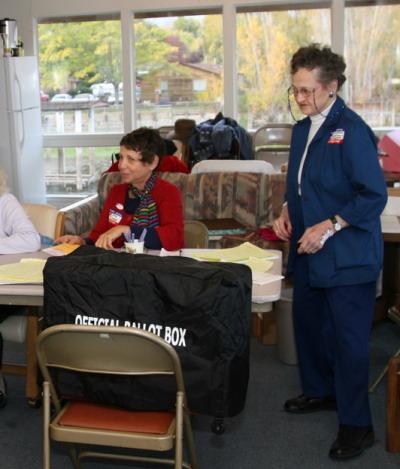
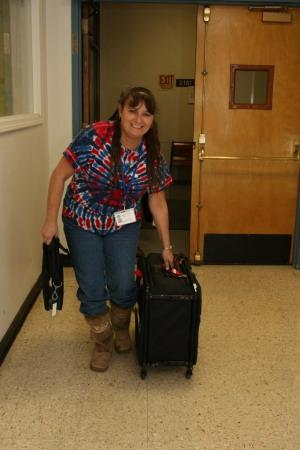
The more compelling story to be found on Tuesday was that of the people coming to the polls and the people volunteering to ensure the election ran smoothly.
Lake County News visited 12 polling places – representing 29 precincts – around the county on Tuesday as residents were taking part in the historic election.
From Nice to Clearlake Oaks, from Clearlake to Lakeport to Middletown, the story was much the same – turnout was big.
Precinct staffers also reported that voters were, in many cases, waiting for the polls to open at 7 a.m., with steady voter turnout over the ensuring hours.
“It's been a very interesting day,” said DeAnn Fawcett, a volunteer poll worker at the Lutheran Church Parish Hall on Country Club Drive in Lucerne. She estimated voter turnout in the Lucerne precincts to be up by 75 percent over the previous presidential election.
At the grange hall in Finley, election inspector Joan Luke said voters were coming through the doors steadily all day, with an expectation that voting would busier toward day's end.
At the Nice Community Baptist Church, Steve Merchen and fellow election volunteers also noted high turnout.
They, like others witnessing the election, told poignant stories of people who took part in the voting.
Nicole Ventura, one of the volunteers at Nice's polling place, said an elderly man came to vote with his daughter earlier in the day. The man hadn't voted in years but made a point of going to the polls to cast his vote on Tuesday.
Another man, said Ventura, announced to poll workers that he hadn't voted since Richard Nixon ran for president.
At the Orchard Shores Clubhouse in Clearlake Oaks, a steady stream of voters continued visiting the polls into the evening.
“It's been very busy all day long,” said election volunteer Pat Brotherton.
She said she witnessed a “real change of attitude of voters this time,” with more voters showing optimism and an upbeat attitude.
Her fellow volunteer Gwen Bushell agreed. “The interest has been sky high compared to what it has been.”
They also said they saw families coming in to vote together.
In Lower Lake, Gary Pickrell, an election inspector at the Lower Lake United Methodist Church hall, noted more turnout than the June primary.
“We've been busy from the start,” he said.
Voting in Middletown and Hidden Valley was also reported to be brisk by election volunteers, who said the day was going smoothly.
Poll worker Teri Fox at the Middletown Lions Club said in the few years she had been working as a volunteer this was the largest turnout they had.
At the Hidden Valley lake Firehouse, poll workers estimated they were seeing an average of 34 voters an hour.
With the optimism there also came concerns about the election's outcome.
Hidden Valley Lake resident Elizabeth Leathers said she hoped her vote wasn't in vain, adding, “I hope that the Bush administration has nothing to do with the outcome.”
Election volunteer Suzy Reicks, working at Clearlake City Hall, said the spirit of the day was very positive, with voters waiting patiently during the busier periods of the day, such as after school got out mid-afternoon.
She said there were many first-time voters – both young and old – making their way to the ballot box, and many parents also brought their children along.
One little girl who accompanied her mother to the polls shortly before 8 p.m. was allowed to drop her mom's ballot into the box, and afterward got an “I voted” sticker to wear home.
Many young first-time voters also wanted to drop their own ballots in the box, said Reicks.
Voting machines: Different communities, different receptions
While registered absentee voters outnumber voters who are registered to cast their ballots at precincts, Tuesday's turnout showed more votes cast at polling places.
Each polling place has one InterCivic eSlate electronic voting machine, overseen by a trained technician. The machines saw different levels of use around the county.
Lucerne election volunteer Jack DeVine said there had been definite interest in the polling places voting machine, which was used mostly by younger voters.
The machine in Nice was widely used, with more than 40 people casting their vote electronically as of 5:30 p.m., according to Merchen. In the June primary, about 30 people had used the machine in Nice.
However, many people stayed with their paper ballots. In Nice, when offered a paper ballot or the voting machine, one woman replied, “Paper, definitely.” A man said, “I don't do electronics.”
The machines had less use in Clearlake, Clearlake Oaks and Lower Lake, poll workers reported.
Anthony Lewis, who oversaw the machine at Clearlake City Hall's polling place, said the machine worked fine, with the only glitch being when it briefly ran out of paper. He said he's used it himself and it's a reliable voting option.
Lake County News correspondents Harold LaBonte and Aimee Gonsalves contributed to this report.
E-mail Elizabeth Larson at
{mos_sb_discuss:3}
- Details
- Written by: Elizabeth Larson
THIS STORY HAS BEEN UPDATED.
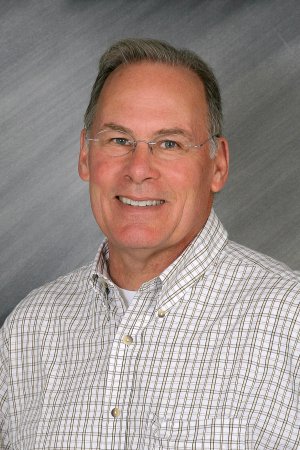
SOUTH LAKE COUNTY – After trailing Susanne La Faver by less than a dozen votes in the June primary, James Comstock came through on Tuesday with a decisive victory to claim the District 1 supervisorial seat.
Comstock received 2,369 votes, or 53.1 percent of the vote, to the 2,096 votes – amounting to 46.9 percent – for La Faver.
La Faver issued a statement Wednesday congratulating Comstock on his win.
“I wish to express my most grateful thanks to my wonderful supporters and volunteers for all your effort, time and contributions,” she said. “I sincerely appreciate your encouragement and your passion for the well-being of District 1 and Lake County. We must remain involved and help keep Lake County the wonderful place we are proud to call home.”
In June, La Faver had received 811 votes to the 800 received by Comstock. They had topped a field of six candidates, and La Faver and Comstock set out over the next several months to pick up the votes that had been split between the four other candidates in the primary.
Comstock, who was reached early Wednesday morning after just receiving the final vote tally, said he attributed his win to his efforts to meet with south county residents and listen to their needs, wants and desires.
His campaign, he said, was about improving the south county's economic situation and providing opportunities for the community's young people, tasks which he acknowledges won't be easy but which he is committed to pursuing.
“This is about serving,” he said. “This isn't about me winning.”
Comstock will succeed Supervisor Ed Robey, who is retiring at the end of this year after three terms on the board.
The two men are on the opposite ends of the political spectrum, with Robey – currently serving as board chair – known for more liberal stances while Comstock is a conservative who believes in less government, not more.
As a result, Comstock's election will represent a major shift in the board and its approach to a variety of issues.
Case in point: On Tuesday, the board was set to hold a second reading on an ordinance to ban genetically engineered crops, which had initially been approved on a 3-2 vote Oct. 21.
Comstock, whose family has a 1,700-acre ranch outside of Middletown, has been an opponent of the ban, which Robey authored and took to the board.
While Comstock looked on from the gallery Tuesday, the board's three-hour discussion of the ordinance and some proposed modifications resulted in the matter being continued to Nov. 18, when a revised ordinance and more information about the formation of an advisory committee will be presented.
Comstock said the matter has been rushed through, and said he expects there will be an attempt to get a revised version passed by the board before Robey's term ends.
The GE ban will be one of the first orders of business for Comstock once he's sworn in this coming January. He said he wants to see the issue resolved in an equitable manner.
Comstock added, however, that if the board were to accept a revised version of the ban that he would work to overturn it.
“I firmly believe that this should be worked out without government intervention if possible,” he said.
That includes relying on local experts and an advisory committee to explore the matter further. “I believe the cart was put in front of the horse here,” he said, adding that the process has been “skewed.”
He's also not a supporter of rent control, and the board on Tuesday also discussed a rent stability agreement that has been in the works for years.
Comstock said if landlords can't raise rents they don't improve their property. However, he said he supports the agreement's voluntary approach.
During the election Comstock walked all of the south county's mobile home parks, and found some of them to be “an absolute disaster” and “an embarrassment.”
“Code enforcement needs to be in there now,” he said, recalling when many of those parks were resorts more than 40 years ago.
Comstock portrayed himself as the candidate for change in the south county. “I firmly believe that District 1 has been underrepresented.”
In the final weeks of the campaign, questions were consistently raised about Comstock's relationships with pro-development forces in the south county, which he said was a manipulation by Robey and others opposed to his campaign.
Comstock had received a $10,000 campaign donation from the Luchetti family, who bought their ranch from Comstock's father decades before. “They have no intention to developer their property, just as we have no intention to develop ours,” said Comstock.
He added that if he were a developer, he would have developed his land before now – such as during the time when his family was struggling to pay off the crushing inheritance tax that hit them in the wake of his father's death 30 years ago.
“I don't live the rural lifestyle, every day, wanting to see us paved over and looking on San Jose,” he said.
Comstock said he likes to see cows grazing on the land, but believes property owners have rights, which includes development.
As he gets ready to take his seat in January, Comstock will step down from his seat on the Middletown Unified School District Board of Trustees, which he has held for nearly two decades. He'll also be getting extra help on the ranch and working to maintain his current clients in his financial services business, but will no longer be expanding his efforts.
“I ran for this to serve the people of District 1 and the county and that's what I plan on doing,” he said.
E-mail Elizabeth Larson at
{mos_sb_discuss:3}
- Details
- Written by: Elizabeth Larson