 How to resolve AdBlock issue?
News
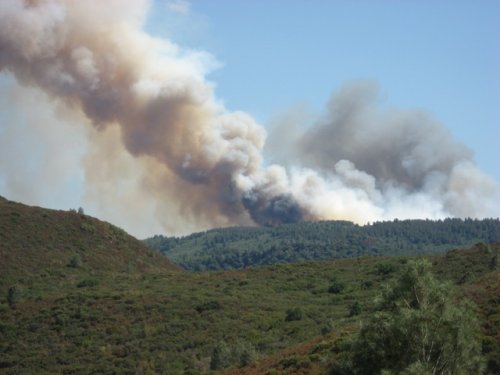
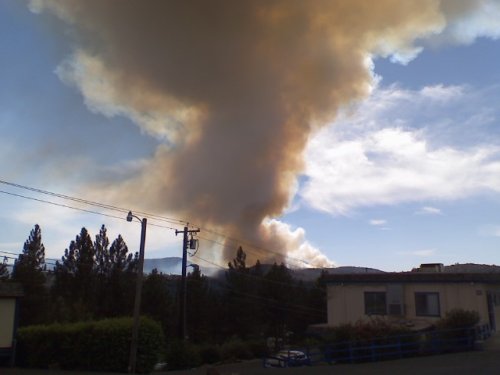
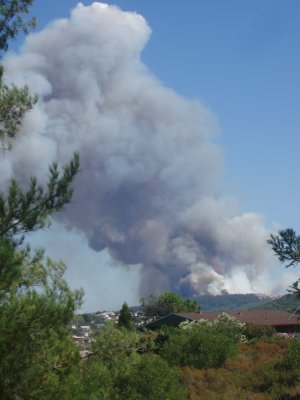
LOWER LAKE – State and local firefighters moved quickly to suppress a fire that broke out along Highway 29 near Lower Lake Monday afternoon.
The fire reached approximately 182 acres, Cal Fire reported late Monday evening. Earlier in the day, acreage estimates had reached 300 acres, but officials said that number was scaled back due to better mapping.
Cal Fire's Incident Command Center reported that the fire was dispatched at 2:18 p.m.
The fire necessitated shutting down a portion of Highway 29 near Diener and Manning Flat as firefighters worked to contain it.
California Highway Patrol Officer Adam Garcia said Point Lakeview at one point was being used as an alternate route. However, that road also was closed at about 3:16 p.m., with the fire reportedly cresting the ridge.
CHP reported shortly before 6 p.m. that Point Lakeview could be reopened. CHP reported that Highway 29 itself was reopened shortly after 9 p.m.
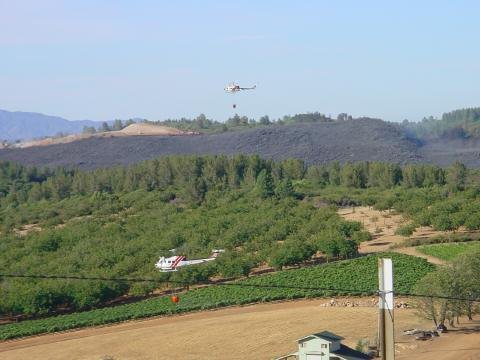
Cal Fire led the suppression effort, with five air tankers, three helicopters, 11 fire engines, six bulldozers and five hand crews, along with resources from local fire districts, including a five-engine strike team that was called for before shortly before 4 p.m.
Witnesses at the scene reported large Cal Fire air tankers were dropping retardant on the fire, with helicopters also making water drops.
The air tankers were released at 6:46 p.m., with the helicopters released by 7:30 p.m., according to reports from the scene.
Power lines were down at the scene, with some onscene reports indicating the possibility of a blown transformer.
Pacific Gas and Electric spokesperson Jana Morris said that 4,800 customers served by the company's Konocti power substation – serving areas including Kelseyville and Cobb – were out of power mid-afternoon.
The outage's cause, said Morris, appeared to be the downed power lines, but why the power lines had fallen was still being investigated.
She said at 2:35 p.m. PG&E received a call from a customer who reported a loud noise that they thought had come from a transformer, but Morris could not confirm Monday that a transformer had in fact blown.
All 4,800 customers had power restored to them by 5 p.m., Morris said. Cobb resident Roger Kinney reported that the power was off in Cobb about two hours.
Vehicles being routed onto Highway 175 to avoid the fire encountered a solo vehicle crash on Highway 175 near Cobb, which took place just after 4 p.m. and resulted in the vehicle and some nearby grass catching fire.
Cal Fire, which took the call, reported the fire was very small and quickly contained. The vehicle was destroyed. Minor injuries to the occupants were reported by CHP.
Officials with Cal Fire said late Monday that the 182-acre fire scene was still being mopped up. The downed power lines are believed to be a contributing factor, Cal Fire reported.
E-mail Elizabeth Larson at


{mos_sb_discuss:2}
- Details
- Written by: Elizabeth Larson
The county's preliminary July unemployment rate was 10.2 percent, up from the revised June rate of 9.5 percent and 1.9 percent above the year-ago, July 2007 rate of 8.3 percent, according to Dennis Mullins of the Employment Development Department's North Coast region office.
Mullins said that, at a 10.2 percent unemployment rate, Lake County ranked 47th among the State's 58 counties.
Some surrounding county rates included 10.5 percent for Colusa, 6.6 percent for Mendocino and 6.1 percent for Sonoma, according to Mullins.
Marin had the lowest rate in the state at 5.0 percent, said Mullins, and Imperial County had the highest with 23.3 percent. The comparable California and U.S. rates were 7.6 and 6.0 percent, respectively.
Mullins reported that total industry employment increased 380 (2.6 percent) between July 2007 and July 2008 ending the year-over period with 15,110 jobs.
Year-over job growth occurred in manufacturing; trade, transportation and utilities; information; private educational and health services; leisure and hospitality; and government.
Year-over job losses occurred in natural resources, mining and construction; professional and business services; and other services.
Farm and financial activities were industry sectors with no change over the year.
Mullins said government led industry gainers adding 220 jobs over the year. The private educational and health services sector was up 90 jobs and trade, transportation and utilities gained 70. Leisure and hospitality increased 20, and manufacturing and information were each up 10 jobs.
Professional and business services led decliners dropping 20 for the period, said Mullins, with natural resources, mining and construction, and other services each down 10 jobs.
Eight industry sectors gained jobs or held steady over the year, and three declined, according to Mullins.
Gov. Arnold Schwarzenegger issued a statement on the state's unemployment picture, saying the entire nation continues to suffer through a slow economy that is affecting jobs and families here in California, and he's working with legislators to include in the state budget an economic stimulus package.
“Construction and financial services continue to struggle in California, but I am encouraged about recent increases in housing purchases and that other job sectors – while they do not have the robust growth we want or expect in California – are holding steady,” Schwarzenegger said.
{mos_sb_discuss:2}
- Details
- Written by: Lake County News reports
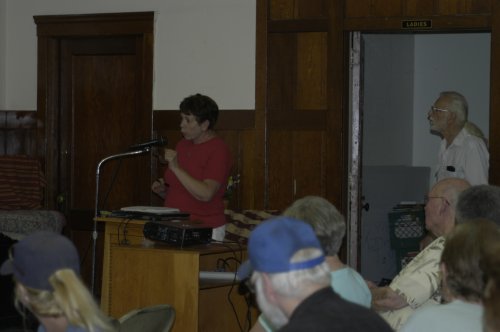
CLEARLAKE OAKS – A Saturday night meeting to discuss a proposed rate hike in the Clearlake Oaks County Water District saw anger and frustration on the part of ratepayers and the launch of a possible recall effort of two board members.
Close to 100 ratepayers crowded into the Eastlake Grange on Highway 20 for the meeting, which ran more than two hours.
At times the tone of the meeting was tense, with some district customers shouting at board members, prompting board Vice President Mike Anisman to walk out.
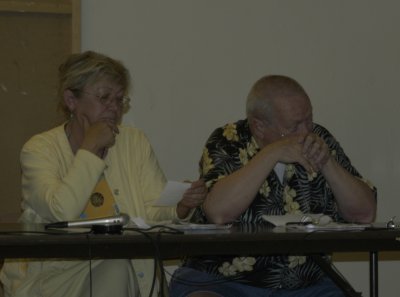
That left board President Helen Locke and board members Harry Chase and Frank Toney to meet a quorum, since the fifth and longest-serving member of the board, Pat Shaver, did not attend.
The district initially proposed a 39.4-percent hate hike on both water and sewer rates, which district General Manager Darin McCosker said was initially believed necessary to stabilize the district's finances and make needed capital improvements, including upgrades to its High Valley tanks, as Lake County News has reported.
In the past few weeks, however, McCosker has developed two alternate rate hike proposals, one for 25 percent and another for 10 percent, which are now believed sufficient to help the district make ends meet. Ratepayers argued they hadn't been formally noticed about those options, and they asked for more information on them before a decision was made.
McCosker explained that the district's rates were currently among the lowest in the county, and that the proposed 39.4-percent increase would make the district the fifth-highest for water, with the sewer rate hike at the same amount likely to make the district's sewer rates amongst the most expensive.
He said rates haven't been raised in several years while, at the same time, the district dealt with a major sewage spill and cleanup in 2000, and had several large projects in the years since then.
Some financial measures he's proposing include reducing purchasing, paying bills on time to avoid penalties, completing complex projects in-house, a spending freeze which already is in effect and making adjustments to employee benefits.
The district takes its water from Clear Lake, paying $50 an acre foot to Yolo County for the water, said McCosker. That's not a bad price compared with some areas. “Raw water costs are astronomical throughout California,” he said.
McCosker said the district has two past-due audits with another audit coming due shortly. But his understanding of the district's financial shape is changing, and has developed more in recent months. In March, two months after he took over as general manager, he said he thought a 50-percent rate increase was necessary. But that belief has changed.
He also suggested easing into a number of capital improvements over the next few years with smaller rate increases.
The audits, and the ratepayers' concerns about the district's true budget picture, would be a recurring theme throughout the evening. Many people suggested the audits – which are required by state law –should be completed before a rate increase is considered.
As tempers flared, with people yelling at the board – sometimes several at once – Anisman became frustrated. “You don't have the right to speak to us like animals,” he told the audience.
When the yelling continued, Anisman picked up his things and walked out only a half-hour into the meeting, with several audience members immediately demanding he be removed from the board.
Many people wanted to know how the district got into its current situation. McCosker said it was not altogether unexpected, based on the result of its last audit for the 2004-05 fiscal year.
That audit, said McCosker, warned that the district's reserves, at $1.3 million in 1998, were down to $385,000 and the district needed to raise rates before the reserves were completely gone. Before McCosker took over as general manager in January, reserves were down to $13,000.
Locke said the district's former board as well as its previous general manager, Ellen Pearson, “were being too nice” in not raising rates.
During the course of the evening other ratepayer questions centered around why the district hadn't instituted a hiring freeze, water quality and chemical usage, having two staffers drive around to check meters (necessary, said McCosker, because it's quicker and the district still does meter reading with a meter book and not handheld processors, which would cost $20,000).
Within the first hour several people got up and left the meeting, frustrated over what they felt was a lack of forthright answers. Several people also didn't like having to submit written questions to the board.
Former board member Bob White, who failed to win reelection last November in the same election that saw Toney, Anisman and Locke elected, said he lost because he told people the truth about the district's situation.
He blamed the other board members on the previous board – including Chase and Shaver – for giving Pearson everything she wanted. White then went on to suggest both Chase and Shaver should be removed from the board.
“The past general manager took this water district down,” he said.
He also urged community members to give the new board a chance.
The board was roundly upbraided by town resident Mike Benjamin for its handling of the Saturday meeting. Benjamin, who has attended regular board meetings in recent months, read from the Brown Act, which explained how the public had a right to get up and ask questions during meetings rather than submit questions on cards.
“You have not allowed public testimony here at all tonight. You have only provided a lecture,” he said, getting a big round of applause.
Locke said during the meeting that the board was going to take its input gathered at the Saturday meeting and make a decision at its regular meeting this Wednesday.
Jim Burton, Clearlake Oaks' retired fire chief, suggested they call another special evening meeting and bring back more specifics on the three rate hike proposals. “You're going to have a lot of really ticked off people here if you try to pass this thing next Wednesday,” he said.
Benjamin returned to the microphone, stating the meeting was the most important the board has had in several years. He asked where Shaver was – Locke said Shaver had said she couldn't make it – and then asked if Anisman's leaving was an appropriate act.
One audience member yelled “Recall!” Benjamin then pulled out two copies of a petition for a notice of intention to circulate recall petitions on both Shaver and Anisman, and asked who would be interested in signing them, with several people indicating they were.
Toney asked who was going to step up and take those two spots on the board as Benjamin went to the back of the room and began collecting signatures.
Susan Burton urged the board to formulate a plan, which includes a completed audit, in order to move forward. She asked for them to show why the rates needed to go up and said then she would be willing to do her part and pay higher rates. Burton also asked them to consider night meetings to encourage more public participation.
“Let's get a plan, let's get an audit, let's get going,” he said.
Locke asked the crowd if they wanted another meeting to explore all of the rate options, which was answered with a definite “yes.”
The board's next regular meeting is at 3 p.m. Wednesday, Aug. 20, at the district office, 12952 E. Highway 20.
Benjamin said after the meeting he received enough signatures to get started on the notice of intention to circulate the recall petitions against Anisman and Shaver.
E-mail Elizabeth Larson at
{mos_sb_discuss:2}
- Details
- Written by: Elizabeth Larson
My perennial herb garden is just outside my kitchen door. I put it in the very first week I moved into my home. It contains a large patch of chives, thyme, sage, rosemary, oregano and, just for the beauty and diversity, a bunch of milkweed plants.
I like having an extra large patch of chives since they die off during the winter, so in the summertime I use them like crazy. Not only can you use the leaves of the chive plant but the entire plant is edible, much like a small green onion. Asian cooks will take a small bundle of the whole plants, tie them in a knot, then batter and deep fry them. Trust me ... YUMMY!
The flower blossoms also are edible, giving a mild oniony yet beautiful bite to any salad. Just remember to add them after you toss in the dressing, otherwise they lose a lot of that beauty and look like something that you should fish out.
Thyme has got to be my favorite herb; there is something about that flavor that goes well with everything. Don’t believe me? Try taking a couple of melons, cut then into cubes, and toss in a bowl with a tablespoon of honey and a teaspoon of fresh thyme leaves, then serve chilled.
There are many different types of thyme, and what will work best in your kitchen all depends on what your tastes are. I grow two varieties, an English thyme and a silver thyme. The first one is green, and the second is variegated (green and white leaves); this way I can use them for different applications.
For instance, variegated thyme wouldn’t look good in a spaghetti sauce. You’d keep looking at these small white flecks in your food and feel like you should pick them out. Although TV chefs usually recommend striping the leaves from a sprig of thyme I rarely do. With the exception of recipes like the melon one above, I prefer to throw the entire sprig into a sauce or dish and then fish out the branch later when it’s done cooking.
Sage is available in many colors/varieties and loves our climate here in Lake County. Being an evergreen plant, it is available to us year-round. Where would our Thanksgiving turkey be without the flavor of sage? Sage is considered medicinal and/or magical by many cultures and religions. It was also considered by the ancient Greeks to have such protective qualities that they would be stunned if a man died while sage grew in his garden.
If you are looking to deer-proof your yard, then add some rosemary – deer hate it. One of my goals in life is to have my own organic farm, and one of the first things I would do is put up a rosemary hedge to keep out the deer naturally.
I love to cut long branches of rosemary and use them as skewers for meat, and I never make lamb without rosemary. When you plant rosemary, be sure to give it plenty of room because it can grow 5 feet high and wide, or if you have a small space just be sure to keep it trimmed. I use rosemary so much that its size isn’t a problem in my garden; it’s constantly trying to keep up with my demand for it. Rosemary has long been used to improve memory, and modern studies have added some credence to this belief.
My garden is organic, so I’ve learned to live with sharing my garden with plenty of moochers, a.k.a., pests. This year my rosemary plant is covered with caterpillars. No big deal, I just brush them off before I cook with them (the rosemary, not the caterpillars). Similarly, every year my tomatoes get a couple of hornworms, and instead of getting all upset, we name them and have fun watching them grow. My tomato plants are healthy enough to handle the infestation without worry.
I grow asclepias, a.k.a. milkweed or pleurisy root, in with my herbs because the addition of genetically diverse plants in a garden makes it healthier and reduces pest problems naturally. Asclepias are the sole food for monarch butterflies, and I like seeing the little critters flittering about the garden. The plants also attract hummingbirds, and it has been fun to watch the interaction of these assertive birds with my wife’s cats. Asclepias are toxic to humans, so although they are in my herb garden I don’t eat them.
Oregano is great in many cuisines. Not only does it work well in spaghetti sauce but also in guacamole and taco seasoning. There are many different varieties, so talk to your garden center staff about what kind you should grow. Sicilian oregano is purported to be one of the most flavorful varieties.
I used to grow other herbs in my herb garden, like savory and marjoram, but I found I didn’t use them enough to justify them taking up the space in my small garden. I grow annual herbs like parsley, dill and basil elsewhere in the garden.
The thing you have to understand if you do plant an herb garden is ... be patient and let it grow. Too many people plant an herb garden and start harvesting from it that very year. With annual plants like basil and parsley that’s fine, but slower growing perennials need a year to become established and really produce well for you. Rosemary plants will eventually become five feet tall, sage will become a couple of feet tall, chives will actually divide and multiply themselves into a small patch. If you start harvesting the very first year then you will be cheating yourself in the long run.
Basil is an annual herb, meaning it will completely die over the winter and will need to be replanted in the spring. A variety called “Genovese basil” has been named the best tasting basil by “The International Pesto Society” (boy, there is a club out there for everyone!), and that has been my variety of choice for years.
Basil is very fragile, so make sure to plant it when all chance of frost is gone. When using basil, try not to cut it until the very last second – anywhere stainless steel touches basil it will turn black in just a couple minutes. Some chefs recommend tearing basil by hand to avoid this unsightly reaction.
Let’s talk parsley. Never mind that “curly” parsley that you get on the side of your plate when you eat at the diner, flat-leafed Italian parsley is what you want. It has a much fuller flavor and is easier to chop to add to dishes. Parsley is a biennial, which means it will live for two years before it flowers and dies. If you have a pet rabbit, plant parsley as a treat for it. I planted an extra large patch of parsley to share with my daughter’s bunny, and it was a very happy bunny! You can put your bunny in the parsley patch and come back an hour later; trust me, it ain’t leaving voluntarily.
Men, you should also keep in mind that subconsciously – and even not so subconsciously – women think that a single man who can keep a plant alive would make a good husband/father, since it shows responsibility and care. As a result, a man with a garden is viewed as more attractive to women since he shows that he can take care of a living thing. Consequently, even if you aren’t a big cook, having an herb garden can benefit you. Just remember that the plants need to look healthy or the effect is lost.
For this following saltimbocca recipe veal is typically used, but my daughter refuses to eat veal (remember, petting zoo vegetarianism) so I changed it slightly. You can follow the same instructions using veal if you wish to stay traditional. Saltimbocca means “Jump in the mouth,” as if someone said, “I didn’t eat them all, they just jumped into my mouth!” This recipe alone is my main reason for growing sage. I buy prosciutto at the mega-market – just check in the specialty meats area by the deli.
Chicken Saltimbocca (Recipe serves 2)
2 chicken breasts
8 slices of Prosciutto
12 sage leaves
12 toothpicks (unflavored)
1/2 cup of flour
4 tablespoons butter
Lay the chicken breasts on a cutting board and split each of them horizontally so you end up with four identical but thin breast slices. Be very careful doing this; it helps if your knife is extra sharp. Using the smooth side of a meat mallet gently pound the chicken breast halves even thinner without going to the point where you are destroying them. Put two slices of prosciutto on top of each chicken breast and, using the waffle side of your meat mallet, gently pound the prosciutto into the chicken as if you are trying to meld them into one piece of meat. (If you don’t have a waffle-sided meat mallet, try using a couple of forks to stab the two meats together over and over again.)
Position three sage leaves on each breast on top of the prosciutto. Using the toothpicks, pin the sage to each breast.
Heat a non-stick pan to medium on the stovetop and add 2 tablespoons of the butter. Gently dredge each breast in flour as the pan heats, and then place one or two of the breast slices in the pan (depending on size of your pan). Cook for one minute on each side or until done. Add the rest of the butter as needed to cook remaining pieces.
Serve each person two slices but expect them to want more, so increase this recipe as needed. And be sure to remind dinner guests to remove the toothpicks themselves.
Ross A. Christensen is an award-winning gardener and gourmet cook. He is the author of "Sushi A to Z, The Ultimate Guide" and is currently working on a new book. He has been a public speaker for many years and enjoys being involved in the community.
{mos_sb_discuss:4}
- Details
- Written by: Lake County News Reports