
News
- Details
- Written by: Lake County News Reports
KELSEYVILLE – This week, work will continue on a fire prevention project in the Black Forest that began last month.
During the week of April l5-21, crews from Cal Fire – the new name for the California Department of Forestry and Fire Protection – began cutting brush and snags from the forest's edge running along Soda Bay Road in order to create a shaded fuel break.
The Bureau of Land Management project is intended to reduce the likelihood of a wildland fire in the forest, according to Rich Burns of the BLM's Ukiah field office. The project is sponsored and funded by BLM and the US Department of Interior.
On April 21, community volunteers helped drag undergrowth the Cal Fire crews had cut up to Soda Bay Road, where tons of materials was chipped. Taking part in the effort were students from Carle, Kelseyville and Clear Lake high schools; Big Valley Lions Club members; and local volunteers as well as those from as far away as Contra Costa and San Diego counties.
In addition, Bob Braito, used his heavy equipment to grade a staging area near Golf Road and Soda Bay and moved many yards of brush from Soda Bay Road to the staging area. The Buckingham Homes Association, led by manager Julie Berry, provided lunch with help from donations from Bruno's and D&J Pizza.
Volunteers on April 21 weren't able to complete chipping all of the materials, so the rest of the work is slated for completion this week.
On Tuesday and Wednesday, flaggers will be controlling traffic from Madrone to Little Borax Road. One volunteer flagger for Tuesday, quipped, "I feel that I am getting to be on my sixth grade school traffic squad again. You were special if you were trusted to use the whistle and the little stop sign."
The west side of the road will have two chippers working in tandem with 20 Cal Fire members feeding the chippers the rest of the cut undergrowth. This work will complete the first phase of the Black Forest Fire Prevention Project.
Only a portion of the "Prescription Plan" developed by CDF and BLM in 2004 was completed in Phase I. The plan for the Black Forest calls for removing all brush and trees under 3 inches in diameter at a height of 10 feet. The removal would extend 300 feet into the forest, providing a defensible fire control area, Cal Fire officials explained.
Most fires that start along the road smolder for a long time. If the grass fires cannot easily ladder up into the trees, the local fire service has a better chance of extinguishing the fire. Roads to the entrance of Yosemite National Park and other national parks entrances are being treated with the same prescription prepared for the Black Forest.
The prescription was established by BLM when the 250 acres was turned over to the BLM from the Lake County Land Trust. The Land Trust was able to purchase the property from loggers and hold the property in trust until a combination of donations and grants were obtained. All the land, except for seven acres owned by Lake County, was turned over to BLM in September 2004.
Planning will soon start for the project's next phase.
The Black Forest Fire Prevention Project Phase II is scheduled for Saturday, Sept 29, on National Public Lands Day. That effort will be discussed at an information celebration at 4 p.m. Friday, May 11, at the Witherell home, 8100 Soda Bay Road.
The public is invited to see the results of Phase I and discuss a Phase II project. Youth are encourage to attend. All three high school representatives have indicated that they plan to bring their students on Sept. 29 for phase II.
For more information about National Public Lands Day, visit www.publiclandsday.org. For more information about the Black Forest project, e-mail
{mos_sb_discuss:2}
- Details
- Written by: Leslie Weeks

Editor's note: This is the first of two articles by Clearlake resident Leslie Weeks about a trip to Uganda she took in December with her husband, John Weeks, MD, and their daughter.
It takes imagination and understanding to want to help those in a third world country who have been trampled by poverty and disease as well as decades of horrendous dictatorship. It also takes a lot of determination to break the numerous barriers that are blocking the way. Furthermore, it may result in a different outcome than one expects.
My husband, daughter and I were lucky to be able to travel to Uganda this December. We were invited to experience this incredible country by Arthur Bikangaga, who is originally from Kabale, Uganda.
Arthur had left during the height of the Idi Amin years, after too many close calls with this dreadful dictator. His father and mother were still there, amazingly intact despite their political participation. Unfortunately, although Arthur’s father lived a long and productive life, he died an hour before we arrived. He lived long enough to say good-by to his son.
Uganda is a landlocked African country of 27 million people struggling to achieve a stable economy with a more modern, safe reputation. It is surrounded by Sudan, Republic of Congo, Rwanda, Kenya, and Tanzania. The second largest lake in the world, Lake Victoria, sits on its southern border.
Uganda is glaringly impoverished. The average yearly income is about $1,200. Signs requesting aid for orphans are posted everywhere you look because so many parents die before they turn 45. Women and children carry water to their house in five-gallon jugs so the family can clean and drink. Even at an early age children earn money by running to cars with sticks of cooked chicken, fruit, or maize to sell to slowing traffic.
Uganda is also a beautiful, lush place where people commonly greet you with the phrase “you are welcome.” There is no intolerance between races. The people are generally frank and straightforward. The villagers resolve differences in regular community meetings. Entire communities attend and help pay for lavish weddings. It is unthinkable not to pay your respects to a family who has had someone pass away.
Because of Arthur’s invitation, we began a “safari” (which means journey in Swahili), which began in Lake County, continued in Uganda, and, at least for me, hasn’t ended yet.
Our safari was also inspired by Bill Bordisso, who teaches a fourth grade class at Lower Lake Elementary School. He had established a pen pal relationship between his class and a school in Uganda, thus initiating a cultural connection with a Ugandan school, Kiyoima Primary School, and his own class. He became interested in this school because of his sister, Kate.
Lower Lake connection
Kate has been helping the Kiyoima School since she visited Uganda four years ago when she went to the Kibale Forest chimp reserve, which is near the school. She met Julia Lloyd, a young woman completing her PhD on the influence of humans on chimp behavior. They became fast friends.
Julia introduced Kate to Ronald, who works at the chimp reserve as a guide, and had graduated from the primary school as “Best Boy.” Best boy is awarded to the most promising boy in the class. Through Ronald, Kate and Julia both became involved in the school and have been helping it ever since.
This primary school is located about six hours northwest of Kampala, the capital of Uganda. It is in the midst of a swamp, and next to the chimpanzee reserve. The school has a few cinder block buildings, a couple shelves of books, and eight instructors. There are more than 500 students who must walk to school each day. The assistant headmaster walks six kilometers to work each day.
Because of the long treks for children and teachers, the school is trying to become a boarding school. A recent donation allowed the school to purchase mattresses. The children each carried a mattress on their head through the swamp to the school, giggling and laughing the whole way.
Primary schools in Uganda are free and go through grade seven. The parents are required to provide all school supplies, including pens, paper, books, and school uniforms. Girls must all have their hair cut very short, almost shaved. Their skirts fall below their knees, and socks meet the skirt’s hem. They are all the same color, usually green or blue. Black shoes complete the outfit. No jewelry is allowed while they are in school.
After seventh grade, schools are private and testing determines what quality of school the child attends next. The family then pays the full fee for continued education.
When Kate told Bill about the school, he eagerly wanted to involve his students. He taught them about Uganda, and his class began writing pen pal letters. The children in Uganda are getting excellent practice with their English by writing back regularly. Both groups of kids are learning about each other’s cultures, opening up their minds to the beauty of diversity.
Amidst Bill’s animal skeletons and motorcycle models, Ugandan photos and maps are displayed in the classroom. The fourth graders in his classroom have not only become educated about the geography and culture of Uganda, but have become familiar with the entire continent of Africa. They eagerly await letters from their pen pals.
As well as offering to carry the pen pal letters to the school, we videotaped Bill’s class singing and put together a musical postcard. Inspired by Bill’s dedication to this cultural exchange, we also collected donations from the generous staff at Redbud hospital.
We ended up with four large suitcases of school supplies, eye medicines and dental supplies.
With letters, school and medical supplies in hand, we were off to Uganda. We arrived after 36 hours of traveling to find that all of our luggage had been lost. Two more hours of filling out paper work (there is a different sense of time in Uganda, no one was in a hurry to get us on our way) we then left in a taxi at midnight to the Makerere University Guest house where we were to stay.
Note: Tomorrow, Leslie Weeks describes learning about the Ugandan economy and social customs, and experiencing a safari.
{mos_sb_discuss:2}
- Details
- Written by: Editor
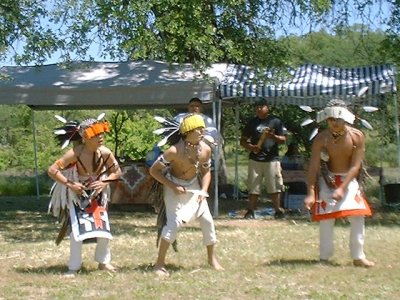
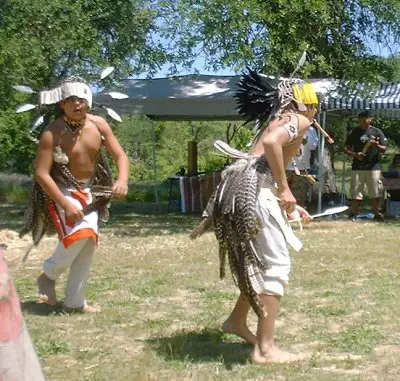
RODMAN SLOUGH – The Lake County Land Trust hosted its fifth annual Art & Nature Festival at its Rodman Slough Preserve Saturday.
The free, daylong event featured the work of local nature artists and offered a variety of activities focusing on the county's natural beauty and wildlife. A special theme this year was introducing children to art and nature.
One of the event's highlights was a performance by young dancers from Robinson Rancheria, whose dancing gave visitors a glimpse into their rich culture.
{mos_sb_discuss:2}
- Details
- Written by: Elizabeth Larson
LAKE COUNTY – The results of the state's fifth and final snow measurement of the season have led state officials to call for redoubling water conservation efforts, and devoting more energy to water storage plans.
Here in Lake County, plans also are under way to begin planning for future water projects.
The Department of Water Resources' snow measurement, held Tuesday, showed the state's snowpack average at 29 percent of normal, a number that by Friday had dropped to 27 percent.
Those are the lowest snowpack levels since 1988, officials reported.
The snowpack measurements help hydrologists forecast water supplies for the year, the Department of Water Resources reported.
It's been a sparse year for snowpack overall, with Mendocino National Forest officials last month reporting the driest April reading since measurements began in 1944.
California has enjoyed several years of strong rainfall and snowpacks, which means that the state isn't yet in a crisis, said Department of Water Resources Director Lester Snow. As well, in the last 20 years the state has put increasing emphasis on building water storage infrastructure, including reservoirs and conveyance.
However, Snow said climate change is leading to more drastic conditions, a pattern which he said has developed over the last 40 years.
The Department of Water Resources has estimated that the state's snowpack will decrease by 40 percent by the year 2050 due to climate change, a prediction that appears backed up by recent conditions.
Planning has become critical in offsetting serious drought events, said Snow.
"There is no question that these snowpack results indicate the need for conservation and more water storage," Snow said in a statement, which also called for support for Gov. Arnold Schwarzenegger's Strategic Growth Plan. That plan includes increased surface and groundwater storage and Delta preservation in light of the state's growing population.
Snow said the Department of Water Resources is working with local and regional agencies throughout the state to encourage and implement water conservation measures as a precaution against subsequent dry years.
The agency reported that some communities have begun voluntary rationing. Those include the San Francisco Public Utilities Commission, which called on their 2.4 million customers to reduce their water use by 10 percent or they could face water rationing this summer.
In addition, the East Bay Municipal Utilities District has asked their customers find and fix any plumbing that leaks, to water their laws only three days a week and never on consecutive days and to do so at night or in the morning, the Department of Water Resources reported.
“This is a reminder that climate change isn't going to happen for our children, it's happening now,” Snow said of this year's drier conditions.
Pam Francis, deputy director of the county's Water Resources Division, agrees. “We need to come to grips with that,” she said.
The county, Francis said, has met with the Department of Water Resources because they're concerned about water conditions.
She said Lake County is fortunate because it isn't tied closely to snowpack conditions. And while rain levels have been lower this year, recent groundwater monitoring has shown local wells are within average range, and the lake itself is about average, she added.
“I wouldn't say that we have any serious concerns locally,” Francis said.
The trends, however, suggest that the area is in the beginning stage of a dry period, she said.
While most people only think of conservation during crisis periods, Francis emphasized that conservation “is always a good thing for any resource.”
Locally, Francis said plans are under way to begin planning for the county's water future.
On May 16, the county will host its first integrated regional water management planning meeting for county stakeholders.
The group's goal, said Francis, is to work together to formulate a regional water management plan, which looks at water from both the supply and demand sides.
Several water bond measures were approved by voters last fall, but to receive those funds, said Francis, the county must have an integrated regional water management plan.
The meeting will be a step toward applying for a grant to aid the county in the planning process. “We expect to do that next summer,” said Francis. “That's our goal.”
The plan will include a list of local water projects, said Francis, which must meet certain criteria.
“Multiple beneficial uses are key to any project,” said Francis. Those multiple uses include groundwater recharge, increasing storage capacity, improving water quality and flood control.
Some of the projects Francis expects to see included in the management plan include the Middle Creek Restoration Project, which would restore 1,200 acres of wetlands and 500 acres of floodplain around the lake; the Full Circle Project, which seeks to transport the county's wastewater to The Geysers for injection; and the Lakeport Dam, which, among other things, would help recharge Scotts Valley's groundwater.
E-mail Elizabeth Larson at
{mos_sb_discuss:2}





 How to resolve AdBlock issue?