 How to resolve AdBlock issue?
Education
- Details
- Written by: Editor
SACRAMENTO – California community college students receiving fee waivers will have to meet minimum academic and progress standards to remain eligible for the financial assistance under new regulations adopted this week by the California Community Colleges Board of Governors.
The new policy, which takes effect in fall of 2016, is a key component of the Board of Governors’ Student Success Initiative.
The new regulations will work in concert with statewide enrollment priorities that will go into effect in fall 2015 to encourage students to focus on their classes and seek help when they face difficulties.
Community colleges are putting in place more counseling and other support services to help students define their educational and career goals and stay on track to achieve them.
“We will do everything in our power to help students on financial aid succeed, but students need to know that they have a responsibility to keep up their end of the bargain,” said California Community Colleges Chancellor Brice W. Harris. “This policy provides students with incentives to meet standards that will ultimately help them achieve their educational goals. It benefits students and it is responsible stewardship of state resources.”
Under the new regulations, students would lose eligibility for the Board of Governors Fee Waiver if they are on probation for not maintaining a 2.0 GPA for two consecutive primary terms or not successfully completing half the units attempted in that period.
Students must be notified of their probation status within 30 days of the end of the term for which they did not meet the standards, and districts are required to notify students of support services that are available to them.
Foster youth are exempted from the policy and the board of governors did agree to study possible additional exemptions in the future. Districts are required to establish appeals processes that students can use to demonstrate extenuating circumstances.
The California Community Colleges is the largest system of higher education in the nation. It is composed of 72 districts and 112 colleges serving more than 2 million students per year.
- Details
- Written by: Editor
NORTHERN CALIFORNIA – U.S. Rep. Mike Thompson (CA-5) announced that the United States Naval Academy is accepting applications for their Summer Science, Technology, Engineering, and Math (STEM) Program. Applications for the United States Naval Academy’s Summer Seminar program will open on Jan. 16.
“These programs provide students in our district with great opportunities to learn important, high-quality skills from some of our nation’s best and brightest educators and leaders,” said Thompson. “I highly encourage all of those who are interested in STEM fields or the U.S. Naval Academy, to consider applying to these summer programs.”
The Summer STEM program is designed for rising eighth through 11th graders who are interested in pursuing education in the science, technology, engineering and math fields.
During the STEM program, students will be exposed to world-class lab facilities and have the opportunity to learn from some of the best college professors in the country.
In addition, they will meet fellow students from across country, get to visit Annapolis, and experience the Naval Academy firsthand.
SUMMER STEM SESSION DATES
- Rising eighth and ninth graders: June 2-7;
- Rising 10th graders: June 9-14;
- Rising 11th graders: June 16-20.
The Summer Seminar program, designed for rising 12th graders, gives students the opportunity to find out if they have what it takes to be a midshipmen.
The program allows students to experience the rigorous academics, physical challenges and student life at the Naval Academy.
Summer Seminar is perfect for students who have no prior exposure to a service academy as well as those who are trying to decide if a service academy is right for them.
SUMMER SEMINAR SESSION DATES*
- Session 1: May 31-June 5;
- Session 2: June 7-12;
- Session 3: June 14-19.
*All sessions for rising 12th graders, applications open Jan. 16.
For more information, please visit the U.S. Naval Academy’s Web site at http://www.usna.edu/Admissions/Programs/ .
- Details
- Written by: Editor
SANTA ROSA, Calif. – Onita Pellegrini, long-term trustee on the Sonoma County Junior College District Board of Trustees for Santa Rosa Junior College (SRJC), has announced her resignation, effective 61 days after her last board meeting on Jan. 14.
Pellegrini’s resignation comes from the fact that her position as chief executive officer of the Petaluma Chamber of Commerce has demanded more of her time. Pellegrini also mentioned the need to spend more time at home with her ailing father.
“I still plan on being involved as much as I can, but at this moment, I can’t give the JC the love and attention it deserves,” she said.
Pellegrini, a longtime Petaluma resident, was appointed to SRJC’s Board of Trustees in March, 2005 following Kathleen Doyle’s resignation in February of the same year.
Pellegrini was responsible for representing all South County communities, including Petaluma, Penngrove and communities in north Marin County.
After finishing up Doyle’s remaining term, Pellegrini ran unopposed for a second term in 2010. Since she has been elected, she has served in various official positions including board clerk (2005-2006; 2009-2010) and vice president (2008-09).
Jeff Kunde, president of SRJC’s Board of Trustees, praised Onita Pellegrini for her experience and dedication.
“Onita brought to the board a great knowledge of the local community, primarily within her Petaluma area district, as well as an insight to the Petaluma campus from a local community perspective,” Kunde said. “She was actively involved in the scholarship committee. Most notable was her input during the difficult times we faced at SRJC with the lack of funding from the state, and how we moved forward to meet everyone needs. I will miss the perspective she brought to the board, and how well she worked with the board.”
Before serving as a board trustee, Onita Pellegrini gained professional experience working in legislation, running small businesses, a service station, and a real estate office. Pellegrini has acquired many skills over the years that have helped her in making difficult decisions.
As a trustee, she also was involved in the hiring committee for presidency at SRJC, which led to the hiring of Dr. Frank Chong, superintendent and president of the district.
“Trustee Pelligrini was always an effective advocate to insure that the Petaluma campus’ needs were met,” said Dr. Chong. “She gave us a unique perspective of the Sonoma County business community and its workforce needs. She was a tremendous asset as a trustee. I personally feel indebted to her for transitioning me as an incoming president and introducing me to business and civic leaders in Petaluma.”
Trustee Terry Lindley, former president of the Board of Trustees, said: “Onita could always be counted on to provide her honest opinions during any discussion. Her dedication to the SRJC will be greatly missed. The Board of Trustees for Santa Rosa Junior College wishes her the very best.”
- Details
- Written by: Andy Pino
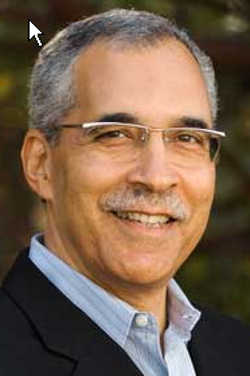
BERKELEY, Calif. – The Regents of the University of California will be asked to approve the selection of Claude Steele, a preeminent scholar of social psychology and dean of Stanford University's Graduate School of Education, as the next executive vice chancellor and provost of the University of California, Berkeley.
UC Berkeley Chancellor Nicholas Dirks announced the appointment Monday, noting Steele's stellar academic accomplishments, and his strong record of leadership both at Stanford and at Columbia University, where Steele served as provost from 2009-2011.
“Claude is a world-class scholar, an extraordinarily gifted administrator, and a visionary leader with a deep commitment to teaching, innovation and collaboration,” Dirks said. “He is uniquely qualified to help sustain and expand our public mission and ethos, maintain our academic excellence and access and advance on our commitment to diversity in every sense of the word. We look forward to welcoming him to Berkeley.”
Leadership experience
Steele has an exemplary record of leadership at major institutions across the country, and said he looks forward to bringing that experience to UC Berkeley.
“With its public mission and vigorous commitment to broad access and academic excellence, UC Berkeley holds a special place among the world's great universities. I am thrilled and honored by this opportunity to serve this great institution and contribute to its mission,” Steele said.
Steele currently serves as the I. James Quillen Dean of Stanford's Graduate School of Education, a position he's held since 2011. As dean he led the school toward a deeper engagement in public education, including a major partnership between the school and the San Francisco Unified School District.
In his prior role as Columbia University's provost, Steele led and implemented academic policies and plans for the university, including a major initiative to enhance support for the basic sciences. While at Columbia, he was responsible for managing the work of the university's faculty, departments, research centers and institutes, as well as oversight of the university's budget and financial planning.
Steele was selected after a nationwide search that produced a number of extraordinarily qualified candidates. Interviews and candidate evaluation were conducted by a search committee that included faculty, staff, student and alumni representation.
The search committee warmly supports Steele's selection. Professor Betty Deakin, a member of the search committee and chair of Berkeley’s Academic Senate, praised Steele's academic and administrative credentials.
“Professor Steele is an experienced and savvy administrator and top-flight scholar,” Deakin said. “His commitment to public education is strong, and he is an effective advocate for diversity in all its forms. The Academic Senate looks forward to collaborating closely with him on the shared governance of the university.”
World-renowned scholar
A renowned and respected social scientist, Steele has devoted much of his academic career to groundbreaking social psychology research around issues of group stereotypes, self-identification, self-evaluation and academic achievement.
His work is widely published, and his research has been extensively used by educators and policymakers to develop practical applications and interventions that improve academic performance among underrepresented groups.
Steele's most recent book, “Whistling Vivaldi: How Stereotypes Affect Us and What We Can Do,” published in 2010, summarizes his years of research on stereotypes and their effects on intellectual and academic performance among underrepresented and minority students.
Written for a broad audience, the book has advanced public discussion and engagement around this salient societal issue.
Steele's scholarly contributions have been recognized with membership in the American Academy of Arts and Sciences, the National Academy of Sciences and the American Philosophical Society.
He has served as president of the Society for Personality and Social Psychology, president of the Western Psychological Association, and as a member of the board of directors of the American Psychological Society. In 2011, he was elected to the National Science Board.
Commitment to education
Steele received his Ph.D. in psychology from Ohio State University in 1971, and over the next 20 years, he taught at the University of Utah, the University of Washington and the University of Michigan.
He joined the faculty at Stanford University in 1991, where he remained until 2009 when he moved to Columbia University as provost. In 2011, Stanford recruited him back to lead the Graduate School of Education.
Steele said, “I am the recipient of a great public education, and I have spent much of my career finding ways to successfully address the challenges of preserving access, excellence and opportunity on college campuses across the country. I am deeply committed to UC Berkeley's public mission, and I look forward to working with Chancellor Dirks and the entire campus community to sustain and strengthen this mission in the years to come.”
In addition to serving as executive vice chancellor and provost, Steele will have an appointment as a professor in the Department of Psychology.
Chief academic officer
As executive vice chancellor and provost, Steele will serve as the chief academic officer for UC Berkeley's 14 schools and colleges. Working closely with the Faculty Senate and student leaders, Steele will have leadership responsibility for all academic programs, faculty recruitment and retention and undergraduate and graduate education.
“Claude will be a bold change agent for helping us improve faculty and student diversity, improve professional development for graduate students and find new funding streams,” Bahar Navab, a Graduate Assembly vice president and a member of the search committee, said. “Together with Chancellor Dirks, I think he can help push Berkeley to the next level as a public research university.”
The UC Board of Regents will vote on the appointment and terms of employment, including compensation, at its next meeting in January.
If approved, Steele is expected to assume the position on March 31. Steele will succeed retiring Executive Vice Chancellor and Provost George Breslauer, who has served in that role since 2006.
Andy Pino writes for the UC Berkeley News Center.