 How to resolve AdBlock issue?
Health
- Details
- Written by: Editor
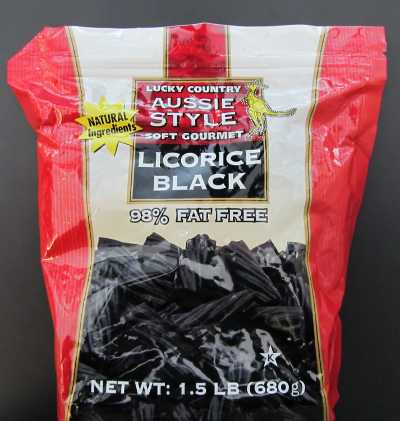
Dr. Ron Chapman, director of the California Department of Public Health (CDPH) and state health officer, on Thursday advised consumers not to eat Lucky Country Aussie Style Soft Gourmet Licorice Black Natural Ingredients (Lucky Country Natural Black Licorice) candy, Lot A3057, after tests conducted by CDPH found the products contained levels of lead that exceeded the state’s standards.
Lucky Country Natural Black Licorice candy is manufactured and distributed by Lucky Country, Lincolnton, N.C., which has initiated a voluntary recall. Consumers in possession of the candy should discard it immediately.
Recent analysis of this candy by CDPH determined that Lucky Country Natural Black Licorice candy, Lot A3057, contained as much as 0.18 parts per million of lead.
This concentration of lead could provide up to 7.2 micrograms of lead per serving and children under 6 years of age should not consume more than 6.0 micrograms of lead per day from all dietary sources.
CDPH is currently working with the manufacturer to ensure that the contaminated candies are removed from the market place.
Lucky Country Natural Black Licorice candy is sold in a 1.5 pound package that is red, white, and black in color. A drawing of a kangaroo appears on the package next to the candy name.
Pregnant women and parents of children who may have eaten this candy should consult their physician or health care provider to determine if medical testing is needed. Information, including photos, is available on the CDPH Web site, www.cdph.ca.gov .
Consumers who find this candy for sale should call the CDPH Complaint Hotline at 800-495-3232.
For more information about lead poisoning, contact your county childhood lead poisoning prevention program or public health department.
Additional information is available on the CDPH Childhood Lead Poisoning Prevention page at www.cdph.ca.gov/healthinfo/discond/Pages/CLPPBChildrenAtRisk.aspx .
- Details
- Written by: Editor
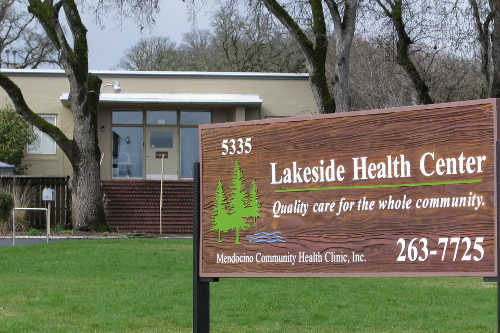
NORTH COAST, Calif. – Community health centers like Mendocino Community Health Clinic (MCHC) have become a powerhouse in primary care because they provide a quality and cost-effective model for health care delivery.
A recent study by researchers at the Stanford University School of Medicine and the University of California-San Francisco concluded that health centers demonstrated equal or better quality performance than private practices on ambulatory quality measures, despite serving patients with more chronic disease and socio-economic challenges.
This is the case at MCHC, where patients receive quality and affordable primary and preventive care services under one roof that include medical, dental, behavioral health and women’s health.
“At MCHC our patients not only receive quality care on a regular basis but they are treated as individuals, with dignity and respect,” said Chief Executive Officer Lin Hunter. “This is what health care should be about and what our patients come back for time and time again. We are their provider of choice because they like the care they get here and, because we are part of the community, we understand our patients and what they need.”
Community Health Centers have been in existence for over 45 years and have compiled a significant record of success.
Locally, according to a Mendocino County Board of Supervisors’ resolution approved last month recognizing Aug. 5-11 as National Health Center Week, in 2011 more than half of Mendocino County residents “sought and received high-quality, cost-effective primary health services” at the five community health clinics: Mendocino Community Health Clinic, Anderson Valley Health Center, Long Valley Health Center, Mendocino Coast Clinics and Redwood Coast Medical Services.
Mendocino Community Health Clinic totaled more than 128,000 patient encounters last year. That’s an average of more than 2,400 patient encounters a week, or approximately 500 patient encounters a day.
New fact sheets from the National Association of Community Health Centers (NACHC) provide a more comprehensive glimpse behind the health center record of:
- Reducing income and ethnic health disparities nationwide, even in the poorest and most challenged communities
- Producing $24 billion in annual health system savings
- Reducing unnecessary hospitalizations and unnecessary visits to the ER
- Providing a system of preventive medicine that patients use regularly, thereby improving health outcomes.
The successful model of care that health centers provide is tied with how they are directed by local communities.
Each health center has patients represented on their governing boards to ensure accountability to the community, funding sources and the American taxpayer.
Health centers also go beyond the reach of traditional medicine by addressing the social determinants that can cause poor health – meaning factors such as poverty, nutrition, inadequate housing, or lack of education.
To make access to primary care easier, health centers also offer services that remove common, persistent barriers to health care, such as transportation, translation, insurance enrollment, case management, and health education.
Health centers also empower their patients to be active participants in improving their health and in preventing or managing their chronic conditions through better nutrition, counseling or patient education.
As a result, health center patients are more likely to comply with their providers’ guidance than other patients and have a better chance for improved health.
With better health and access to regular care at a health center, people can more easily avoid costly visits to the hospital.
The NACHC fact sheets were issued as part of National Health Center Week, a weeklong campaign (August 5-11) to raise awareness about the mission and accomplishments of America’s Health Centers as local solutions.
To learn more about the mission and accomplishments of Community Health Centers visit www.nachc.org .
To learn more about Mendocino Community Health Clinic, visit www.mchcinc.org .
- Details
- Written by: Editor
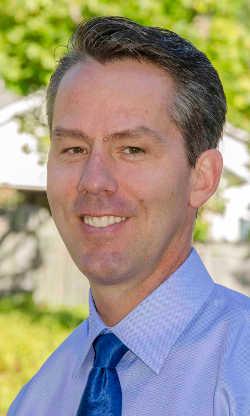
Ukiah, Calif. – Mendocino Community Health Clinic has named Justin Ebert its new associate medical director.
Ebert is the first mid-level provider to join the clinical leadership team with authority to help shape MCHC’s future.
A physician assistant is a mid-level provider with an expertise level between a nurse and a doctor, and MCHC – like many health care organizations – depends on mid-levels to increase its capacity to treat patients.
In his role as associate medical director, Ebert will serve a liaison to improve organizational communication as MCHC implements the Patient-Centered Health Home (PCHH) model.
He also will mentor other clinicians and work with the electronic medical records team to implement future upgrades.
According to MCHC Medical Director Dr. Stephen Vance, “Justin [Ebert] is already involved in a variety of administrative and mentoring roles, and has always been an exemplary team player. He will be working with me and the administrative team in supporting primary care and the Patient-Centered Health Home.”
In his work with the Electronic Medical Records team, Ebert will communicate with developers and software trainers to explain clinical workflows, so the computer technology can provide the most benefit to nurses and doctors.
“I hope to be a voice for nurses and practitioners to determine how we operate and the direction we should go,” he said. “My plan is to listen, and if trends emerge then to pay attention.”
According to his peers, Ebert has a long history at MCHC of providing thoughtful, well-considered opinions and of backing up his suggestions with the work required to see them through.
As a respected provider, he will serve as a mentor for other mid-levels and clinical staff.
“He is a natural mentor: he leads by example and is willing to take time to listen and teach,” said Chief Operating Officer Carole Press.
- Details
- Written by: Editor
Average basic premiums for Medicare prescription drug plans are projected to remain constant in 2013, Health and Human Services Secretary (HHS) Kathleen Sebelius announced Monday.
The average 2013 monthly premium for basic prescription drug coverage is expected to be $30. Average premiums for 2012 were projected to be $30 and ultimately averaged $29.67.
At the same time, since the law was enacted, seniors and people with disabilities have saved $3.9 billion on prescription drugs as the Affordable Care Act began closing the “donut hole” coverage gap.
“Premiums are holding steady and, thanks to the health care law, millions of people with Medicare are saving an average of over $600 each year on their prescription drugs,” said Secretary Sebelius.
Monday’s projection for the average premium for 2013 is based on bids submitted by drug and health plans for basic coverage during the 2013 benefit year, and calculated by the Centers for Medicare & Medicaid Services (CMS) Office of the Actuary.
The upcoming annual enrollment period – which begins Oct. 15 and ends Dec. 7, 2012 – allows people with Medicare, their families and their caregivers to choose their plans for next year by comparing their current coverage and quality ratings to other plan offerings. New benefit choices are effective Jan. 1, 2013.
Because of the Affordable Care Act, out-of-pocket savings on medications for people with Medicare continue to grow.
Last month, CMS announced that more than 5.2 million people with Medicare have saved over $3.9 billion on prescription drugs in the Medicare Part D donut hole since the law was enacted.
In the first half of 2012, over 1 million people with Medicare saved a total of $687 million on prescription drugs, averaging $629 per person this year.
As a result of the Affordable Care Act, coverage for both brand name and generic drugs in the coverage gap will continue to increase over time until 2020, when the coverage gap will be fully closed.
This year, people with Medicare received a 50 percent discount on covered brand name drugs and 14 percent coverage of generic drugs in the donut hole.
In 2013, Medicare Part D’s coverage of brand name drugs will begin to increase, meaning that people with Medicare will receive a total of 52.5 percent off the cost of brand name drugs (a 50 percent discount and an additional 2.5 percent in coverage) and coverage for 21 percent of the cost of generic drugs in the donut hole.
For more information on how the Affordable Care Act closes the Medicare drug benefit donut hole, please visit http://www.healthcare.gov/law/features/65-older/drug-discounts/index.html .