
Health
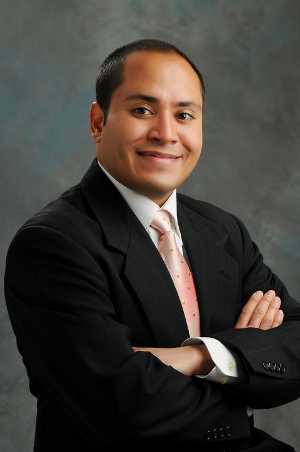
UKIAH, Calif. – Mendocino College Health Awareness is hosting a free memory seminar with a well-known speaker this Thursday, Dec 1, in the Little Theatre at the Ukiah campus.
The event begins at 6:30 p.m.
Chester Santos is the 2008 United States National Memory Champion, and is one of the world’s foremost experts on memory training techniques, with appearances in the New York Times, Wall Street Journal, San Francisco Chronicle, Washington Post, USA Today, CNN and various other media around the world.
He holds an undergraduate degree in psychology from the University of California at Berkeley and a master’s degree in software engineering from Golden Gate University.
Santos has spoken for groups of chief executive officers, Fortune 500 companies and prestigious universities including the Royal University for Women in Bahrain, the Haas Graduate School of Business in Berkeley and Harvard University.
He is working on a new book about memory improvement and brain fitness due out in 2012.
His iPhone application, “Steel Trap,” was featured by Apple and became an instant worldwide bestseller.
Santos' life and memory training are the subject of an upcoming feature‐length documentary that is being narrated by Academy Award Nominee and Golden Globe winning actor, Paul Giamatti. This film is titled, “You Must Remember This.”
The Thursday event is free to everyone and will benefit all ages.
Mendocino College Women’s Basketball will provide concessions at intermission with snacks and drinks.
The memory presentation will be followed by a memory training seminar; helping boost creativity, utilize both sides of the brain, learn effective ways to memorize and cut down study time, and ultimately improve memory.
The seating is capped at 180; so it is encouraged to arrive before 6:30 p.m.
The Little Theatre is equipped with tablet arm chairs for writing down notes if need be; unless you can memorize it all.
Mendocino College Health Awareness is excited to bring this well-known speaker to the Ukiah campus this Thursday, Dec. 1.
The Little Theatre is located in the center of campus, south of McMillan Hall and to the left of the new Library construction.
Santos will take the stage at 6:30 p.m., so remember to arrive early.
- Details
- Written by: Editor
“It is very difficult to distinguish which mushrooms are dangerous and which are safe to eat. Therefore, we recommend that wild mushrooms not be eaten unless they have been carefully examined and determined to be edible by a mushroom expert,” Chapman said.
Wild mushroom poisoning continues to cause disease, hospitalization and death among California residents.
According to the California Poison Control System (CPCS), 1,748 cases of mushroom ingestion were reported statewide in 2009-2010.
Among those cases:
Two individuals died;
Ten individuals suffered a major health outcome, such as liver failure leading to coma and/or a liver transplant, or kidney failure requiring dialysis;
964 were children under six years of age. These incidents usually involved the child’s eating a small amount of a mushroom growing in yards or neighborhood parks;
948 individuals were treated at a health care facility;
19 were admitted to an intensive care unit.
The most serious illnesses and deaths have been linked primarily to mushrooms known to cause liver damage, including Amanita ocreata, or “destroying angel,” and Amanita phalloides, also known as the “death cap.” These and other poisonous mushrooms grow in some parts of California year-round, but are most commonly found during fall, late winter or spring.
Eating poisonous mushrooms can cause abdominal pain, cramping, vomiting, diarrhea, liver damage and death.
Individuals who develop symptoms after eating wild mushrooms should seek immediate medical attention. Likewise, individuals with symptoms, or their treating health care providers, should immediately contact the CPCS at 1-800-222-1222.
Local mycological societies offer educational resources about mushroom identification, and may be able to help individuals identify whether mushrooms they have picked are safe or not.
For more information about mycological societies in California, please visit http://www.namyco.org/clubs/index.html.
- Details
- Written by: Editor




 How to resolve AdBlock issue?