 How to resolve AdBlock issue?
Health
- Details
- Written by: Editor
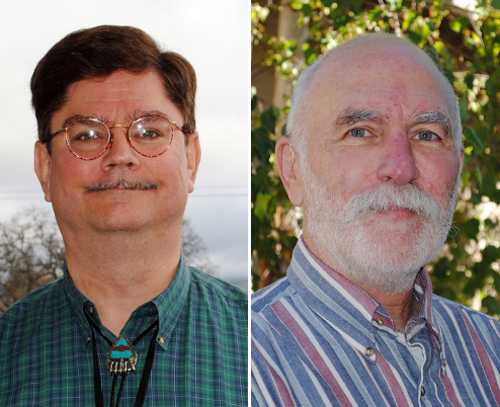
LAKEPORT, Calif. – Mendocino Community Health Clinic (MCHC) is pleased to welcome two new providers at their Lakeside Health Center: Internist Dr. Thomas Luck and Family Nurse Practitioner Michael Gibson.
Dr. Luck was a Navy man, attending medical school on an Armed Forces Health Professions scholarship. After his service, he completed his residency at Temple University in Philadelphia.
Dr. Luck has worked as a hospitalist and a primary care physician, focusing on allergy and immunology as well as general internal medicine.
His recent experience includes locum tenens stints at Fort Defiance Indian Healthcare Facility and Chinle Comprehensive Healthcare Facility, both in Arizona.
He is a dedicated family man, to the point of temporarily giving up his practice to assist with aging parents and members of his wife’s family who have special medical needs.
“Dr. Luck is very thorough. He really pays attention to the details,” said Lakeside Site Manager Lori Conroy.
Dr. Luck is a member of the American Academy of Allergy, Asthma and Immunology; the American College of Allergy, Asthma and Immunology; the Southeastern Allergy Association, and the Allergy Association of Northern California. He holds active medical licenses in Florida and California.
Mike Gibson has only been with MCHC a short time, but he’s already seeing 18 patients a day. His colleagues call him “easy to work with” and, according to Conroy, patients love him.
“Mike’s experience and relaxed demeanor put patients at ease,” Conroy said.
Gibson took a circuitous route in joining the ranks of health care professionals. He served six years in the Army, packing parachutes for jump school and Special Forces (among other responsibilities). He served in Georgia, North Carolina and Panama. After his experience in the military, he worked as a welder and journeyman sheet metal mechanic.
In 1991, he decided to make a change, choosing a career that “couldn’t be exported to India,” as he put it. He became a registered nurse in 1996 and after several years as an RN, he went back to school and became a nurse practitioner, graduating in 2009. He spent a year as a nurse practitioner at Hayfork Community Health Center, but it was a little remote for his tastes, so MCHC invited him to join their team.
Both providers are currently accepting new patients at Lakeside Health Center, one of three health centers owned and operated by Mendocino Community Health Clinic, a local non-profit organization providing access to health care for the most vulnerable people in our community.
- Details
- Written by: Editor
MIDDLETOWN – The Middletown Seventh-day Adventist Church will host the annual Middletown Health Fair on Sunday, Jan. 23.
The event will take place from 11 a.m. to 3 p.m. at the church, 21640 Highway 175 South.
There will be lots of great services and activities designed for your health and enjoyment.
Adventist Health will be available for a variety of free health screenings – blood pressure, blood sugar, cholesterol, bone density and oxygen levels. Medical professionals will be available to walk you through the results.
The Live Well clinic is offering weight loss, diabetic support and health evaluation.
There also will be exercise classes every half hour from noon to 2 p.m. hosted by Middletown Jazzercise, food provided from the Middletown Pathfinder Youth group and The Garden, Sunrise Special Services Reach Out program, children's activities and more.
For more information call Jacque Felber at 707-987-2661.
- Details
- Written by: Editor
The California Rx Card provides free discount prescription drug cards to California residents of all income levels, without any restrictions to membership, and no income requirements, age limitations, waiting periods or the need to complete an application.
“The California Rx Card helps uninsured and underinsured residents of California afford their prescription medications,” said Edward Brown, program director for the California RX Card. “And it is also used by people with health insurance coverage without prescription benefits, which is common in many health savings accounts (HSA) and high deductible health plans.”
California Rx Card works with pharmacies and drug companies to provide brand-name and generic prescription medications at an average savings of about 30 percent. Some discounts are as high as 75 percent.
Additionally, the program can be used for non-formulary or non-covered drugs and by people enrolled in Medicare Part D.
Uninsured and under-insured Californians who do not qualify for publicly-funded programs, such as Medicaid and Medicare, particularly benefit from the program.
The program even discounts prescriptions for people who receive medications through charity care providers such as 340B and also discounts certain prescription pet medications.
Anyone can download a free discount drug card by visiting www.CaliforniaRxCard.com where they can also search drug prices and locate participating pharmacy locations from more than 50,000 across the country.
Those without Internet access can simply visit any CVS/pharmacy or Longs Drug Store location in California and ask the pharmacist to process their prescription through California Rx Card.
- Details
- Written by: Editor
In some instances, consumers would see their health insurance rates skyrocket by up to 59 percent.
“I find it stunning that Blue Shield would seek to impose such massive premium increases on policyholders during these troubling economic times,” Jones said. “These premium increases will impose significant financial burdens on struggling families and, in some cases, will lead to the loss of health care coverage altogether.”
Jones also sent a letter calling on Blue Shield to refrain from moving forward with its rate increase for at least 60 days beyond the insurer’s proposed March 1 effective date.
Under current California law, the Insurance Commissioner does not have the authority to reject excessive premium increases; however, by asking Blue Shield for a delay in the implementation of its plan, the Commissioner will have the opportunity to ensure that all proposed increases have been thoroughly reviewed.
“Many Californians will no doubt be surprised to learn that the insurance commissioner does not have the legal authority to reject excessive health insurance premium increases,” Jones said.
He said he's fought to give that authority to the insurance commissioner's post over the last six years, including authoring strong legislation to give the commissioner the authority to reject excessive premium increases.
He said that legislation was defeated in the Legislature by conservative legislators. “I will continue to fight to pass this legislation.”