 How to resolve AdBlock issue?
Health
- Details
- Written by: Editor
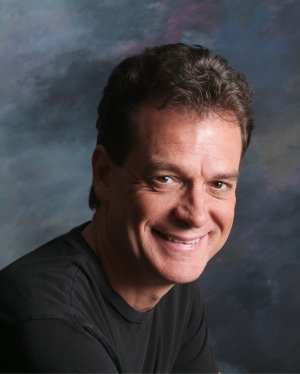
LAKEPORT – Have you ever heard the saying that most of your worries never happen? If you are like most people, excessive worry and fear can be a frustration. Being overly afraid about life circumstances can also negatively impact your health. With an improved frame of reference, anyone can control and even eliminate fear and worry.
According to Matthew McQuaid, DPM the secret to living fearless is in changing your conscious and unconscious thinking.
There are many simple and practical techniques you can do to eliminate fear from your life forever. Dr. McQuaid will be discussing these fear reducing skills during an evening talk, “Living Without Fear,” May 28, at Sutter Lakeside Hospital & Center for Health’s Wellness Center.
Webster’s defines fear as, “an unpleasant emotional state characterized by anticipation of pain or distress.” Dr. McQuaid reminds people the key word in the preceding definition is anticipation. Fear is only the anticipation of events, not necessarily how experiences unfold in reality. Dr. McQuaid teaches students the acronym for fear as: False Evidence Appearing Real.
Anyone can benefit from the workshop because the class will cover all of the various reasons people have fears. From the fear of the unknown, financial stress, relationship worry, fear of illness or injury, and work related anxieties. Dr. McQuaid emphasizes that no matter what the situation, there is hope. The class will give hands on training in stress reduction.
Participants in the workshop will also discover the relationship between fear and its impact on general health. Dr. McQuaid will explore the causes of fear and how to effectively reduce the negative thinking that can lead to self sabotage.
According to Dr. McQuaid, the techniques student will learn in the class are proven ways to eliminate fear and live a life healthy, successful and happy.
The program is scheduled for Wednesday, May 28, at Sutter Lakeside Wellness Center, on the hospital campus, 5176 Hill Road East in Lakeport.
Refreshments will be served beginning at 5:30 p.m., with the program beginning promptly at 6 p.m.
For registration information call the Wellness Center at 262-5171.
{mos_sb_discuss:2}
- Details
- Written by: Editor
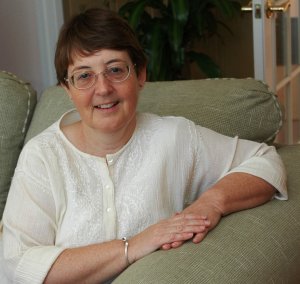
LAKEPORT – Feeling frazzled? Current methods of dealing with stress not working? Want to make a change but don’t know how or where to start?
The Wellness Center at Sutter Lakeside Hospital and Center for Health is beginning a new session of the Stress Reduction and Relaxation Clinic on Tuesday, May 6.
In this eight-week workshop, participants learn new patterns of response to stress and how to move from being highly reactive to life events to learning how to respond with calm.
In this small-group environment, participants will receive support and learn from each other and the curriculum. Individuals will take a Health Risk Assessment and general wellness inventory to assess their current state of mental, emotional, and physical well-being.
Participants will learn methods such as diaphragmatic breathing, progressive relaxation, mindful meditation, gentle movement yoga and other strategies to cope with and overcome stress.
The program begins Tuesday, May from 5:30 p.m. to 6:30 p.m. and meets twice a week for eight weeks. The instructor is Leslie Lovejoy, Ph.D.
There is a fee for this program and scholarships are available.
To register or for more information call the Wellness Center, 262-5171.
{mos_sb_discuss:2}
- Details
- Written by: Editor
Each year at this event, civic and business leaders who work in the Washington, D.C. area cook recipes for culinary experts to judge.
Jan Thompson was a co-chair of the event in 2005 and each year, Mike and Jane enter a recipe. This year, they entered the cook-off with their recipe for Shrimp Ceviche. The judges awarded them “Healthiest Dish.”
Mike & Jan Thompson’s Shrimp Ceviche
1 pound medium shrimp
3 limes, juiced
3 lemons, juiced
1 orange, juiced
½ cup seeded tomatoes cut into ½ inch dice
½ cup red onion cut into ¼ inch dice
1 bunch cilantro, stemmed and chopped
1 Serrano chili, roughly chopped
1 large Hass avocado, peeled, seeded and cut into ½ inch dice
1 large cucumber peeled and cut into ½ inch dice
1 ripe mango peeled and diced
2 tablespoons extra virgin olive oil
1 teaspoon salt
Tortilla chips
In a large pot of boiling water, add the shrimp and simmer until cooked through, about five minutes. Using a slotted spoon, transfer the shrimp to a bowl of ice water to chill.
Drain the shrimp, cut into ¾ inch pieces and transfer to a bowl. Add the lime, lemon and orange juice, stir to combine and refrigerate for at least four hours. Stir the tomato, onion, cilantro, salt, and chili into shrimp mixture and let it sit at room temperature for about 30 minutes.
Prior to serving, stir in the avocado, cucumber and mango. Drizzle the olive oil over the mixture, stir gently, and serve with tortilla chips.
{mos_sb_discuss:2}
- Details
- Written by: Editor
After a two-week stay in the hospital where he was prescribed the powerful painkiller OxyContin, Simons continued to use the drug against his doctors' orders, secretly obtaining a steady supply.
Within a year of first being prescribed the painkiller, he found himself in drug rehab. Simons was only 21 years old.
An alumni of The Pat Moore Foundation, Simons (whose real name is withheld to protect his identity) explains he was taking OxyContin everyday and by himself. His life revolved around the getting and using of this powerful painkiller.
Simons is not alone, he falls into a group - patients prescribed drugs who later become addicted - who are most susceptible to abusing painkillers. The other group is people, including the young, who begin using painkillers for recreational, and not medical, reasons.
An estimated 5.2 million people used prescription pain relievers in 2006 for non-medical reasons, up from 4.7 million in 2005, according to the Department of Health and Human Services. That's more than twice the 2.4 million people DHHS estimates use cocaine nationwide.
According to statistics compiled by the Partnership for a Drug Free America, nearly one in five teens, or a staggering 4.5 million kids age 12-19, reportedly abused prescription medications to get high last year. Despite an overall downward trend in drug use among teenagers, painkiller abuse is up, according to a White House report released late 2007.
"Opiates, a type of opioids, are a group of drugs which are medically used to relieve pain. OxyContin and Vicodin are both opiates and it is their pain relieving quality that also makes them so highly addictive," explains Phil Allen, CEO of The Pat Moore Foundation, a non-profit drug detox and treatment center in Orange County, CA, that specializes in opiate detox.
Opioids are chemicals that attach to certain receptors in the brain. They both prevent pain and stimulate the pleasure center in the brain. Those drugs that are the most effective in terms of attaching to those receptors give the most relief from pain as well as the most pleasure.
Allen explains that opiates serve a purpose and that's to deal with short-term pain. There are physicians who prescribe drugs chronically and after a while patients become habituated. Patients need more medicine to have an effect, but the pain doesn't get any better. They become dependent and if they try to stop withdrawal symptoms set in.
Having helped recovering addicts for over 12 years, Allen knows from experience that some people are more susceptible to painkiller addictions. People who are depressed, prone to anxiety or alcoholics are more likely to develop an addiction to prescription drugs like OxyContin. In fact, one of the more common conditions that lead to pain killer addiction is lower back injuries. People start using OxyContin from a prescription to relieve the pain and then they can't get off the drug.
"What makes painkillers so life shattering is that, unlike other drugs, the physical effects of addiction may not be as apparent, even to friends and family. But, the power of addiction is just as strong as any abused drug. The life of a painkiller addict is consumed with getting the drug. That becomes their entire life purpose, to the detriment of everything ... even their own lives."
The Pat Moore Foundation is a non-profit alcohol and drug rehabilitation center based in Orange County.
{mos_sb_discuss:2}