 How to resolve AdBlock issue?
Health
- Details
- Written by: Editor
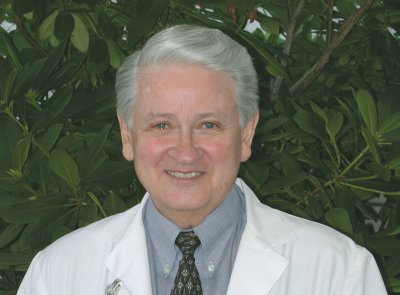
CLEARLAKE – A new breed of doctors called “hospitalists” has arrived at Redbud Community Hospital, bringing specialized in-hospital care to patients.
Hospitalists are board-certified internists and family practice physicians who spend 100 percent of their time treating patients who are admitted to the hospital. Hospitalists maintain a close relationship with the patient's primary care physician and return the patient to their physician's care when discharged from the hospital.
“This allows the primary care physician to dedicate their time to caring for patients in their offices. If the primary care physicians choose to care for their patients during a hospitalization, they have that option,” said John Hodgkin, MD, medical director of the new program and a nationally renowned pulmonary medicine specialist honored as 2007 “Outstanding Clinician of the Year” by the California Thoracic Society. He is a board-certified pulmonary and critical care specialist who trained at the Mayo Clinic and has practiced at St. Helena Hospital since 1983.
“Studies have commonly shown improved patient care when hospitalist physicians assume responsibility for the care of inpatients. Hospitalist programs can also reduce the length of hospital stays and the need for readmissions,” he said. “It’s a win-win for inpatients, office patients and doctors.”
Hospitalists at Redbud admit and care for patients who come to the hospital through the emergency department or have been sent to the hospital by their primary care physician. Since hospitalists are based at Redbud full time, they can respond to the needs of patients and their families quickly. “This makes it possible for inpatients to be assessed quickly following their admission and whenever problems arise,” Dr. Hodgkin said.
For patients who have a primary care physician, close contact is maintained between the hospitalist, the patient’s physician, and the patient’s family. At the time of a patient’s discharge, the primary care physician is given key information including required medication and follow-up care instructions.
Redbud’s program is similar to the two-year-old hospitalist program at St. Helena Hospital, where patient satisfaction scores are among the highest in the area. “We believe the hospitalist program at Redbud will have a very positive impact on our patient satisfaction and our quality of care,” said Linda Gibson, senior vice president of operations, who has expressed a goal of making Redbud “the best critical access hospital in the country.”
Redbud operates the program through a partnership with TeamHealth Hospital Medicine, a division of TeamHealth, the nation's largest provider of clinical outsourcing services to more than 500 hospitals.
{mos_sb_discuss:2}
- Details
- Written by: Editor
SJR 31 calls on the U.S. Congress and President George W. Bush to enact the federal “Commercial Fishing Health Care Coverage Act of 2008,” which would provide coverage for the nation’s commercial fishing men and women. Approval by the Health Committee means the measure now heads for a vote of the full Senate.
Wiggins, who chairs the Joint Legislative Committee on Fisheries and Aquaculture, said that even though commercial fishing remains one of the nation’s most dangerous professions, the number of men and women in that industry who lack health insurance is “three to four times greater than the national average.”
Her measure, Senate Joint Resolution 31, calls on the President, Vice President Dick Cheney, and members of the U.S. Senate and House of Representatives to enact the “Commercial Fishing Health Care Coverage Act,” which is contained in two federal bills, S. 2630 and HR 5404, introduced by a bi-partisan group of Congressional representatives. If they were to become law, the federal bills would authorize funding to coastal states for planning and implementation of health care programs specific to the needs of a state’s commercial fishing fleet.
In her testimony before the committee, Wiggins said that the “fishing community is under-insured relative to most other industries because of the dangers of the job, the migratory nature of fishing fleets, and the irregular cash flow of the industry.”
{mos_sb_discuss:3}
- Details
- Written by: Editor
The bill, which Congressman Mike Thompson helped craft as a member of the Ways and Means Committee, pays particular attention to recipients in areas with limited access to health care.
In addition, the bill includes several provisions championed by Thompson that directly impact the First Congressional District.
“Medicare providers in rural areas like Northern California often lack the resources they need to serve the public,” said Thompson. “This bill increases payments for sole community and critical access hospitals, increases payments for rural ambulance services and ensures physicians are fairly reimbursed for Medicare services.”
Without this legislation, physicians across the country would face a 10.6 percent cut in reimbursements for Medicare services beginning July 1. Alarmingly, the data suggests that over 60 percent of California physicians would leave the Medicare program or stop taking new Medicare patients if these cuts are implemented.
“Although this bill stops cuts to physician payments, it is not about how much we pay doctors,” said Thompson. “This bill is about access to health care for patients. When doctors don’t get reimbursed, they often can’t continue serving Medicare patients.”
The Medicare Improvements for Patients and Providers Act (HR 6331) also includes provisions from Thompson’s telehealth legislation, which expands the types of health facilities that offer telehealth services. Telehealth, the delivery of health services via telecommunications, is a proven method for doctors and patients to effectively communicate from separate locations.
Also included are provisions from Thompson’s cancer prevention bill, expanding the Welcome to Medicare Physical Examination from six months to one year for all new Medicare enrollees. Thompson has been a leading champion for preventive health care since his time in the State Senate, and believes this provision will help millions of Medicare recipients stay healthy.
“Making investments in preventive health care is one of the best ways to keep people healthy and reduce our nation’s health care costs,” added Thompson.
In addition, the bill permanently extends a Thompson-authored law that helps National Guard and Reserve physicians maintain their practices while deployed overseas.
Prior to Thompson’s law, Guard and Reserve physicians would have difficulties arranging other physicians to cover their practices while they were deployed and still get reimbursed for Medicare services; however, this law will expire on July 1. This bill ensures that physicians can continue to serve our country overseas without worrying about losing their medical practice at home.
The Medicare Improvements for Patients and Providers Act now moves to the Senate for consideration.
{mos_sb_discuss:3}
- Details
- Written by: Editor
Biofeedback can help you to use your mind to manage certain medical conditions, like stress. Sutter Lakeside Hospital and Center for Health’s Wellness Center invites community members to experience this non-invasive and relaxing treatment by visiting their new biofeedback lab.
The lab is open to the public, by appointment only, without the need for a physician referral.
The biofeedback program that the lab utilizes is designed to enable participants – in mind-over-matter fashion – to use their thoughts and will to control their bodies.
Biofeedback is based on the idea, confirmed by scientific studies, that people have the innate potential to influence with their minds many of the automatic, involuntary functions of their bodies.
It uses electronic equipment to monitor your internal physiological states, e.g., heart rate, breath rate, skin temperature and sweat response, etc., and to provide “feedback,” typically visually, that helps the user to learn how to control these states.
For more information or to make an appointment to visit the Sutter Wellness Center Biofeedback Lab, call 262-5171.
Lab sessions are self-guided; an orientation to the equipment and the program is given prior to the first session.
The lab is located in the Integrative Healing House on the Sutter Lakeside Campus in Lakeport.
{mos_sb_discuss:2}