 How to resolve AdBlock issue?
Health
- Details
- Written by: Elizabeth Larson
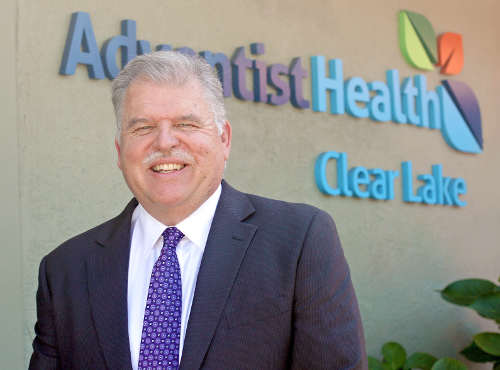
LAKEPORT, Calif. – Adventist Health Clear Lake is proud to expand its services in Lakeport by welcoming experienced chiropractor Daniel Ayers, DC, to its medical office located at 801 11th St.
Dr. Ayers completed his doctor of chiropractic degree at the Los Angeles College of Chiropractic and has been practicing since 2003.
He has operated his own chiropractic practice in Southern California and most recently was the lead chiropractor at a busy practice in Rosemead, Calif.
“I choose to integrate various combinations of techniques for the unique needs of each patient,” said Dr. Ayers. “I utilize mobilization, manual and instrumental adjusting styles to ensure the most comfortable and effective care.”
Chiropractic care can help individuals by increasing structural function, restoring mobility and decreasing pain.
“I also like our patients to understand their care, what they can do to improve their health and how they can accelerate and support their progress by using exercise and lifestyle changes,” Dr. Ayers said.
Dr. Ayers treats conditions including repetitive and postural strains, degenerative disc disease, sciatica, migraines, sports injuries, and neck and back pain during pregnancy.
When not serving patients, Dr. Ayers enjoys time with family and his German Shepherd, sports, camping, fishing and time outdoors.
Adventist Health Clear Lake opened its Lakeport medical office in December 2018. The office also offers primary care and cardiopulmonary testing services. Chiropractic care is also offered at the Adventist Health Clear Lake Medical Office in Clearlake through the Live Well Program.
The Adventist Health Clear Lake Medical Office – Lakeport is located at 801 11th St. in Lakeport.
Patients may schedule an appointment with Dr. Ayers by calling 707-263-3746.
- Details
- Written by: California Department of Public Health
Tests conducted by CDPH found that the products contained as much as 0.17 parts per million (ppm) of lead, exceeding the state’s standard of 0.10 ppm.
La Zagala brand Fruit Pulp Tamarin Flavor candy is distributed by La Zagala Imports Inc., in Downey, California. The company initiated a voluntary recall on Aug. 13.
CDPH is currently working with the distributor to remove the contaminated candy from stores.
This candy is sold in 3.5 ounce (100g) brown clay jars decorated with a green and yellow flower design, has a clear cellophane cover, and a Universal Product Code (UPC) of 750114345756 label applied to the top of the container with a small picture of a cow with “La Zagala” and “Fruit Pulp Tamarin Flavor” in a large font. Product photographs are available on CDPH's website.
The recalled products can be identified by the following lot codes on the bottom of each jar:
191039-03 exp. 6/4/20
191039-08 exp. 6/4/20
191039-11 exp. 6/4/20
190776-02 exp. 4/26/20
190776-03 exp. 4/26/20
190776-12 exp. 4/26/20
182348-03 exp. 12/26/19
Pregnant women and parents of children who may have eaten this candy should consult their health care provider to determine if medical testing is needed. Consumers who find this candy for sale should call the CDPH Complaint Hotline at (800) 495-3232. For more information about lead poisoning, visit the CDPH Childhood Lead Poisoning Prevention page.
- Details
- Written by: Elizabeth Larson
As of July 31, CDC reports that there are 127 cases of human infection tied to exposure to pig ear pet treats with Salmonella enterica serotypes I 4,[5],12:i:-, Infantis, London, and Newport in 33 states. CDC reports that many of these cases are multidrug-resistant. Twenty-six people have been hospitalized.
The FDA has traced back some of the pig ear treats associated with cases of illness to sources in Argentina and Brazil. Two firms have recalled. Some of these treats have tested positive for Salmonella, and further testing is ongoing to identify the Salmonella strain(s).
As of July 31, based on information gathered from cases and the traceback data gathered from FDA, the FDA and CDC are recommending that people avoid purchasing or feeding any pig ear pet treats at this time. If you have pig ear pet treats, safely discard them and thoroughly clean the areas where the treats have been.
FDA is working with impacted firms to remove pig ear pet treats from the marketplace and identify places where they may have been distributed.
Salmonella can affect both human and animal health. People with symptoms of Salmonella infection should consult their healthcare providers. Consult a veterinarian if your pet has symptoms of Salmonella infection.
This is an ongoing investigation and FDA will provide the public with new information as it becomes available.
Please visit the FDA Web site for more information.
- Details
- Written by: Elizabeth Larson

CLEARLAKE, Calif. – About one in every eight women in the United States will be diagnosed with invasive breast cancer in her lifetime.
This staggering statistic is one of the reasons why Adventist Health has added a breast nurse navigator to its cancer care team.
Laurie Schirling, RN, OCN, CN-BC, is a board-certified breast nurse navigator and oncology certified nurse with a long career or serving women and families facing breast cancer.
“My passion is helping those with breast cancer through the transformative process from fear, to fighter, to empowered advocate,” she said.
Schirling began her nursing career nearly three decades ago working in an oncology setting at Duke University Medical Center.
After working across the country as a nursing unit director, oncology outpatient nurse, hospice nurse and house supervisor, she became a breast nurse navigator at St. Mary’s Regional Medical Center’s Commission on Cancer-accredited cancer center in Reno, Nevada.
She then moved to California’s Central Valley, where she served patients as director of breast care centers, sleep labs and lung care centers for Adventist Health.
“My role is to break down barriers to the continuum of care,” Schirling said. “I educate patients about their individual cancer journey, to empower them as advocates for their care and support them and their families through survivorship.”
As a breast nurse navigator serving Napa and Lake County residents, Schirling works to streamline patient care, facilitates cancer peer groups and connects with the community to encourage preventative care.
Schirling serves as a support for patients that have abnormal breast imaging studies, such as women who have 3D mammograms at Adventist Health Clear Lake’s outpatient medical imaging center on Lakeshore Boulevard in Clearlake.
After spending a number of years serving patients in Adventist Health’s Central Valley Network, she was ready for a change. When not helping patients, she enjoys kayaking, hiking, being in the outdoors and spending time with her goldendoodle.
To schedule a mammogram in Clearlake, patients may call 707-995-5638. Schirling may be contacted by calling 707-967-7585.