 How to resolve AdBlock issue?
Health
- Details
- Written by: Elizabeth Larson

KELSEYVILLE, Calif. – Adventist Health Clear Lake’s Philanthropy Council hosted their 50th Anniversary Golden Gala Celebration on Nov. 10 at Boatique Winery.
Presented by Rob and Madi Mount of Boatique, the event celebrated 50 years of Hospital history and launched a new campaign aligned with the city of Clearlake.
Two hundred and twenty five guests, under the theme of “What Together Can Do,” raised $100,000 in community giving.
In the last 50 years, Adventist Health Clear Lake, previously known as Redbud, has continually invested in the community through philanthropic events.
In an effort to continue that investment the Golden Gala focused on raising funds in partnership with the City of Clearlake’s Park Restructuring to provide new safe playground equipment for children.
The equipment is one phase of the park restructuring and the funds raised will cover the cost of purchasing the equipment for Austin Park in Clearlake.
The hospital has been tied to the history of the community of Clear Lake since it was built in 1968.
As guests arrived they had a chance to walk through some of the stories of that 50-year history of both the hospital and Clear Lake.
Honored historian Gene Paleno, author of “Lake County History,” was on hand to share rich stories of the lake history.
“The Doctors Three” – Mark Copper, Marc Shapiro and John Weeks – shared humorous stories of their practices while Conrad Colbrandt, Redbud Healthcare District executive manager, and Jim Robello, Philanthropy Council chair, shared childhood memories of living in Lake County.
David Santos, Adventist Health Clear Lake CEO, launched the event with a moment of silence for the communities of Paradise and Ventura County.
“We have been called to serve the communities of Lake County and that means expanding our reach outside the walls of the hospitals and clinic in to the heart of our community,” said Santos. “Living God’s love means providing a community that is safe where our children and adults can live a healthy life.”
The Gala program, “Honoring the Past, Celebrating the Journey and Inspiring the Future,” led guests through a journey from 1968 into our present success before laying the groundwork for future investments in Lake County.
Pat Pirtle, one of Redbud Hospital’s original nursing assistants, and Willie Sapeta, Lake County Fire Protection District Fire chief, shared stories of their work with the hospital and staff over the last 50 years.
Ben Hill, master of ceremonies, presented the accomplishments of the hospital and clinics in the last 20 years. Throughout the evening, guests were treated with stunning aerialist performances, Celtic harp music and a Chef Nicholas catered meal.
Shelly Trumbo, Adventist Health Community integration executive, and Russ Perdock, Adventist Health Clear Lake Community integration director, presented “Activate”, a campaign to bring new safe playground equipment to Austin Park in Clearlake. Providing a safe place for children to be active and invest in their health through playground activity is an investment in their future health.
Following the presentation guests were treated to a vocal performance by Trumbo and Mary Swehla singing Carrie Underwood's “Change.” The song's message is that each of us can do something to change the world.
“The Adventist Health Clear Lake Golden Gala was such a special event, watching our hospital join with our city to focus on promoting health through activity,” said Perdock. “The ability to raise enough to fund the purchase of playground equipment in one night is something to be celebrated.”
The evening ended with a paddle raise auction by Generosity Auctions that raised $41,450 in addition to the event sponsor pledges, bringing the evening’s total to $100,000.
- Details
- Written by: Cici Winiger

WILLITS, Calif. – It’s a Friday morning at Blosser Lane Elementary School.
Instead of the usual scene of children sitting around, waiting for the bell to ring, over 100 students are running and walking laps around the basketball court, all the while laughing and having fun.
Students are indeed off to a healthy start by earning their “miles” thanks to a new before-school program called “Morning Mile” sponsored by Adventist Health Howard Memorial.
A running/walking program originating in Florida, Morning Mile is designed to help tackle childhood obesity by giving kids the opportunity to be active every day. The challenge of course being, how to motivate today’s youth to step away from the TV and go for an early morning walk.
But it’s easier than we think. “Music, socializing, and a little bit of competition, something to show for their effort, and to get moving, that’s all they want,” said Tiffany Klee, physical education teacher, who spearheaded the effort, along with Tina Tyler-O’Shea, Senior Program Specialist with the Mendocino County Health and Human Services Agency.
It was Tyler-O’Shea who came up with the idea of starting a morning exercise program. “I was at another school and saw the program for the first time. I saw how much the kids loved it and the teachers and parents too. I just thought, ‘We have to do this in Willits. We have to do this at every school!’”
She approached Blosser Lane Principal Nancy Runberg. “Anything to help us get students moving is a good thing. It really warms my heart to see so many kids, staff and community members participating. The other day, I saw kids rushing as the bus pulled up and they were so excited to get their laps in. It’s really a wonderful program. Besides the health benefits, it also allows them to release all that energy and get them ready to learn. It’s a win-win for both teachers and students, that’s for sure.”
Adventist Health Howard Memorial donated funds to get the program running. Jason Wells, president said, it’s exactly the kind of programs that the hospital is excited to support.
“Childhood obesity is a growing problem and anything we can do to help address it, is a step in the right direction. And this ties perfectly with our mission of inspiring health in our communities. While we love taking care of kids when they’re sick, we would rather keep them healthy and well. Starting healthy habits while they’re young can set them up for a great future and better health outcomes for the community as whole. We hope more schools get on board and we will be happy to support them in any way we can,” he explained.
The statistics on childhood obesity – with nearly one in five school-age children in the U.S. being considered obese is pretty grim. In Mendocino County, 45 percent of children are obese.
But there’s also hope: obesity is a preventable and curable disease and programs like the Morning Mile is a step towards prevention, especially right where the children spends time the most – in schools.
It’s not just students who participate in the program. Parents, teachers and even principal Runberg are having fun and walking as they funnel along the loop around the basketball court measured for distance. Six laps around the loop is exactly a mile and students aim to get more than that.

“They love the challenge. And it’s not even about the competition. It’s just about challenging themselves and getting better every day,” O’Shea explained.
Each lap earns the prize of a straw, to be recorded and tracked for more incentives. Every participant receives a necklace, and a charm for every five miles.
Organizers hope to arrange classroom challenges and rewards for milestones to keep inspiring the students.
Kaiden Oliver, fifth grader, says he loves running, as he shows off the charms he’s earned around his neck. “I did 15 laps today! Tomorrow, I’ll be even better!”
After he’s done, he gets back in the starting line and encourages his friends to keep going, giving them high-fives along the way.
Kaiden’s mother, Amy Buckingham, says the program has been a blessing for Kaiden “He has a lot of energy. With this new program, he has an outlet for all that energy and he’s ready to learn and to pay attention to his studies.”
“As a mom and a nurse, this program excites me. Running and exercise has been proven to offer many health benefits, including strengthening your lungs, relieving stress, improving your immune system and preventing high blood pressure. Instilling those good healthy habits while they are young will set them up for success so they can be healthy adults in the future,” she adds.
Jeff Kia Schwebs, grandfather of Kai, a fourth-grader, agreed. “This is awesome. We ran four miles today! “
As a grandparent, he said it’s the sort of activity he would like to see the community promote more of and was happy to see teachers and staff moving right alongside the kids.
“With so much focus on video games, and TV, kids don’t really play and socialize anymore. I’m glad we’re bringing it back, especially before school starts. It’s a great way to start their day,” Schwebs said.
Angie, fifth grader, said she loves it. “It’s so much fun and I’m losing weight already.”
Before school starts, the kids hand in their straws to be tallied. The results have been impressive so far. In the first few weeks, 137 students and 38 staff and visitors have walked/ran 3,180 laps or 530 miles. One fifth grader managed more than 15 miles on the first week.
To find out more about the national program, go to www.morningmile.com. Those wishing to support the program or schools who would like to start the program should contact Tina Tyler O’Shea at 707-456-3827 or Cici Winiger at Adventist Health Howard Memorial.
Cici Winiger is communications and community outreach manager for Adventist Health Howard Memorial.

- Details
- Written by: Elizabeth Larson
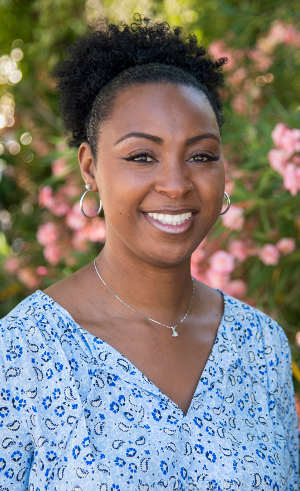
UKIAH, Calif. – MCHC Health Centers dentist Dr. Connie Austin not only provides excellent dental care, she inspires disadvantaged youngsters who have big dreams.
Austin is a shining example of what can happen when you pursue your goals relentlessly, and her story is a reminder of the importance of a mentor in children’s lives.
Austin grew up in Mississippi with two sisters, cared for by a single mother who did not go to college, but who championed her children’s educations nonetheless.
Austin did well in high school and had dreams of becoming a dentist, but when she realized she had to continue with physics in college, she did not have much confidence, so she began reassessing her goals – considering becoming a dental hygienist rather than a dentist.
“If I’d had a counselor or someone to encourage me, I probably would have continued on my original path, but I was scared. I hated physics. If I’d known how much harder it would be to learn it later in life, I would definitely have stuck with it in high school,” she said.
Shortly after beginning college, she fell in love and began thinking about getting married and starting a family, and that solidified her decision to forego becoming a dentist.
“I didn’t want to wait forever to start a family,” she explained. She got married, but never had children, and seven years later she and her husband divorced.
By this time, she was well established in her career as a dental hygienist. She continued to work for a dentist in Houston, Texas for years, while one dentist periodically nudged her – asking her if she was happy, telling her she was a great hygienist and could certainly become a dentist.
Over time, his message sunk in; she realized the barriers to her becoming a dentist had disappeared. She had confidence that if she worked hard enough, she could pass the required courses, and she had no one to care for but herself, so she decided to go back to school.
The test to become a dentist is called the Dental Admission Test, or DAT. It is a standardized test that assesses competencies in areas important to dentistry.
The test includes four sections: Survey of the natural sciences (including biology, general chemistry and organic chemistry), perceptual ability test, reading comprehension test, and quantitative reasoning test. A person can take the DAT up to three times but must score well by the third attempt or be permanently denied.
Austin had always done well in school, so she signed up for the DAT figuring it would not be too difficult for someone who had spent the last 15 years as a dental hygienist. She did not study much and was very disappointed when she did not score high enough. The test was much harder than she anticipated.
She reasoned that if she studied, she would do much better, but working full-time and being an adult learner was more challenging than she expected. She took the test a second time, and did far better, but not well enough. It was a moment of truth: How much did she want this?
She was inspired by Randy Pausch’s book titled “The Last Lecture.” Until then, she had not put her full determination into this goal. This all changed. She studied during every lunch break. Instead of going home after work, she went to the library to study.
She decided Pausch was right: “Road blocks are for people who don’t want it bad enough.” On her last attempt on the DAT, her score improved dramatically.
During her first year in dental school, she became a National Health Corps Scholar, a prestigious scholarship program that pays for college tuition and a monthly stipend in return for service in an underserved area.
She finished dental school followed by an Advanced Education in General Dentistry residency, then began working at MCHC Health Centers in July.
She chose MCHC because she liked the community and organization. She said, “It’s a great program.”
She especially enjoys the focus on dentistry for children and also appreciates the integrated approach to care – having medical, dental and behavioral health professionals work together to help patients. “I really like the family element here,” she said.
She feels grateful that she now has the opportunity to do what she always wanted to do, and she also feels a responsibility to pay it forward.
“My mom never finished eighth grade, but all of her children went to college. She told us to shoot high,” she said, “But she didn’t always know how to help us. I never had a mentor in that sense.”
So, Austin says she wants to provide that mentorship. She currently has a foreign exchange student from the Netherlands living with her and she is making community connections, so she is in a better position to help others.
“You can always find a reason not to do something, to justify not taking action. But that doesn’t get you where you want to go,” she said.
Dr. Austin is one of two dentists who are National Health Corps Scholars at MCHC, a local non-profit organization providing access to comprehensive healthcare for people in Ukiah, Willits and Lakeport.
MCHC Operations Officer Jill Damian said, “MCHC is proud to bring compassionate, well-trained providers to our region,” and she noted that all MCHC health centers accept Partnership (Medi-Cal), Medicare, Covered California insurance and other insurance.
Learn more at www.mchcinc.org.
- Details
- Written by: Elizabeth Larson
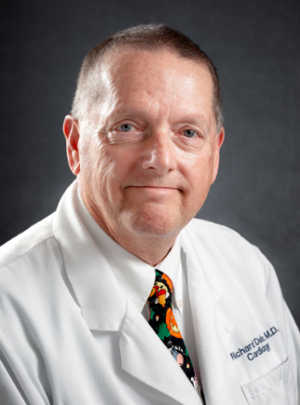
LAKEPORT, Calif. – Sutter Lakeside Community Clinic recently welcomed Richard Deits, MD, to its roster of providers.
Dr. Deits, a heart specialist, is board-certified in cardiology and internal medicine, and has nearly 40 years of experience in practice.
He diagnoses and treats cardiovascular disease, as well as helps patients manage chronic conditions such as high blood pressure and elevated cholesterol levels.
He joins Dr. John Minotti and Dr. Jaime Molden in providing cardiac care to Lake County.
Dr. Deits’ original career was as an electrical engineer; his work with the government led him to discover the intricacies of human physiology.
“I found that the human body was the most impressive piece of engineering I’d ever seen,” said Deits. “To figure it out, I had to go to medical school.”
He received his MD from D Geffen School of Medicine – UCLA, completed his internal medicine residency at St. Mary Medical Center (Long Beach), and cardiology training and fellowship at Harbor – UCLA Medical Center (Torrance).
Prior to joining Sutter Lakeside Community Clinic, Dr. Deits has been in solo practice in Los Angeles and group practice in Orange County, and has served as the COO and vice president of an Electronic Medical Records company in Pasadena, Calif.
His most recent work prior to coming to Lake County was as a member of Oak Hills Medical Corporation in Bakersfield.
Dr. Deits is accepting new patients.
To schedule an appointment, call Sutter Lakeside Community Clinic at 707-263-6885.