
Health
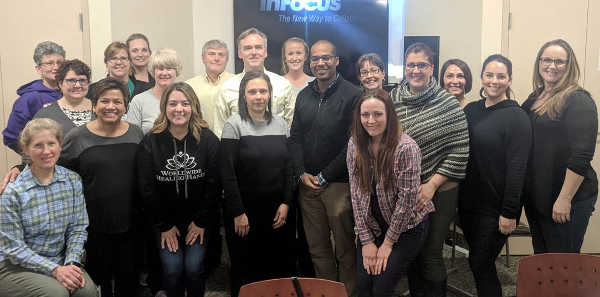
LAKEPORT, Calif. – On March 21 Dr. Scott Witt spent time getting ready for an important date.
Dr. Witt, who normally works at Sutter Santa Rosa Regional Hospital, packed up his car, as he does every six months, and drove to Lakeport to spend two hours with obstetricians and nurses who care for patients at the Sutter Lakeside Hospital Family Birth Center.
Dr. Witt is a perinatologist – a special kind of obstetrician who has additional training in managing women with high-risk pregnancies or complications during pregnancy.
Also driving in for this meeting was Dr. Regina Arvon, a neonatologist from California Pacific Medical Center in San Francisco. A neonatologist is a special kind of pediatrician who has had additional training in the care of sick or premature newborns.
After everyone arrived and exchanged handshakes and hugs the group began the case conference.
Sutter Lakeside Hospital’s Family Birth Center team presented complex and unusual patient cases for the group to review, offering a chance for the entire care team – from floor nurses to specialists who usually communicate via telemedicine – to glean learning opportunities.
“Building relationships between our team and specialists within the system – and sharing knowledge between these groups – is at the heart of our philosophy,” said Jackie Rad, RN, MSN, Family Birth Center manager.
The biannual, retrospective review of cases began in 1997 and has grown to include three main modes of knowledge sharing and consultation.
Case conferences
Case conferences bring together a team of nurses and doctors – which might include anesthesiologists, pediatricians and primary care physicians in addition to the specialties listed above – to discuss best practices, review treatment plans, and develop recommendations.
“Supporting all of these specialists onsite full time would be impossible for a Critical Access Hospital,” said Rad. “By holding case conferences, we build the relationships necessary to constantly improve, collaborate, learn and break down siloes of care, improving patient outcomes. Putting faces to the names of interdisciplinary team members at different affiliates gives our nurses and doctors the confidence that when they need a second opinion, the physician on the other line is familiar with our team’s skills and limitations.”
Education
“Medical knowledge can sometimes get trapped among specialists,” said Dr. Derrick Barnes, an obstetrician (or OB/GYN) who practices full-time at Sutter Lakeside. “This is a shame because OB/GYNs are perfectly capable of caring for pregnant women with gestational diabetes, those who are HIV positive, or have other complications as long as we receive the corresponding additional education on these topics.”
This type of education won’t turn an obstetrician into a perinatologist or neonatologist, but that’s not the goal.
“The goal is to help moms and babies get and stay healthy, here in their home county if at all possible” said Barnes. “To do that everyone needs to work at the top of their license and stretch their skills within their scope of practice.”
Telemedicine
Technology has been used for the past decade to connect rural health care professionals with specialists at academic medical centers.
“In telemedicine, doctors treat patients via video conference, just as they would in a clinic setting,” says Rad. When case conferences or education aren’t enough, moms and babies receive one-on-one consultations from perinatologists and neonatologists through the Sutter Health network – thanks to years of investment in telemedicine.
Bringing it all together
“The approach Sutter is taking allows me to provide specialist-backed care – in a trusted local setting,” said Dr. Bryan Murphy, an OB/GYN who practices full time at Sutter Lakeside.
This approach not only benefits the individual patients that have greater access to perinatologists and neonatologists without leaving Lake County; other providers who participate benefit too.
“Everyone is a teacher and a learner. Obstetricians can spot things that perinatologists and neonatologists may miss and vice versa,” said Rad. “The results, such as telemedicine advancement, hands-on learning and maintaining best practices ultimately result in the best care possible for our patients.”
- Details
- Written by: Morgen Wells
SACRAMENTO – California Attorney General Xavier Becerra, joined by 15 attorneys general, on Monday filed a motion to intervene in Texas et al. v. United States et al., a lawsuit filed in federal district court in Texas which seeks to dismantle the Affordable Care Act, or ACA.
The Texas lawsuit imperils health care coverage and funding for all Americans, particularly more vulnerable groups like seniors, children and people with chronic medical conditions or disabilities.
Leading the coalition, Attorney General Becerra seeks to enter the lawsuit to vigorously defend the ACA and the millions of families across the country who rely on it for affordable care.
“The Texas lawsuit is based on a dubious legal claim with the sole goal of stripping Americans of their healthcare,” said Attorney General Becerra. “In California, millions of people receive quality, affordable healthcare under the ACA, many for the first time. In addition, the proponents of the Texas lawsuit want to eliminate the preventive care and prescription drug benefits for working families, seniors and people with disabilities. To roll back the clock and risk the health of millions of Americans is irresponsible and dangerous. We can’t and we won’t go back.”
The Texas lawsuit petitioned the federal court to stop Medicaid expansion; end tax credits that help people afford insurance; allow insurance companies to deny coverage to people with pre-existing conditions; take away seniors’ prescription drug discounts; strip funding from our nation’s public health system, including work to combat the opioid epidemic; and much more.
If the ACA were terminated, the state of California would stand to lose $160.2 billion in health care for its people.
In total, Americans living in the states seeking to intervene could lose half a trillion dollars in healthcare funding if this lawsuit succeeded.
Texas filed the lawsuit in the United States District Court for the Northern District of Texas, Fort Worth Division on February 28, 2018 and was joined by 19 other states.
Texas alleges that the ACA is no longer constitutional due to the passage of the Republican tax break bill, passed in December 2017, which zeroed out the penalty payment due under the ACA’s individual mandate for those who could afford to pay for their health insurance but failed to do so.
In the motion to intervene, Attorney General Becerra alleges that the ACA has not been repealed by the passage of the Republican tax break bill, and its constitutionality has been upheld by the Supreme Court:
The ACA has survived nearly 70 unsuccessful repeal attempts in Congress since it was passed in 2010.
In National Federation of Independent Businesses v. Sebelius (2012), the Supreme Court ruled that the individual mandate is constitutional.
The state of California and every state in the United States would suffer grave harm if the plaintiffs achieved the goals of their lawsuit.
Joining Attorney General Becerra in filing today’s motion are the Attorneys General of: Connecticut, Delaware, Hawai’i, Illinois, Kentucky, Massachusetts, North Carolina, New Jersey, New York, Oregon, Rhode Island, Virginia, Vermont, Washington and the District of Columbia.
The Texas lawsuit imperils health care coverage and funding for all Americans, particularly more vulnerable groups like seniors, children and people with chronic medical conditions or disabilities.
Leading the coalition, Attorney General Becerra seeks to enter the lawsuit to vigorously defend the ACA and the millions of families across the country who rely on it for affordable care.
“The Texas lawsuit is based on a dubious legal claim with the sole goal of stripping Americans of their healthcare,” said Attorney General Becerra. “In California, millions of people receive quality, affordable healthcare under the ACA, many for the first time. In addition, the proponents of the Texas lawsuit want to eliminate the preventive care and prescription drug benefits for working families, seniors and people with disabilities. To roll back the clock and risk the health of millions of Americans is irresponsible and dangerous. We can’t and we won’t go back.”
The Texas lawsuit petitioned the federal court to stop Medicaid expansion; end tax credits that help people afford insurance; allow insurance companies to deny coverage to people with pre-existing conditions; take away seniors’ prescription drug discounts; strip funding from our nation’s public health system, including work to combat the opioid epidemic; and much more.
If the ACA were terminated, the state of California would stand to lose $160.2 billion in health care for its people.
In total, Americans living in the states seeking to intervene could lose half a trillion dollars in healthcare funding if this lawsuit succeeded.
Texas filed the lawsuit in the United States District Court for the Northern District of Texas, Fort Worth Division on February 28, 2018 and was joined by 19 other states.
Texas alleges that the ACA is no longer constitutional due to the passage of the Republican tax break bill, passed in December 2017, which zeroed out the penalty payment due under the ACA’s individual mandate for those who could afford to pay for their health insurance but failed to do so.
In the motion to intervene, Attorney General Becerra alleges that the ACA has not been repealed by the passage of the Republican tax break bill, and its constitutionality has been upheld by the Supreme Court:
The ACA has survived nearly 70 unsuccessful repeal attempts in Congress since it was passed in 2010.
In National Federation of Independent Businesses v. Sebelius (2012), the Supreme Court ruled that the individual mandate is constitutional.
The state of California and every state in the United States would suffer grave harm if the plaintiffs achieved the goals of their lawsuit.
Joining Attorney General Becerra in filing today’s motion are the Attorneys General of: Connecticut, Delaware, Hawai’i, Illinois, Kentucky, Massachusetts, North Carolina, New Jersey, New York, Oregon, Rhode Island, Virginia, Vermont, Washington and the District of Columbia.
- Details
- Written by: Editor





 How to resolve AdBlock issue?