 How to resolve AdBlock issue?
Health
- Details
- Written by: Editor
LAKEPORT, Calif. – Lake County is a wonderful place to live and work, but it’s also home to a host of health care challenges.
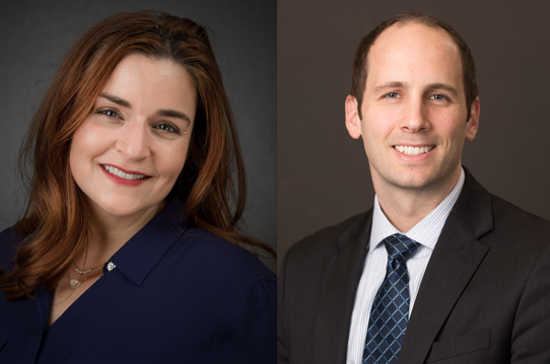
During the recent National Rural Health Day on Nov. 16, Leeann Hadgis, director of Sutter Lakeside ambulatory clinics, and Dan Peterson, chief administrative officer for Sutter Lakeside Hospital reflect on successes the community can celebrate, and reaffirm Sutter’s commitment to caring for Lake County residents.
Location, location, location
Rural residents know that sometimes just getting to a clinic is tough. Currently Sutter operates two rural health clinics: Sutter Lakeside Family Medicine Clinic at 5176 Hill Road East and Sutter Lakeside Community Clinic at 5196 Hill Road East, Suite 300 in Lakeport.
Together these clinics provide primary care to 10,000 patients a year and allow many more patients to see specialists in the disciplines of cardiology, podiatry, obstetrics and sports medicine.
“I am incredibly proud of the care delivered at these two care centers and even more delighted to announce that next year we will be able to serve our community better. In April 2018 our Family Medicine Clinic will relocate to a new facility in Lakeport – at Creekside Medical Plaza off of Highway 29,” said Hadgis.
The new facility will offer a modern and relaxing atmosphere thanks to the work of a design team from Boulder Associates and photography from local artists.
The building’s convenient location – right in town – will make it easier for families to access providers, and receive comprehensive care. New features include a private consultation room where a diabetes educator can meet with patients and an on-site phlebotomist who can draw a patient’s blood for diagnostic tests right after an appointment.
Time is of the essence
Traveling to the doctor’s office isn’t the only challenge. Many physicians are booked so far in advance that it’s nearly impossible to get an appointment.
“At Sutter Lakeside’s clinics our goal is for you to get an appointment with your primary doctor no later than 2 days from the day you call – and we’ve implemented some important changes to meet this goal,” Hadgis said.
Every day Sutter’s clinics have four appointments – per primary care provider – reserved for same day scheduling.
“We also prioritize personalized care – which means that 85 percent of the time you will see your provider, who you have history with and who knows you,” said Peterson.
This emphasis on “continuity of care” is not only better for each patient, it also creates additional capacity, because people tend to need fewer followup visits if they are seen by the same doctor every time.
Sutter’s focus on scheduling is the result of their participation in a 10-month Advanced Access Collaborative, sponsored by Partnership Health Plan.
“Learning and adopting new ways of working is just one way we are pioneering better care for our community,” Peterson said.
To read more about Sutter Lakeside Hospital and its two rural health clinics visit www.sutterhealth.org/lakeside.
- Details
- Written by: Editor
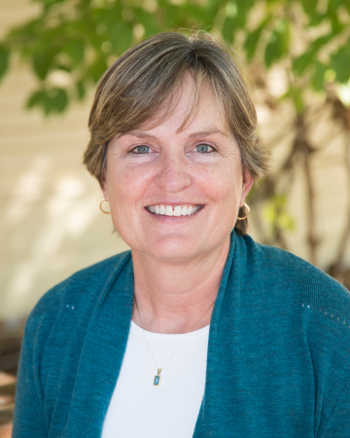
UKIAH, Calif. – MCHC Health Centers is pleased to announce the addition of Karen Oslund to its board of directors.
Oslund is the executive director of the Cancer Resource Centers of Mendocino County, or CRCMC, and a long-time county resident who has contributed to her community for years.
Oslund helped establish the Willits Kids Club, a nonprofit agency that serves children through after-school and summer programs, and she continues to serve as a board member for the organization.
From 1999 to 2008, she served on the Willits City Council and from 2002 to 2004 she was mayor of Willits. During this time she was also president of the Redwood Empire Chapter of the League of California Cities.
Before joining the CRCMC, Oslund worked for Ukiah Valley Medical Center in the medical records department after managing her own medical transcription business.
“We are so pleased to have Karen join our board,” said MCHC CEO Carole Press. “The Cancer Resource Center and MCHC serve many of the same patients, and Karen understands the needs and challenges they face.”
Oslund said she was immediately impressed by MCHC when she toured its facilities in Ukiah, Willits and Lakeport.
“The facilities are modern, clean, and well designed,” she said. “And MCHC’s leaders really understand the importance of reducing barriers to care. This is essential. The sooner clients are referred to us after their initial cancer diagnosis, the faster we can help them choose a course of treatment that works best for them. With cancer, as with many health issues, the earlier people begin treatment, the better their outcomes.”
CRCMC does not charge clients for services, allowing anyone in our community to receive assistance with patient navigation, to attend support groups, to borrow resources from the lending library, or to take advantage of CRCMC’s transportation assistance.
Oslund was invited to apply for MCHC Health Centers board membership by fellow board member Jim Marrill of the Willits Community Services and Food Bank.
Oslund said she likes the fact that MCHC strives to find board members based on their ability to reflect the organization’s patient population, blending men and women and people of various ages and socio-economic statuses.
“I’m honored to serve on MCHC’s board. I think when people at our organizations build strong relationships, we’ll be able to better serve people facing cancer in our communities,” she said.
MCHC Health Centers is a local nonprofit organization providing access to comprehensive healthcare for people in Ukiah, Willits and Lakeport.
All MCHC health centers accept Medi-Cal, Medicare, Covered California insurance and other insurance.
Learn more at www.mchcinc.org.
- Details
- Written by: Editor
MIDDLETOWN, Calif. – A presentation will be held this weekend on the topic of electromagnetic pollution and its impacts on health.
The presentation by Paul Doyon will take place from 2 to 5 p.m. Saturday, Nov. 25, in the community room at the Middletown Library, 21256 Washington St.
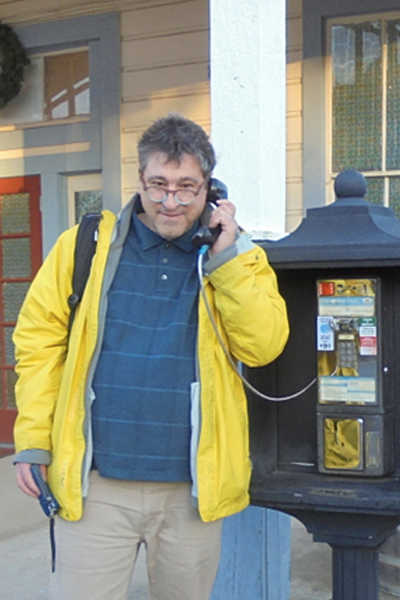
Doyon is a writer, researcher, educator and a building biology certified electromagnetic radiation specialist who has been researching the health effects connected to the increasing levels of ambient electromagnetic fields in our everyday environments for the past 12 years since he himself became deathly ill living in the vicinity of several cell towers back in 2005.
In this presentation, entitled "What You Are Not Being Told About Electromagnetic Pollution and its Effects on Public Health," Doyon will discuss:
– Different forms of electromagnetic radiation;
– The top EMF research studies;
– How EMFs are having an adverse effect on human health and the environment;
– The laws regarding EMFs in the USA and other countries, and what actions you can take to protect yourself and your loved ones.
With the proposed placement of a cell tower in Hidden Valley Lake, this is a must-see presentation for residents of not only Hidden Valley Lake, but also the wider Lake County community.
Donations are appreciated.
For more information, email Doyon at
- Details
- Written by: Editor
Bacteria can be found in foods such as meat and poultry and may cause illness if insufficiently cooked, inadequately cooled or improperly handled.
Also, it is important to carefully wash fresh produce, and not allow uncooked food to come in contact with raw meat or poultry.
“We can help ensure that foodborne illnesses don’t ruin our holidays, or any day, by properly preparing and handling meat, poultry and other foods,” said CDPH Director and State Public Health Officer Dr. Karen Smith.
Most foodborne diseases can be prevented by:
– Washing hands with soap and warm water before and after food preparation, and especially after handling raw foods.
– Cleaning all work surfaces, utensils and dishes with hot soapy water and rinsing with hot water after each use.
– Cooking food thoroughly and refrigerating leftovers promptly between meals.
– Preventing cross-contamination (from raw foods to foods that are ready to eat).
– Keeping hot foods hot and cold foods cold.
Symptoms of foodborne disease can include diarrhea, which may be bloody, vomiting, abdominal cramps and fever. Most infected people recover from foodborne illnesses within a week.
Some, however, may develop complications requiring hospitalization. Young children, the elderly, pregnant women and people with weakened immune systems are at highest risk for potentially life-threatening complications.
For more information about preparing and storing food, visit the following CDPH links:
– Food Safety Tips for Holiday Feasts;
– Safe Food Handling Practices;
– Foodborne Pathogens and Illnesses;
– Controlling Food Allergens.
Additional information on food safety is available through the U.S. Department of Agriculture Meat and Poultry hotline at 1-888-MPHotline (1-888-674-6854).
Consumers can also access the national Partnership for Food Safety Education’s “Fight BAC!” (bacteria) Web page.