 How to resolve AdBlock issue?
Health
- Details
- Written by: Editor
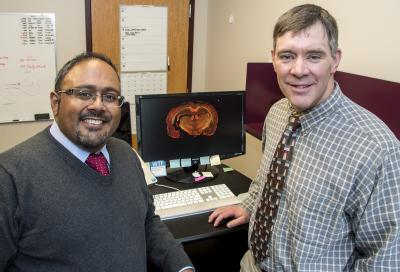
MISSOULA, Mont. – Athletes, members of the military and others suffering from traumatic brain injury may benefit from research conducted by two University of Montana faculty members through a new $300,000 grant awarded by General Electric Co. and the National Football League.
GE and the NFL have announced 16 winners in the first stage of the $20 million Head Health Challenge.
UM Research Assistant Professors Sarj Patel and Tom Rau were among the challenge winners selected to speed diagnosis and improve treatment for mild traumatic brain injury.
Other projects were selected from both biotechnology companies and leading research institutions, including Johns Hopkins Medical School; the University of California, San Francisco; and Weill Cornell Medical College.
The goal of the Head Health Challenge is to improve the safety of athletes, members of the military and society overall.
Winners were selected from more than 400 entries from 27 countries, after having been reviewed and nominated by a panel of leading health care experts in brain research, imaging technologies and advocates for advances in brain research.
GE and the NFL will provide mentorship, access to GE researchers and industry thought leaders, with the opportunity to win an additional $500,000 award in 2015.
Patel and Rau conduct research at UM's Department of Biomedical and Pharmaceutical Sciences in the Skaggs School of Pharmacy.
They are working to determine blood-based biomarkers that indicate how the brain reacts following a traumatic brain injury.
First phases of their research, which was funded by Missoula-based Montana Neuroscience Institute and the state-based Montana Board of Research & Commercialization Technology, have shown that TBI results in changes in how the brain operates and in levels of proteins and ribonucleic acids. Identifying specific biomarkers will show how TBI changes the brain and could help doctors with diagnosis and treatment.
"This award will allow us to immediately begin research to identify biomarkers of injury occurring in the brains of athletes or military personnel," Patel said. "We will collect blood samples from people who have suffered from a traumatic brain injury to see if we can detect these molecules and ultimately determine how long it might take for them to return to play or service."
The researchers have a collaborative agreement with St. Patrick Hospital in Missoula to collect samples from emergency room patients, and according to Patel, they are in early discussion with UM's Department of Athletics to see if UM athletes could be included in the research.
Rau said they already have worked with human samples in collaboration with Dr. Ann McKee, a professor at Boston University and co-director of the Center for the Study of Traumatic Encephalopathy.
Using samples from BU's human brain bank, which includes brains from deceased patients, they were able to identify similar biomarkers of TBI based on their previous research with animals.
"That's part of what got us the award," Rau said. "We are far enough along with animals and with humans that we could convince them this was a worthwhile venture."
He said the research may help solve the mystery of why a localized brain injury causes damage throughout the entire brain. Because proteins work in the body as transporters and catalysts, a disruption in one area could cause farther-reaching problems.
"The award highlights the talent of our young investigators," said Richard Bridges, Regents Professor and chair of UM's Department of Biomedical and Pharmaceutical Sciences. "It points to how we've been building momentum and critical mass in the study of traumatic brain injury and neuroscience.
"It also provides graduate and undergraduate students real-world experience in cutting-edge neuroscience research, allowing them the opportunity to participate in the discovery process," Bridges said. "It's the most important and exciting aspect of the sciences, and we need to deliver those experiences to our students."
Launched in March 2013, the Head Health Challenge is part of the Head Health Initiative, a four-year, $60 million collaboration between GE and the NFL.
The initiative includes a $40 million research and development program from the NFL and GE to evaluate and develop next-generation imaging technologies to improve diagnosis that would allow for targeting treatment therapy for patients with mild traumatic brain injury.
- Details
- Written by: Editor
NORTHERN CALIFORNIA – Gov. Jerry Brown’s proposed state budget for fiscal year 2014-2015 contains a proposal to expand pregnancy services for Medi-Cal recipients.
Partnership HealthPlan of California (PHC) is pleased to join that effort, as a managed care organization which already offers its members enhanced pregnancy services.
PHC’s Growing Together Peri-natal Program (GTPP) is a free program for pregnant women with Medi-Cal coverage to ensure good health for babies and their mothers.
GTPP is designed to educate and incentivize expectant mothers through coordinated care involving PHC, its pregnant members and medical providers.
Nutritional and dietary education, breastfeeding classes, prenatal appointment reminders and telephone support are components of GTPP.
Gift cards are awarded to women who enroll in and complete the program and free breast pumps are provided to new mothers who choose to go to school or back to work. All GTPP services are available in both English and Spanish.
“We are very happy to offer this important program to pregnant women with Partnership Medi-Cal coverage,” said Jack Horn, CEO of Partnership HealthPlan of California. “A healthy start in life is a major contributing factor to a healthy life overall. Whatever we can do to help make that happen is worth the effort.”
While all pregnant women with Partnership Medi-Cal qualify for the program, extra attention is paid to women with high-risk pregnancies. PHC works closely with women at risk for gestational diabetes, hypertension and other chronic conditions. Drug counseling, including smoking and drinking cessation is also offered in the program.
For more information on the Growing Together Peri-natal Program, call PHC at 1-800-863-4155.
PHC began operating in 1994 and serves Medi-Cal recipients in 14 northern California counties: Del Norte, Humboldt, Lake, Lassen, Marin, Mendocino, Modoc, Napa, Shasta, Siskiyou, Solano, Sonoma, Trinity and Yolo.
Additional information can be found at www.partnershiphp.org .
- Details
- Written by: Editor
COLUMBUS, Ohio – Practicing yoga for as little as three months can reduce fatigue and lower inflammation in breast cancer survivors, according to new research.
The more the women in the study practiced yoga, the better their results.
At the six-month point of the study – three months after the formal yoga practice had ended – results showed that on average, fatigue was 57 percent lower in women who had practiced yoga compared to the non-yoga group, and their inflammation was reduced by up to 20 percent.
The participants had completed all breast cancer treatments before the start of the study and only yoga novices were recruited for the randomized, controlled clinical trial.
Participants practiced yoga in small groups twice a week for 12 weeks. Women making up the control group were wait-listed to receive the same yoga sessions once the trial was over. During the study, they were instructed to go about their normal routines and not to do yoga.
“This showed that modest yoga practice over a period of several months could have substantial benefits for breast cancer survivors,” said Janice Kiecolt-Glaser, professor of psychiatry and psychology at The Ohio State University and lead author of the study.
“We also think the results could easily generalize to other groups of people who have issues with fatigue and inflammation,” said Kiecolt-Glaser, also an investigator in Ohio State's Comprehensive Cancer Center and the Institute for Behavioral Medicine Research.
Though many studies have suggested that yoga has numerous benefits, this is the largest known randomized controlled trial that includes biological measures, Kiecolt-Glaser said. Researchers recruited 200 women for the study.
The study is published in the Journal of Clinical Oncology.
The research team focused on breast cancer survivors because the rigors of treatment can be so taxing on patients.
“One of the problems they face is a real reduction in cardiorespiratory fitness. The treatment is so debilitating and they are so tired, and the less you do physically, the less you're able to do. It's a downward spiral,” Kiecolt-Glaser said. “That's one reason we think there are higher levels of inflammation in cancer survivors, meaning that an intervention that reduces inflammation could potentially be very beneficial.”
Chronic inflammation is linked to numerous health problems, including coronary heart disease, Type 2 diabetes, arthritis and Alzheimer's disease, as well as the frailty and functional decline that can accompany aging.
All women in the study completed a number of surveys assessing their fatigue, energy level, depressive symptoms, sleep quality, physical activities and food consumption. They also gave baseline blood samples that researchers used to measure levels of several inflammation-related proteins.
Participants ranged in age from 27 to 76 and were two months to three years past the latest surgical or radiation treatment. Kiecolt-Glaser and colleagues deliberately selected women of a variety of ages, stages of cancer (between 0 and 3A) and treatment methods so the results could be generalized to a broad population of cancer survivors, she said.
Each yoga group included between four and 20 women who practiced the same poses during 90-minute sessions twice a week. Researchers encouraged the women to practice at home, as well; participants logged their total weekly practice time.
Immediately after the active phase of the trial ended, the women in the yoga group reported, on average, a 41 percent drop in fatigue and a 12 percent higher vitality score compared to the non-yoga group.
To gauge the participants' inflammation levels, the scientists measured the activation of three proteins in the blood that are markers of inflammation – called pro-inflammatory cytokines. They generated the protein activity by injecting a compound that stimulated an immune response. The proteins are interleukin-6 (IL-6), interleukin-1 beta (IL-1B) and tumor necrosis factor-alpha (TNF-a).
At the three-month point immediately after the yoga sessions ended, all three pro-inflammatory cytokine levels were lower, on average, in the yoga group compared to the non-yoga group: TNF-a by 10 percent, IL-6 by 11 percent and IL-1B by 15 percent.
“We were really surprised by the data because some more recent studies on exercise have suggested that exercise interventions may not necessarily lower inflammation unless people are substantially overweight or have metabolic problems,” Kiecolt-Glaser said. “In this group, the women didn't lose weight, but we saw really marked reductions in inflammation. So this was a particularly striking finding biologically.”
A secondary analysis showed that more frequent yoga practice produced larger changes in fatigue, vitality and depressive symptoms as well as between an average 4 to 6 percent reduction in two of the three pro-inflammatory cytokines. The yoga group also reported significantly improved sleep compared to the control group.
“Yoga has many parts to it – meditation, breathing, stretching and strengthening. We think the breathing and meditation components were really important in terms of some of the changes we were seeing,” Kiecolt-Glaser said.
Revisiting the participants again at the six-month point, three months after the intervention was complete, the researchers discovered that health measures in the yoga group had continued to improve in that window of time: Fatigue was 57 percent lower and inflammation was between 13 and 20 percent lower than the non-yoga group.
“We think improved sleep could be part of the mechanism of what we were seeing. When women were sleeping better, inflammation could have been lowered by that,” Kiecolt-Glaser said. “Reducing fatigue enables women to engage in other activities over time. So yoga may have offered a variety of benefits in addition to the yoga exercises themselves.”
- Details
- Written by: Editor
Feeling extreme loneliness can increase an older person's chances of premature death by 14 percent, according to research by John Cacioppo, professor of psychology at the University of Chicago.
Cacioppo and his colleagues' work shows that the impact of loneliness on premature death is nearly as strong as the impact of disadvantaged socioeconomic status, which they found increases the chances of dying early by 19 percent. A 2010 meta-analysis showed that loneliness has twice the impact on early death as does obesity, he said.
Cacioppo, the Tiffany & Margaret Blake Distinguished Service Professor in Psychology at the University, joined other scholars at a seminar on "The Science of Resilient Aging" Feb. 16 at the American Association for the Advancement of Science Annual meeting in Chicago.
The researchers looked at dramatic differences in the rate of decline in physical and mental health as people age. Cacioppo and colleagues have examined the role of satisfying relationships on older people to develop their resilience, the ability to bounce back after adversity and grow from stresses in life.
The consequences to health are dramatic, as feeling isolated from others can disrupt sleep, elevate blood pressure, increase morning rises in the stress hormone cortisol, alter gene expression in immune cells, and increase depression and lower overall subjective well-being, Cacioppo pointed out in a talk, "Rewarding Social Connections Promote Successful Aging."
Cacioppo, one of the nation's leading experts on loneliness, said older people can avoid the consequences of loneliness by staying in touch with former co-workers, taking part in family traditions, and sharing good times with family and friends – all of which gives older adults a chance to connect others about whom they care and who care about them.
"Retiring to Florida to live in a warmer climate among strangers isn't necessarily a good idea if it means you are disconnected from the people who mean the most to you," said Cacioppo. Population changes make understanding the role of loneliness and health all the more important, he explained.
"We are experiencing a silver tsunami demographically. The baby boomers are reaching retirement age. Each day between 2011 and 2030, an average of 10,000 people will turn 65," he said. "People have to think about how to protect themselves from depression, low subjective well-being and early mortality."
Although some people are happy to be alone, most people thrive from social situations in which they provide mutual support and develop strong rapport. Evolution encouraged people to work together to survive and accordingly most people enjoy companionship over being alone.
Research by Cacioppo and his colleagues has identified three core dimensions to healthy relationships – intimate connectedness, which comes from having someone in your life you feel affirms who you are; relational connectedness, which comes from having face-to-face contacts that are mutually rewarding; and collective connectedness, which comes from feeling that you're part of a group or collective beyond individual existence.
It is not solitude or physical isolation itself, but rather the subjective sense of isolation that Cacioppo's work shows to be so profoundly disruptive. Older people living alone are not necessary lonely if they remain socially engaged and enjoy the company of those around them. Some aspects of aging, such as blindness and loss of hearing, however, place people at a special risk for becoming isolated and lonely, he said. —William Harms