 How to resolve AdBlock issue?
Health
- Details
- Written by: Adventist Health Clear Lake
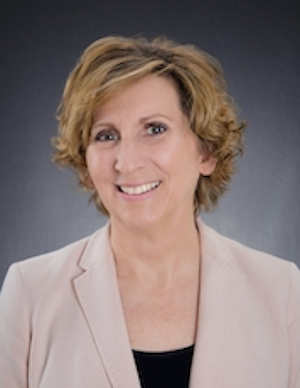
CLEARLAKE, Calif. — Adventist Health announced the appointment of Colleen Assavapisitkul, MSN, RN, CENP, HACP, as president at Adventist Health Clear Lake.
In this role, she will lead the work of Adventist Health Clear Lake in serving the residents of Lake County and contribute to strategic growth while ensuring that strategies align with and support daily operations.
“With a strong background in nursing and leadership, we are confident in the knowledge, capability and dedication Colleen will bring to this role,” said Kerry Heinrich, president and CEO of Adventist Health.
Assavapisitkul’s career in health care includes broad experience in many clinical settings and locations, including Hawaii, Oregon, Washington and Bangkok, Thailand.
She has served with Adventist Health Clear Lake in leadership roles for over 10 years, and as vice president of patient care for the hospital since 2016.
Assavapisitkul’s leadership with the organization began in 2011 when she joined as director of quality/infection control. She then served as administrative director of patient care before being promoted to chief nursing officer in 2014.
"Over the 10 years I’ve worked in Clearlake leading the care of our patients, I’ve been inspired and motivated by our employees, providers, and partners and I look forward to building on our success,” Assavapisitkul said. “As we continue our journey to achieve our vision for Lake County and beyond, we will leverage past achievements and continue to pave the way for an excellent experience for our patients, their families, and our entire community.”
During her time with Adventist Health Clear Lake, Assavapisitkul has been instrumental in opening a new emergency department, improving quality scores and building a strong clinical team focused on providing leading care.
“I’m thankful to Colleen for stepping into this role,” said Judson Howe, president of Adventist Health’s North Coast Network. “Having worked with Colleen in neighboring Mendocino County, I have watched and admired Colleen’s abilities to lead our exceptional team through many milestones and challenges. With our continued focus on alignment and strengthening our hospitals individually and collectively as a network, I’m grateful to have Colleen continuing to provide stability and leadership."
- Details
- Written by: Elizabeth Larson
The event will be presented by Dr. Yazmar Sevilla-Perez (physical therapist) and Dr. Wilbert Perez (physician).
They will be discussing women's issues, such as postpartum, menopause and osteoporosis, and will demonstrate exercises that can help with such conditions.
Come and see how physical therapy and God's Word can improve your quality of life.
The church is located at 21640 Highway 29.
- Details
- Written by: Lakeport Seventh-day Adventist Church
The event, titled, “To everything there is a season,” will take place from 2 to 4 p.m. Sunday, May 15, at the church, located at 1111 Park Way (at the Park Way exit of Highway 29).
The seminar will feature Dr. Andrew Chung, MD and U.C. Master Gardener Gabriele O’Neill.
Dr. Chung will focus on plant and herb-based protocols that boost immunity.
O’Neill will focus on gardening tips to increase productivity, decrease water consumption, tips on planting timing, tips for planting within limited space, and tips on growing herbs with nutritional benefit in our area.
The seminar is sponsored by Spectrum of L.I.G.H.T.
- Details
- Written by: County of Lake
The quarantine is in place to protect the public against poisoning as the toxins found in mussels can lead to severe illness and death.
Previous outbreaks have involved residents of inland counties as well as those along the coast.
This order does not apply to mussels harvested from Clear Lake. Neither does it apply to commercially sold clams, mussels, scallops or oysters. State-certified commercial shellfish harvesters or dealers are permitted to sell these products which are subject to frequent mandatory testing to ensure they are safe for consumers.
Paralytic shellfish poisoning, or PSP, and domoic acid poisoning, or DAP, are linked to microscopic phytoplankton which become concentrated in filter-feeding animals.
PSP affects the human central nervous system producing a tingling sensation around the mouth and fingertips within a few minutes to a few hours after eating toxic shellfish.
DAP can occur within 30 minutes to 24 hours after eating toxic seafood. More information about the annual quarantine, PSP, and DAP can be found on the California Department of Public Health’s Annual Mussel Quarantine Frequently Asked Questions webpage here.
The annual quarantine lasts from May 1 through Oct. 31. Neighboring counties have previously extended the quarantine order after monitoring programs continued to detect elevated levels of domoic acid and high numbers of algae that produce this toxin.
To receive updated information about shellfish poisoning and the annual mussel quarantine, call the California Department of Public Health’s toll-free Biotoxin Information Line at 1-800-553-413 or visit the California Department of Public Health Annual Mussel Quarantine Frequently Asked Questions or the agency’s Marine Biotoxin Monitoring Program.