 How to resolve AdBlock issue?
Health
- Details
- Written by: Editor
NORTH COAST, Calif. – Frank R. Howard Memorial Hospital (HMH) has received national recognition in patient satisfaction with a 2013 Path to Excellence award.
HMH was recognized at the 19th Annual National Research Corporation’s International Patient-Centered Care Symposium in Baltimore, Maryland on Sunday, Sept. 22.
HMH was one of two hospitals, in its size category, to be recognized as “most improved.”
As a 2013 award recipient, HMH is among a select group of health care innovators leading the way on the path to patient-centered care.
“Howard Memorial Hospital already has great hospital rating scores,” said Chief Executive Officer Rick Bockmann. “This award is significant in that it recognizes that we’ve taken these great scores to a whole new level. Our journey to become a Planetree designated hospital has provided a framework to implement changes and make adjustments to improve our patient and family care.”
National Research selected Path to Excellence award recipients based on their achievement within categories that patients have identified as being most important to the quality of their care. The award is only earned by those organizations that are ranked by patients as being a top performer.
“National Research congratulates Howard Hospital for their outstanding achievements,” said Susan Henricks, president and chief operating officer of National Research. “We understand that driving improvement changes across an organization takes an incredible amount of resources and dedication – and Howard Hospital has done exactly that. They are committed to providing the best health care possible for their patients and families.”
- Details
- Written by: Editor
LAKE COUNTY, Calif. – It’s “flu” season and the Lake County Public Health Division has announced its 2013-14 community influenza vaccination clinics.
Getting vaccinated is a great way to avoid getting the flu. Anyone 6 months of age or older is encouraged to get a flu vaccine.
Being careful to use good hygiene is another way to protect yourself and those around you. If you cough or sneeze, cover your nose and mouth with a tissue or the crook of your arm instead of your hands.
A virus can easily be passed from your hands to the things you touch. Wash your hands often and use an alcohol-based hand sanitizer when soap and water aren’t available. Try not to touch your face with your hands.
A virus can enter your system through the membranes of your eyes, nose and mouth. Protect yourself by avoiding close contact with anyone who is sick.
Choosing a healthful lifestyle can also help to keep you well. Getting enough sleep, eating nutritious foods, drinking plenty of water and staying physically active can help to maintain a healthy immune system. Together, we can help to decrease the spread of influenza in our community.
The symptoms of the flu include a temperature of over 100 degrees F combined with a cough, sore throat, body aches, headache and a lack of energy. If you are ill, stay home to keep from infecting others.
Each year the Lake County Public Health Division receives state-funded seasonal flu vaccine. For the 2013-14 season, 1,430 doses have been provided.
They also will be offering Tdap (Tetanus, diphtheria and pertussis) vaccines at no cost for adults 19 years of age and older.
This vaccine is recommended for anyone that has never had a Tdap vaccine and is especially important for adults who will be in close contact with young infants.
Supplies are limited, so these vaccines will be available on a first come, first served basis.
Seasonal flu vaccines are $2.
The Lake County Public Health Clinic schedule for the seasonal flu vaccines is as follows:
Clearlake
– Wednesday, Oct. 16, 10 a.m. to noon, Highlands Senior Community Center, 3245 Bowers Road.
Middletown
– Tuesday, Oct. 22, 10 a.m. to noon, Calpine Visitors Center, 15500 Central Park Road.
Lucerne
– Wednesday, Oct. 23, from 10 a.m. to 11:30 a.m., Lucerne Senior Center, 10th and Country Club Drive.
Lakeport
– Thursday, Oct. 24, 9 a.m. to 11 a.m., Seventh-day Adventist Church, 3500 Hill Road East.
– Tuesday, Oct. 29, 10 a.m. to noon, Public Health Division, 922 Bevins Court.
– Thursday, Oct. 31, from 2 p.m. to 4 p.m., Public Health Division, 922 Bevins Court.
Flu vaccinations are also available in a variety of locations such as your primary care provider and local pharmacies.
The Lake County Public Health Division wishes you all a healthy and happy fall and winter season.
Please call 1-800-794-9291 or 707-263-1090 with questions or concerns.
- Details
- Written by: Editor
The pain and itching associated with shingles and herpes may be due to the virus causing a “short circuit” in the nerve cells that reach the skin, Princeton researchers have found.
This short circuit appears to cause repetitive, synchronized firing of nerve cells, the researchers reported in the journal Proceedings of the National Academy of Sciences.
This cyclical firing may be the cause of the persistent itching and pain that are symptoms of oral and genital herpes as well as shingles and chicken pox, according to the researchers.
These diseases are all caused by viruses of the herpes family. Understanding how these viruses cause discomfort could lead to better strategies for treating symptoms.
The team studied what happens when a herpes virus infects neurons. For research purposes the investigators used a member of the herpes family called pseudorabies virus. Previous research indicated that these viruses can drill tiny holes in neurons, which pass messages in the form of electrical signals along long conduits known as axons.
The researchers' findings indicate that electrical current can leak through these holes, or fusion pores, and spread to nearby neurons that were similarly damaged, causing the neurons to fire all at once rather than as needed. The pores were likely created for the purpose of infecting new cells, the researchers said.
The investigators observed the cyclical firing of neurons in a region called the submandibular ganglia between the salivary glands and the brain in mice using a technique called 2-photon microscopy and dyes that flash brightly when neurons fire.
The team found that two viral proteins appear to work together to cause the simultaneous firing, according to Andréa Granstedt, who received her Ph.D. in molecular biology at Princeton in 2013 and is the first author on the article. The team was led by Lynn Enquist, Princeton's Henry L. Hillman Professor in Molecular Biology and a member of the Princeton Neuroscience Institute.
The first of these two proteins is called glycoprotein B, a fusion protein that drills the holes in the axon wall. A second protein, called Us9, acts as a shuttle that sends glycoprotein B into axons, according to the researchers.
“The localization of glycoprotein B is crucial,” Granstedt said. “If glycoprotein B is present but not in the axons, the synchronized flashing won't happen.”
The researchers succeeded in stopping the short circuit from occurring in engineered viruses that lacked the gene for either glycoprotein B or Us9. Such genetically altered viruses are important as research tools, Enquist said.
Finding a way to block the activity of the proteins could be a useful strategy for treating the pain and itching associated with herpes viral diseases, Enquist said. “If you could block fusion pore formation, you could stop the generation of the signal that is causing pain and discomfort,” he said.
Granstedt conducted the experiments with Jens-Bernhard Bosse, a postdoctoral research associate in molecular biology. Assistance with 2-photon microscopy was provided by Stephan Thiberge, director of the Bezos Center for Neural Circuit Dynamics at the Princeton Neuroscience Institute.
The team previously observed the synchronized firing in laboratory-grown neurons (PloS Pathogens, 2009), but the new study expands on the previous work by observing the process in live mice and including the contribution of Us9, Granstedt said.
Shingles, which is caused by the virus herpes zoster and results in a painful rash, will afflict almost one out of three people in the United States over their lifetime.
Genital herpes, which is caused by herpes simplex virus-2, affects about one out of six people ages 14 to 49 years in the United States, according the Centers for Disease Control and Prevention.
- Details
- Written by: Editor
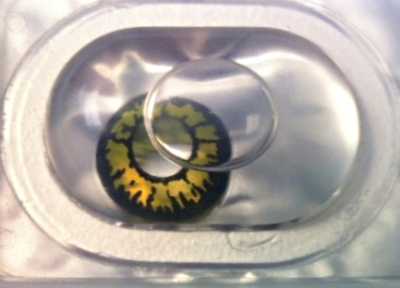
SACRAMENTO – Dr. Ron Chapman, California Department of Public Health (CDPH) director and state health officer, warned consumers about the risks associated with wearing decorative contact lenses without proper consultation with an eye care professional.
Decorative contact lenses are non-corrective lenses that do not correct vision and are intended to temporarily change the appearance of the eye.
Use of these lenses can carry serious risks, including permanent eye injury that may lead to blindness.
Advertised as color, cosmetic, fashion and theatrical contact lenses, they are especially popular around Halloween.
All decorative contact lenses currently approved or cleared under the federal Food, Drug and Cosmetic Act are classified as prescription medical devices and, therefore, may be sold only to or on the prescription of a licensed practitioner.
These decorative contact lenses are typically sold at beauty supply stores and other novelty stores.
Wearing any kind of contact lens, including decorative lenses, can cause serious injury if not used correctly.
The risks include infection, blindness, ulcers, decreased vision, cuts or scratches to the surface of the eye, itchiness or redness.
If these conditions are left untreated, the injuries can progress rapidly. In the most severe cases, blindness and eye loss can occur.
Consumers who have experienced any injury or illness with decorative contact lenses should contact their health care provider or contact CDPH at 1-800-495-3232.