 How to resolve AdBlock issue?
Health
- Details
- Written by: Editor
CLEARLAKE, Calif. – Drs. Brian Freeto and Michael Shifflett, two experienced orthopedic surgeons who have a long history of providing exceptional care in the Napa Valley, will now provide orthopedic care in Lake County at the Clearlake Family Health Center.
With their services, residents of Lake County will now have access to treatment for the hip, knee, shoulder, hand and upper extremities.
In making the announcement, David Santos, vice president of Operations at St. Helena Hospital Clear Lake, expressed great enthusiasm and excitement. “Orthopedic coverage with these highly skilled surgeons means patients will no longer have to travel for high quality orthopedic services. It is now available right here, close to home,” says Santos.
Highlights of the skills and background of these surgeons include:
Dr. Michael W. Shifflett is a board certified orthopedic surgeon specializing in joint replacement, general orthopedics and sports medicine.
He brings considerable experience in trauma reconstruction and fracture management, as well as minimally invasive treatment options for hip and knee reconstruction.
He earned his medical degree from the University of California, Los Angeles, and completed his internship and residencies at the University of California, Davis.
Dr. Brian Freeto specializes in sports medicine, advanced arthroscopic surgery and complex reconstruction of the knee and shoulder.
Dr. Freeto is highly skilled in minimally invasive treatment options. Board Certified, Dr. Freeto earned his medical degree at Wayne State University School of Medicine in Detroit, Michigan, completed his residency and internship at Medical College of Wisconsin in Milwaukee, Wisconsin, and a fellowship at the University of Arizona in Tucson, Arizona.
Under this new agreement these board certified orthopedic surgeons will see patients at the Clearlake Family Health Center in Clearlake.
For more information, or to schedule an appointment, please call 707-995-4500 or go to www.sthelenahospitals.org .
- Details
- Written by: Editor
On Thursday U.S. Rep. Mike Thompson (CA-5) said he voted for the 37th time against a partisan attempt to repeal all or part of the Affordable Care Act.
This is the House Majority’s 37th vote in the last two years to repeal the health care law and take away the patient protections it provides. The 37 votes have cost taxpayers more than $52 million, according to Thompson’s office.
“This is a shameful waste of time and taxpayer dollars,” said Thompson. “Instead of spending more than $50 million to repeal a law that is saving lives and money, we should be working to improve our health care system and expand on the benefits the law provides.
“It’s time to put these political games aside. By building on the reforms made in the Affordable Care Act, we can make sure every American can afford to go to the doctor. And that’s what matters.”
Since the ACA was signed into law in 2010, more than 800,000 jobs have been created in the health care industry.
The law has made investments to increase the number of health care providers and strengthen the primary care workforce. Specifically, it makes investments to help alleviate the current shortage of primary health care providers, including physicians, physician assistants, and nurses.
According to the latest available estimates by the non-partisan Congressional Budget Office (CBO), the health care law is also expected to reduce the federal deficit by $109 billion over the next 10 years and over $1 trillion over the following decade.
The law is also saving money for consumers and slowing health care spending. Since the ACA was enacted, the growth in overall health care spending and Medicare spending has decreased to record lows. As a result, Medicare and Medicaid will now spend $700 billion less over the 10-year period from 2011 through 2020 than previously projected.
And, last summer nearly 13 million Americans benefited from $1.1 billion in consumer rebates provided by the ACA.
Insurers were required to provide rebates if they failed to spend at least 80 percent of premiums on health care.
Other patient protections are also in place in the ACA are:
- Women can no longer be dropped by their insurance company if they become pregnant.
- Young adults can now join or stay on their parents’ health plan until their 26th birthday, if they do not have coverage of their own.
- Children younger than age 19 can no longer be denied coverage by an insurance company for having a pre-existing condition; starting next year, no one can be denied coverage due to a pre-existing condition.
- Small businesses can receive tax credits if they choose to offer coverage to their employees.
- Privately-insured Americans can no longer be dropped from coverage by their insurance company because they get sick, and their insurance company can no longer place a lifetime limit on their coverage.
Thompson represents California’s 5th Congressional District, which includes all or part of Contra Costa, Lake, Napa, Solano and Sonoma counties.
- Details
- Written by: Sarah Yang
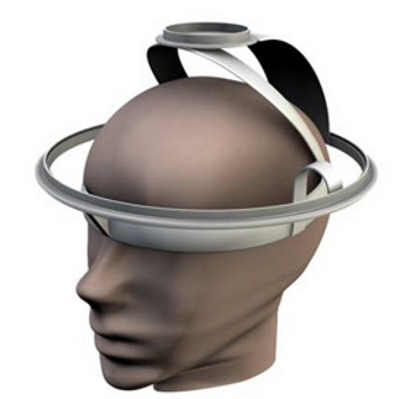
New technology developed at the University of California, Berkeley, is using wireless signals to provide real-time, non-invasive diagnoses of brain swelling or bleeding.
The device analyzes data from low energy electromagnetic waves that are similar to those used to transmit radio and mobile signals.
The technology, described in the May 14 issue of the journal PLOS ONE, could potentially become a cost-effective tool for medical diagnostics and to triage injuries in areas where access to medical care, especially medical imaging, is limited.
The researchers tested a prototype in a small-scale pilot study of healthy adults and brain trauma patients admitted to a military hospital for the Mexican Army.
The results from the healthy participants were clearly distinguishable from the patients with brain damage, and data for bleeding was distinct from data for swelling.
Boris Rubinsky, Professor of the Graduate School at UC Berkeley’s Department of Mechanical Engineering, led the research team along with César A. González, a professor in Mexico at the Instituto Politécnico Nacional, Escuela Superior de Medicina (National Polytechnic Institute’s Superior School of Medicine).
“There are large populations in Mexico and the world that do not have adequate access to advanced medical imaging, either because it is too costly or the facilities are far away,” said González. “This technology is inexpensive, it can be used in economically disadvantaged parts of the world and in rural areas that lack industrial infrastructure, and it may substantially reduce the cost and change the paradigm of medical diagnostics. We have also shown that the technology could be combined with cell phones for remote diagnostics.”
Rubinsky noted that symptoms of serious head injuries and brain damage are not always immediately obvious, and for treatment, time is of the essence.
For example, the administration of clot-busting medication for certain types of strokes must be given within three hours of the onset of symptoms.
“Some people might delay traveling to a hospital to get examined because it is an hour or more away, or because it is exceedingly expensive,” said Rubinsky. “If people had access to an affordable device that could indicate whether there is brain damage or not, they could then make an informed decision about making that trip to a facility to get prompt treatment, which is especially important for head injuries.”
The researchers took advantage of the characteristic changes in tissue composition and structure in brain injuries. For brain edemas, swelling results from an increase in fluid in the tissue. For brain hematomas, internal bleeding causes the buildup of blood in certain regions of the brain.
Because fluid conducts electricity differently than brain tissue, it is possible to measure changes in electromagnetic properties. Computer algorithms interpret the changes to determine the likelihood of injury.
The study involved 46 healthy adults, ages 18 to 48, and eight patients with brain damage, ages 27 to 70.
The engineers fashioned two coils into a helmet-like device that was fitted over the heads of the study participants. One coil acted as a radio emitter and the other served as the receiver. Electromagnetic signals were broadcast through the brain from the emitter to the receiver.
“We have adjusted the coils so that if the brain works perfectly, we have a clean signal,” said Rubinsky. “Whenever there are interferences in the functioning of the brain, we detect them as changes in the received signal. We can tell from the changes, or ‘noises,’ what the brain injury is.”
Rubinsky noted that the waves are extremely weak, and are comparable to standing in a room with the radio or television turned on.
The device’s diagnoses for the brain trauma patients in the study matched the results obtained from conventional computerized tomography (CT) scans.
The tests also revealed some insights into the aging brain.
“With an increase in age, the average electromagnetic transmission signature of a normal human brain changes and approaches that of younger patients with a severe medical condition of hematoma in the brain,” said González. “This suggests the potential for the device to be used as an indication for the health of the brain in older patients in a similar way in which measurements of blood pressure, ECG, cholesterol or other health markers are used for diagnostic of human health conditions.”
González started the research with the support of the University of California Institute for Mexico and the United States (UC MEXUS), an academic research program that supports collaborations between Mexico and the 10-campus UC system, and Mexico’s Consejo Nacional de Ciencia y Tecnología (National Council of Science and Technology), Mexico’s government agency that promotes science and technology research and activities.
Sarah Yang works for the UC Berkeley News Center.
- Details
- Written by: Editor
Number of cigarettes smoked a day and the number of years a person has smoked both increase the risk of rheumatoid arthritis (RA), finds research in BioMed Central’s open access journal Arthritis Research & Therapy.
The risk decreases after giving up smoking but, compared to people who have never smoked, this risk is still elevated 15 years after giving up.
Researchers from the Karolinska Institutet and Karolinska University Hospital analyzed data from the Swedish Mammography Cohort, which included 34,000 women aged between 54 and 89, 219 of which had RA.
Results of the study showed that even light smoking is associated with an increased risk of RA – smoking one to seven cigarettes a day more than doubled this risk.
When the team compared people who had never smoked, to women who had smoked for up to 25 years, they found that the risk also increased with length of smoking.
Stopping smoking did decrease chances of developing RA, with the risk continuing to decrease over time – 15 years after giving up the risk of RA had decreased by a third. However, compared to people who had never smoked, this risk remained significantly higher at 15 years after giving up.
“Stopping smoking is important for many health reasons, including the increased risk of RA for smokers,” said Daniela Di Giuseppe, who led this study. “But the clearly increased risk of developing RA, even many years after giving up, is another reason to stop smoking as soon as possible, and highlight the importance of persuading women not to start at all.”