
Health
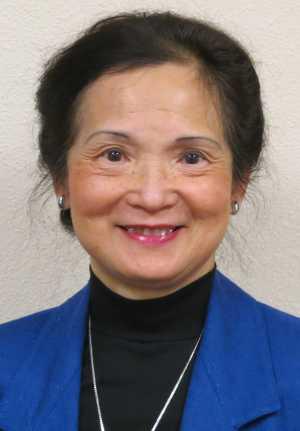
LAKEPORT, Calif. – Celebrating a 38-year medical career, including 14 years as a pathologist at Sutter Lakeside Hospital, Dr. Muoi Arnold retired on Jan. 31.
She continues to work one day a week while sharing a very active lifestyle with her husband, Dr. Keith Arnold.
“Doctor Muoi Arnold has been a tremendous asset to our hospital since arriving in 1999 by supporting our surgeons and radiologists in studying and diagnosing specimens in the lab,” said Dr. Diane Pege, medical director of Sutter Lakeside Hospital. “Her nearly four decades of experience gave her valuable insights into the pathology of a broad range of diseases and helped us successfully treat thousands of patients.”
Dr. Arnold witnessed many improvements at Sutter Lakeside Hospital through the years. Today the hospital offers four operating rooms and technology has added a number of advanced diagnostic tools, including telemedicine and electronic monitoring of the Intensive Care Unit.
During her tenure at Sutter Lakeside, Dr. Arnold was instrumental in streamlining internal department processes.
“I’ve worked with Dr. Muoi Arnold for five years,” said pathologist Dr. Phillip Chen. “She is an excellent, resourceful and energetic colleague that everyone likes. One of her many contributions was helping us organize our workflow so we can perform more efficiently.”
Dr. Arnold’s medical career began in 1974 after graduating from the Medical School at Saigon University.
During the Vietnam War she was an intern working at the Cho Quan Hospital with her mentor and future husband.
She later became an infectious disease specialist of this facility where she treated hundreds of patients with conditions such as bubonic plague, rabies, cholera, malaria and typhoid fever.
She left the country in 1978 with a group of “boat people” three years after the North Vietnamese Army invaded the South.
The following year was spent on a previously uninhabited Malaysian island along with 6,000 refugees until everyone could be reassigned to other countries. Dr. Arnold exchanged medical services for food and shelter.
Dr. Arnold qualified again as a doctor in Hong Kong under the British system; after briefly coming to America and marrying Keith, she returned with her husband to practice as a physician in the crown colony. When Hong Kong was to be turned over to Communist China in 1997, they left the country and returned to America.
After undergoing additional training, Dr. Arnold became a pathology specialist. She is a member of seven professional pathology and pediatric pathology societies around the globe and has published over 40 scientific research papers in peer reviewed medical journals.
Throughout her career she was also an academic physician, teaching, doing research and taking care of patients in university medical schools, and she has taken care of patients in Vietnam, Hong Kong and America.
“I never considered my career as work. For me, every day was a holiday that I enjoyed without ever looking at my watch,” Dr. Arnold said.
Born in Vietnam of Chinese parents, she is fluent in Vietnamese, Mandarin and Cantonese, with a working knowledge of French and Spanish.
She and her husband collaborated on translating an important Chinese medical book on malaria and its treatment that was recently published.
Dr. Arnold and Keith enjoy backpacking and have trekked throughout the Balkans, Bulgaria and Romania, among 80 other countries.
She is a member of the “Clear Lake Clikkers,” a clog-dancing group, and sings with the local chapter of the “Sweet Adelines,” a female group singing four-part harmony in barbershop style.
She is learning to play the piano and the violin and is studying the Cambodian language prior to going there on a research project.
Sutter Lakeside Hospital Chief Administrator Officer, Siri Nelson, added, “Dr. Arnold is a force of nature at this hospital. We’re definitely going to miss her knowledge and her energy.”
- Details
- Written by: Gary Quackenbush
SACRAMENTO – Legislation that establishes the Community Based Adult Services (CBAS) program as a permanent Medi-Cal benefit in California passed the Assembly Health Committee on Tuesday, April 9.
AB 518, authored by Assemblymember Mariko Yamada (D–Davis), chair of the Assembly Committee on Aging and Long-Term Care, and Bob Blumenfield (D-San Fernando Valley), chair of the Assembly Budget Committee, received unanimous bipartisan support with a 19-0 vote.
The CBAS program replaces California’s Adult Day Health Care program (ADHC) which was eliminated as an optional state Medi-Cal benefit in 2011.
CBAS offers seniors and persons with disabilities a cost-effective alternative to nursing homes by providing integrated medical and social services in community-based settings.
“With a rapidly aging population, and California's most turbulent budget decisions behind us, it is time to start re-building a network of home and community-based options for the elderly and persons with disabilities,” Yamada said.
CBAS was established in settlement of the Darling v. Douglas lawsuit brought against the state on behalf of disabled individuals whose independence was jeopardized by the elimination of California’s long-standing Adult Day Health Care (ADHC) program.
The settlement agreement expires in June of 2014, leaving the future of the program uncertain.
“Thousands of patients and their families don’t know what their future holds when the settlement period expires,” said Blumenfield, author of legislation vetoed in 2011 that closely resembled the CBAS program. “Uncertainty is a nightmare that these families have endured over many years about access to vital care for their loved ones. This bill helps end that.”
AB 518 intends to stabilize the CBAS program by establishing it as a permanent program in state law. Over the past few years, 48 adult day health care centers have closed their doors at a time when demand for such services is growing.
The Legislature agreed to eliminate ADHC during the height of the state’s budget crisis in 2011 based on an understanding that a similar, though smaller program would replace it.
Lawmakers were blindsided when Governor Brown vetoed the “step-down” program, leaving seniors and persons with disabilities stranded without an affordable alternative to more costly institutional care.
“Making CBAS permanent fulfills the Legislature’s intent to preserve adult day health care services in California,” Yamada said. “Programs like CBAS that enhance well-being, meet consumers' preferences, and provide working families a sense of security for their loved ones should be enhanced, not eliminated,” she said.
The bill will be heard next in the Assembly Committee on Aging and Long-Term Care.
Assemblymember Yamada represents the 4th Assembly District, which includes all or parts of Colusa, Lake, Napa, Solano, Sonoma and Yolo counties.
- Details
- Written by: Editor





 How to resolve AdBlock issue?