
Health

New scientific evidence seems to confirm the famous Roman saying “Mens sana in corpore sano” – a healthy mind in a healthy body.
Researchers from the University of Granada have demonstrated that people who normally practice sport have a better cognitive performance than those with bad physical health.
More specifically, the results of this research indicate that the former have a better sustained attention span (they react more rapidly to an external stimulus introduced randomly while carrying out a monotonous task).
Their autonomic nervous system also appears to work better when dealing with cognitive loads over a longer time period.
In an article published in the latest edition of the renowned journal, PLOS ONE, scientists compared the cognitive performance in specific tasks such as sustained attention, time-oriented attention (generating expectations of when an event will occur) and time perception.
The study involved working with a test group made up of 28 young males. Of these, 14 were University of Granada students, aged from 17 to 23 and who showed a low level of physical aptitude (according to regulatory values established by the American College of Sports Medicine).
The other 14 subjects were aged from 18 to 29 and had a high level of physical aptitude: 11 belonged to the Andalusian Cycling Federation for Under-23s and the other 3 were students of the Faculty of Physical Activity and Sports Activities of the University of Granada.
According to previous investigations, an improvement in vagal tone (more efficient functioning of the autonomic nervous system; greater variability in heart rate) is among the many benefits and also seems to be related to structural and functional adaptations of the central nervous system (for example, sporting activity prevents neuro-degeneration and promotes the growth of nerves and blood capillaries in zones such as the hippocampus, cortex, cerebellum and basal ganglia.
More rapid reaction times
The article published by the researchers from the University of Granada has revealed that the group with good physical condition demonstrated a better cognitive performance with regards to sustained attention when compared with the group with a more sedentary lifestyle, and also demonstrated more rapid reaction times. No difference was seen with regards to the other two cognitive tasks.
Without doubt, one of the most interesting results of this study is how the three cognitive tasks affected the working of the autonomic nervous system in different ways (measured through changes in heart rate variability).
Temporary perception had the greatest effect on the variability of heart rate (greater reduction), while sustained perception was the task that had least effect on this autonomic indicator.
Furthermore, the data showed a general decrease in the variability of heart rate as time passed following the activities, uniquely affecting the group of sedentary participants.
“It is important therefore to highlight that both the physiological and behavioural results obtained through our study suggest that the main benefit resulting from the good physical condition of the cyclists who participated in the study, appeared to be associated with the processes implicated by sustained attention,” explains Antonio Luque Casado of the Department of Experimental Psychology of the University of Granada, the principal author of the study.
Nevertheless, the investigators warn that this is a preliminary study, “and future investigations are necessary in order to confirm these initial findings.”
With this objective, the University of Granada scientists are currently evaluating different population groups with a view to incorporating electrophysiological recording techniques and more powerful techniques of analysis such as ECG (electroencephalogram) in the future.
- Details
- Written by: Editor
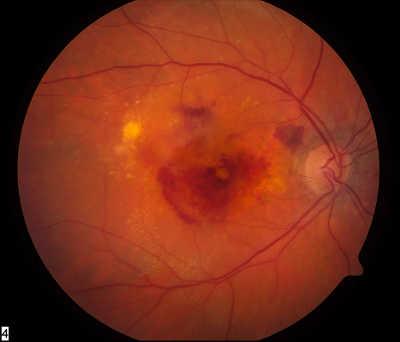
Targeting cholesterol metabolism in the eye might help prevent a severe form of age-related macular degeneration (AMD), one of the most common causes of blindness in older Americans, according to indications in a study in mice, which was supported by the National Institutes of Health.
Cholesterol build-up in arteries and veins, or atherosclerosis, occurs as a natural consequence of aging. Likewise, in AMD, cholesterol is known to accumulate in the eye, within deposits called drusen.
The study, published in Cell Metabolism, shows that large cells called macrophages appear to play a key role in clearing cholesterol from the eye, and that with aging, these cells become less efficient at this task.
Eye drops containing a type of drug known to promote cholesterol release from macrophages, called a liver X receptor (LXR) agonist, helped restore macrophage function and prevent AMD progression in a mouse model.
The study was led by Rajendra Apte, M.D., Ph.D., a professor of ophthalmology and vision sciences at Washington University in St. Louis.
An estimated 2 million Americans have AMD. The disorder causes damage to the macula, a region of the retina responsible for central, high-resolution vision.
The macula is dense with light-sensing cells called photoreceptors, and is what humans rely on for tasks that require sharp vision, such as reading, driving, and recognizing faces.
This sharp vision deteriorates in AMD, which can take two forms. In one, sometimes referred to as dry AMD, vision loss is due to a gradual loss of photoreceptors in the macula. In the other, referred to as wet or neovascular AMD, abnormal blood vessels grow under the macula, leaking blood and causing rapid damage to the photoreceptors.
“This study points to a novel strategy for early intervention to prevent the progression of AMD to the severe neovascular form of the disease,” said Grace Shen, Ph.D., a program director at NIH’s National Eye Institute, which funded the research.
An eye care professional can detect AMD prior to vision loss by looking for drusen, which are yellow deposits under the retina that contain cholesterol and other debris. Although small drusen are a normal part of aging, larger drusen typically indicate AMD.
What triggers neovascular AMD is unclear. Drusen, and the cholesterol within them, have been prime suspects. And based on genetic studies, including a recent genome-wide association analysis, the immune system appears to play a role, too. But researchers have had few details to connect these two pathways.
Dr. Apte theorizes that macrophages, a type of immune cell, may provide a crucial link. Macrophages, literally “big eaters” in Greek, act like garbage collectors. They scavenge for debris, engulf it, and process it.
In previous studies, Dr. Apte found that macrophages normally help limit the growth of new blood vessels in the eye, but with age, the cells lose this ability. The new study suggests that prior to these changes, old macrophages become less efficient at processing cholesterol.
“Ideally, macrophages should take up cholesterol, process it, and spit it out into the bloodstream. In AMD, we think the cells are ingesting cholesterol but not able to spit it out. So you get these inflamed macrophages that promote blood vessel growth,” he said.
A protein called ABCA1 is needed for macrophages to release cholesterol into the bloodstream. In these experiments on mice, Dr. Apte and his team found that in old macrophages, there is a decrease in the level of ABCA1 protein.
The researchers found a similar drop in ABCA1 levels in blood cells – the source of macrophages – in samples donated by older people (ages 67-87) vs. younger ones (ages 25-34). The ABCA1 gene has been identified as a risk factor for AMD.
To investigate the link between these changes and blood vessel growth, the researchers first performed tests in cell culture. When grown in a dish with blood vessel cells, young macrophages efficiently stopped the cells from multiplying, but old macrophages did not.
Deleting the ABCA1 gene in young macrophages caused them to behave like old macrophages. Next, the researchers tried treating old macrophages with an LXR agonist; these drugs are known to enhance cholesterol transport from macrophages by turning on the ABCA1 gene. Exposure to the drug rejuvenated the old macrophages and enabled them to inhibit blood vessel cell growth.
The researchers also tested the LXR agonist in mice with an eye injury that produces abnormal blood vessel growth, similar to that seen in neovascular AMD. Eye drops of the drug significantly reduced this blood vessel growth when given several days before the injury.
Although there is no cure for AMD, a number of treatments are available. A combination of antioxidants and zinc known as the AREDS formulation can help slow vision loss in people with intermediate (but not early) stages of AMD.
There are several treatments for advanced neovascular AMD; the most common choice involves injecting the eye with drugs that block the effects of a secreted protein involved in new blood vessel formation. However, such drugs must be given frequently – up to once a month – and the repeated injections carry a risk of infection.
“If we could prevent the blood vessels from growing, it would be better than trying to eliminate them after the fact,” Dr. Apte said. LXR agonists or other drugs to help macrophages clear away cholesterol might help, he said.
Having high blood cholesterol is not strongly related to AMD, and it remains to be determined whether statins and other cholesterol-modifying drugs on the market can reduce the risk of AMD.
LXR agonists and other agents that modify cellular release of cholesterol are at various stages of investigation for many disorders. Some studies have found that when the drugs are given orally to mice, they appear to reduce atherosclerosis, but there have been concerns about potential toxic effects on the liver. Dr. Apte theorizes that therapy limited to the eye would not raise the same safety issues.
For more information about AMD, visit http://www.nei.nih.gov/health/maculardegen/index.asp .
- Details
- Written by: Editor





 How to resolve AdBlock issue?