
Health
In many cases, obesity is caused by more than just overeating and a lack of exercise. Something in the body goes haywire, causing it to store more fat and burn less energy. But what is it?
Researchers at Sanford-Burnham Medical Research Institute have a new theory – a protein called p62.
According to a study the team published in the Journal of Clinical Investigation, when p62 is missing in fat tissue, the body’s metabolic balance shifts – inhibiting “good” brown fat, while favoring “bad” white fat.
These findings indicate that p62 might make a promising target for new therapies aimed at curbing obesity.
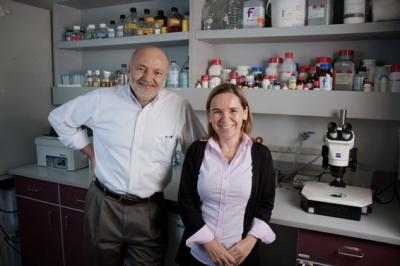
“Without p62 you’re making lots of fat but not burning energy, and the body thinks it needs to store energy,” said Jorge Moscat, Ph.D., Sanford-Burnham professor. “It’s a double whammy.” Moscat led the study with collaborators at Helmholtz Zentrum München in Germany and the University of Cincinnati.
Moscat’s team had previously produced mice that completely lack the p62 protein everywhere in their bodies. As a result, the animals were obese. They also had metabolic syndrome.
In other words, as compared to mice with p62, mice lacking p62 weighed more, expended less energy, had diabetes and had a hyper-inflammatory response that’s characteristic of obesity.
While those results showed that the lack of p62 leads to obesity, “we didn’t know which tissue was responsible for these effects, because p62 was missing in all of them,” Moscat said.
Some researchers believe that muscle tissue, where energy is expended, controls obesity. Others suspect the liver is a key player, or that the brain’s appetite control center is most responsible for obesity.
But then there’s fat itself – both white fat and brown fat. White fat is the type we think of as unwanted body fat. Brown fat, on the other hand, is beneficial because it burns calories. Many researchers now believe that brown fat somehow malfunctions in obesity, but the details are unclear.
In their latest study, Moscat and colleagues set out to pinpoint the specific tissue responsible for obesity when p62 is missing. They made several different mouse models, each missing p62 in just one specific organ system, such as the central nervous system, the liver, or muscle. In every case, the mice were normal. They weren’t obese like the mice lacking p62 everywhere.
Then they made a mouse model lacking p62 only in their fat tissue. These mice were obese, just like the mice missing p62 in all tissues.
Upon further study, the researchers found that p62 blocks the action of an enzyme called ERK while activating another enzyme called p38.
When p62 is missing, the enzyme p38 is less active in brown fat, while ERK is more active in white fat. As a result, Moscat said, p62 is “a master regulator” in normal fat metabolism.
According to Moscat, the discovery of p62’s role in brown fat tissue is encouraging, because fat tissue is much more accessible than other parts of the body – the brain, for example – for potential drug therapies.
“This makes it easier to think about new strategies to control obesity,” he said.
New methods for preventing or treating obesity, a major epidemic in the United States, are urgently needed.
Drug therapies designed to minimize the intake of food have had limited success and also produce considerable side effects.
- Details
- Written by: Editor
A cocktail of three specific genes can reprogram cells in the scars caused by heart attacks into functioning muscle cells, and the addition of a gene that stimulates the growth of blood vessels enhances that effect, said researchers from Weill Cornell Medical College, Baylor College of Medicine and Stony Brook University Medical Center in a report that appears online in the Journal of the American Heart Association.
“The idea of reprogramming scar tissue in the heart into functioning heart muscle was exciting,” said Dr. Todd K. Rosengart, chair of the Michael E. DeBakey Department of Surgery at BCM and the report’s corresponding author. “The theory is that if you have a big heart attack, your doctor can just inject these three genes into the scar tissue during surgery and change it back into heart muscle. However, in these animal studies, we found that even the effect is enhanced when combined with the VEGF gene.”
“This experiment is a proof of principle,” said Dr. Ronald G. Crystal, chairman and professor of genetic medicine at Weill Cornell Medical College and a pioneer in gene therapy, who played an important role in the research. “Now we need to go further to understand the activity of these genes and determine if they are effective in even larger hearts.”
During a heart attack, blood supply is cut off to the heart, resulting in the death of heart muscle. The damage leaves behind a scar and a much weakened heart. Eventually, most people who have had serious heart attacks will develop heart failure.
Changing the scar into heart muscle would strengthen the heart. To accomplish this, during surgery, Rosengart and his colleagues transferred three forms of the vascular endothelial growth factor (VEGF) gene that enhances blood vessel growth or an inactive material (both attached to a gene vector) into the hearts of rats.
Three weeks later, the rats received either Gata4, Mef 2c and Tbx5 (the cocktail of transcription factor genes called GMT) or an inactive material. (A transcription factor binds to specific DNA sequences and starts the process that translates the genetic information into a protein.)
The GMT genes alone reduced the amount of scar tissue by half compared to animals that did not receive the genes, and there were more heart muscle cells in the animals that were treated with GMT.
The hearts of animals that received GMT alone also worked better as defined by ejection fraction than those who had not received genes. (Ejection fraction refers to the percentage of blood that is pumped out of a filled ventricle or pumping chamber of the heart.)
The hearts of the animals that had received both the GMT and the VEGF gene transfers had an ejection fraction four times greater than that of the animals that had received only the GMT transfer.
Rosengart emphasizes that more work needs to be completed to show that the effect of the VEGF is real, but it has real promise as part of a new treatment for heart attack that would minimize heart damage.
“We have shown both that GMT can effect change that enhances the activity of the heart and that the VEGF gene is effective in improving heart function even more,” said Dr. Crystal.
The idea started with the notion of induced pluripotent stem cells – reprograming mature specialized cells into stem cells that are immature and can differentiate into different specific cells needed in the body.
Dr. Shinya Yamanaka and Sir John B. Gurdon received the Nobel Prize in Medicine and Physiology for their work toward this goal this year.
However, use of induced pluripotent stem cells has the potential to cause tumors. To get around that, researchers in Dallas and San Francisco used the GMT cocktail to reprogram the scar cells into cardiomyocytes (cells that become heart muscle) in the living animals.
Now Rosengart and his colleagues have gone a step farther – encouraging the production of new blood vessels to provide circulation to the new cells.
- Details
- Written by: Editor





 How to resolve AdBlock issue?