 How to resolve AdBlock issue?
Recreation
- Details
- Written by: Editor
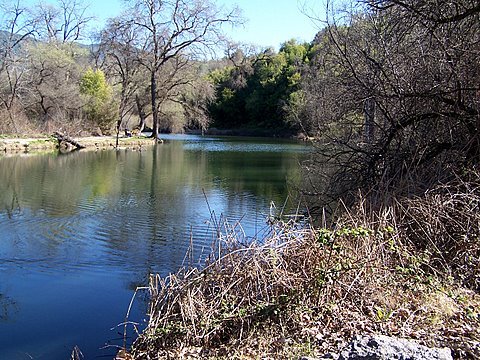
KELSEYVILLE – Join docent Glenn Smith at the Clear Lake State Park Visitor Center ramp at 8:30 a.m. on Sunday, July 13 for a nature walk.
Whether stopping under a Toyon, a Cottonwood or investigating a blackberry bush for tasty fruit, you will find it a relaxing way to enjoy a park adventure.
Nature and bird walks will take place on the second and fourth Sundays at 8:30 a.m. in Clear Lake State Park through August.
The Visitor Center and Nature Museum are open 10 a.m. to 4 p.m. Saturday and Sunday. There is no entrance fee to the park when entering to join walks or visit the museum.
Clear Lake State Park is located at 5300 Soda Bay Road, Kelseyville.
{mos_sb_discuss:2}
- Details
- Written by: Editor
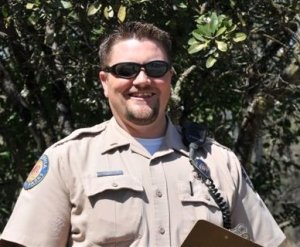
KELSEYVILLE – With the excitement of both Lake County State Parks remaining open, Supervising Ranger Ryen Goering, Clear Lake Sector, invites community members to become volunteers at Anderson Marsh State Historic Park, Lower Lake, and Clear Lake State Park, Kelseyville.
Goering has scheduled orientation and park-specific training to update current park volunteers on park policies and open the program to all persons interested in volunteering at either of these beautiful parks.
A few hours of volunteering each month presents great opportunities to use one’s talents in interpreting the uniqueness of Lake County. Interpretation can take many forms. It might be leading nature walks, conducting tours, working with school programs, discussing the geology and culture of Lake County or assisting in the gift shops. Enthusiasm for volunteering only increases as one meets the wonderful park visitors who really want to learn about beautiful Lake County.
A convenient training schedule has been set for July, with choices of time and locations.
As “orientation” training is the same for both parks, volunteers can choose either of the following locations for the initial training.
Tuesday, July 8, 3 p.m. to 6 p.m., at Lower Lake High School Board Room, 9430 Lake St., Lower Lake.
Saturday, July 12, 9 a.m. to noon, Clear Lake State Park Visitor Center Auditorium.
“ Park Specific” training for Clear Lake State Park volunteers is scheduled for Saturday, July 12 from 1 p.m. to 3 p.m. in the Clear Lake State Park Visitor Center Auditorium. If attending the full day program, a bag lunch is suggested.
“Park Specific” training for Anderson Marsh State Historic Park volunteers is scheduled for Tuesday, July 29 from 3 p.m. to 6:00 p.m. in the Lower Lake High School Board Room, 9430 Lake St., Lower Lake. Training will include a of tour of Anderson Marsh State Historic Park, Highway 53, Lower Lake.
For inclusion in or inquiries about the Volunteer In Parks Program for Lake County’s two outstanding state parks, leave your contact information at 279-2267.
{mos_sb_discuss:2}
- Details
- Written by: Lake County News Reports
There are boats of every kind rolling into our county this week as folks come to enjoy all that our magnificent lake has to offer. The fishing is darn good (as good as it has been this year, in fact) and the water looks great. We’ve got a bit of wind forecast for the weekend and the weather is supposed to be a bit cooler than it has been.
Bass anglers are fishing a wide variety of artificial baits – buzz baits in white, spinner baits in white or chartreuse, jigs with trailers, Beavers, Senkos, Brush Hogs … the list goes on. This is the kind of fishing that allows one to stick with their favorite technique or try that new technique you’ve been itchin’ to try.
Most reports have anglers catching 30 to 60 fish a day depending on how many hours you’re out on the water, and how hard you want to fish. Live bait anglers have been frustrated at the lack of availability of the larger sizes of minnows. Simply put, there are none to be had. Nearly all of our bait fish come from the big farms in Arkansas. They’ve been out of ‘em now for a couple weeks so there aren’t any coming into the hatcheries in California. Many of our anglers who enjoy using live minnows have gone to using the “medium” or crappie sized minnows and are having good success. (These minnows actually “match the hatch” pretty while at this point in time.)
Crappie anglers are enjoying catching a few crappie here and there. Some are reporting up to 15 per outing. Others are catching only two or three. The key to the crappie fishing right now is having a boat and enough motivation to check known locations throughout the day to locate the schools. Deeper water (18 to 25 feet) has accounted for most of the crappie lately. The Boat Works and Four Poles have both held crappie this week. Medium minnows or the ever-popular Panfish Assassin lures are tops.
Catfish are eating … everything. We’re in that time of year when the bass guys are having fits because they're catching catfish on their highly specialized bassin’ gear. Have you ever seen what a 14-pound catfish does to a spinner bait? Yikes! It’s ugly. Shrimp, mackerel and anchovies, night crawlers, clams and livers, mice and rats – all are prime targets for the predatory catfish. (Keep your Chihuahua away from the water …)
Saturday will see the 41st annual International Worm Races immediately following the Redbud Parade. Come join the fun, watch the parade, buy your highly trained race worm and test you luck in the races. (Pay no attention to the Worm Doping Scandal in the papers last week. Our crawlers are steroid free!) The parade will start at Redbud Park and end at Austin Park here in the city of Clearlake on Saturday morning. The worm races will begin at noon and run until about 3 p.m. There are also concessions and a carnival for a full day of family fun at the lake. Hope to see you ther e… (You guessed it, I’ll be at the worm races with the race worms.)
Bob Rider owns Lakeshore Bait & Tackle in Clearlake. Visit his Web site at www.994fish.com or call him at 994-FISH (3474).
{mos_sb_discuss:2}
- Details
- Written by: Lake County News Reports
So what’s new? Night bite! And the smoke from the many fires burning around us.
The big question callers have had this week is “How’s the air quality?” To that I can answer “improving.” On Thursday we had a southwest wind that is moving the smoke eastward. Two days ago I couldn’t see the nearby hills, yesterday an outline appeared and today we can make out the trees on the ridgeline. Here are the detailed reports …
Bass anglers are feeding bass Senkos, Brush Hogs, Speed Worms and top water lures. Frogs and poppers are good when the sun first hits the water in the morning and again during the heat of the day. Minnows are a knockout at first light. Drop shotting a Witch’s T or Bold Bluegill finesse worm will get you bit.
Depth reports have fish being caught in two feet of water, 10 feet of water, 20 feet of water and deep in the weed mats. So, it sounds like fish are pretty much everywhere and on most everything we would normally fish this time of year.
The numbers aren’t off the charts – more like just plain average, but the bass are cooperating and are fairly easy to locate. Night fisherman are reporting phenomenal fishing from 10 p.m. on through the darkest hours of the night. Black & blue, purple & brown, and brown & orange jigs are accounting for many a night bass. And don’t overlook the BIG BLACK WORM – like Maverick’s 10-inch Curly Tail hand pour offering.
Crappie anglers are experiencing success in moderate numbers. Fifteen fish – on average – is what we’re hearing for catches. The shoreline areas from Clearlake Oaks through Glenhaven along with the docks over in Jago Bay are getting the most attention. There are other spots producing too, but nothing in great numbers. I’d say the key is to fish several areas thoroughly and at several depths to locate fish. Use minnows or mini-jigs. Top colors haven’t changed in eons – white or chartreuse. Some are even using the old standby red and white jigs that were so popular in days gone by.
There’s plenty of excitement about the catfish bite. So much so that we’ve scheduled our first CatFest event of the year for July 19. But more on the event news in a moment. Let’s talk about the whiskerfish …
All shoreline areas around Clearlake and Cache Creek have been producing for our regulars. Kids and adults alike are catching some nice fish. We haven’t seen anything of gargantuan proportions lately, but the numbers are quite good. Mackerel still outsells everything else for cats. However, most everything seems to be getting a bite these days whether it be minnows, livers, clams, shrimp or crawlers.
And now on to the upcoming event … CatFest is back! As we've done before, we'll meet here during the afternoon. We'll get our gear and our boats ready, swap some stories, pick our baits, and eat some food (barbecue dogs, chips and beans are the usual fare).
The flotilla will hit the water about 6 p.m. and fish until 11 p.m. We'll have a pool for biggest fish of the evening. Pitch in a couple of bucks for the barbecue and get in on the pool – all at your own discretion. This is not a competitive event, but rather a good time with a group of folks all fishing for catfish together. It’s a blast, so come on down and get in on the fun.
And lastly, we’re taking registrations for the Hunter Safety Class coming up July 21, 23 and 26 (three sessions, one class). The class is held at the Lake County Fire Protection District on Olympic Drive in Clearlake (across from the Burns Valley Plaza). Ten dollars gets you a seat in the class. Phil Parker is our fabulous instructor. The class is open to kids (age 9 and up) and adults. This will be the last class offered in Clearlake before deer season opens. Sign up for the class here at Lakeshore Bait and Tackle.
Bob Rider owns Lakeshore Bait & Tackle in Clearlake. Visit his Web site at www.994fish.com or call him at 994-FISH (3474).
{mos_sb_discuss:2}