 How to resolve AdBlock issue?
Recreation
- Details
- Written by: Betty Strach
There were 133 alcohol use-related boating fatalities in 2006 (the latest statistics available). In California in 2007, the California Department of Boating and Waterways reported 1,800 alcohol-related boating accidents.
The U.S. Coast Guard Auxiliary in Lake County is asking all boat owners and operators to help reduce fatalities, injuries, property damage and health care costs related to recreational boating accidents by taking personal responsibility for their own safety and the safety of their passengers.
Essential steps include always wearing a life jacket and requiring passengers to do the same; never boat under the influence of drugs or alcohol; complete a boating safety course; and get a free vessel safety check annually from the local U.S. Coast Guard Auxiliary Vessel Examiners.
Eight of 10 boat operators have never taken a boating class. If asked, the typical boat operator will respond to the question of their taking a boating class with: a) My dad always had a boat; b) I’ve been boating for years; c) I’m only going fishing; or d) I don’t take my boat out of the county.
The U.S. Coast Guard Auxiliary in Lake County reminds all boaters, "You're in Command. Boat Responsibly!”
The USCG Auxiliary is offering America’s Boating Course, a Coast Guard approved boating safety course. The next three classes are June 21 and July 19.
Please call Betty Strach for details, 928-9811 or 245-3136.
Betty Strach is staff officer for public education for Lake County's Flotilla 8-8.
{mos_sb_discuss:2}
- Details
- Written by: Lake County News reports
Boats are the primary transporters of the aquatic species and recreationalists should take special care to properly clean, drain and dry vessels.
“Invasive mussels pose a serious threat to our water systems and recreational facilities,” said California Secretary for Resources Mike Chrisman. “Over the Memorial Day holiday and throughout this boating season we ask for the assistance of water users to prevent the spread of quagga and zebra mussels in California.”
The task force – comprised of California’s Department of Fish and Game, Department of Water Resources, Department of Parks and Recreation and Department of Boating and Waterways – urges boaters to take action to protect the state’s many water bodies from quagga and zebra mussel infestation.
Invasive aquatic mussels are primarily transported by watercrafts and boaters should follow these steps to inhibit their spread:
Inspect all exposed surfaces: Small mussels feel like sandpaper to the touch.
Wash the hull of each watercraft thoroughly, preferably with high-pressure hot water.
Remove all plants and animal material.
Drain all water and dry all areas.
Drain and dry the lower outboard unit.
Clean and dry all live-wells.
Empty and dry any buckets.
Properly dispose of all bait.
Wait five days and keep watercraft dry between launches into different fresh waters.
These steps are designed to thwart spread of the invasive mussels, safeguard boats and preserve high-quality fisheries.
Quagga mussels were first detected in the Great Lakes in 1989, resulting in hundreds of millions of dollars in damage to water delivery systems. They were first detected in the Colorado River system in January 2007 and were later found in San Diego and Riverside counties by state and local water agencies. Zebra mussels were discovered in San Justo Reservoir in San Benito County in January.
Thus far, no quagga or zebra mussels have been found in the State Water Project, which is closely monitored for these species by environmental scientists.
Both species of mussel are non-native aquatic mollusks that wreak havoc on the environment by disrupting the natural food chain and releasing toxins that affect other aquatic species. Although they range in size from microscopic to the size of a fingernail, they are prolific and attach themselves to hard and soft surfaces.
In addition to devastating the natural environment, quagga and zebra mussels pose a dramatic economic threat to California. The mussels can colonize on hulls, engines and steering components of boats, other recreational equipment, and can damage boat motors and restrict cooling. The invasive species also attach to aquatic plants, and submerged sediment and surfaces such as piers, pilings, water intakes, and fish screens. In doing this, water intake structures can be clogged, hampering the flow of water. The mussels frequently settle in massive colonies that can block water intake and threaten municipal water supply, agricultural irrigation and power plant operations.
Zebra mussels inhabit water depths from four to 180 feet, while quaggas can reach depths more than 400 feet. Both mollusks can attach to and damage boat trailers, cooling systems, boat hulls and steering equipment. Mussels attached to watercraft or trailers can be transported and spread to other water bodies. Water in boat engines, bilges, live wells and buckets can carry mussel larvae (called veligers) to other water bodies as well.
The task force is currently working to determine the extent of the quagga and zebra mussel threat and to educate watercraft users and water managers about what they can do to help.
As part of the public education effort, the state has facilitated nearly a dozen quagga/zebra inspection and decontamination trainings for more than 350 individuals in Lake County, San Diego, Redding, Fresno, Stockton, Monterey, Los Alamitos, Ontario, Sacramento and Yountville.
To date, the task force has distributed more than 1.75 million information cards and 1.2 million letters to registered boaters and other water users around the state about the quagga and zebra mussel danger.
A public toll-free hotline – 1-866-440-9530 – has also been established for information about destructive Quagga and Zebra mussels. The toll-free number is available Monday through Friday, 8 a.m. to 5 p.m.
For more information on the quagga/zebra mussel response, please visit the DFG Web site at www.dfg.ca.gov/invasives/quaggamussel.
For information about Lake County's prevention programs, visit www.co.lake.ca.us/Government/DepartmentDirectory/Water_Resources/Mussel_Prevention.htm.
{mos_sb_discuss:2}
- Details
- Written by: Editor
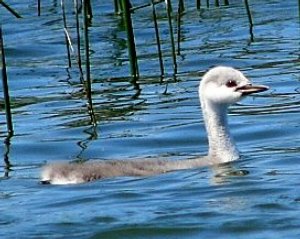
CLEAR LAKE STATE PARK – Enjoy nature at Clear Lake State Park this weekend.
On Saturday, May 24, Docent Leona Butts will present Joy of Birding II in the park’s auditorium from 1 p.m. to 2:30 p.m.
See some of the delightful babies that are a part of the summer scene in Lake County. Through dialogue and slides, become acquainted with habits and where to look for our feathered neighbors. Find out what songbird really needs to take singing lessons.
Join Glenn Smith for a nature walk on Sunday, May 25. The plants in the park contribute to the wellbeing of our birds and animals, as well as give us ascetic pleasure. Meet at the Visitor Center ramp at 8:30.a.m. Wear walking shoes.
There is no entrance fee into the park for visitor center programs and organized walks.
The Visitor Center museum and gift shop will be open Saturday and Sunday from 10 a.m. to 4 p.m. throughout the summer. Time and time again, visitors tell the on-duty docents they consider the Clear Lake State Park Visitor Center the best they have visited.
Clear Lake State Park is located at 5300 Soda Bay Road, Kelseyville.
{mos_sb_discuss:2}
- Details
- Written by: Editor
“After a day of riding one of our gaited Rocky Mountain Horses through the beautiful California countryside, there is no better way to spend an evening than returning to the ranch for a glass of fine wine, a wonderful meal and conversing with friends,” said Cowboy Hideaway co-owner Jeff Irvine.
Guests at this unique new equestrian venue discover California’s Wine Country and its dramatic scenery while enjoying private tours and tastings of award winning wines. They ride horseback through vineyards, ancient redwood groves and glide through the ocean mist along the rugged Mendocino Coast. Guests sample wines from Napa, Sonoma, Lake and Mendocino counties as they traverse some of the most spectacular landscape the West Coast has to offer.
Guests at Cowboy Hideaway ride exclusively gaited Rocky Mountain Horses born and trained at Mountain Magic Ranch in Montana. These wonderful riding horses have an even temperament and an ambling four-beat gait to ensure even novice riders an effortless ride. With your horse as your companion for the week, guests experience the pleasure of these rare, beautiful animals with their strong hearts, natural endurance and smooth level ride.
Each day’s ride explores a new and different facet of the countryside. A day may begin with a vineyard ride and a talk on the viticulture of the area. One day is spent touring Ridgewood Ranch home of Seabiscuit’s miraculous recovery to win at Santa Anita with the exclusive privilege to ride the same trails as that famous stallion. One ride is on miles of beaches along the Mendocino Coast with winery stops on the way back to the Ranch and another into the quaint town of Upper Lake and lunch at the classic Blue Wing Saloon.
After riding guests have private winery tours including Jim Fetzer’s new winery Ceago del Lago and Francis Ford Coppola presents Rosso and Bianco. Guests return to the comfort, pleasure and warmth of the lodge on the 750 acre Cowboy Hideaway Ranch to savor exceptional regional cuisine. Some evenings include a private tasting or a massage while the sun casts its evening glow on Clear Lake, California’s largest natural lake. The three-story lodge offers luxury accommodations, a great room dominated by a towering stone fireplace, an enormous gourmet kitchen and a view from every window.
Guests not only have the opportunity to experience a variety of local California wine, they learn about different growing techniques, the production of different varietals and the philosophies of diverse wine makers. The different wines are paired with meals prepared with the finest of local ingredients by either the staff or perhaps a new and rising star of the culinary world.
Corkscrews and Horseshoes – need we say more?
The California Wine and Equine Tour includes:
Three to six nights lodge accommodations and most meals.
Two to five days of guided trail riding, winery tours and private tastings.
Available in 2008 from April through November.
For more information contact Cowboy Hideaway, telephone 707-328-3192 or visit www.cowboyhideaway.com.
{mos_sb_discuss:2}